Benefits of Getting Enough Sleep Every Night: Why It Matters
Published: 28 Dec 2025
Sleep is not just rest, it’s a natural healing process for your body and mind. Every night, your brain repairs itself, your muscles recover, and your energy resets for the next day. Yet, millions of people ignore how important sleep really is.
Getting enough sleep every night can improve your physical health, mental clarity, emotional balance, and even your long-term wellbeing. Experts say adults should sleep 7–9 hours daily for optimal performance and better health.
In this expert guide, I’ll explain why getting enough sleep every night is essential, how it affects every part of your life, and what happens when you don’t get it.
Benefits of Getting Enough Sleep Every Night
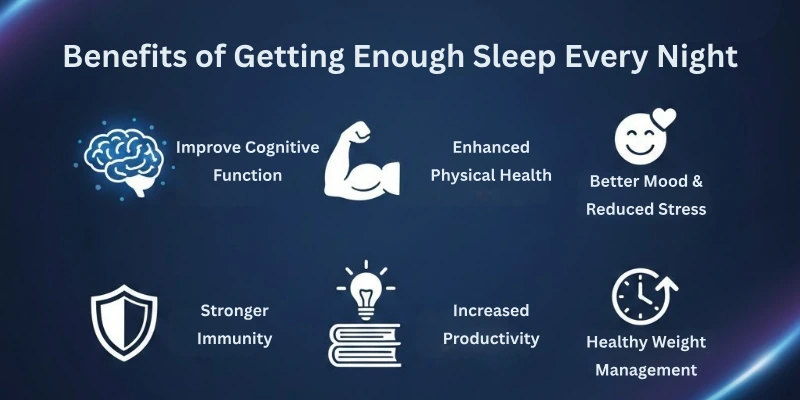
As a sleep expert, I can confirm that good sleep plays a major role in improving your health, focus, and happiness. Let’s start with the key benefits of sleeping well:
- Improves memory and brain function
- Boosts your immune system
- Supports emotional stability
- Increases energy and productivity
- Helps maintain a healthy weight
- Enhances heart health
- Improves skin and overall appearance
- Reduces stress and anxiety
- Promotes better decision-making
- Strengthens relationships and mood
Let me guide you about each benefit in detail.
1. Improves Memory and Brain Function
When you sleep deeply, your brain organizes and stores new information. It also clears out toxins that build up during the day. Studies show that people who get enough sleep perform better in learning, problem-solving, and decision-making. A well-rested mind stays sharp and focused throughout the day.
2. Boosts Your Immune System
Adequate sleep helps your immune cells regenerate and respond quickly to infections. People who sleep less than 6 hours are more likely to catch colds and viruses. A strong immune system depends on consistent, quality sleep every night.
3. Supports Emotional Stability
Sleep and mood are closely connected. Poor sleep often leads to irritability, sadness, or mood swings. Getting proper sleep every night helps regulate your emotions, reduce anger, and improve overall mental health.
4. Increases Energy and Productivity
If you want to feel more energetic and focused, quality sleep is your natural fuel. It boosts alertness, improves reaction time, and helps you complete daily tasks faster. Good sleep enhances both physical and mental performance at work or school.
5. Helps Maintain a Healthy Weight
Lack of sleep disrupts hormones that control hunger and metabolism. This makes you crave junk food and eat more calories. Sleeping enough keeps these hormones balanced, helping in weight control and fat loss naturally.
6. Enhances Heart Health
Sleeping less than 7 hours increases the risk of heart problems like high blood pressure, stroke, and heart disease. During deep sleep, your blood pressure drops and your heart gets time to rest. Regular sleep helps keep your heart strong and healthy.
7. Improves Skin and Overall Appearance
Your skin repairs itself while you sleep. Lack of rest causes dark circles, dull complexion, and early wrinkles. Enough sleep improves blood flow, giving you glowing skin and a fresher look every morning — that’s why it’s called “beauty sleep.”
8. Reduces Stress and Anxiety
Sleep reduces the levels of stress hormones in your body. When you rest properly, your nervous system stays calm, and your mood remains positive.
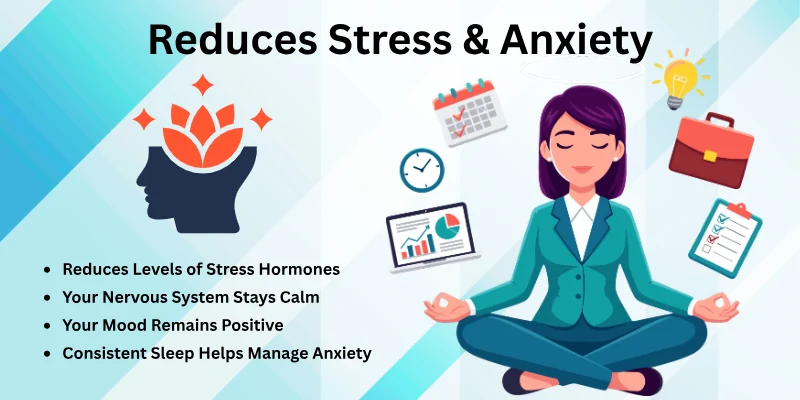
Consistent sleep helps manage anxiety and prevents burnout.
9. Promotes Better Decision-Making
A tired brain struggles to focus and make smart choices. Sleep refreshes your mind and enhances judgment, helping you make confident decisions at work, home, or in relationships.
10. Strengthens Relationships and Mood
When you’re well-rested, you communicate better and handle emotions wisely. Sleep improves patience, empathy, and positivity, key traits for healthy relationships and social life.
What Happens When You Don’t Get Enough Sleep
Missing sleep regularly can harm your health more than you think. Chronic sleep deprivation can lead to:
- Weakened immune system
- Weight gain and hormonal imbalance
- Increased risk of depression
- Memory loss and poor focus
- Higher risk of diabetes and heart disease
If you’re often tired, moody, or unfocused, your body is signaling that it needs more rest.
Final Note
Getting enough sleep every night isn’t a luxury, it’s a necessity for a healthy, productive life. When you prioritize your sleep, you improve your brain, body, and emotional balance all at once.
Start tonight, turn off distractions, relax your mind, and let your body recover naturally. Remember, good sleep equals good health.
FAQs: Benefits of Getting Enough Sleep Every Night
Here are some of the most commonly asked questions related to the benefits of getting enough sleep every night:
Getting enough sleep is important because it helps your brain, heart, and body function properly. It improves focus, memory, and mood while reducing stress and fatigue. Sleep also strengthens your immune system and keeps your hormones balanced for better overall health.
Most adults need between 7 to 9 hours of sleep every night to stay healthy and active. Less than 6 hours can affect energy, focus, and heart health. Regular, quality sleep helps your body recover and perform at its best every day.
Lack of sleep can lead to tiredness, poor concentration, and mood swings. Over time, it increases the risk of obesity, diabetes, and heart disease. You may also experience memory problems and low energy throughout the day.
Yes, sleep directly affects mental health. Good sleep improves emotional balance, reduces anxiety, and helps prevent depression. Poor sleep makes you more irritable, stressed, and less able to manage daily challenges.
Yes, quality sleep supports weight loss by balancing hunger hormones. When you sleep less, your body releases more ghrelin (hunger hormone) and less leptin (fullness hormone), making you crave junk food. Proper sleep helps control appetite and maintain a healthy weight.
During sleep, your immune system releases proteins that fight infections and inflammation. When you don’t sleep enough, your body produces fewer of these protective proteins. Getting good sleep every night keeps your immunity strong and reduces your chances of getting sick.
Yes, poor sleep can affect your skin’s health and appearance. It slows cell repair, increases wrinkles, and causes dark circles. Getting enough sleep allows your skin to regenerate, making it look fresh and glowing.
You can improve sleep quality by following a fixed bedtime, reducing caffeine intake, and limiting screen time before bed. Keep your bedroom dark, quiet, and cool. Relaxing habits like reading or deep breathing also help you sleep better.
For most adults, 6 hours of sleep isn’t enough. Over time, it can cause fatigue, poor focus, and health issues. Experts recommend 7–9 hours of quality sleep for better energy, mood, and overall wellness.
Chronic sleep deprivation can lead to serious problems like high blood pressure, obesity, diabetes, and heart disease. It also affects brain health, memory, and mental stability. Over time, lack of sleep weakens your body’s ability to heal and function properly.






- Be Respectful
- Stay Relevant
- Stay Positive
- True Feedback
- Encourage Discussion
- Avoid Spamming
- No Fake News
- Don't Copy-Paste
- No Personal Attacks
- Be Respectful
- Stay Relevant
- Stay Positive
- True Feedback
- Encourage Discussion
- Avoid Spamming
- No Fake News
- Don't Copy-Paste
- No Personal Attacks
