Benefits of Walking 30 Minutes Daily: Stay Healthy
Published: 17 Mar 2026
Walking is one of the easiest and most effective ways to stay healthy. Spending just 30 minutes a day walking can improve your body, mind, and overall well-being. You don’t need any special equipment or a gym membership.
Walking regularly can help with weight management, mental clarity, heart health, and energy. In this guide, we will cover 15 major benefits of walking 30 minutes daily and how to make the most of them.
Benefits of Walking 30 Minutes Daily
Here are the 15 best benefits of walking 30 minutes daily:
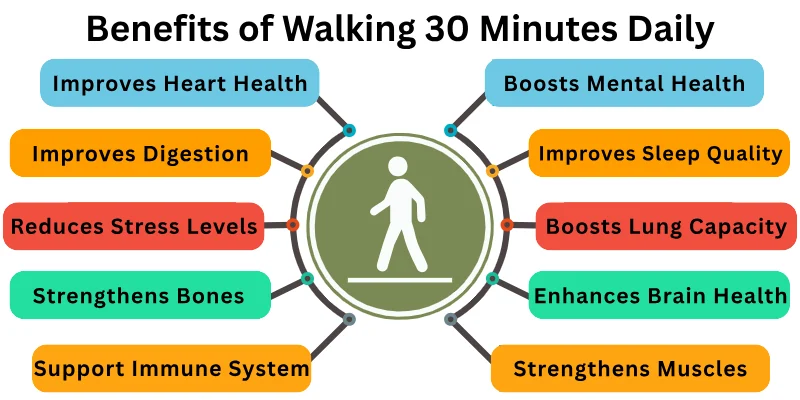
- Improves Heart Health
- Helps in Weight Management
- Boosts Mental Health
- Increases Energy Levels
- Strengthens Muscles and Joints
- Improves Digestion
- Supports Immune System
- Improves Sleep Quality
- Enhances Brain Health
- Reduces Stress Levels
- Improves Blood Sugar Control
- Boosts Lung Capacity
- Strengthens Bones
- Supports Mental Clarity and Creativity
- Encourages a Healthy Lifestyle
Let us cover all in detail below.
1. Improves Heart Health
Walking strengthens the heart and improves blood circulation. It reduces the risk of high blood pressure, cholesterol problems, and heart disease. Brisk walking raises your heart rate and keeps your cardiovascular system healthy.
Other Details:
- Walk at a brisk pace for 30 minutes
- Include intervals of faster walking for intensity
- Walk outdoors in green spaces for extra benefits
2. Helps in Weight Management
Walking burns calories and helps maintain a healthy weight. It is an easy way to control body fat without intense workouts. Pair walking with a balanced diet for effective weight management.
Other Details:
- Track your steps for motivation
- Walk uphill or use stairs to burn more calories
- Aim for 7,000–10,000 steps daily
3. Boosts Mental Health
Walking releases endorphins that improve mood and reduce anxiety and depression. It is also a great way to clear your mind and focus. Outdoor walks in nature further enhance mental well-being.
Other Details:
- Practice mindful walking to reduce stress
- Walk with friends or family for social benefits
- Combine with deep breathing exercises
4. Increases Energy Levels
Walking improves oxygen flow to the muscles and brain. It helps reduce fatigue and increases stamina. Many people feel more alert and active after regular walks.
Other Details:
- Take morning walks to energize your day
- Maintain good posture for better oxygen intake
- Include short walks during breaks at work
5. Strengthens Muscles and Joints
Walking tones your legs, glutes, and core muscles. It improves joint flexibility and reduces stiffness over time. Regular walking supports functional fitness.
Other Details:
- Use proper walking shoes to prevent injuries
- Walk on varied surfaces like grass or trails
- Include gentle stretches before and after walking
6. Improves Digestion
Walking after meals stimulates the digestive system. It reduces bloating and promotes healthy nutrient absorption. A simple walk can prevent digestive discomfort.
Other Details:
- Walk 10–15 minutes after meals
- Maintain a steady pace
- Stay hydrated during and after walking
7. Supports Immune System
Regular walking boosts immune function and helps fight infections. Light to moderate activity improves circulation and white blood cell activity.
Other Details:
- Walk daily, even in cooler or sunny weather
- Combine walking with a vitamin-rich diet
- Avoid overexertion to prevent fatigue
8. Improves Sleep Quality
Walking regulates your sleep cycle and helps you fall asleep faster. Exposure to daylight also supports melatonin production for better rest.
Other Details:
- Walk in the morning or early evening
- Keep a consistent walking schedule
- Avoid strenuous walks too close to bedtime
9. Enhances Brain Health
Walking increases blood flow to the brain, improving memory, focus, and cognitive function. It may also reduce the risk of dementia and Alzheimer’s disease.
Other Details:
- Walk in stimulating environments for mental engagement
- Listen to audiobooks or podcasts
- Include uphill walking for extra challenge
10. Reduces Stress Levels
Walking lowers cortisol levels and relaxes tense muscles. It is a natural and effective way to manage stress.
Other Details:
- Take slow, mindful walks focusing on your breath
- Walk in nature for maximum relaxation
- Combine with light stretches or meditation
11. Improves Blood Sugar Control
Walking after meals helps manage blood sugar spikes. It supports diabetes management and prevents insulin resistance.
Other Details:
- Walk 10–15 minutes after eating
- Maintain a brisk pace
- Pair with a healthy diet
12. Boosts Lung Capacity
Walking strengthens the lungs and improves oxygen intake. This supports overall endurance and respiratory health.
Other Details:
- Walk outdoors in fresh air
- Focus on deep breathing
- Walk at brisk pace for best results
13. Strengthens Bones
Walking is a weight-bearing exercise that supports bone density. It reduces the risk of osteoporosis and fractures.
Other Details:
- Include inclines or stairs for resistance
- Combine with calcium-rich foods and vitamin D
- Walk regularly for consistent bone health
14. Supports Mental Clarity and Creativity
Walking stimulates brain activity, improving creativity and problem-solving. Many people report better focus after walks.
Other Details:
- Take quiet, distraction-free walks
- Observe surroundings for mindful practice
- Use walking breaks at work to refresh your mind
15. Encourages a Healthy Lifestyle
Daily walking promotes overall healthy habits. It encourages balanced diet, hydration, and consistent sleep. Walking is a simple step toward a healthier, more active lifestyle.
Other Details:
- Set daily step goals
- Walk with family or friends for motivation
- Track progress using apps or journals
How to Make Walking a Daily Habit
Walking regularly requires planning and consistency. You can set reminders, pair walks with other activities, and track progress to build a habit.
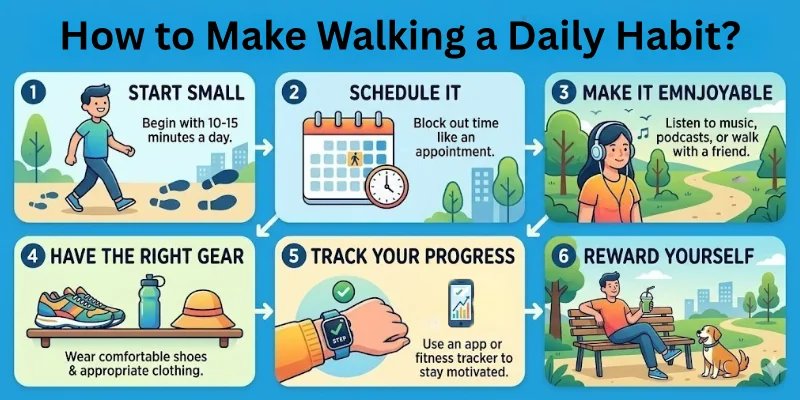
Tips to Build a Daily Walking Habit:
- Walk at the same time every day to create routine
- Choose routes you enjoy, like parks, trails, or streets with scenery
- Start small and gradually increase duration or pace
- Pair walking with tasks, like walking to work, school, or while calling someone
- Use a fitness tracker or smartphone app to monitor steps and progress
- Set weekly or monthly goals to stay motivated
- Reward yourself after achieving milestones
- Walk with friends, family, or pets for accountability and enjoyment
- Listen to music, podcasts, or audiobooks to make walks more fun
- Plan indoor walking options for rainy or cold days
Tips for Walking Safely and Effectively
Safety and proper technique enhance walking benefits. Walking with proper shoes, maintaining posture, and staying hydrated are key.
Safety & Effectiveness Tips:
- Wear supportive shoes with good grip to prevent injuries
- Keep your back straight, shoulders relaxed, and engage your core
- Hydrate before, during, and after walking
- Avoid walking on slippery, uneven, or unsafe surfaces
- Warm up with light stretches before starting
- Cool down with stretching to prevent soreness
- Be visible during low light: wear reflective clothing or carry a light
- Walk against traffic on streets for safety
- Maintain a brisk but comfortable pace for cardiovascular benefits
- Listen to your body and rest if you feel pain or discomfort
Final Note
In this guide, we have covered the benefits of walking 30 minutes daily, how to make walking a consistent habit, and tips for walking safely and effectively. Walking is simple, free, and highly effective for improving your body, mind, and overall well-being. My personal advice is to start small, stay consistent, and enjoy each walk.
Make walking a daily routine, combine it with healthy eating, and experience long-term health and energy improvements. Keep moving, stay active, and enjoy a healthier life!
FAQs: Health Benefits of Walking
Here are some of the most commonly asked questions related to the benefits of walking daily:
Most experts recommend walking 7,000–10,000 steps daily for general health. This helps improve heart health, burn calories, and maintain stamina. Beginners can start lower and gradually increase their steps. Consistency is more important than hitting an exact number every day.
Yes, walking 30 minutes daily can support weight loss. It burns calories, improves metabolism, and helps maintain a healthy body weight. Combining walking with a balanced diet increases results. Brisk walking or including hills can burn more calories.
Absolutely, walking strengthens the heart and improves blood circulation. It reduces the risk of heart disease, high blood pressure, and cholesterol problems. Walking regularly keeps the cardiovascular system healthy. Brisk or interval walking gives even greater heart benefits.
Yes, walking releases endorphins that naturally reduce stress and boost mood. Walking outdoors in nature further helps mental relaxation. Even short daily walks can make you feel calmer and more focused. Combining walking with mindful breathing increases stress-relief effects.
Walking after meals helps control blood sugar levels and supports diabetes management. Regular walking improves insulin sensitivity and prevents spikes. A simple 10–15 minute walk after eating is highly effective. Consistency is key for long-term blood sugar control.
Walking increases blood flow to the brain, enhancing memory, focus, and cognitive function. It may also reduce the risk of dementia over time. Outdoor walks and mindfulness walking boost mental clarity even more. Walking can also improve creativity and problem-solving skills.
Yes, walking is a weight-bearing exercise that strengthens bones and improves muscle tone. It reduces the risk of osteoporosis and supports joint health. Walking tones legs, glutes, and core muscles naturally. Walking regularly also improves balance and stability.
The best time to walk depends on your schedule, but morning and early evening walks are highly effective. Morning walks energize the body and improve metabolism, while evening walks help relax and reduce stress. Consistency is more important than the exact time.





- Be Respectful
- Stay Relevant
- Stay Positive
- True Feedback
- Encourage Discussion
- Avoid Spamming
- No Fake News
- Don't Copy-Paste
- No Personal Attacks
- Be Respectful
- Stay Relevant
- Stay Positive
- True Feedback
- Encourage Discussion
- Avoid Spamming
- No Fake News
- Don't Copy-Paste
- No Personal Attacks
