Cardio vs Strength Training: Which One Is Better for Your Body?
Published: 20 Mar 2026
Many beginners wonder whether they should focus on cardio or strength training. Both forms of exercise are important, but they serve different purposes and deliver different benefits.
In this guide, we will explain cardio vs strength training in great detail. We will compare them, show how to combine them, and guide you step by step using apps, equipment, and trackers. By the end, you’ll know which is better for your fitness goals and how to plan a simple routine at home or in the gym.
What is Cardio?
Cardio is any exercise that raises your heart rate and helps improve your stamina. It focuses on your heart and lungs rather than muscles.
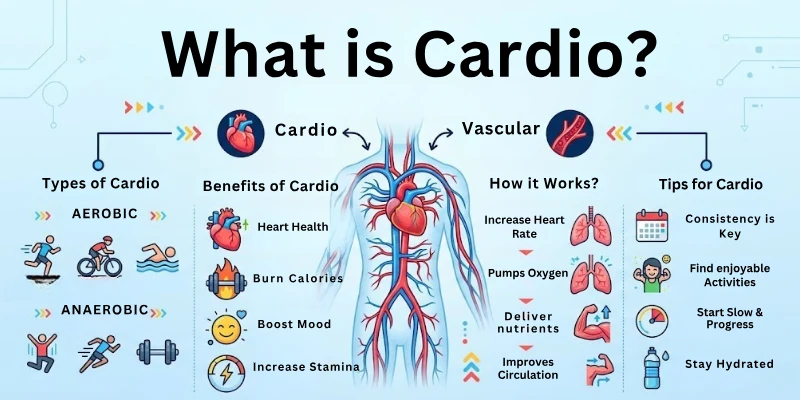
Examples of Cardio:
- Running or jogging
- Cycling (stationary or outdoors)
- Swimming
- Jump rope or skipping
- Dancing or Zumba
Benefits of Cardio:
- Burns calories quickly, helping with weight loss
- Strengthens the heart and lungs, improving overall health
- Boosts energy and stamina for daily life
- Reduces stress and improves mood through endorphin release
Tip: Cardio can be done with minimal equipment, making it easy to start at home or outdoors. Fitness apps like Nike Training Club or FitOn offer guided cardio sessions for beginners.
What is Strength Training?
Strength training, also called resistance training, focuses on building and toning muscles. It is essential for long-term health and metabolism.
Examples of Strength Training:
- Lifting dumbbells, kettlebells, or using machines
- Bodyweight exercises like push-ups, squats, and lunges
- Resistance bands exercises
Benefits of Strength Training:
- Builds and tones muscles, shaping your body
- Increases metabolism, helping you burn calories even at rest
- Strengthens bones and joints, preventing injuries
- Improves posture, balance, and functional strength
Tip: Beginners can start with light weights or resistance bands at home. Apps like Fitbod or Centr can provide personalized strength workout plans.
Cardio vs. Strength Training: Detailed Comparison
Understanding the key differences between cardio and strength training helps you decide which to prioritize, or how to combine both.
| Feature | Cardio | Strength Training |
| Main Goal | Improve heart and lung health, burn calories | Build muscle, increase strength, tone body |
| Exercise Type | Continuous rhythmic motion | Short, controlled movements against resistance |
| Equipment Needed | Minimal: treadmill, bike, jump rope | Dumbbells, resistance bands, machines, bodyweight |
| Calories Burned | High during exercise | Moderate during exercise, higher after due to muscle gain |
| Body Effects | Improves stamina, endurance, heart health | Builds muscles, strengthens bones, improves metabolism |
| Best For | Weight loss, energy, endurance | Muscle gain, body shaping, long-term health |
Summary: Cardio is better for fat loss and endurance, while strength training is better for muscle building and metabolism. Combining both gives optimal fitness results.
How to Combine Cardio and Strength Training
You don’t have to pick just one. Combining cardio and strength training gives the best results for overall health, weight management, and muscle tone.
Option 1: Alternate Days
- Monday: Cardio (run, bike, HIIT)
- Tuesday: Strength training (weights, bodyweight, or bands)
- Wednesday: Cardio
- Thursday: Strength training
- Friday: Cardio
- Saturday: Strength training
- Sunday: Rest or light walking
Option 2: Same Session (Circuit Training)
- 5 mins warm-up
- 10 mins cardio
- 15 mins strength exercises
- Repeat 2–3 rounds
- 5 mins cool-down
Tip: Apps like FitOn, Nike Training Club, and Centr help you plan and track combined workouts.
Fitness Apps for Cardio vs. Strength Training
Fitness apps make it easy to start and track workouts at home, especially for beginners.
Recommended Apps:
- Nike Training Club: Offers guided cardio and strength workouts
- FitOn: Free workouts with step-by-step instructions
- Fitbod: Personalizes strength programs based on available equipment
- Centr by Chris Hemsworth: Combines cardio, strength, and nutrition guidance
Tip: Using apps ensures you maintain correct form, track progress, and stay motivated.
Home Equipment for Cardio and Strength Training
You don’t need a gym to start. Here’s a simple guide to home equipment.
Cardio Equipment:
- Treadmill or stationary bike
- Jump rope
- Outdoor running or cycling
Strength Equipment:
- Dumbbells or kettlebells
- Resistance bands
- Yoga mat for bodyweight exercises
- Adjustable weight machines (optional)
Tip: Even simple bodyweight exercises or resistance bands can give great results for beginners.
Tracking Progress: Wearables and Fitness Trackers
Wearable devices help you measure and improve workouts, whether cardio or strength.
- Cardio Tracking: Monitors heart rate, distance, steps, and calories burned
- Strength Tracking: Monitors reps, sets, weight, and sometimes heart rate
- Popular Brands: Apple Watch, Garmin, Fitbit, Whoop
Tip: Track your progress over weeks to adjust intensity, prevent plateau, and stay motivated.
Subscription Services and Online Platforms
Subscription services give structure, expert guidance, and variety for both cardio and strength training.
- Peloton: Focuses on cardio like cycling, running, and HIIT
- Apple Fitness+: Offers both cardio and strength routines with guided videos
- Fiit: Studio-quality cardio and strength workouts for home
- YouTube / FitOn / Nike Training Club: Free guided workouts for beginners
Tip: Many services offer free trials, making it easy to try before committing.
Smart Equipment for Home Workouts
Smart equipment can track your performance and guide workouts at home.

- Smart Treadmills: Best for cardio; track distance, calories, heart rate, and virtual runs
- Smart Weight Machines: Best for strength; guide reps, track weight lifted, and improve form
Tip: Choose equipment based on your primary goal…. cardio for endurance, strength machines for muscle building.
Final Advice: Cardio vs. Strength Training
Both cardio and strength training are necessary for overall health, fat loss, and muscle tone.
- Beginners should aim for 20–30 minutes of cardio 3 times a week and 2–3 strength sessions
- Combining both provides fat burning, muscle growth, and heart health benefits
- Use fitness apps, trackers, and simple home equipment to stay consistent
- Enjoy the process, consistency and gradual improvement are key
Remember: There is no single “better” workout. The best choice depends on your goal, preference, and schedule. A balanced combination gives the most effective results.
FAQs: Cardio vs Strength Training
Here are some of the most commonly asked questions related to the difference between cardio and strength training:
Apps like Nike Training Club and FitOn show how to do cardio and strength exercises. They give step-by-step videos for beginners. The apps track your progress. They help you stay consistent and motivated.
Programs like Centr and Apple Fitness+ combine cardio and strength. Cardio helps you burn fat, strength helps you build muscle. You can follow a plan every week. They make it easy to see results.
You can buy online from Amazon, Decathlon, or Walmart. Cardio items include treadmills or jump ropes. Strength items include dumbbells and resistance bands. Start small and add more later.
Websites like FitOn, Peloton, Nike Training Club have online plans. They show both cardio and strength exercises. You can follow them at home. They also track your progress.
Trackers like Fitbit or Apple Watch measure heart rate for cardio. For strength, they track reps, sets, and weight. They show your progress over time. This helps you improve every day.
Services like Peloton focus on cardio like running and cycling. Others like Apple Fitness+ give both cardio and strength workouts. They show videos and guides. You can try them with free trials.
Smart treadmills track distance, speed, and heart rate. Smart weight machines track reps and weight lifted. Both are good at home. Pick one based on your main goal.
Brands like Whoop, Fitbit, and Garmin track strength well. They count reps, sets, and calories burned. Cardio is tracked too, but less detailed. Strength exercises are easier to follow with these.
Yes, apps like Nike Training Club or FitOn combine both. You can follow mixed workouts in one session. They guide beginners step by step. This saves time and gives full-body results.
Start with 3 days of cardio and 2 days of strength each week. Do 20–30 minutes per session. Rest one or two days. Gradually increase time as you improve.
Yes, strength training builds muscle, which burns calories even at rest. It helps you lose fat slowly and safely. Cardio can speed up weight loss. Both together give better results.
Yes, you can use dumbbells, bands, or bodyweight exercises at home. Cardio can be done with running, jumping rope, or dancing. Home workouts are convenient and cheap. Consistency is more important than equipment.
Yes, trackers count steps, calories, and heart rate. They show progress over time. You get reminders to exercise. This keeps beginners on track every day.
It depends on your goal. Cardio burns fat and improves stamina. Strength builds muscle and metabolism. A combination is best for overall fitness.
Yes, you can do short cardio first, then strength. Or use circuit training mixing both. Keep sessions 20–40 minutes. This saves time and gives full-body benefits.



- Be Respectful
- Stay Relevant
- Stay Positive
- True Feedback
- Encourage Discussion
- Avoid Spamming
- No Fake News
- Don't Copy-Paste
- No Personal Attacks
- Be Respectful
- Stay Relevant
- Stay Positive
- True Feedback
- Encourage Discussion
- Avoid Spamming
- No Fake News
- Don't Copy-Paste
- No Personal Attacks
