Early Signs of Diabetes: Spot Symptoms Early
Published: 31 Mar 2026
Diabetes is a serious health condition that affects millions of people around the world. It occurs when your body cannot properly produce or use insulin, which regulates blood sugar.
Many people do not notice early signs, and this can lead to severe complications such as heart disease, kidney problems, nerve damage, and vision loss. Recognizing diabetes early can help you manage it effectively and prevent long-term health problems.
In this guide, you will learn the early signs of diabetes everyone should know and practical steps to detect them early for better health.
Early Signs of Diabetes Everyone Should Know
People often ignore minor symptoms like fatigue or increased thirst, but these could be warning signs. By knowing what to look for, you can protect your health and prevent serious conditions.
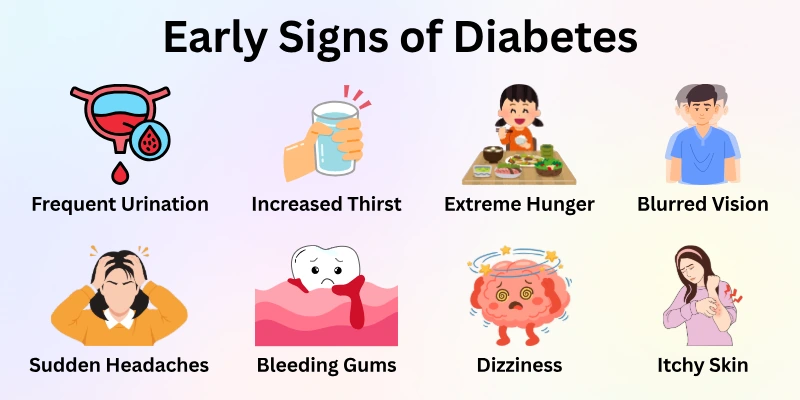
Here is a comprehensive list of common early symptoms that everyone should watch for:
- Frequent Urination
- Increased Thirst
- Extreme Hunger
- Unexplained Weight Loss
- Fatigue and Weakness
- Blurred Vision
- Slow-healing Wounds
- Tingling or Numbness in Hands and Feet
- Frequent Infections
- Dark Patches On the Skin (acanthosis nigricans)
- Irritability and Mood Changes
- Dry Mouth and Itchy Skin
- Sudden Headaches
- Nausea or Vomiting
- Recurring Yeast Infections
- Frequent Gum Infections
- Swollen or Bleeding Gums
- Dizziness or Fainting
- Dark Urine
- Increased Skin Infections
Let us cover all these early signs in detail.
1. Frequent Urination
Frequent urination is one of the first signs of diabetes. When blood sugar levels rise, your kidneys work harder to remove excess sugar from your blood.
This leads to more frequent trips to the bathroom, often disturbing sleep at night. Many people may ignore this symptom as normal, but it can be an early warning. Detecting this symptom early allows you to take steps to manage your blood sugar.
How it happens:
- Excess glucose draws water out of the body
- Kidneys work overtime to remove sugar
- Causes dehydration and increased thirst
- Affects daily routines and sleep
2. Increased Thirst
People with diabetes often feel very thirsty even after drinking water. This is directly related to frequent urination, which causes dehydration. Excessive thirst is a signal that your blood sugar levels may be too high.
Ignoring this symptom can make your body weaker over time. Early recognition and proper hydration help manage diabetes effectively.
How it happens:
- Fluid loss triggers constant thirst
- Body tries to replace lost water
- Persistent thirst despite drinking water indicates high sugar
- Early action reduces dehydration
3. Extreme Hunger
Even after eating meals, people with diabetes can feel unusually hungry. This happens because glucose cannot enter your cells to provide energy.
As a result, your body signals hunger frequently. Overeating without energy gain can lead to weight changes and fatigue. Recognizing this early helps you manage your diet and monitor blood sugar.
How it happens:
- Insulin is insufficient or ineffective
- Cells do not get proper energy from glucose
- Brain signals frequent hunger
- Can lead to overeating and tiredness
4. Unexplained Weight Loss
Sudden weight loss without changes in diet or physical activity can indicate diabetes. When cells cannot use glucose, the body starts burning fat and muscle for energy. This results in rapid weight loss and weakness. People often ignore this symptom, thinking it is healthy, but it can be dangerous. Early medical advice can prevent further health complications.
How it happens:
- Insufficient insulin prevents glucose absorption
- Body uses stored fat and muscle for energy
- Rapid, unexplained weight loss occurs
- Can affect overall strength and immunity
5. Fatigue and Weakness
Feeling tired all the time is common in early diabetes. The body’s cells cannot use glucose effectively, leaving you with low energy.
Fatigue affects focus, productivity, and daily tasks. Ignoring this symptom can worsen other complications. Early detection allows changes in diet, exercise, and lifestyle to boost energy.
How it happens:
- Cells lack proper energy
- Body feels weak and drained
- Fatigue impacts daily activities
- Blood sugar management restores energy
6. Blurred Vision
High blood sugar affects the lenses of the eyes, causing fluid changes. This can make vision blurry, sometimes temporarily.
Ignoring vision problems can lead to long-term eye damage. Early recognition allows you to see an eye specialist and prevent complications. Healthy blood sugar levels protect vision.
How it happens:
- Sugar affects eye lens shape
- Fluid changes cause vision problems
- Persistent blurred vision is a warning sign
- Early care prevents eye damage
7. Slow-Healing Wounds
Cuts, bruises, and infections may take longer to heal with diabetes. High glucose slows circulation and weakens immune responses.
Minor injuries can worsen or develop infections. Recognizing this symptom allows early care to prevent severe infections. Proper blood sugar control improves healing.
How it happens:
- Poor circulation reduces oxygen to wounds
- Immune system works slower
- Minor injuries take longer to heal
- Early treatment prevents infection
8. Tingling or Numbness in Hands and Feet
People with diabetes may feel tingling, burning, or numbness in extremities. This happens due to nerve damage called diabetic neuropathy.
Early recognition can prevent permanent damage and improve comfort. Ignoring this symptom can lead to serious complications.
How it happens:
- High sugar damages nerves over time
- Reduced sensation increases risk of injury
- Tingling or numbness appears
- Early medical care helps prevent damage
9. Frequent Infections
High blood sugar weakens the immune system, making infections more common. Urinary tract infections, skin infections, and yeast infections are typical.
Recognizing frequent infections as a symptom allows early treatment. Proper sugar management strengthens immunity.
How it happens:
- Sugar feeds bacteria and fungi
- Immune response is slower
- Recurrent infections appear
- Early detection helps prevent serious issues
10. Dark Patches on Skin (Acanthosis Nigricans)
Dark, velvety patches on the neck, armpits, or skin folds indicate insulin resistance. This is an early warning sign of diabetes. Detecting this early allows blood sugar monitoring and preventive care. Skin changes often appear before other symptoms.
How it happens:
- High insulin affects skin cell growth
- Dark patches appear in folds
- Indicates early diabetes risk
- Monitoring sugar prevents progression
11. Irritability and Mood Changes
Blood sugar fluctuations affect brain chemistry, causing irritability or mood swings. People with early diabetes may feel anxious, restless, or unusually sad. Recognizing this symptom helps maintain emotional health. Lifestyle changes and monitoring stabilize mood.
How it happens:
- Sugar imbalances impact neurotransmitters
- Mood swings become frequent
- Emotional control decreases
- Early lifestyle changes stabilize emotions
12. Dry Mouth and Itchy Skin
Dehydration and high blood sugar lead to dry mouth and itchy skin. This can cause discomfort and increase the risk of infection. Early recognition allows hydration and sugar control. Taking care of skin and mouth prevents additional problems.

How it happens:
- Water loss through urine causes dryness
- Skin and mouth feel itchy or cracked
- Discomfort increases risk of infection
- Early care improves comfort and health
13. Sudden Headaches
Blood sugar spikes or drops can cause headaches. These headaches may appear suddenly and frequently. Monitoring blood sugar helps identify causes. Early management prevents recurring headaches.
How it happens:
- Brain reacts to sugar changes
- Blood vessels expand or contract
- Headaches appear with fluctuating sugar
- Sugar management reduces pain
14. Nausea or Vomiting
High blood sugar can upset the digestive system, causing nausea or vomiting. This symptom often appears with other signs like fatigue or thirst. Early recognition helps prevent worsening complications. Medical consultation is essential if symptoms persist.
How it happens:
- Insufficient insulin affects digestion
- Stomach discomfort occurs
- Persistent nausea may indicate diabetes
- Early action improves health
15. Recurring Yeast Infections
Sugar-rich environments in the body promote fungal growth. People with diabetes often face recurring yeast infections. Early recognition allows timely treatment and sugar management. Ignoring infections can lead to complications.
How it happens:
- Sugar feeds fungi
- Immune system responds slowly
- Recurrent infections appear
- Early care prevents serious issues
How to Reduce Risk of Diabetes Early
Taking preventive steps can reduce the risk of developing diabetes. Healthy lifestyle habits support normal blood sugar levels. Regular exercise, balanced meals, and monitoring are key. Managing stress and sleep also play an important role.
- Maintain a healthy weight
- Eat balanced meals
- Exercise regularly
- Avoid sugary drinks and snacks
- Monitor blood sugar regularly
- Manage stress and sleep
When to See a Doctor
Recognizing early signs is only the first step. Medical consultation ensures proper diagnosis and care. If symptoms persist or worsen, see a doctor immediately. Early management prevents severe complications.
- Persistent thirst or frequent urination
- Unexplained weight loss or fatigue
- Recurrent infections or slow-healing wounds
- Tingling in hands and feet
- Blurred vision or dark skin patches
Final Note
In this guide, we have covered the early signs of diabetes everyone should know including frequent urination, increased thirst, fatigue, blurred vision, and slow-healing wounds. Recognizing these symptoms early allows timely medical consultation and lifestyle changes. Early action prevents serious complications such as nerve damage, heart disease, kidney issues, and vision problems.
Take care of your health and watch for these warning signs to manage diabetes effectively. Regular checkups, healthy habits, and monitoring your blood sugar can protect your long-term health.
FAQs: Early Signs of Diabetes Everyone Should Know
Here are some of the most commonly asked questions related to the major signs of diabetes:
The first signs are frequent urination, increased thirst, and extreme hunger. People may also feel very tired or lose weight without reason. Noticing these early helps you get treatment quickly.
Yes, sudden weight loss can be a sign of diabetes. The body burns fat and muscle for energy when it cannot use sugar properly. Early care can prevent more serious health problems.
High blood sugar can blur your vision. It changes the fluid in your eyes and makes the lens swell. Eye checkups help prevent long-term damage.
Diabetes stops your cells from getting energy from sugar. This makes your body weak and tired. Managing blood sugar helps restore energy.
Yes, tingling or numbness can mean nerve damage. High sugar can hurt your nerves over time. Early treatment can prevent permanent damage.
Yes, high blood sugar makes your immune system weaker. You may get skin, urinary, or yeast infections more often. Treating diabetes early helps prevent these problems.
See a doctor for a blood sugar test. Early detection helps you start treatment quickly. This reduces the risk of serious complications.
Yes, changes in blood sugar can make you moody or irritable. You may feel anxious or tired easily. Managing sugar levels helps keep your mood stable.
Persistent thirst can be a sign of diabetes. It happens because your body loses water through frequent urination. Drinking water helps, but you should check your blood sugar.
Yes, finding diabetes early can prevent serious health problems. It lowers the risk of heart, kidney, and nerve damage. Early care keeps you healthier for longer.




- Be Respectful
- Stay Relevant
- Stay Positive
- True Feedback
- Encourage Discussion
- Avoid Spamming
- No Fake News
- Don't Copy-Paste
- No Personal Attacks
- Be Respectful
- Stay Relevant
- Stay Positive
- True Feedback
- Encourage Discussion
- Avoid Spamming
- No Fake News
- Don't Copy-Paste
- No Personal Attacks
