How to Balance Work and Health: Easy Strategies
Published: 28 Dec 2025
Balancing work and health is about giving your career and your well-being equal importance. It means managing your time, energy, and habits so that you can stay productive at work while keeping your body and mind healthy.
Many people focus only on work and ignore their health, which leads to stress, fatigue, and illness. On the other hand, neglecting work can harm your career growth.
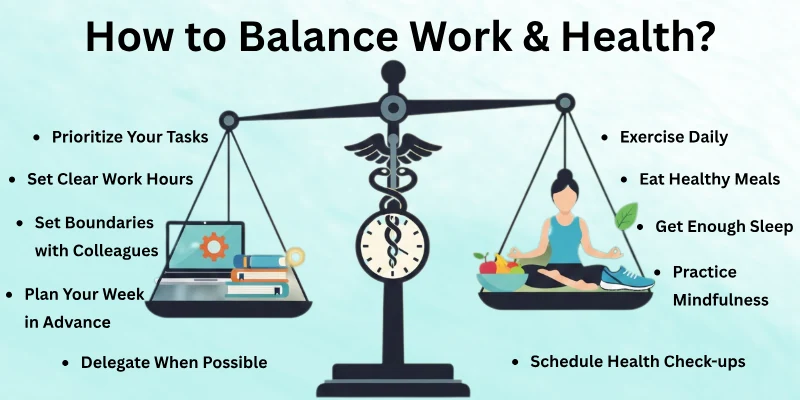
In this guide, you will learn how to balance work and health effectively using practical and easy steps that anyone can follow.
Tips for Work Health Balance
Here is the list of 15 practical tips to help you maintain a healthy balance between work and health:
- Prioritize Your Tasks
- Set Clear Work Hours
- Take Short Breaks Regularly
- Exercise Daily
- Eat Healthy Meals
- Drink Plenty of Water
- Get Enough Sleep
- Practice Mindfulness or Meditation
- Avoid Multitasking
- Limit Screen Time After Work
- Delegate When Possible
- Set Boundaries with Colleagues
- Plan Your Week in Advance
- Take Time for Hobbies
- Schedule Health Checkups
Let me guide you about each in detail.
1. Prioritize Your Tasks
Start your day by listing the tasks that need immediate attention. Focus on completing high-priority work first and leave less important tasks for later. This reduces stress and prevents you from feeling overwhelmed by your workload.
When your tasks are organized, you will have more mental energy for healthy habits like exercising or cooking nutritious meals. Prioritizing also improves your productivity because you are working on the right things at the right time.
2. Set Clear Work Hours
Decide on your work start and end times and stick to them consistently. Avoid checking emails or doing work outside these hours. Clear work hours help your mind switch off after work and create time for self-care.
You will feel less stressed when your work has a defined boundary. Setting work hours also teaches others to respect your time, making it easier to balance work and health.
3. Take Short Breaks Regularly
During work, take short breaks every hour or two. Stand up, stretch, or walk around your room for a few minutes. These breaks reduce physical strain and mental fatigue caused by long sitting periods. Regular breaks improve focus and productivity, so you complete work faster and still have energy for healthy activities. Your body benefits from small movements, and your mind feels refreshed.
4. Exercise Daily
Include at least 20 to 30 minutes of exercise in your routine. You can walk, jog, do yoga, or simple bodyweight exercises. Daily exercise increases your energy, improves mood, and strengthens your immune system.
It also helps manage stress caused by work pressure. When your body is active, it becomes easier to maintain a balance between professional tasks and personal health.
5. Eat Healthy Meals
Plan meals that include vegetables, proteins, and healthy fats. Avoid skipping meals, especially breakfast, because it provides the energy to start your day. Eating healthy keeps your mind sharp and your body strong, which helps you perform better at work.
Avoid fast food and high-sugar snacks as they cause fatigue and mood swings. Consistent healthy eating is a key habit for maintaining a balance between work and health.
6. Drink Plenty of Water
Keep a water bottle on your desk and drink regularly throughout the day. Water helps digestion, boosts metabolism, and keeps you alert. Drinking enough water prevents headaches and fatigue caused by dehydration.
When your body is hydrated, you can focus better and work more efficiently. Hydration also supports your overall health, making it easier to balance work and wellness.
7. Get Enough Sleep
Aim for 7 to 8 hours of sleep each night. Sleep restores your energy, improves memory, and strengthens your immune system. Lack of sleep reduces productivity and increases stress, making it harder to manage work and health.
Create a bedtime routine that avoids screens and stressful activities. Good sleep ensures that you wake up refreshed and ready to perform your best in work and personal life.
8. Practice Mindfulness or Meditation
Spend a few minutes daily in meditation or deep breathing exercises. Mindfulness reduces stress and improves emotional stability. It helps you focus on work without feeling overwhelmed.
Practicing meditation also enhances self-awareness, which encourages healthier lifestyle choices. Even five minutes a day can improve your overall well-being and balance work and health effectively.
9. Avoid Multitasking
Focus on one task at a time instead of trying to do many things at once. Multitasking decreases work quality and increases mental stress. When you concentrate on a single task, you finish it faster and better.
This allows more time for exercise, relaxation, and other health activities. Avoiding multitasking makes both work and personal life more manageable.
10. Limit Screen Time After Work
Avoid using phones, laptops, or tablets after work hours. Excess screen time can affect your sleep and increase stress. Spend your evenings reading, cooking, walking, or engaging in hobbies instead.
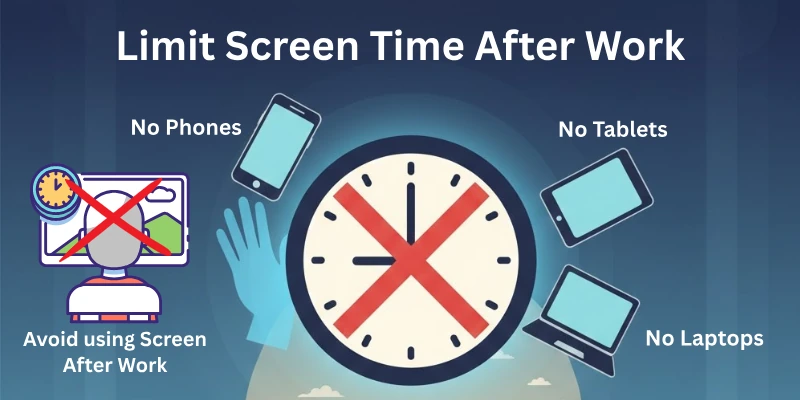
Limiting screen exposure helps your eyes, mind, and body recover from the day. This small habit improves both your health and your ability to focus the next day.
11. Delegate When Possible
Do not try to do everything yourself. Assign tasks to colleagues or team members when possible. Delegating reduces stress and frees up time for healthy habits. It also builds trust and improves teamwork. Using your time wisely allows you to balance work and health without compromising either.
12. Set Boundaries with Colleagues
Politely communicate your availability and limits to coworkers. Avoid taking extra work that can interfere with your health routines. Boundaries help you manage time better and prevent burnout.
Respecting your personal time allows you to focus on both work and wellness. Healthy boundaries make work less stressful and life more balanced.
13. Plan Your Week in Advance
Use a planner or digital calendar to organize your tasks for the week. Schedule work, exercise, meal prep, and relaxation activities. Planning ahead reduces last-minute stress and ensures you have time for health priorities. You will feel in control and less pressured throughout the week. Planning also helps you maintain a consistent balance between work and health.
14. Take Time for Hobbies
Engage in activities that you enjoy outside of work. Hobbies reduce stress, boost creativity, and improve overall happiness. Spending time on things you love refreshes your mind and body. Even 30 minutes daily can make a big difference. Hobbies create a balance between professional responsibilities and personal satisfaction.
15. Schedule Health Checkups
Regular medical checkups help you monitor your physical health. Early detection of problems prevents serious issues that can affect work and personal life. Schedule appointments for blood tests, dental care, eye exams, and vaccinations.
Health checkups keep you proactive and reduce anxiety about your well-being. Staying healthy ensures you can focus on work without unnecessary interruptions.
Additional Tips for Work and Health Balance
Some extra strategies to improve balance include practicing gratitude, maintaining social connections, and creating a comfortable workspace. These small steps enhance mental and physical health while increasing work productivity. Staying consistent with healthy habits ensures long-term balance and satisfaction in both life and career.
Final Note
In this guide on how to balance work and health, we have covered practical strategies to improve both your professional life and your well-being. Remember, small consistent actions make a big difference. Prioritize health without compromising work, and set routines that support both.
By following these tips, you can reduce stress, stay productive, and enjoy a healthier lifestyle. Achieving a balance between work and health is possible for everyone with the right habits and mindset.
FAQs: Work Life Management
Here are some of the most commonly asked questions related to work and health managements:
Work life management means organizing your time and priorities so that work does not harm your health or personal life. It involves planning tasks, setting boundaries, and creating routines. When you practice good work life management, you feel less stressed and more productive. This is a key step toward achieving a proper work and health balance.
Work life balance helps you stay healthy while performing well at work. Without balance, stress and fatigue can harm your body and mind. A balanced lifestyle improves focus, energy, and happiness. Prioritizing both work and health ensures long-term success and well-being.
Improving work and life balance requires planning and consistency. You can set work hours, take regular breaks, and spend time on hobbies. Exercise and healthy meals also play a role. Small daily actions help you maintain balance and reduce stress effectively.
To balance work and personal life, start by prioritizing important tasks and delegating when possible. Create a schedule that includes work, family time, and self-care. Avoid overworking and practice mindfulness to stay relaxed. These steps support both productivity and health.
Maintaining a good work life balance means setting clear boundaries between work and personal life. Avoid checking emails after hours and take regular breaks during work. Exercise, sleep well, and enjoy hobbies. A consistent routine keeps your mind and body healthy.
Practical ways include planning your week in advance, prioritizing tasks, and delegating responsibilities. Take care of your body with daily exercise and nutritious meals. Limit screen time after work and spend time with family. These actions help achieve work and health balance naturally.
Professional balance means meeting your work responsibilities without compromising your health. Set realistic goals, avoid multitasking, and delegate tasks when needed. Take breaks, eat well, and get enough sleep. Balancing work and health improves both performance and well-being.
Employees can use solutions like flexible work hours, task management tools, and wellness programs. Taking short breaks and practicing mindfulness reduces stress. Eating healthy and exercising daily also help. These solutions create a sustainable work and health balance.
Yes, employees can use tips like setting boundaries, prioritizing tasks, and avoiding multitasking. Regular exercise, hydration, and sleep are essential. Scheduling hobbies and relaxation time keeps stress low. Following these tips improves both health and productivity.
Balancing life, work, and family requires careful planning and priorities. Allocate time for work tasks, family activities, and personal care. Avoid overworking and communicate your limits with family and colleagues. This balance ensures your health and relationships stay strong.





- Be Respectful
- Stay Relevant
- Stay Positive
- True Feedback
- Encourage Discussion
- Avoid Spamming
- No Fake News
- Don't Copy-Paste
- No Personal Attacks
- Be Respectful
- Stay Relevant
- Stay Positive
- True Feedback
- Encourage Discussion
- Avoid Spamming
- No Fake News
- Don't Copy-Paste
- No Personal Attacks
