How to Start a Daily Workout Routine: Easy Steps
Published: 19 Mar 2026
Starting a daily workout routine can feel overwhelming, especially if you are new to fitness or have a busy schedule. Many people struggle to stay consistent, know which exercises to start with, or find the motivation to continue.
In this guide, I will show you exactly how to start a daily workout routine, build it gradually, and make it a long-term habit.
Following this step-by-step plan will help you improve your energy, fitness, and overall health, even if you have a desk job or little experience with exercise. By the end, you will know how to start your daily workout routine confidently and effectively.
How to Start a Daily Workout Routine
Starting a daily workout routine requires planning, patience, and small consistent steps.
A proper routine balances strength, cardio, flexibility, and recovery, making your body stronger, healthier, and more energized. Below is a detailed roadmap to help you start today.
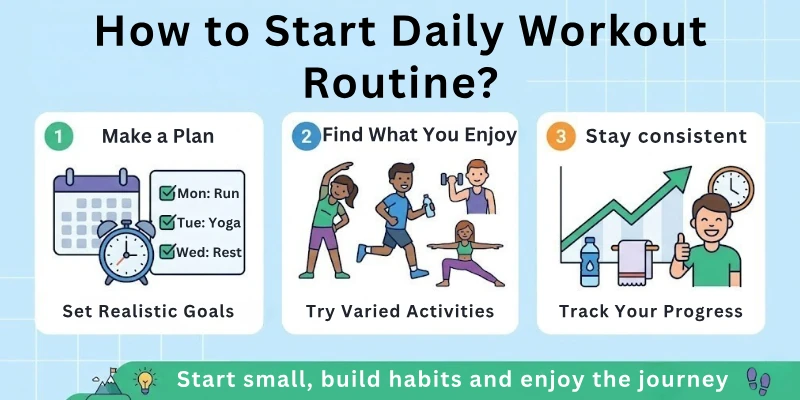
Step-by-Step List of How to Start a Daily Workout Routine:
- Set Clear and Realistic Goals
- Choose the Right Time for Workouts
- Start Small and Gradually Increase
- Include a Balanced Mix of Exercises
- Prepare Your Space and Equipment
- Warm-Up and Cool Down
- Track Your Progress
- Stay Motivated
- Rest and Recovery
- Make It a Habit
Let us cover each step in detail.
1. Set Clear and Realistic Goals
Setting goals is the foundation of a successful daily workout routine. Goals give your workouts purpose and help you track progress. Without goals, it is easy to get discouraged and stop exercising.
- Decide your goal: Weight loss, muscle gain, endurance, or overall fitness.
- Set achievable targets: For example, “Walk 20 minutes daily” or “Do 10 push-ups every morning”.
- Break long-term goals into smaller milestones: Weekly or monthly targets help you stay motivated.
- Write them down: Keep a notebook or fitness app to monitor your achievements.
Starting with clear goals makes it easier to focus and stick to your daily workout routine.
2. Choose the Right Time for Workouts
Choosing the right time helps make exercise consistent and enjoyable. The goal is to find a time you can stick to regularly.
- Morning workouts: Boost metabolism, improve energy for the day, and help create a habit.
- Evening workouts: Reduce stress, relax your mind, and help you sleep better.
- Short sessions: Even 15–30 minutes is enough to start. Consistency matters more than duration.
- Stick to a schedule: Pick a fixed time most days, and treat it as non-negotiable.
Consistent timing ensures your body adapts and working out becomes automatic.
3. Start Small and Gradually Increase
Many beginners fail because they start with intense workouts. Starting small helps your body adjust, reduces the risk of injury, and builds confidence.
- Begin with 15–20 minutes per day.
- Focus on simple exercises: walking, bodyweight squats, push-ups, or stretches.
- Increase duration and intensity gradually each week.
- Avoid comparing yourself to others; small improvements add up over time.
Starting small prevents burnout and ensures your daily workout routine is sustainable.
4. Include a Balanced Mix of Exercises
A balanced workout routine covers cardio, strength, flexibility, and balance. This approach ensures overall fitness and prevents muscle imbalances.
- Cardio: Walking, jogging, cycling, or skipping rope to boost heart health and burn calories.
- Strength training: Push-ups, squats, lunges, planks, or dumbbells to build muscles and strengthen joints.
- Flexibility: Yoga, Pilates, or stretching improves range of motion and reduces stiffness.
- Balance and core: Planks, side planks, or bird-dog exercises improve posture and stability.
Combining different exercise types keeps workouts interesting and effective.
5. Prepare Your Space and Equipment
Having a designated workout space makes it easier to stay consistent. Even a small area at home works.
- Minimal equipment: Yoga mat, resistance bands, light dumbbells.
- Comfortable clothing and shoes to allow full movement.
- Clear space: Enough room for stretching and basic exercises.
- Ventilation: A well-ventilated room makes workouts more comfortable.
Preparation reduces excuses and helps your daily workout routine feel effortless.
6. Warm-Up and Cool Down
Warm-ups and cool-downs are essential for injury prevention and better performance.
- Warm-up: 5–10 minutes of jumping jacks, arm circles, or light jogging.
- Cool-down: Slow walking, stretching tight muscles, deep breathing.
- Benefits: Increases flexibility, reduces soreness, and improves recovery.
Never skip these steps; they prepare your body and help it recover properly.
7. Track Your Progress
Tracking progress keeps you motivated and shows measurable improvements.
- Use a fitness journal or app to log exercises, reps, and duration.
- Track performance: Note how many push-ups, squats, or minutes of cardio you can do.
- Adjust intensity: Increase difficulty gradually as your strength and stamina improve.
- Celebrate milestones: Reward yourself for weekly or monthly achievements.
Tracking ensures you are improving and keeps your daily workout routine effective.
8. Stay Motivated
Motivation is key to consistency in a daily workout routine. Without it, you may skip days.
- Workout with a friend or join online communities.
- Set small rewards for completing weekly goals.
- Change exercises occasionally to avoid boredom.
- Listen to music or podcasts to make workouts enjoyable.
Motivation helps you stick with the routine even on tough days.
9. Rest and Recovery
Rest is an essential part of any daily workout routine. Your muscles grow and repair during rest, preventing injury and fatigue.
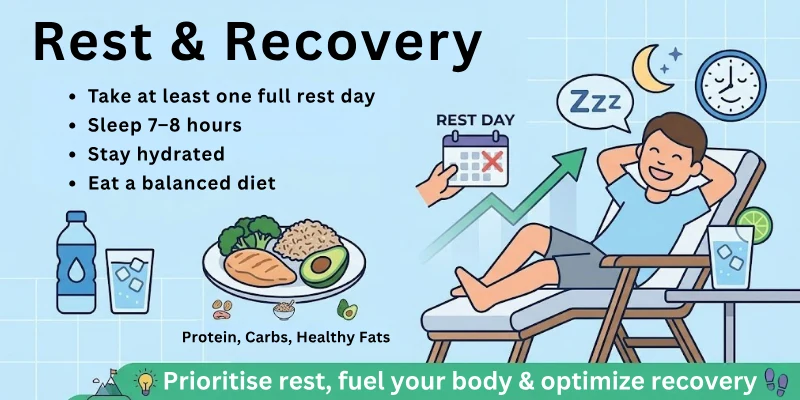
- Take at least one full rest day per week if doing intense workouts.
- Sleep 7–8 hours each night.
- Stay hydrated before, during, and after workouts.
- Eat a balanced diet with proteins, carbs, and healthy fats to support recovery.
Recovery ensures long-term success and prevents burnout.
10. Make It a Habit
Consistency is the most important part of a daily workout routine.
- Start with small, manageable steps that you can realistically do daily.
- Stick to the same time every day to create a habit.
- Pair workouts with daily routines like morning coffee or evening walks.
- Over time, exercising will feel natural and automatic.
Building a habit is the ultimate goal for long-term health and fitness.
Final Note
In this guide, we covered how to start a daily workout routine in great detail. I explained how to set goals, schedule your time, choose exercises, track progress, and make workouts a habit. My personal recommendation is to start small, stay consistent, mix exercise types, and include rest days. Following this plan daily will improve your energy, strength, and overall health.
Start today, stick with it, and enjoy your new active lifestyle! Please do not miss the faqs part!
FAQs: Best Fitness Routine
Here are some of the most commonly asked questions related to beginners fitness routine:
Apps like Nike Training Club, FitOn, and Couch to 5K are great for beginners. They offer guided workouts for strength, cardio, yoga, and running. Most of these apps are free or have free versions. They help you follow a plan and track your progress.
Devices like Fitbit Inspire 3, Garmin Venu Sq 2, and Apple Watch SE can track steps, heart rate, calories, and workouts. They help you stay consistent and see your progress. Some devices also track sleep and activity trends.
Apps like Fitbod, MadMuscles, and Strong offer plans tailored to your goals and fitness level. They create workouts based on your experience and available equipment. These apps guide you step by step and track your improvement.
Decide how many days per week you want to exercise. Pick a plan on apps like Nike Training Club or FitOn, or create your own schedule. Use reminders in the app to stay consistent. Track your progress each week to stay motivated.
Peloton App, Fiit, and Apple Fitness+ provide daily video workouts. They have exercises like HIIT, strength, yoga, and cardio. You can follow live or on-demand classes. Many offer free trials or a free plan to start.
Yes, many apps like Peloton, FitOn, and Nike Training Club offer free trials. Some are completely free, while others let you try premium features for a short time. This helps you test the app before paying.
Reddit communities like r/BeginnerFitness and r/FitFuelDaily are popular. Discord fitness servers also connect people for support and advice. These communities help you stay motivated and share progress.
Wearables track your activity, heart rate, and calories burned. They give reminders and set daily goals. This helps you stay consistent and improve over time. Seeing your progress motivates you to keep going.
Services like Fitness Food, Sunfare, and Healthy Box Meal provide healthy meals. They focus on protein-rich and balanced nutrition. This saves time and supports your fitness goals.
Many gyms now offer virtual classes via Fitness On Demand or apps like AKT InMotion. You can stream live or recorded workouts at home. Some local gyms also provide online memberships with their studio classes.






- Be Respectful
- Stay Relevant
- Stay Positive
- True Feedback
- Encourage Discussion
- Avoid Spamming
- No Fake News
- Don't Copy-Paste
- No Personal Attacks
- Be Respectful
- Stay Relevant
- Stay Positive
- True Feedback
- Encourage Discussion
- Avoid Spamming
- No Fake News
- Don't Copy-Paste
- No Personal Attacks
