How to Stay Fit Without Going to the Gym: Simple Ways
Published: 16 Mar 2026
You don’t need a gym to stay fit and healthy. With simple home exercises, outdoor activities, and mindful habits, anyone can maintain strength, flexibility, and stamina.
Many people assume that fitness requires machines or weights, but bodyweight exercises, walking, yoga, and HIIT can be just as effective.
This guide will show you practical ways to stay active, improve your health, and achieve fitness goals without stepping into a gym.
How to Stay Fit Without Going to the Gym
Here are some of the most effective ways to stay fit without gym equipment:
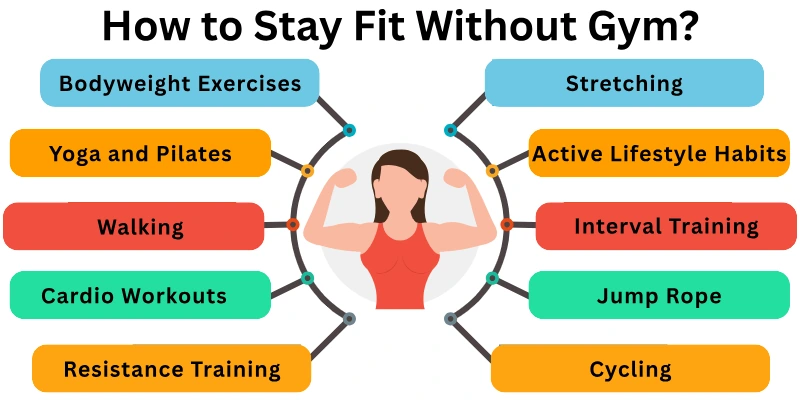
- Bodyweight Exercises
- Yoga and Pilates
- Cardio Workouts at Home
- Walking or Jogging Outdoors
- High-Intensity Interval Training (HIIT)
- Resistance Training with Household Items
- Stretching and Mobility Work
- Cycling
- Jump Rope
- Active Lifestyle Habits
Let us cover all in detail below.
1. Bodyweight Exercises
Bodyweight exercises are effective and require no equipment. They strengthen multiple muscle groups, improve endurance, and are adaptable to all fitness levels. Beginners can start slow and gradually increase intensity.
How to Do: Include exercises like push-ups, squats, lunges, planks, and burpees. Perform in circuits or sets.
Duration/Frequency: 20–40 minutes, 3–5 times a week.
Benefits:
- Builds strength and endurance
- Tones muscles
- Improves balance and flexibility
- Burns calories
Other Details: Ensure proper form to prevent injuries. Adjust reps and sets based on your ability.
2. Yoga and Pilates
Yoga and Pilates improve flexibility, core strength, and mental well-being. They are gentle but effective, perfect for beginners and advanced practitioners alike. These practices also improve posture and reduce stress.
How to Do: Follow online videos or apps for guided sessions. Poses like Downward Dog, Cobra, Bridge, and Plank are effective.
Duration/Frequency: 15–30 minutes daily or 4–5 times a week.
Benefits:
- Strengthens core
- Increases flexibility
- Reduces stress
- Enhances body awareness
Other Details: Focus on breath control and alignment. Combine with other workouts for full fitness.
3. Cardio Workouts at Home
Cardio workouts raise your heart rate, improve stamina, and burn fat. They are easy to do without equipment.
How to Do: Exercises like jumping jacks, high knees, mountain climbers, and stair climbing work well.
Duration/Frequency: 15–30 minutes, 3–5 times per week.
Benefits:
- Improves heart health
- Burns calories and fat
- Boosts energy levels
- Strengthens legs and core
Other Details: Keep movements controlled to avoid joint strain. Add intervals for higher intensity.
4. Walking or Jogging Outdoors
Walking and jogging are simple, natural ways to stay active. They improve cardiovascular health and mood. Being outdoors also reduces stress and increases vitamin D levels.
How to Do: Walk briskly or jog in a park, street, or trail. Track distance or steps for motivation.
Duration/Frequency: 30–60 minutes, 5–6 times a week.
Benefits:
- Improves heart and lung function
- Burns calories
- Boosts mental health
- Enhances stamina
Other Details: Wear comfortable shoes. Use hills or stairs for more intensity.
5. High-Intensity Interval Training (HIIT)
HIIT combines short bursts of intense exercise with rest periods. It burns a lot of calories quickly and boosts metabolism.
How to Do: Alternate 30–40 seconds of high-intensity exercise (like burpees, jumping jacks, or squat jumps) with 20–30 seconds rest. Repeat 6–10 cycles.
Duration/Frequency: 15–20 minutes, 3 times a week.
Benefits:
- Burns fat efficiently
- Increases stamina
- Improves cardiovascular fitness
- Builds muscle endurance
Other Details: Warm-up before HIIT. Start slow if you are a beginner.
6. Resistance Training with Household Items
You can use household items as resistance tools. Water bottles, backpacks, or chairs can act as weights. Resistance training strengthens muscles and joints without gym equipment.
How to Do: Use a backpack filled with books for squats, lunges, or rows. Lift water bottles for arm exercises.
Duration/Frequency: 20–30 minutes, 3–4 times a week.
Benefits:
- Builds muscle strength
- Improves bone density
- Tones body
- Enhances functional fitness
Other Details: Focus on controlled movements. Increase weight gradually.
7. Stretching and Mobility Work
Stretching keeps muscles flexible and prevents injuries. Mobility exercises maintain joint health and range of motion.
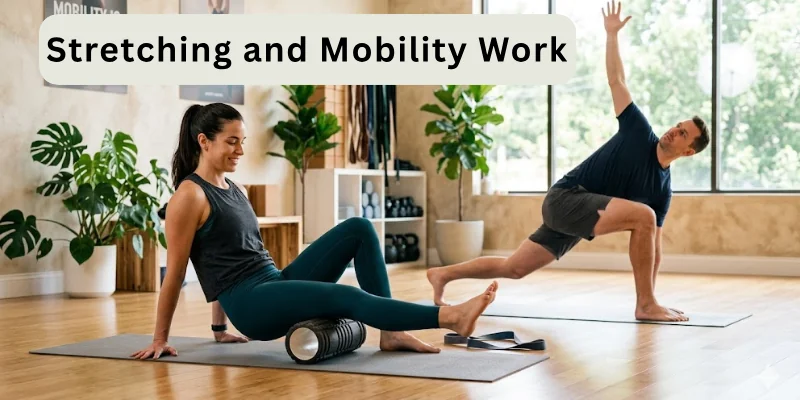
How to Do: Include stretches for hamstrings, quads, back, shoulders, and neck. Combine with yoga poses for full-body mobility.
Duration/Frequency: 10–15 minutes daily.
Benefits:
- Reduces stiffness and soreness
- Improves flexibility
- Enhances posture
- Supports recovery
Other Details: Stretch after workouts for best results. Avoid bouncing movements.
8. Cycling
Cycling is a low-impact cardio option that strengthens legs. You can ride outdoors or use a stationary bike if available.
How to Do: Cycle at a moderate pace for endurance, or do sprints for intensity.
Duration/Frequency: 20–60 minutes, 3–5 times a week.
Benefits:
- Improves cardiovascular health
- Strengthens lower body
- Burns calories
- Boosts mood
Other Details: Wear a helmet outdoors. Adjust seat for proper posture.
9. Jump Rope
Jump rope is simple, fun, and effective. It boosts coordination, endurance, and calorie burn.
How to Do: Jump with both feet together or alternate feet. Use wrist rotation, not arms.
Duration/Frequency: 5–15 minutes daily, or as a warm-up.
Benefits:
- Burns calories fast
- Strengthens legs and core
- Improves coordination
- Boosts heart health
Other Details: Use proper footwear to protect joints. Start slow if new to jumping.
10. Active Lifestyle Habits
Fitness is not just exercise; staying active throughout the day matters. Small lifestyle changes make a big difference.
How to Do: Take stairs instead of elevators, walk while talking on phone, do short stretches during breaks, or stand while working.
Benefits:
- Increases daily calorie burn
- Reduces sedentary risks
- Improves overall health
- Maintains flexibility
Other Details: Set reminders to move every 30–60 minutes. Small consistent actions matter.
Additional Tips to Stay Fit Without the Gym
Here are some of the additional tips to stay fit without going to gym:
- Stay hydrated and eat a balanced diet.
- Track your progress with a journal or app.
- Sleep 7–8 hours daily to support recovery.
- Combine strength, cardio, and flexibility exercises.
- Listen to your body and rest when needed.
Final Note
In this guide, we covered how to stay fit without going to the gym using bodyweight exercises, yoga, cardio, HIIT, and lifestyle habits. My personal advice is to pick activities you enjoy, stay consistent, and gradually increase intensity. Fitness is about building a sustainable routine, not just short-term results.
Start today, stay active, and enjoy a healthier life. Goodbye!
FAQs: How to Stay Fit Without Going to Gym
Here are some of the most commonly asked questions related to the how to stay fit without going to the gym:
Yes, you can get fit without gym equipment. Bodyweight exercises, yoga, HIIT, and outdoor activities can strengthen muscles and burn calories effectively. Consistency and proper form are the keys. You can achieve fitness goals at home or outdoors without machines.
Exercising 3–5 times a week is ideal for beginners. Even short 20–30 minute sessions can be effective if done consistently. You can mix cardio, strength, and flexibility exercises. The key is to make it a regular habit.
Yes, weight loss is possible without gym workouts. Combining bodyweight exercises, walking, cycling, and proper diet helps burn calories. HIIT and cardio exercises are especially effective for fat loss. Tracking your progress and staying consistent boosts results.
Some of the best bodyweight exercises are squats, push-ups, lunges, planks, and burpees. They target multiple muscles and improve strength and endurance. You can do circuits for a full-body workout. These exercises require no equipment and can be done anywhere.
Yoga, Pilates, and regular stretching improve flexibility without gym access. Poses like Downward Dog, Cobra, and Seated Forward Bend are effective. Practicing daily for 10–20 minutes gradually increases range of motion. Consistency is key to long-term flexibility.
Home workouts can be 15–40 minutes depending on your fitness level. Beginners can start with shorter sessions and gradually increase duration. Focus on proper form and balanced exercises. Short, regular workouts are better than occasional long sessions.
Yes, you can build muscle using bodyweight exercises. Movements like push-ups, planks, lunges, and bridges engage multiple muscles. Gradually increasing repetitions or trying advanced variations increases muscle strength. Resistance from household items can also help.
Cardio exercises like jumping jacks, high knees, mountain climbers, and skipping rope are very effective at home. You can also do brisk walking or jogging outdoors. These increase heart rate and burn calories. Combining cardio with strength exercises maximizes fitness results.
Motivation comes from routine and tracking progress. Set a fixed time, follow online workout videos, and use apps or journals. Small milestones and rewards keep you encouraged. Remember, consistency matters more than intensity.
Yes, you can stay fit indoors using bodyweight exercises, yoga, Pilates, and HIIT. Cardio can be done in limited space with jump rope or indoor jogging. Maintaining a healthy diet and active lifestyle supports fitness indoors. Regular practice ensures strength, flexibility, and endurance.






- Be Respectful
- Stay Relevant
- Stay Positive
- True Feedback
- Encourage Discussion
- Avoid Spamming
- No Fake News
- Don't Copy-Paste
- No Personal Attacks
- Be Respectful
- Stay Relevant
- Stay Positive
- True Feedback
- Encourage Discussion
- Avoid Spamming
- No Fake News
- Don't Copy-Paste
- No Personal Attacks
