Importance of Self-Care for Mental Peace: Simple Tips
Published: 30 Mar 2026
Self-care is not just a luxury; it is essential for mental peace. Taking care of your mind, body, and emotions helps you manage stress, anxiety, and everyday challenges. Many people ignore self-care, which can affect their mental health over time.
In this guide, you will learn the importance of self-care for mental peace and simple ways to practice it daily. Following these steps brings calmness, balance, and happiness to your life.
Importance of Self-Care for Mental Peace
In this section, you will learn why self-care is vital for maintaining a healthy mind and calm emotions. Self-care improves mental health, reduces stress, and enhances overall quality of life.
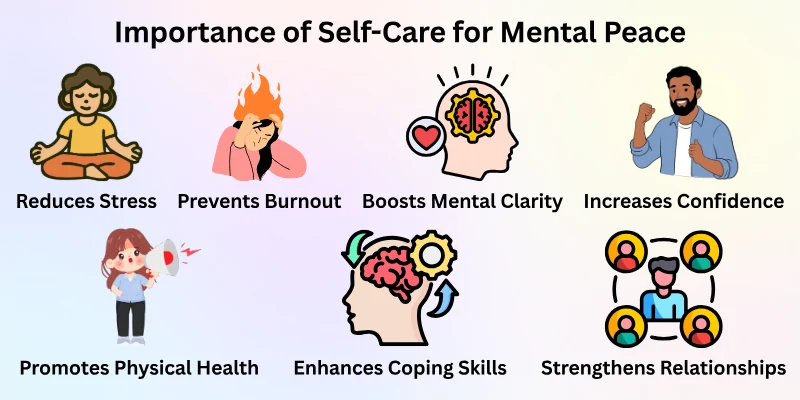
List of Key Importance of Self-Care:
- Reduces Stress
- Improves Emotional Health
- Boosts Mental Clarity and Focus
- Prevents Burnout
- Enhances Sleep Quality
- Strengthens Relationships
- Increases Self-esteem and Confidence
- Promotes Physical Health
- Enhances Coping Skills
- Creates a Sense of Balance
- Encourages Positive Mindset
- Supports long-term Mental Health
Let us cover all these points in detail.
1. Reduces Stress
Self-care is a powerful tool to manage and lower stress. Daily habits like taking short breaks, relaxing, and meditating allow your mind to rest. Stress reduction improves your mood, helps you think clearly, and keeps your emotions steady.
Beginners can start with simple breathing exercises or a 5-minute walk. Lower stress also strengthens your physical health over time.
How it helps:
- Reduces tension in mind and body
- Prevents burnout
- Improves focus and clarity
- Supports calm thinking
- Strengthens emotional balance
2. Improves Emotional Health
Taking care of yourself improves emotional wellbeing. Activities like journaling, practicing gratitude, or engaging in hobbies help manage sadness, worry, and frustration. Emotional health affects how you respond to daily challenges.
Regular self-care teaches patience and builds inner peace. Beginners notice calmer moods and better reactions to stress over time.
How it helps:
- Reduces anxiety and worry
- Enhances mood stability
- Builds resilience against challenges
- Encourages positive thoughts
- Supports overall mental peace
3. Boosts Mental Clarity and Focus
Self-care helps you think clearly and stay focused. Sleep, exercise, and mindful breaks refresh your brain. Mental clarity allows better decision-making and problem-solving. Without self-care, your mind may feel foggy and tired.
Even small habits like short walks or brief meditation improve focus. Regular self-care keeps your mind sharp and alert.
How it helps:
- Improves concentration
- Supports better memory
- Reduces mental fatigue
- Enhances problem-solving
- Strengthens cognitive function
4. Prevents Burnout
Consistent self-care prevents physical, mental, and emotional burnout. Setting boundaries and taking time off work or study protects your energy. Burnout leads to exhaustion, stress, and poor mental health.
Beginners can start with short breaks and gradually increase relaxation time. Self-care ensures you stay productive without harming your mind.
How it helps:
- Protects mental energy
- Reduces physical fatigue
- Prevents emotional exhaustion
- Maintains consistent performance
- Supports long-term wellbeing
5. Enhances Sleep Quality
Proper sleep is a key part of self-care. Relaxing before bed, avoiding screens, and having a bedtime routine improve sleep.
Good sleep restores your mind and reduces stress. Poor sleep increases anxiety, irritability, and mood swings. Self-care habits make it easier to fall asleep and wake up refreshed.
How it helps:
- Improves mood
- Enhances energy
- Supports focus and clarity
- Reduces stress levels
- Strengthens mental balance
6. Strengthens Relationships
When you care for yourself, you can care better for others. Self-care improves patience, empathy, and communication skills. Positive relationships reduce loneliness and support emotional health.
Spending time with supportive people enhances your mental peace. Beginners can schedule social interactions to recharge emotionally.
How it helps:
- Builds stronger bonds
- Reduces relationship conflicts
- Provides emotional support
- Improves social skills
- Enhances mental stability
7. Increases Self-Esteem and Confidence
Self-care teaches you to value yourself. Small actions like healthy eating, exercising, and setting boundaries boost confidence.
Self-esteem improves when you prioritize your needs. A confident mind handles challenges better. Regular self-care makes you feel capable, happy, and mentally strong.
How it helps:
- Boosts self-respect
- Increases confidence
- Encourages independence
- Reduces negative self-talk
- Strengthens mental peace
8. Promotes Physical Health
Self-care is not just mental; it supports your body too. Exercise, balanced meals, and proper rest reduce stress on your body.
A healthy body improves brain function, mood, and energy. Beginners can start with light exercises or healthy snacks. Mental peace is easier to achieve when your body is strong and healthy.
How it helps:
- Improves energy and stamina
- Reduces tension and fatigue
- Supports brain function
- Enhances mood and positivity
- Protects long-term health
9. Enhances Coping Skills
Self-care prepares your mind for challenges. Mindful activities, hobbies, and relaxation strengthen resilience. When stress arises, self-care habits help you respond calmly.
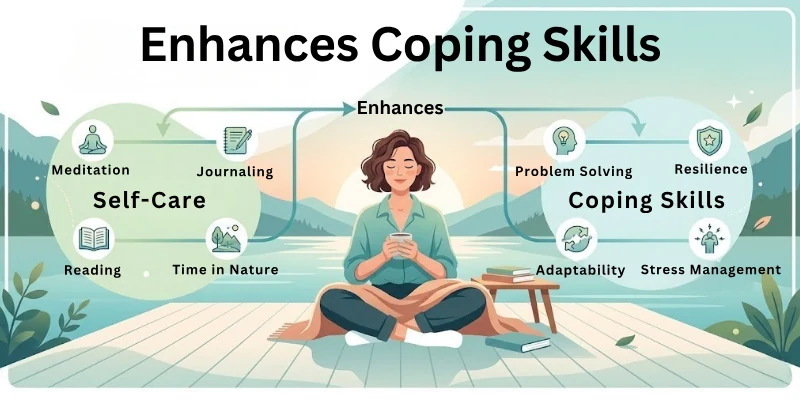
Beginners notice improved problem-solving and emotional control. Regular self-care makes coping with difficulties easier.
How it helps:
- Improves resilience
- Reduces panic and worry
- Enhances decision-making
- Strengthens emotional control
- Promotes calmness
10. Creates a Sense of Balance
Self-care balances work, personal life, and leisure. Maintaining balance reduces stress and prevents overwhelm.
A well-balanced routine keeps your mind and body healthy. Beginners can start with small daily habits. Balance ensures mental peace and emotional stability.
How it helps:
- Prevents exhaustion
- Reduces stress
- Supports productivity
- Encourages relaxation
- Strengthens overall wellbeing
11. Encourages Positive Mindset
Self-care improves how you think and feel about life. Gratitude, hobbies, and mindful activities promote optimism.
Positive thinking reduces stress and increases happiness. Beginners can start by listing three things they are grateful for daily. Positive mindset strengthens mental peace and resilience.
How it helps:
- Reduces negative thoughts
- Improves mood
- Enhances motivation
- Encourages happiness
- Supports emotional stability
12. Supports Long-Term Mental Health
Self-care creates a strong foundation for long-term mental health. Regular habits prevent stress, anxiety, and burnout.
Your mind becomes calm, focused, and resilient. Beginners who practice self-care daily build lasting mental peace. Mental health improves steadily over time with consistent care.
How it helps:
- Prevents mental health problems
- Maintains calmness and focus
- Reduces stress and anxiety
- Strengthens emotional resilience
- Supports lifelong wellbeing
Final Note
In this guide we have covered the importance of self-care for mental peace and twelve key ways it benefits your mind and emotions. Self-care reduces stress, improves focus, strengthens relationships, and builds long-term mental health.
Daily small habits create balance, happiness, and calmness in life. Practice self-care patiently and consistently to enjoy a peaceful and strong mind.
FAQs: Importance of Self-Care for Mental Peace
Here are some of the most commonly asked questions related to self care and mental peace relation:
Self-care means taking care of your mind, body, and emotions. It reduces stress and improves mental peace. Regular self-care prevents burnout and strengthens emotional health.
Self-care activities like meditation, breathing exercises, and hobbies calm the mind. They lower tension and improve focus. Daily practice helps prevent mental fatigue.
Yes, sleep improves when you relax before bed and avoid screens. Good sleep restores your energy and reduces anxiety. Rested minds stay calm and balanced.
When you take care of yourself, you have patience and positivity for others. Healthy relationships support emotional health. Connection with supportive people reduces loneliness.
Yes, hobbies provide relaxation and joy. They reduce stress and improve focus. Regular hobbies strengthen emotional balance and mental peace.
Self-care makes you value yourself. Small habits like setting boundaries or exercising increase self-esteem. Confidence helps you face challenges calmly.
No, self-care also includes physical health like exercise, sleep, and healthy eating. A healthy body supports a calm and focused mind. Mental peace improves with both mind and body care.
Daily self-care is most effective. Even small actions like short breaks, gratitude, or walking help. Consistent practice creates long-term mental peace.
Yes, regular self-care prevents exhaustion from work or life stress. Rest, relaxation, and hobbies protect your mental and physical energy.
No, self-care is essential for your health. It allows you to help yourself and others better. Prioritizing your wellbeing strengthens long-term happiness.





- Be Respectful
- Stay Relevant
- Stay Positive
- True Feedback
- Encourage Discussion
- Avoid Spamming
- No Fake News
- Don't Copy-Paste
- No Personal Attacks
- Be Respectful
- Stay Relevant
- Stay Positive
- True Feedback
- Encourage Discussion
- Avoid Spamming
- No Fake News
- Don't Copy-Paste
- No Personal Attacks
