Link Between Sleep and Mental Health: Sleep Better Today
Published: 26 Mar 2026
Sleep and mental health stay connected in many ways, and this guide teaches you everything about this connection in simple and clear language.
In this guide, you will learn why sleep matters, how it affects your emotions, what poor sleep does to your brain, and how you can improve it to protect your mental health. The goal is to help even a dull audience understand the link between sleep and mental health without confusion.
You will also learn practical steps that improve both your sleep and your emotional well-being. This guide gives you deeply explained points that cover all important parts of this topic.
What Is the Link Between Sleep and Mental Health
In this part you will understand what this connection means and why both influence each other deeply.
Sleep keeps your brain stable, calm, and healthy. When you sleep, your brain repairs stress, processes emotions, and stores memories. Poor sleep makes your brain tired, and this leads to mood problems, stress, anxiety, and depression.
Mental health problems also disturb your sleep and make falling asleep harder. This creates a cycle that harms both your sleep and your emotional strength.
- Sleep helps your brain repair stress
- Poor sleep weakens emotional control
- Mental health issues disturb your sleep cycle
- Both sleep and mental health affect each other
- Good sleep supports a healthy mind
Why Sleep Is Important for Mental Health
In this part you will learn why sleep protects your emotions, your energy, and your thinking.
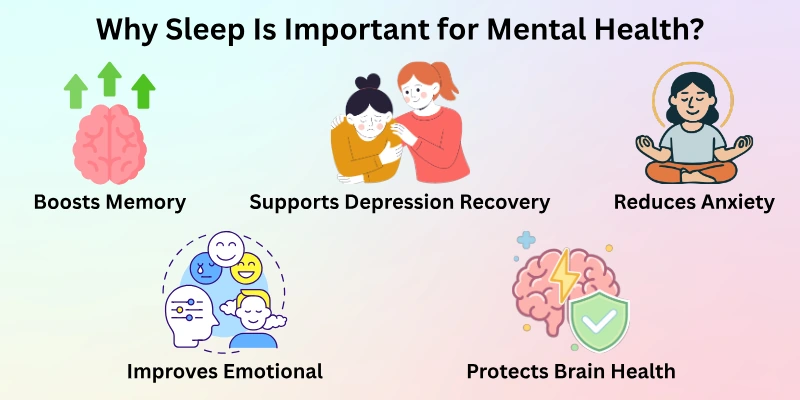
1. Sleep Improves Emotional Balance
Your emotions stay stable when you sleep well every night. Your brain uses sleep time to remove stress and calm down emotional pressure.
This helps you stay patient and gentle during the day. You react better to problems because your mind feels stronger. You also experience fewer sudden mood changes.
- Sleep improves mood stability
- Helps you react calmly
- Reduces emotional pressure
- Supports peaceful behavior
- Makes you patient during stress
2. Sleep Reduces Anxiety and Stress
Good sleep controls stress hormones in your body. When you sleep well, your brain resets your nerves and reduces worry.
You wake up feeling lighter and stronger. Poor sleep increases stress and makes you feel overwhelmed. Sleep becomes a natural tool for anxiety control.
- Lowers stress hormones
- Reduces worry and fear
- Makes your thoughts calmer
- Helps you relax easier
- Supports emotional safety
3. Sleep Boosts Memory and Focus
Sleep helps your brain store information and improve memory. Your focus becomes sharp after proper rest. You think clearly and make better decisions.
You learn new things faster. Good sleep supports academic and work performance.
- Improves memory
- Sharpens focus
- Strengthens learning
- Supports clear thinking
- Helps you make better decisions
4. Sleep Supports Depression Recovery
Good sleep gives you more energy during the day. You feel more motivated and active. It becomes easier to handle emotional pain. Poor sleep increases sadness and hopelessness. Sleep supports mental healing.
- Boosts energy
- Improves motivation
- Lowers sadness
- Helps emotional recovery
- Supports long term mental health
5. Sleep Protects Your Brain Health
Your brain clears waste during sleep. It repairs cells and strengthens nerve pathways. This protects your long term mental wellbeing. Good sleep lowers the risk of mental disorders. It also keeps your brain sharp and active.
- Removes brain waste
- Repairs brain cells
- Strengthens nerves
- Protects long term health
- Improves brain performance
How Poor Sleep Affects Your Mental Health
In this part you will learn how lack of sleep harms your emotions, thoughts and behavior.
1. Poor Sleep Raises Anxiety Levels
Lack of sleep makes your mind restless and scared. You feel worried even without a reason. Your body stays tense and stressed. You find it hard to relax or trust your thoughts. Anxiety becomes stronger when you sleep less.
- Increases fear
- Raises worry
- Makes your mind restless
- Keeps your body tense
- Weakens emotional control
2. Poor Sleep Triggers Depression Symptoms
Poor sleep lowers your energy and makes you feel down. You lose interest in daily activities. Small tasks feel heavy and difficult. You feel less motivated to work or study. Depression becomes stronger when sleep is weak.
- Lowers energy
- Reduces motivation
- Increases sadness
- Weakens interest
- Affects daily performance
3. Poor Sleep Weakens Decision Making
When you do not sleep well, your brain becomes slow. You struggle to choose what to do. You make mistakes easily. You feel confused and overwhelmed. Poor sleep harms your judgment.
- Slows thinking
- Increases confusion
- Makes decisions harder
- Weakens judgment
- Raises mistake levels
4. Poor Sleep Increases Mood Swings
Lack of sleep makes your mood unstable. You become irritated quickly. Small things annoy you. You lose patience easily. You feel emotional without any reason.
- Causes irritability
- Raises anger
- Lowers patience
- Creates sudden mood changes
- Affects emotional control
5. Poor Sleep Reduces Focus and Memory
Poor sleep harms your memory and makes learning harder. You forget things often. You cannot focus on tasks properly. You feel mentally slow. Your work performance drops.
- Weakens memory
- Lowers focus
- Slows thinking
- Affects learning
- Drops daily performance
Common Sleep Problems Linked to Mental Health
In this part you will learn about sleep issues that disturb your emotional and mental balance.
1. Insomnia
Insomnia makes it hard for you to fall asleep or stay asleep. Your sleep becomes light and broken. You feel tired even after resting. You become irritated during the day. It affects your mood and energy.
- Hard to fall asleep
- Wake up often
- Tired during day
- Irritable mood
- Poor emotional balance
2. Sleep Deprivation
Sleep deprivation means you do not get enough sleep consistently. Your brain becomes slow and heavy. Your emotions become unstable. You feel exhausted every day. Your mental health weakens over time.
- Not enough sleep
- Slow thinking
- Emotional imbalance
- Low energy
- Weak mental health
3. Nighttime Anxiety
Nighttime anxiety makes you overthink in bed. Your heart feels heavy and fast. You fear things without reason. You struggle to relax and sleep. It affects your rest completely.
- Overthinking at night
- Fast heartbeat
- Difficulty relaxing
- Fear without reason
- Weak sleep quality
4. Poor Sleep Quality
Poor sleep quality means your sleep does not refresh your mind. You wake up feeling tired. Your sleep cycle becomes irregular. You wake up too early or too often. This disturbs your mental health.
- Irregular cycle
- Light sleep
- Early waking
- Broken rest
- Low mental energy
How Much Sleep You Need for Strong Mental Health
In this part you will learn the right sleep hours for each age group.
Recommended Sleep Hours
Your mental health stays strong when you follow proper sleep hours. Adults need steady sleep every night. Teenagers need more rest because their brain develops. Children need even more sleep for growth. Young kids require long hours for full brain development.
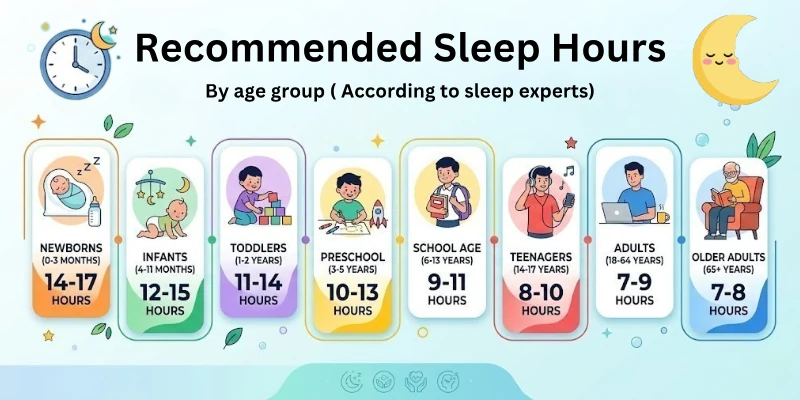
- Adults need 7 to 9 hours
- Teenagers need 8 to 10 hours
- Children need 9 to 12 hours
- Younger kids need more than 10 hours
- Consistent sleep matters more than long sleep
Best Ways to Improve Sleep for Better Mental Health
In this part you will learn practical habits that support healthy sleep and emotional wellbeing.
1. Fix Your Sleep Schedule
A fixed sleep schedule trains your brain to rest on time. Your body follows the same rhythm daily. You fall asleep faster and wake up fresh. This routine reduces stress and improves mental stability. It also helps balance your sleep cycle.
- Sleep at same time
- Wake up at same time
- Avoid long naps
- Keep routine steady
- Follow daily pattern
2. Use a Calming Bedtime Routine
A calm bedtime routine helps your mind slow down. Reading, stretching or soft meditation work well. Warm drinks relax your muscles. Gentle activities calm your brain. This makes sleeping easier.
- Light reading
- Soft stretching
- Warm drink
- Slow breathing
- Light meditation
3. Reduce Screen Time at Night
Screens keep your brain active and awake. Bright light confuses your body and delays sleep. Turning off screens helps your mind relax. It prepares your body for rest. This improves sleep quality.
- Turn off screens early
- Avoid bright lights
- Use warm lighting
- Keep your room dark
- Protect your sleep cycle
4. Create a Sleep Friendly Bedroom
A quiet and cool room helps you sleep peacefully. Comfortable bedding supports your body. Soft scents reduce stress. Noise control improves sleep quality. A peaceful room supports a peaceful mind.
- Keep room cool
- Use soft bedding
- Reduce noise
- Use calming scent
- Keep lighting soft
5. Avoid Caffeine in the Evening
Caffeine keeps your brain active. It delays your sleep and increases stress. Avoiding caffeine helps your mind relax faster. You fall asleep naturally. It improves deep sleep.
- Avoid coffee
- Skip energy drinks
- Avoid soft drinks
- Choose herbal tea
- Calm your nerves
6. Try Relaxation Techniques
Relaxation techniques help your brain slow down. They reduce stress and prepare your body for rest. These methods improve sleep quality. They also support mental health. They are simple and effective.
- Deep breathing
- Slow exhaling
- Gentle stretching
- Warm shower
- Short meditation
7. Stay Active During the Day
Daily movement improves your energy and reduces stress. It helps you sleep faster at night. Your mind feels calmer. Your sleep becomes deeper. Your mental balance improves.
- Walk daily
- Do light exercise
- Get sunlight
- Stay physically active
- Keep your body fresh
When You Should See a Doctor
In this part you will learn when sleep issues need medical help.
Warning Signs
Some sleep problems need medical support. If your sleep issues last too long, your mental health may suffer. Professional help gives proper treatment. You must not ignore these signs. Early help protects your mental health.
- Sleep issues last more than two weeks
- You feel anxious every night
- You feel depressed often
- You cannot sleep even when tired
- Your focus keeps getting worse
Final Note
In this guide we have covered the link between sleep and mental health with deep explanations that help you understand every detail clearly. You now know how sleep affects your emotions, your thoughts and your daily strength.
When you follow good sleep habits, your mind becomes calm, balanced and healthy. Take small steps toward better sleep each day because your mental health grows stronger with every good night of rest.
FAQs: Link Between Sleep and Mental Health
Here are some of the most commonly asked questions related to how sleep affects mental health (and vice versa):
Sleep gives your brain time to rest and repair. When you sleep well, your mood stays stable and your stress levels stay low. Poor sleep makes your mind more sensitive and increases anxiety and irritability.
Yes, lack of sleep makes your brain react more strongly to stress. Your thoughts become faster and harder to control, which raises anxiety. Good sleep helps calm your nervous system and supports emotional balance.
Sleep helps your brain process emotions in a healthy way. When you sleep enough, you feel calmer and more positive during the day. Poor sleep often leads to mood swings and frustration.
Long term sleep problems can increase the risk of depression. When the brain does not get enough rest, it becomes harder to regulate emotions. Good sleep supports chemical balance in the brain and reduces depressive symptoms.
Stress keeps your mind active and your body alert. Your brain releases stress hormones that make it harder to relax. When stress increases, your sleep cycle becomes disturbed and you wake up feeling tired.
Sleep strengthens the parts of the brain that store and organize information. When you sleep well, your mind focuses faster and remembers things easily. Poor sleep blocks your ability to learn and solve problems.
Yes, poor sleep makes you more irritated and less patient. This affects how you talk and react to people around you. Good sleep helps you stay calm, kind, and emotionally stable.
Yes, sleep gives your brain time to reset and heal from daily pressure. When you sleep well, your emotional energy increases and burnout reduces. Without enough sleep, stress affects your mood more deeply.
Yes, lack of sleep lowers your ability to handle challenges. Small problems feel bigger because your brain is tired. Good sleep keeps your reactions balanced and your coping skills strong.
Most adults need seven to nine hours of sleep every night to support mental wellness. This helps your brain recharge and stay emotionally stable. Kids and teens need more sleep for healthy growth and stress control.




- Be Respectful
- Stay Relevant
- Stay Positive
- True Feedback
- Encourage Discussion
- Avoid Spamming
- No Fake News
- Don't Copy-Paste
- No Personal Attacks
- Be Respectful
- Stay Relevant
- Stay Positive
- True Feedback
- Encourage Discussion
- Avoid Spamming
- No Fake News
- Don't Copy-Paste
- No Personal Attacks
