Meditation for Beginners: Start Your Mindful Journey Now
Published: 28 Mar 2026
Meditation helps your mind slow down, relax and feel lighter. Many people think meditation is hard, but it becomes easy when you follow simple steps.
This guide explains meditation for beginners in the easiest way so you can start without confusion. You will learn what to do, how to sit, how to breathe and how to build a calm daily practice.
Meditation for Beginners: Easy Steps to Start
In this part you will learn the basic and simple steps that help every beginner start meditation with confidence. These steps are easy, clear and suitable for all age groups.
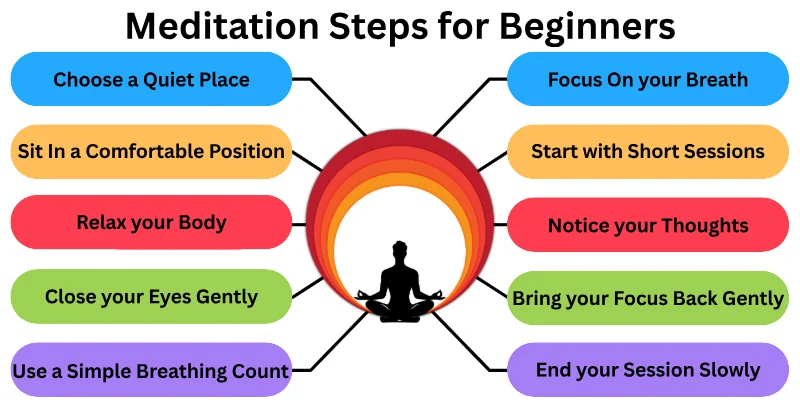
List of All Steps
- Choose a Quiet Place
- Sit In a Comfortable Position
- Relax your Body
- Close your Eyes Gently
- Focus On your Breath
- Start with Short Sessions
- Use a Simple Breathing Count
- Notice your Thoughts
- Bring your Focus Back Gently
- End your Session Slowly
Let us cover all the steps in detail.
1. Choose a Quiet Place
A quiet place helps your mind settle down. You need a peaceful environment to begin meditation without distractions. This space does not have to be perfect or special. It can be a corner of your room or any area where you feel safe. A calm space prepares your mind for relaxation. You feel more focused when your surroundings are steady.
How it helps:
- It removes distractions.
- It keeps your mind calm.
- It prepares you for focus.
- It supports steady breathing.
- It builds a peaceful mood.
2. Sit in a Comfortable Position
Comfort helps you stay still during meditation. You can sit on a chair, floor or bed. Your back needs to stay straight but relaxed. You should feel no pain or pressure. Comfort makes meditation easier for beginners. It also keeps your mind focused for longer.
How it helps:
- It prevents body tension.
- It helps you stay focused.
- It supports calm breathing.
- It keeps your session steady.
- It builds physical comfort.
3. Relax Your Body
Your body must loosen up before you start meditation. Relaxed muscles make your breath smoother. When your body feels light, your mind follows. This step reduces stress quickly. Beginners need this part to remove pressure from the body. Relaxation helps the session feel peaceful.
How it helps:
- It releases tension.
- It improves calmness.
- It prepares your breath.
- It softens your thoughts.
- It balances your mood.
4. Close Your Eyes Gently
Closing your eyes helps you focus inward. It removes visual distractions. Your mind starts to settle when your eyes rest. You enter a quiet mental space. This step helps beginners reduce outside noise. It makes your breathing more noticeable.
How it helps:
- It blocks outside movement.
- It improves focus.
- It calms your mind.
- It supports deep breathing.
- It makes you feel safe.
5. Focus on Your Breath
Breathing is the center of meditation. Your breath helps your mind stay steady. When you focus on each inhale and exhale, you become calm. Your thoughts move slower. This step builds strong mindfulness. It helps beginners feel grounded.
How it helps:
- It slows your thoughts.
- It improves focus.
- It reduces stress.
- It supports calmness.
- It brings inner balance.
6. Start With Short Sessions
Short sessions help you build the habit easily. You do not need long meditation at the beginning. A few minutes are enough to start. This teaches your mind to stay present. Short practice builds confidence. You slowly increase time as you improve.
How it helps:
- It prevents pressure.
- It builds routine.
- It makes learning easier.
- It supports consistency.
- It keeps you motivated.
7. Use a Simple Breathing Count
Counting your breath makes meditation easier for beginners. It gives your mind something gentle to follow. You can count from one to five and repeat. This helps you stay focused. Counting keeps your thoughts steady. It builds a simple rhythm for your session.
How it helps:
- It improves concentration.
- It reduces wandering thoughts.
- It builds steady breathing.
- It supports calmness.
- It keeps you focused.
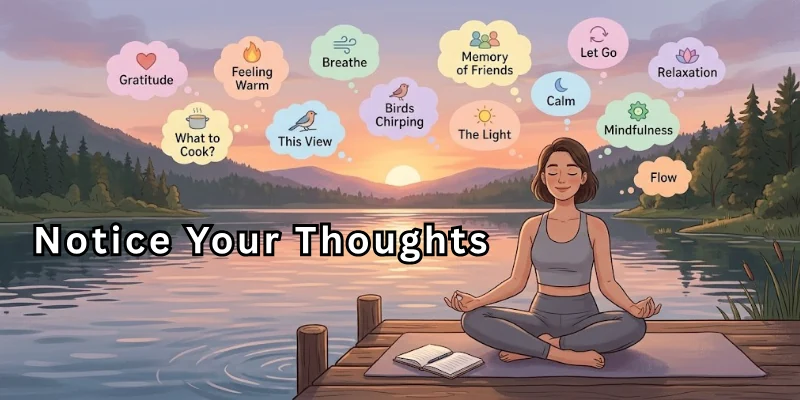
8. Notice Your Thoughts
Thoughts always come during meditation. You do not need to stop them. Just notice them and stay relaxed. Thoughts will pass like clouds. This step teaches you not to fight your mind. It helps beginners stay calm instead of frustrated.
How it helps:
- It reduces stress about thoughts.
- It improves awareness.
- It supports emotional control.
- It teaches acceptance.
- It builds mindfulness.
9. Bring Your Focus Back Gently
When your mind wanders, return to your breath slowly. Do not judge yourself. Gently moving back builds mental strength. Your mind learns to stay present. This part is normal for every beginner. It makes meditation more natural.
How it helps:
- It improves focus.
- It builds calm habits.
- It strengthens your mind.
- It reduces frustration.
- It supports mindfulness.
10. End Your Session Slowly
A slow ending helps your mind adjust back to daily life. Do not rush. Open your eyes gently. Take a few deep breaths. Feel your surroundings again. This step completes your meditation safely.
How it helps:
- It protects your calm mood.
- It helps you transition smoothly.
- It keeps your energy balanced.
- It supports emotional comfort.
- It maintains peacefulness.
How Long Should Beginners Meditate
In this part you will learn the ideal meditation duration for beginners and how to increase it slowly.
Beginners can start with two to five minutes. Short sessions help your mind learn without pressure. As you feel comfortable, you can increase your time. Slow progress builds a strong meditation habit. You can reach ten to fifteen minutes after a few weeks.
H2: Common Mistakes Beginners Make in Meditation
In this part you will learn what to avoid so meditation becomes easier.
Many beginners expect a silent mind, but this is not required. Others push themselves too hard which increases stress. Some people sit uncomfortably, which breaks focus. Some expect fast results. Avoiding these mistakes helps you enjoy meditation.
Final Note
In this guide we have covered the simplest and most beginner friendly steps to start meditation. You can follow these steps daily to build a calm and steady mind.
Meditation becomes easier when you practice with patience and kindness toward yourself. Start small, stay gentle, and let your mind grow stronger each day.
FAQs: Meditation for Beginners
Here are some of the most commonly asked questions related to meditation for beginners:
Meditation feels new at first, but it becomes easier with practice. Short daily sessions help your mind learn step by step. You just need calm breathing and patience.
You can start with two or three minutes. This short time builds your habit without stress. You can slowly increase the duration when you feel ready.
No, any quiet corner is enough. You just need a peaceful space where you feel relaxed. A calm environment supports your focus.
It is normal for thoughts to come. Notice them gently and return to your breath. This practice strengthens your focus.
Yes, meditation slows your breathing and calms your mind. Your stress level drops naturally. Regular practice brings emotional balance.
You can sit anywhere that feels comfortable. A chair, sofa or cushion works well. Your comfort is more important than the location.
Yes, you can keep your eyes slightly open. Some people feel calmer this way. Choose the style that feels natural to you.
Some people feel calm after one session. Others need a few days or weeks. Benefits grow with regular practice.
It happens when your body is tired. You can meditate sitting up straight or try earlier in the day. Regular sleep also helps.
Yes, soft music or nature sounds can help you relax. Make sure it is calm and slow. This supports your breathing and focus.






- Be Respectful
- Stay Relevant
- Stay Positive
- True Feedback
- Encourage Discussion
- Avoid Spamming
- No Fake News
- Don't Copy-Paste
- No Personal Attacks
- Be Respectful
- Stay Relevant
- Stay Positive
- True Feedback
- Encourage Discussion
- Avoid Spamming
- No Fake News
- Don't Copy-Paste
- No Personal Attacks
