Top Stretching Exercises for Office Workers: Get Relief Now
Published: 18 Mar 2026
Office workers sit for long hours, and this slowly builds stiffness in the neck, shoulders, back and hips. I have trained many people who spend most of their day at a desk, and I have seen how small daily stretches improve comfort and energy.
This guide is created from my own experience helping office workers feel lighter, move better and stay active during a busy workday. You will learn the best stretches, when to do them and what to avoid so you can stay productive without pain.
Top Stretching Exercises for Office Workers
Here are my best personal recommendations from years of helping people with desk workouts. These top stretching exercises for office workers are simple, quick and perfect for any busy schedule.
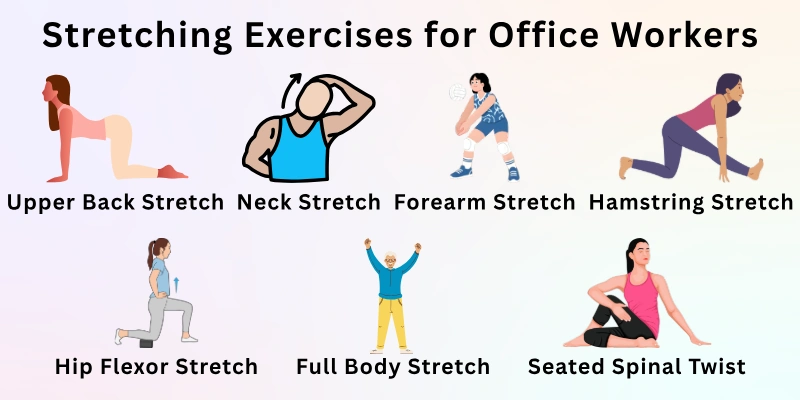
Here is the list of the top 10:
- Neck Stretch
- Shoulder Roll
- Upper Back Stretch
- Chest Opener
- Wrist and Forearm Stretch
- Seated Spinal Twist
- Hip Flexor Stretch
- Hamstring Stretch
- Ankle Circles
- Full Body Stretch
Let us cover all in detail.
1. Neck Stretch
This stretch is very important for screen users. It reduces tension that builds up from bending your head forward. It helps release pressure from the neck muscles. It also supports a better sitting posture. You feel lighter and more relaxed after this simple movement.
How to do it
- Sit tall in your chair
- Tilt your head to the right
- Hold for 15 seconds
- Repeat on the left side
- Keep shoulders relaxed
When to do it
- Every 1 hour
- After long meetings
- Before and after typing
- When your neck feels tight
What to avoid
- Do not pull your neck hard
- Do not move too fast
- Avoid twisting the neck
- Avoid doing it while leaning
2. Shoulder Roll
This stretch reduces shoulder pressure caused by typing. It improves upper body movement. It helps relax the shoulder blades. It improves your breathing. It supports better posture during desk work.
How to do it
- Sit or stand straight
- Roll shoulders forward 10 times
- Roll shoulders backward 10 times
- Keep neck relaxed
When to do it
- Every two hours
- Before starting work
- After long typing tasks
- During short breaks
What to avoid
- Do not lift shoulders too high
- Avoid fast rolling
- Avoid stiff posture
3. Upper Back Stretch
This stretch opens the upper back area. It reduces pain from slouching in front of a laptop. It supports easy breathing. It helps correct posture. You feel relief after just a few seconds.
How to do it
- Sit tall
- Clasp your hands in front
- Push arms forward
- Round your upper back
- Hold for 20 seconds
When to do it
- After long sitting
- After phone scrolling
- When your back feels tight
What to avoid
- Do not round your lower back too much
- Avoid shrugging shoulders
4. Chest Opener
This stretch fixes the hunch that forms from leaning at your desk. It opens the chest muscles. It improves breathing. It brings your shoulders back naturally. It boosts your energy during the day.
How to do it
- Stand tall
- Clasp hands behind you
- Lift your chest
- Pull shoulders back
- Hold 15 to 20 seconds
When to do it
- After long meetings
- After hours of laptop work
- Anytime your chest feels tight
What to avoid
- Avoid leaning too far back
- Do not lock your elbows
5. Wrist and Forearm Stretch
Typing and using the mouse makes the wrist tight. This stretch relaxes the hands and fingers. It reduces wrist strain. It improves movement for daily tasks. It prevents pain during long screen work.
How to do it
- Extend your right arm
- Pull fingers downward gently
- Hold for 15 seconds
- Pull fingers upward
- Switch arms
When to do it
- Before typing
- After heavy typing
- While taking short breaks
What to avoid
- Do not stretch too hard
- Avoid bending the wrist too far
6. Seated Spinal Twist
This stretch reduces lower back pressure. It makes your spine more flexible. It releases stiffness after long sitting hours. It improves circulation. It gives instant relaxation.
How to do it
- Sit straight
- Place right hand on left knee
- Twist gently to the left
- Hold 15 seconds
- Switch sides
When to do it
- After long meetings
- When your back feels tight
- During afternoon slump
What to avoid
- Avoid fast twisting
- Do not over-rotate your spine
7. Hip Flexor Stretch
Long sitting tightens the hip muscles. This stretch opens the hips. It reduces lower back pain. It improves walking comfort. It helps you sit straighter.
How to do it
- Stand and take a small step forward
- Bend slightly into a lunge
- Push hips forward gently
- Hold 20 seconds
- Switch legs
When to do it
- After long sitting hours
- After lunch break
- Before going home
What to avoid
- Avoid arching your lower back
- Avoid deep lunges
8. Hamstring Stretch
This stretch reduces tightness in the back of your legs. It supports healthy lower back movement. It improves flexibility. It reduces pressure from sitting. It helps you walk comfortably.
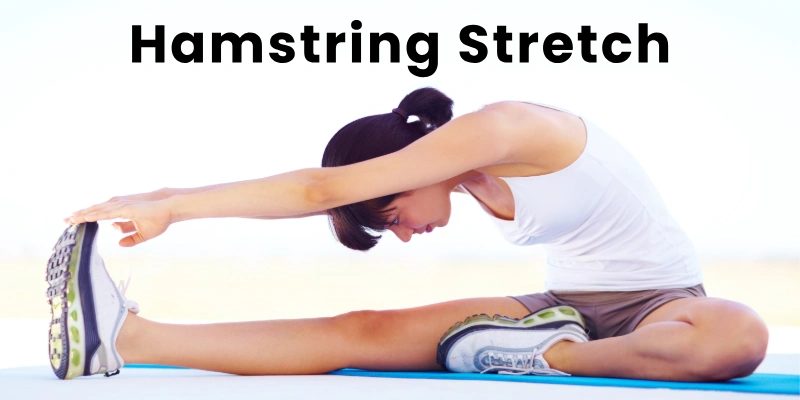
How to do it
- Sit at the edge of a chair
- Extend one leg forward
- Lean from the hips
- Hold 20 seconds
- Switch legs
When to do it
- After long sitting
- Before walking
- After work
What to avoid
- Do not round your spine
- Avoid bouncing
9. Ankle Circles
This stretch improves blood flow in the legs. It prevents swelling from sitting too long. It keeps your feet flexible. It improves balance. It supports long work hours.
How to do it
- Lift your foot slightly
- Circle your ankle clockwise 10 times
- Circle it counterclockwise 10 times
- Switch legs
When to do it
- During calls
- After long sitting
- Before standing up
What to avoid
- Avoid fast rotation
- Avoid moving your knee too much
10. Full Body Stretch
This stretch refreshes the whole body. It opens the spine. It releases muscle tension. It improves breathing. It restores energy during a long office day.
How to do it
- Stand up
- Raise your arms overhead
- Stretch your whole body upward
- Hold 15 seconds
- Relax gently
When to do it
- Every morning
- During breaks
- After work
What to avoid
- Avoid overstretching
- Avoid locking your knees
How Often Should Office Workers Stretch Daily
Walking is the best exercise, but stretching still plays an important support role for office workers.
Here is how often you should stretch to protect your neck, shoulders, back and hips throughout the day:
- Stretch once every 60 minutes
- Hold each stretch for 15 to 20 seconds
- Do deeper stretching twice a day if stiffness increases
- Stretch before and after long computer tasks
- Add short movement breaks between meetings
- Walk for 2 to 3 minutes after each sitting hour
These simple steps keep your body comfortable, reduce muscle stress and help you stay active even in a desk based routine.
Final Note
In this guide, we covered the top stretching exercises for office workers. I shared the best 10 exercises you can do right at your desk to stay relaxed and pain-free. But along with these stretches, always try to take short breaks during office hours and walk for at least 10 minutes. This small habit keeps your body active, improves your posture and supports your overall health.
Take care and goodbye!
FAQs: Best Stretching Exercises
Here are some of the most commonly asked questions related to the best stretching workouts for office workers:
The best stretches include neck stretches, shoulder rolls, chest openers, hip flexor stretches, and hamstring stretches. These exercises reduce stiffness, improve posture, and keep you comfortable during long sitting hours. Doing them daily can prevent pain and boost energy.
You should stretch every 1 to 2 hours for 1–2 minutes. Short frequent breaks prevent muscle stiffness, improve blood flow, and maintain flexibility throughout the day. Combine these with small walks for better results.
Yes, many stretches like shoulder rolls, wrist stretches, neck stretches, and seated spinal twists can be done while sitting. These desk stretches help release tension without interrupting work. Standing stretches can also be added when possible.
Yes, regular stretching increases circulation, reduces pain, and refreshes your mind. When your body feels better, you can focus more easily on tasks. Even 5 minutes of stretching can boost energy during long workdays.
Quick stretches include neck tilts, shoulder rolls, wrist rotations, seated spinal twists, and ankle circles. These can be done in 1–2 minutes and repeated multiple times during the day. They are simple, effective, and require no equipment.
Stretching alone improves flexibility and reduces stiffness but combining it with short walks or light office workouts strengthens muscles and boosts energy. Desk workouts complement stretching for full-body health.
Set reminders on your phone or computer every hour. Keep a sticky note on your desk. Pair stretching with daily tasks like calls or emails. Regular reminders help build a healthy office routine.
Yes, consistent stretching keeps muscles flexible, supports joints, and reduces the risk of back, neck, and shoulder injuries. It is one of the easiest ways to protect your body while working long hours.




- Be Respectful
- Stay Relevant
- Stay Positive
- True Feedback
- Encourage Discussion
- Avoid Spamming
- No Fake News
- Don't Copy-Paste
- No Personal Attacks
- Be Respectful
- Stay Relevant
- Stay Positive
- True Feedback
- Encourage Discussion
- Avoid Spamming
- No Fake News
- Don't Copy-Paste
- No Personal Attacks
