Types of Vitamins: What Your Body Needs Daily
Published: 12 Mar 2026
In this guide, we will cover everything you need to know about the types of vitamins in detail. You will learn about their classification, the specific vitamins in each category, their unique functions, health benefits, sources, and how to include them in your daily diet.
By the end of this guide, you will have a complete understanding of how vitamins support your body’s growth, energy, immunity, skin, hair, bones, and overall health. This is your ultimate resource to understand what vitamins do and why they are essential for a healthy life.
Classification of Vitamins
Vitamins are divided into two main categories based on how they are absorbed and stored in the body:
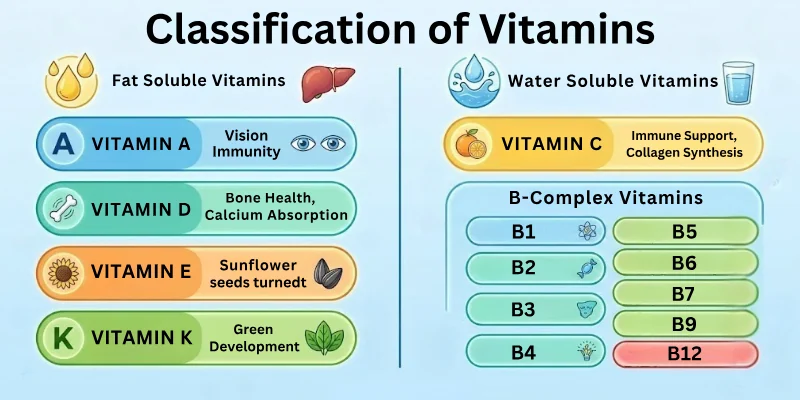
- Fat-Soluble Vitamins: Dissolve in fat and are stored in the liver and fatty tissues. Examples: A, D, E, K.
- Water-Soluble Vitamins: Dissolve in water, are not stored in the body, and need to be consumed regularly. Examples: C and B-complex vitamins (B1, B2, B3, B5, B6, B7, B9, B12).
Let us learn about each in detail.
Fat-Soluble Vitamins
Fat-soluble vitamins are vitamins that dissolve in fat and are stored in the liver and fatty tissues for later use.
Unlike water-soluble vitamins, your body can store them, so you do not need to consume them every day. These vitamins are essential for vision, immunity, bone health, antioxidant protection, and blood clotting.
List of Fat-Soluble Vitamins:
- Vitamin A
- Vitamin D
- Vitamin E
- Vitamin K
Let us cover all of them in detail.
1. Vitamin A
Vitamin A is a vital nutrient that helps your body maintain healthy vision, skin, and immunity. It is important for growth, reproduction, and cell development. Regular intake ensures your eyes and skin stay healthy and your immune system functions optimally.
Functions:
- Supports night vision and overall eye health.
- Strengthens immunity and helps fight infections.
- Maintains healthy skin, hair, and mucous membranes.
Sources: Carrots, sweet potatoes, spinach, eggs, liver.
Daily Requirement: 700–900 mcg for adults.
Tip: Avoid excessive intake; high doses can be toxic.
2. Vitamin D
Vitamin D is essential for bone health and overall immunity. It helps your body absorb calcium and phosphorus, which are critical for strong bones and teeth. Sunlight is the natural source, but dietary sources and supplements can help if exposure is limited.
Functions:
- Supports calcium absorption for strong bones.
- Strengthens the immune system and reduces inflammation.
- Plays a role in mood regulation and mental health.
Sources: Sunlight, fatty fish, egg yolks, fortified dairy.
Daily Requirement: 600–800 IU for adults.
Tip: Supplement if you do not get enough sunlight.
3. Vitamin E
Vitamin E acts as a powerful antioxidant that protects your cells from damage. It supports healthy skin, eyes, and immune function. Regular intake can slow down signs of aging and help prevent oxidative stress in the body.
Functions:
- Protects cells from free radical damage.
- Supports skin health and reduces signs of aging.
- Improves eye health and immune function.
Sources: Almonds, sunflower seeds, spinach, vegetable oils.
Daily Requirement: 15 mg for adults.
Tip: Avoid excessive supplementation; it can interfere with blood clotting.
4. Vitamin K
Vitamin K is crucial for blood clotting and bone health. It ensures that your blood coagulates properly and supports strong bones by helping calcium bind to them. Deficiency can cause excessive bleeding and weak bones.
Functions:
- Essential for proper blood clotting.
- Supports bone strength and reduces fracture risk.
Sources: Leafy greens (kale, spinach), broccoli, Brussels sprouts, fermented foods.
Daily Requirement: 90 mcg/day for women, 120 mcg/day for men.
Tip: Consult your doctor if taking blood-thinning medications before increasing intake.
Water-Soluble Vitamins
Water-soluble vitamins are vitamins that dissolve in water and are not stored in the body. Because the body cannot store them, they need to be consumed regularly through your diet.
These vitamins play a crucial role in energy production, immune support, red blood cell formation, and overall metabolism.
List of Water-Soluble Vitamins:
- Vitamin C
- Vitamin B1 (Thiamine)
- Vitamin B2 (Riboflavin)
- Vitamin B3 (Niacin)
- Vitamin B5 (Pantothenic Acid)
- Vitamin B6 (Pyridoxine)
- Vitamin B7 (Biotin)
- Vitamin B9 (Folate/Folic Acid)
- Vitamin B12 (Cobalamin)
Let us cover all of them in detail.
1. Vitamin C (Ascorbic Acid)
Vitamin C is a powerful antioxidant that supports immunity and helps repair tissues. It is essential for collagen production, which keeps skin, hair, and joints healthy. Vitamin C also protects cells from damage caused by free radicals.
Functions:
- Boosts immunity and prevents infections.
- Supports collagen production for healthy skin and tissues.
- Acts as an antioxidant protecting cells from damage.
Sources: Citrus fruits, strawberries, kiwi, bell peppers, broccoli.
Daily Requirement: 75 mg for women, 90 mg for men.
Tip: Excess is excreted in urine; include fresh fruits and vegetables daily.
2. Vitamin B1 (Thiamine)
Vitamin B1 helps your body convert food into energy and maintains proper nerve function. It is essential for metabolism and brain health.
Functions:
- Converts carbohydrates into energy.
- Supports nerve and heart function.
Sources: Whole grains, pork, beans, nuts.
Daily Requirement: 1.1 mg for women, 1.2 mg for men.
3. Vitamin B2 (Riboflavin)
Vitamin B2 is important for energy production and cell growth. It also supports healthy skin and eyes.
Functions:
- Helps convert food into energy.
- Maintains healthy skin, hair, and eyes.
Sources: Eggs, milk, almonds, leafy vegetables.
Daily Requirement: 1.1 mg for women, 1.3 mg for men.
Vitamin B3 (Niacin)
Vitamin B3 supports metabolism, nervous system function, and skin health. It helps your body convert food into energy efficiently.
Functions:
- Supports energy metabolism.
- Maintains healthy skin and nerves.
- Helps lower cholesterol levels.
Sources: Chicken, fish, peanuts, whole grains.
Daily Requirement: 14 mg for women, 16 mg for men.
Vitamin B5 (Pantothenic Acid)
Vitamin B5 is essential for energy production and hormone synthesis. It helps your body use fats, proteins, and carbohydrates effectively.
Functions:
- Produces energy from macronutrients.
- Supports production of hormones and cholesterol.
Sources: Eggs, meat, avocados, whole grains.
Daily Requirement: 5 mg for adults.
Vitamin B6 (Pyridoxine)
Vitamin B6 plays a vital role in brain function, red blood cell production, and hormone regulation.
Functions:
- Supports neurotransmitter production for brain health.
- Helps produce hemoglobin and red blood cells.
- Regulates hormones and mood.
Sources: Chickpeas, bananas, fish, potatoes.
Daily Requirement: 1.3–2 mg for adults.
Vitamin B7 (Biotin)
Biotin is also called the “beauty vitamin” because it supports hair, skin, and nails. It also plays a role in metabolism.
Functions:
- Supports healthy hair, skin, and nails.
- Helps metabolize fats, proteins, and carbohydrates.
Sources: Eggs, nuts, seeds, sweet potatoes.
Daily Requirement: 30 mcg for adults.
Vitamin B9 (Folate / Folic Acid)
Vitamin B9 is essential for DNA synthesis, red blood cell formation, and pregnancy health.
Functions:
- Supports cell growth and DNA formation.
- Produces healthy red blood cells.
- Critical during pregnancy to prevent neural tube defects.
Sources: Leafy greens, beans, citrus fruits, fortified cereals.
Daily Requirement: 400 mcg for adults.
Vitamin B12 (Cobalamin)
Vitamin B12 supports nerve health, red blood cell production, and DNA synthesis. It is especially important for vegetarians and older adults.
Functions:
- Maintains healthy nerves and brain function.
- Produces red blood cells to prevent anemia.
- Supports DNA synthesis and cell growth.
Sources: Meat, fish, dairy, fortified plant foods.
Daily Requirement: 2.4 mcg for adults.
How Vitamins Work Inside Your Body
Vitamins act like tiny helpers that keep your body active, strong, and balanced. They support everything from energy and mood to immunity and organ function.
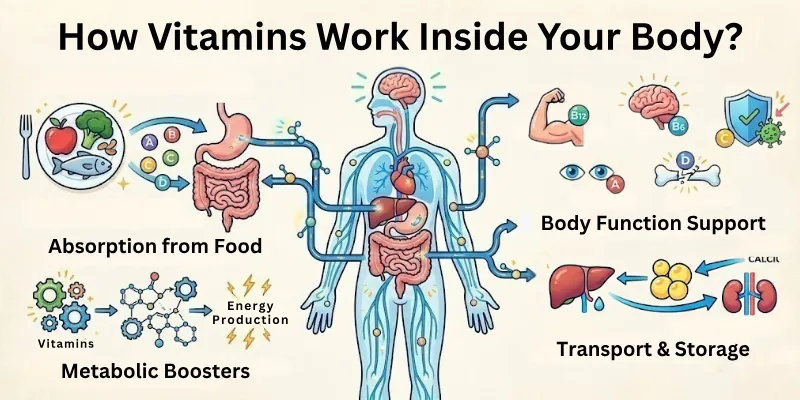
Even though they are small, they control many important processes. Without enough vitamins, your body slows down, and daily tasks become harder.
Key Points
- They turn food into energy your body can use.
- They protect your cells from daily damage.
- They support skin, eyes, nerves, and immunity.
- They help your organs work smoothly.
- They work together with minerals to keep your body balanced.
Daily Recommended Intake for All Vitamins
Your body needs a set amount of each vitamin every day to stay healthy and active. These needs change with age, lifestyle, and health conditions.
Eating a mixed and colorful diet helps you meet your daily requirements naturally. Supplements are helpful only when a doctor advises them.
Key Points
- Each vitamin has its own daily required amount.
- Needs change with age, activity level, and health.
- Natural food sources give the best absorption.
- Supplements fill gaps only when levels are low.
- Balanced meals keep vitamin levels steady.
Signs You Might Have Vitamin Deficiency
Your body shows early warning signs when vitamin levels drop. These symptoms may seem small at first but can grow if ignored. Each vitamin has its own pattern of deficiency signs. Understanding these signals helps you take action early.
Key Points
- Feeling tired often can be an early sign.
- Weak immunity can show low vitamin levels.
- Skin, hair, and nail issues may point to deficiencies.
- Poor focus or mood swings can be related to vitamins.
- Slow wound healing can signal low nutrients.
Final Note
In this guide we have covered the types of vitamins in great detail, explained their two main classifications, and discussed how each vitamin works inside your body with clear and essential points. You now have a full understanding of what they do, how they help, and why your daily balance matters.
Personal Advice: Try to get most of your vitamins from natural food instead of relying only on supplements. Keep your meals colorful, drink enough water, and listen to your body when it shows early signs of deficiency. A small change in daily habits can protect your long-term health.
Take care of your body every day and it will take care of you. Goodbye and stay healthy.
FAQs: Vitamin Types
Here are some of the most commonly asked questions related to the types of vitamins:
There are two types of vitamins called fat soluble and water soluble. Fat soluble vitamins stay in your body for a longer time. Water soluble vitamins leave your body fast. You need both types to stay healthy.
Each type does a different job in your body. Fat soluble vitamins help your eyes, skin, and immune system. Water soluble vitamins give you energy and help your brain. Your body works best when you get both.
Yes, too many supplements can be bad for your body. Fat soluble vitamins can build up and cause problems. This is why you should not take high doses on your own. Always follow safe amounts or ask a doctor.
Water soluble vitamins get used up fast. Your body cannot store them for long. You must eat them every day to stay active and strong. Vitamins like B and C are in this group.
Some people do not eat a variety of foods. Others have stomach issues that block vitamin absorption. Stress or certain medicines can also lower vitamin levels. Small diet changes can help fix this.
Yes, cooking can lower vitamins in your food. Boiling removes the most vitamins. Steaming or light cooking keeps more nutrients. Raw foods sometimes keep the best amount.
It depends on what your body needs. A blood test can show which vitamins you are low in. If you feel tired or weak, you may need a supplement. Asking a doctor is the safest option.




- Be Respectful
- Stay Relevant
- Stay Positive
- True Feedback
- Encourage Discussion
- Avoid Spamming
- No Fake News
- Don't Copy-Paste
- No Personal Attacks
- Be Respectful
- Stay Relevant
- Stay Positive
- True Feedback
- Encourage Discussion
- Avoid Spamming
- No Fake News
- Don't Copy-Paste
- No Personal Attacks
