What Does Protein Do for Muscles: Explained Simply
Published: 9 Mar 2026
Understanding what does protein do for muscles allows you to take full control of your strength, recovery, and long-term physical health.
Protein is not just a nutrient. It is the main structural material that keeps your muscles stable, strong, repaired and ready for growth. When you supply your body with enough high quality protein, your muscles respond quickly. They repair faster, grow stronger and maintain their shape even during weight loss or heavy training.
This guide explains the full science, daily routine, metabolism effects and real life application in very detailed steps.
How Protein Starts the Muscle Growth Process
Your muscles grow only when you create a cycle of stress and repair. When you work out, you place controlled tension on your muscles. This creates microscopic tears inside the fibers.
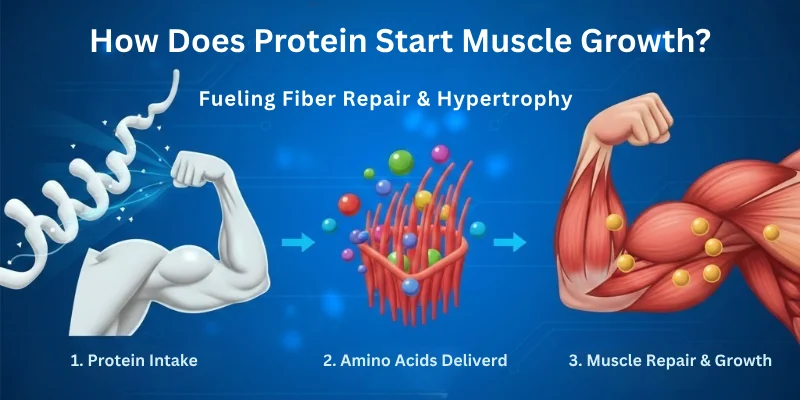
Your body immediately starts looking for nutrients to repair these tears, and protein becomes the main tool your body uses during this rebuilding phase.
Detailed Action Inside the Muscle
- Your workout creates small internal injuries in muscle fibers
- Your body releases repair signals that call for amino acids
- Protein breaks down into amino acids and travels to the damaged area
- These amino acids rebuild the torn fibers and create new ones
- Your muscles become thicker, stronger and more resistant
This is the natural way your body increases strength, size and power.
How Protein Repairs Muscle Damage After Every Workout
When your workout ends, your muscles enter a breakdown state. They become weaker temporarily because of the microtears.
Protein starts rebuilding these fibers the moment it enters your bloodstream. This is why post workout protein intake is crucial.
Detailed Repair Mechanism
- Your muscles open up their cells for amino acid absorption
- Protein triggers muscle protein synthesis
- Damaged areas receive fast support
- Muscle soreness reduces because repair starts quickly
- Recovery speed increases, helping you train harder next time
Without protein, this natural repair slows down and progress becomes limited.
Why Your Body Needs Protein Every Day to Maintain Muscle
Your body does not store protein like it stores carbs or fat. This means every day your muscles require a fresh supply of amino acids to survive, repair and stay strong. Even on rest days your muscles continue to repair previous damage.
Daily Importance
- Prevents your body from breaking down existing muscle
- Helps you maintain strength even on non training days
- Supports stable metabolism and energy
- Keeps your muscles firm instead of soft and weak
Daily protein intake is the strongest foundation for long term muscle health.
What Happens Inside the Muscle When You Eat Protein
To understand what does protein do for muscles, you must know what happens after digestion.
When you eat protein, your stomach breaks it into amino acids. These amino acids enter your bloodstream and travel directly into your muscle cells.
Detailed Internal Breakdown
- Protein enters your stomach and breaks into smaller amino acids
- Amino acids reach your muscle tissues through the bloodstream
- Muscle cells absorb these amino acids to fill damaged points
- Fiber rebuilding becomes stronger and more structured
- Muscle shape, strength and density improve steadily
This is a continuous cycle that happens every day.
How Protein Protects Your Muscles During Weight Loss
When you follow a calorie deficit, your body searches for energy. Without enough protein, your body may break muscle tissue for fuel. To prevent this, you must supply enough protein daily.
How Protein Saves Muscle During Dieting
- Protects lean muscle while your body burns fat
- Keeps your metabolism fast because muscle burns more calories
- Maintains strength while losing weight
- Prevents sagging and weakness during fat loss
This is why high protein diets work best for fat loss.
Best Clean Protein Sources for Strong Muscles
Your muscles respond better to high quality protein that contains all essential amino acids. When you include a mix of animal and plant sources, your body gets a balanced supply.
Top Animal Protein Sources
- Chicken breast for clean lean protein
- Fish for fast absorption and omega 3
- Eggs for complete amino acid profile
- Lean beef for strength and iron
- Greek yogurt for digestion support and protein
Top Plant Protein Sources
- Lentils for fiber and muscle support
- Beans for slow digesting protein
- Chickpeas for stable energy
- Tofu as a complete plant protein
- Quinoa which includes all essential amino acids
Including a variety keeps your muscles nourished throughout the day.
How Much Protein You Should Eat Per Day
Your protein requirement depends on your lifestyle, training routine and body weight. People who train regularly need more protein to match their muscle repair demand.
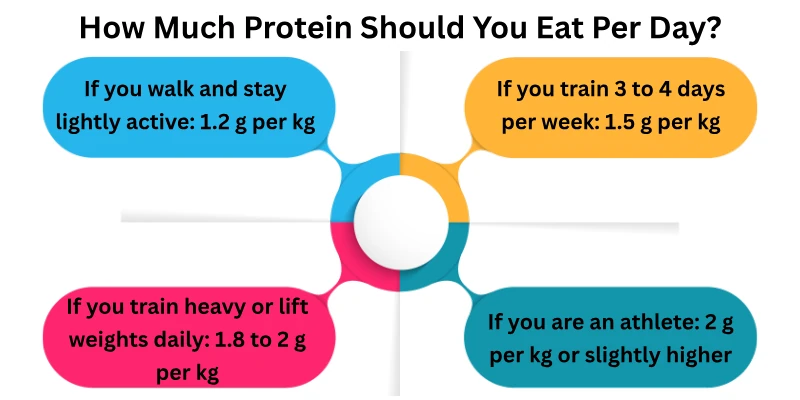
Precise Daily Protein Guide
- If you walk and stay lightly active: 1.2 g per kg
- If you train 3 to 4 days per week: 1.5 g per kg
- If you train heavy or lift weights daily: 1.8 to 2 g per kg
- If you are an athlete: 2 g per kg or slightly higher
Correct intake ensures maximum muscle repair and growth.
Best Time to Eat Protein for Maximum Muscle Support
Timing plays a big role in muscle growth. Your muscles absorb nutrients better during certain windows.
Best Timing Windows
- Morning to stop overnight muscle breakdown
- Post workout to activate fast repair
- Before sleep to support recovery during deep rest
- Evenly throughout the day to maintain stable muscle building
These timing habits improve your training results significantly.
How Protein Improves Muscle Performance
Strong muscles depend on consistent recovery. Protein makes your muscles contract better, lift more weight and resist fatigue during long training sessions.
Performance Benefits
- Improves strength output
- Enhances muscle endurance
- Reduces tiredness between exercises
- Supports strong balance and stability
This helps you train at a higher level.
Long Term Benefits of Protein for Muscle Health
Protein protects your muscles as you age. Muscle naturally declines after 30, but strong protein intake slows this process.
Long Term Muscle Protection
- Prevents age related muscle loss
- Supports spine, joints and posture
- Keeps your body active and mobile
- Reduces injury risk and weakness
This makes protein essential for lifelong health.
Final Summary
Protein shapes your body, strengthens your muscles and supports strong recovery. When you understand what does protein do for muscles, you make better choices in your training, diet and daily routine.
Now you fully understand what does protein do for muscles and how to apply it for long lasting strength, stable metabolism and better body performance.
FAQs: Protein for Muscle Growth
Here are some of the most commonly asked questions related to how important is protein for muscle growth:
Protein gives your muscles the building blocks they need to repair and grow after workouts. Without enough protein, your muscles recover slowly and cannot get stronger. Eating high protein foods daily helps your body rebuild fibers efficiently.
Yes, protein reduces soreness because it repairs tiny tears in your muscles after exercise. Amino acids from protein help your muscles recover faster. This makes you ready for the next workout sooner.
The right amount depends on your weight and activity. Beginners may need around 1.2 g per kg of body weight, while heavy lifters may need 1.8–2 g per kg. Matching protein intake to training helps muscle protein synthesis and growth.
Eating protein after workouts or before sleep maximizes recovery. Your muscles absorb amino acids better at these times. Spreading protein evenly during the day also keeps muscles nourished.
Yes, protein protects muscles during weight loss. When calories are low, your body burns fat instead of muscle if protein intake is high. This is why people include protein in their weight reduce plan for safe fat loss.
Animal sources like chicken, eggs, fish, and Greek yogurt are highly effective. Plant sources like lentils, beans, chickpeas, tofu, and quinoa also help. A mix of these gives your muscles the nutrients needed to grow.
Protein alone helps maintain existing muscles but cannot create major muscle growth without activity. Resistance or strength training is needed for advice for losing weight or building strength effectively. Protein supports recovery and prevents muscle loss during rest.




- Be Respectful
- Stay Relevant
- Stay Positive
- True Feedback
- Encourage Discussion
- Avoid Spamming
- No Fake News
- Don't Copy-Paste
- No Personal Attacks
- Be Respectful
- Stay Relevant
- Stay Positive
- True Feedback
- Encourage Discussion
- Avoid Spamming
- No Fake News
- Don't Copy-Paste
- No Personal Attacks
