How To Track Macros For Weight Loss & Hit Your Goals
Published: 30 Jun 2026
Tracking macros is one of the most effective ways to lose weight while maintaining energy, muscle, and overall health. Unlike simply counting calories, macro tracking focuses on the quality and balance of the nutrients you eat.
Macronutrients, protein, carbohydrates, and fats each have a unique role in your body. Protein preserves muscles and keeps you full, carbs provide energy for daily activity, and healthy fats support hormones and metabolism.
Many people struggle to maintain a consistent diet because they ignore the balance of macros. By tracking them properly, you gain awareness of what you are eating, reduce overeating, and achieve sustainable results.
This guide will teach you how to track macros for weight loss effectively, step by step, with practical tips and examples.
How to Track Macros for Weight Loss
Tracking macros is an effective way to manage your calorie intake while ensuring your body gets the right balance of protein, carbohydrates, and fats. It helps you make informed food choices, control portions, and stay consistent with your weight loss goals.
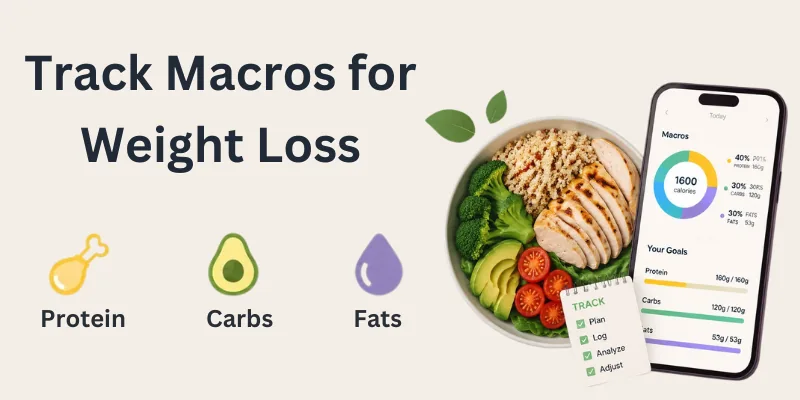
By following a few simple steps and monitoring your daily intake, you can build healthy eating habits that support long-term fat loss. Here are the key steps to help you track your macros and achieve fat loss naturally:
- Understand Macros and Their Role
- Calculate Your Daily Calorie Needs
- Set Your Macro Ratio for Fat Loss
- Use a Macro Tracking App
- Weigh and Measure Your Food
- Track Every Meal and Snack
- Prioritize Protein Intake
- Adjust Macros Based on Progress
- Plan and Prep Your Meals in Advance
- Stay Consistent and Patient
Let’s dive into each step in detail.
1. Understand Macros and Their Role
Macros are nutrients that provide your body with calories and energy. There are three main macronutrients:
- Protein: 4 calories per gram. Helps maintain muscle, improves fullness, and supports metabolism.
- Carbohydrates: 4 calories per gram. Primary energy source for workouts and daily activity.
- Fats: 9 calories per gram. Essential for hormone production, brain function, and satiety.
Knowing these basics allows you to make informed choices instead of blindly counting calories. It helps you understand which foods are more filling, which boost energy, and which support fat loss.
How To Apply:
- Learn the calorie value of each macro.
- Understand how your body uses protein, carbs, and fats.
- Avoid extreme diets that eliminate entire food groups.
- Focus on balance, not perfection.
- Educate yourself using trusted nutrition resources.
Benefits:
- Builds awareness of what you eat.
- Helps you make informed food choices.
- Supports healthier, structured weight loss.
2. Calculate Your Daily Calorie Needs
To lose weight effectively, you need to know how many calories your body burns each day, your Total Daily Energy Expenditure (TDEE). Once you know your TDEE, you can create a calorie deficit to lose fat safely. A moderate deficit of 300–500 calories per day is recommended for steady weight loss without losing muscle.
How To Apply:
- Use online calculators to estimate TDEE.
- Factor in your age, weight, height, and activity level.
- Subtract 300–500 calories for weight loss.
- Avoid extreme deficits that cause energy drops.
- Adjust periodically as your weight changes.
Benefits:
- Provides a clear daily calorie target.
- Prevents overeating.
- Supports sustainable fat loss.
3. Set Your Macro Ratio for Fat Loss
Once calories are determined, divide them into macros. A common weight loss macro ratio is:
- Protein: 30–35% of total calories
- Carbohydrates: 35–40%
- Fats: 25–30%
Protein should be prioritized to preserve lean muscle. Carbs provide energy for workouts, and fats support hormones and satiety. Ratios can be adjusted based on activity level, body type, and preferences.
How To Apply:
- Calculate protein needs first (0.7–1g per pound of body weight).
- Allocate fats moderately (healthy sources like nuts, avocado, olive oil).
- Fill the remaining calories with carbs.
- Use a macro calculator for guidance.
- Adjust based on hunger, energy, and results.
Benefits:
- Maintains muscle during weight loss.
- Keeps energy stable.
- Promotes steady fat loss.
4. Use a Macro Tracking App
Apps simplify tracking macros and calories accurately. They allow you to log meals, scan barcodes, and calculate daily intake automatically. Apps also help you see where your diet may be unbalanced.
How To Apply:
- Download a reliable macro-tracking app (MyFitnessPal, Cronometer, or Lose It!).
- Enter your daily macro targets.
- Log every meal and snack immediately.
- Scan packaged foods to save time.
- Review totals at the end of the day.
Benefits:
- Increases accuracy.
- Improves accountability.
- Saves time compared to manual calculations.
5. Weigh and Measure Your Food
Estimating food portions often leads to miscalculations. Using a kitchen scale ensures precision and improves macro tracking accuracy. Even small mistakes can add up over time.
How To Apply:
- Buy a digital kitchen scale.
- Weigh raw foods before cooking for accuracy.
- Measure oils, butter, and sauces carefully.
- Track portion sizes consistently.
- Avoid guessing quantities, especially for calorie-dense foods.
Benefits:
- Prevents hidden calorie intake.
- Supports accurate macro tracking.
- Helps maintain steady fat loss.
6. Track Every Meal and Snack
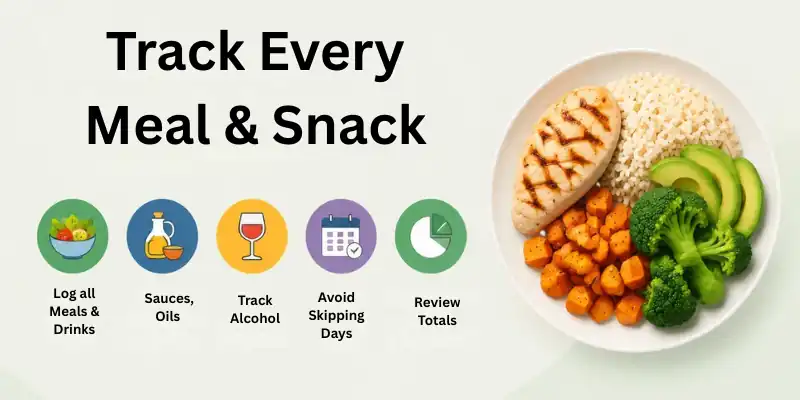
Consistency is key in macro tracking. Even small snacks or beverages contain calories and macros that can impact your results. Accurate tracking ensures you stay within your targets.
How To Apply:
- Log all meals, drinks, and snacks.
- Include sauces, oils, and toppings.
- Track alcohol, if consumed.
- Avoid skipping days of tracking.
- Review totals before going to bed.
Benefits:
- Builds discipline.
- Prevents hidden overeating.
- Improves overall results.
7. Prioritize Protein Intake
Protein is essential for preserving muscle during weight loss. It also increases satiety, reducing hunger and cravings. Higher protein intake slightly increases metabolism due to the thermic effect of food.
How To Apply:
- Include protein in every meal (chicken, fish, eggs, Greek yogurt, beans).
- Spread intake evenly throughout the day.
- Use protein-rich snacks if needed.
- Avoid replacing protein entirely with carbs or fats.
- Adjust intake if experiencing hunger.
Benefits:
- Preserves lean muscle.
- Reduces cravings.
- Supports fat loss.
8. Adjust Macros Based on Progress
Weight loss is not always linear. If results plateau, you may need to tweak your calories or macro distribution slightly. Avoid large changes that can affect energy or mood.
How To Apply:
- Track weight weekly.
- Check macro adherence.
- Reduce calories slightly if progress stalls.
- Increase physical activity if needed.
- Make gradual adjustments, not drastic changes.
Benefits:
- Maintains steady fat loss.
- Prevents frustration.
- Encourages data-driven decisions.
9. Plan and Prep Meals in Advance
Meal planning makes hitting macro targets much easier. Prepped meals prevent last-minute poor choices and help you stay on track. It also saves time and reduces stress.
How To Apply:
- Prepare meals for the week ahead.
- Pre-log them in your macro tracking app.
- Keep healthy snacks ready.
- Cook in bulk to save time.
- Avoid fast food temptations by planning ahead.
Benefits:
- Ensures macro targets are met.
- Reduces impulsive eating.
- Supports consistent weight loss.
10. Stay Consistent and Patient
Tracking macros requires consistency. Missing a few days is okay, but long gaps reduce accuracy and slow progress. Focus on long-term habits rather than perfection.
How To Apply:
- Track meals daily for best results.
- Review weekly averages instead of obsessing over one day.
- Stay flexible but mindful.
- Celebrate milestones that don’t involve food.
- Keep learning and adjusting.
Benefits:
- Builds sustainable fat loss habits.
- Improves awareness of nutrition.
- Encourages a healthy lifestyle mindset.
Final Note
In this guide, we have covered how to track macros for weight loss. Guys, start slowly by tracking one or two meals per day to learn your portion sizes. Use an app to make it easier and adjust gradually. Focus on building a habit rather than perfection, and results will follow. Patience, consistency, and accurate tracking are key to long-term success.
FAQs
Here are some of the most commonly asked questions related to how to track macros for weight loss:
Macros are the main nutrients that give your body energy: protein, carbohydrates, and fats. Each macro has a different calorie content and role in the body. Understanding macros helps you balance meals and reach your goals.
No, most people track macros temporarily to learn portion control and healthy eating. Once you understand your needs, you can estimate without strict tracking. The goal is to build sustainable habits.
Yes, you can lose weight without tracking macros. However, tracking makes results more accurate and helps preserve muscle. It also teaches you better control over your food choices.
Aim for 0.7–1 gram of protein per pound of body weight daily. Protein supports muscle retention and keeps you full longer. Spread it throughout your meals for best results.
Yes, apps like MyFitnessPal and Cronometer make tracking easy for beginners. They let you log meals quickly and calculate macros automatically. Starting with an app helps you learn portion sizes and track consistently.
Results vary, but most people notice changes in 2–4 weeks. Consistent tracking and balanced meals make the difference. Patience is important for sustainable fat loss.
No, healthy fats are essential for hormones, energy, and overall health. Only eating too many calories from any source can cause fat gain. Include healthy fats like nuts, olive oil, and avocado in your diet.
Yes, you can track macros when eating out. Estimate portion sizes and use nutrition info from the restaurant or tracking apps. It may not be perfect, but staying consistent is more important than exact numbers.
Be consistent but allow small variations. Focus on averages over time rather than perfection every meal. Flexibility helps you stick to tracking long-term.
Start with a macro calculator to know your targets. Log your meals daily in an app and track consistently. Adjust portions gradually based on progress and how your body responds.






- Be Respectful
- Stay Relevant
- Stay Positive
- True Feedback
- Encourage Discussion
- Avoid Spamming
- No Fake News
- Don't Copy-Paste
- No Personal Attacks
- Be Respectful
- Stay Relevant
- Stay Positive
- True Feedback
- Encourage Discussion
- Avoid Spamming
- No Fake News
- Don't Copy-Paste
- No Personal Attacks
