How to Reduce Inflammation at Home: Natural Ways to Heal
Published: 16 Apr 2026
Inflammation is the body’s natural response to injury, infection, or stress. While short-term inflammation is normal, chronic inflammation can cause pain, swelling, and health problems. You can reduce inflammation at home using simple remedies and lifestyle changes.
These methods help your body heal naturally, reduce discomfort, and prevent long-term issues. In this guide, you will learn the most effective ways to reduce inflammation at home safely. All remedies are natural, easy to do, and backed by research.
Ways to Reduce Inflammation at Home
Here are the best ways to reduce inflammation at home. They work for joints, muscles, and overall body health.
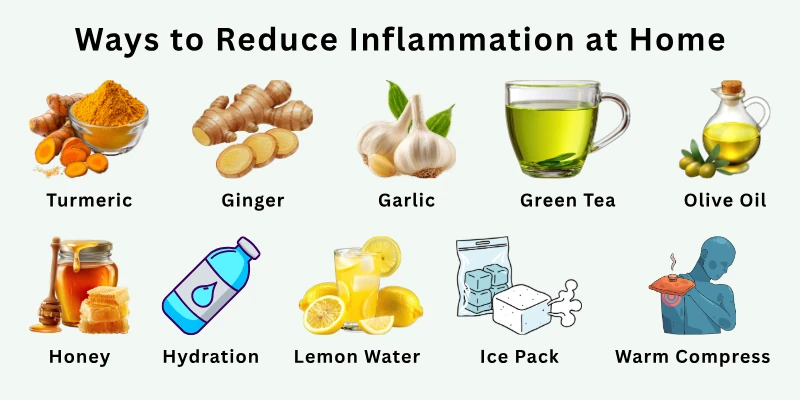
List of Remedies:
- Cold Compress or Ice Pack
- Warm Compress
- Turmeric
- Ginger
- Garlic
- Green Tea
- Omega-3 Rich Foods
- Olive Oil
- Lemon Water
- Honey
- Epsom Salt Bath
- Stretching or Light Exercise
- Hydration
- Sleep and Rest
- Avoid Processed Foods
Let us cover all in detail.
1. Cold Compress or Ice Pack
A cold compress reduces swelling and numbs inflamed areas. It is effective for injuries, joint pain, or localized inflammation. Applying ice for 10–20 minutes reduces redness and discomfort. Cold therapy also prevents further tissue damage. Repeat 2–3 times a day for best results.
Benefits:
- Reduces swelling
- Numbs pain
- Prevents further damage
- Speeds up recovery
- Easy and safe to use
2. Warm Compress
Warm compress improves blood circulation to inflamed muscles or joints. It relaxes tight muscles and reduces stiffness. Warmth can be used for chronic inflammation or after initial swelling decreases. Applying heat for 15–20 minutes relieves discomfort naturally. Combine with gentle stretching for better results.
Benefits:
- Relaxes muscles
- Improves blood flow
- Reduces stiffness
- Eases pain
- Supports recovery
3. Turmeric
Turmeric contains curcumin, a natural anti-inflammatory compound. Drinking turmeric tea or adding it to meals reduces chronic inflammation. Curcumin blocks inflammatory pathways in the body. It also supports joint health and immune function. Regular use prevents flare-ups and promotes overall wellness.
Benefits:
- Reduces chronic inflammation
- Supports joints and muscles
- Boosts immunity
- Prevents flare-ups
- Safe daily use
4. Ginger
Ginger fights inflammation naturally and eases pain. Consuming fresh ginger, ginger tea, or supplements reduces swelling. It also improves digestion and circulation. Regular intake supports long-term inflammation control. Ginger works best combined with turmeric for maximum effect.
Benefits:
- Reduces inflammation
- Improves circulation
- Supports digestion
- Relieves pain naturally
- Enhances overall health
5. Garlic
Garlic has anti-inflammatory and antioxidant properties. Eating raw garlic or adding it to meals helps reduce swelling. It also improves immunity and circulation. Garlic fights free radicals, protecting tissues from damage. Consistent use prevents chronic inflammation.
Benefits:
- Fights inflammation naturally
- Boosts immunity
- Improves circulation
- Protects tissues
- Prevents chronic inflammation
6. Green Tea
Green tea contains polyphenols that reduce inflammation. Drinking 2–3 cups daily helps control joint pain and swelling. Green tea also supports heart health and immunity. Its antioxidants fight free radicals that cause chronic inflammation. Regular consumption promotes overall wellness.
Benefits:
- Reduces inflammation
- Supports heart and joint health
- Boosts immunity
- Fights free radicals
- Safe daily beverage
7. Omega-3 Rich Foods
Omega-3 fatty acids reduce inflammatory molecules in the body. Sources include fish, flaxseed, chia seeds, and walnuts. Regular intake helps relieve joint pain and swelling. Omega-3s also support brain health and cardiovascular function. Include these foods daily for long-term benefits.
Benefits:
- Reduces inflammatory molecules
- Relieves joint pain
- Supports brain and heart health
- Promotes overall wellness
- Safe and natural
8. Olive Oil
Olive oil contains healthy fats and anti-inflammatory compounds. Using extra virgin olive oil in cooking or salads helps reduce chronic inflammation. It improves heart health and protects tissues. Olive oil also supports joint and muscle recovery. Regular use enhances long-term inflammation control.
Benefits:
- Reduces chronic inflammation
- Supports heart health
- Protects tissues
- Aids joint and muscle recovery
- Safe daily use
9. Lemon Water
Lemon water provides antioxidants and vitamin C that fight inflammation. Drinking it daily supports immunity and detoxification. Lemon reduces acidity and improves digestion. It also hydrates the body, which is important for inflammation control. Regular intake helps maintain overall health.
Benefits:
- Reduces inflammation naturally
- Boosts immunity
- Supports digestion
- Hydrates the body
- Enhances overall health
10. Honey
Honey has antibacterial and anti-inflammatory properties. Consuming raw honey reduces swelling and irritation. It also supports immunity and digestive health. Honey is safe for daily use and works as a natural anti-inflammatory agent. Use it in tea, warm water, or directly.
Benefits:
- Reduces inflammation naturally
- Supports immunity
- Improves digestion
- Safe daily use
- Relieves irritation
11. Epsom Salt Bath
Epsom salt contains magnesium that relaxes muscles and reduces swelling. A warm bath with Epsom salt soothes sore muscles and inflamed joints. It also improves circulation and promotes relaxation. Regular baths support natural recovery from inflammation. This method is safe and easy at home.
Benefits:
- Relaxes muscles
- Reduces swelling
- Improves circulation
- Promotes recovery
- Safe and natural
12. Stretching or Light Exercise
Gentle stretching improves flexibility and reduces muscle tension. Light exercise increases blood flow, which helps reduce inflammation. Yoga or walking supports joint health. Avoid intense activity during severe inflammation. Regular movement prevents stiffness and chronic pain.
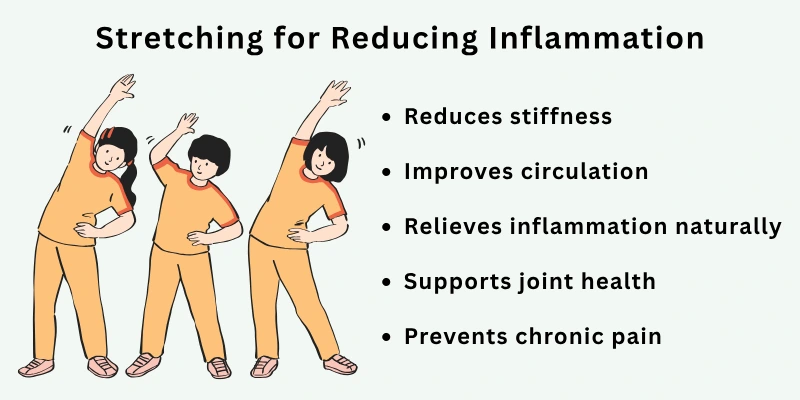
Benefits:
- Reduces stiffness
- Improves circulation
- Relieves inflammation naturally
- Supports joint health
- Prevents chronic pain
13. Hydration
Drinking enough water helps flush out toxins and reduces inflammation. Proper hydration improves circulation and reduces swelling. Combine water with electrolyte-rich drinks for better results. Dehydration can worsen inflammation, so regular intake is key. Staying hydrated supports overall recovery.
Benefits:
- Flushes out toxins
- Reduces swelling
- Improves circulation
- Supports recovery
- Maintains overall health
14. Sleep and Rest
Adequate sleep allows the body to repair tissues and reduce inflammation. Poor sleep worsens chronic inflammation and delays recovery. Adults should aim for 7–9 hours per night. Rest also reduces stress, which is linked to inflammation. Quality sleep supports immunity and overall health.
Benefits:
- Reduces chronic inflammation
- Promotes tissue repair
- Supports immunity
- Reduces stress
- Improves overall recovery
15. Avoid Processed Foods
Processed foods contain trans fats, sugar, and additives that increase inflammation. Avoiding these foods reduces chronic inflammation naturally. Eating whole foods like vegetables, fruits, and lean proteins is better for recovery. Reducing sugar and fried foods supports joint and heart health. Healthy food choices prevent long-term inflammation.
Benefits:
- Reduces chronic inflammation
- Supports heart and joint health
- Promotes natural recovery
- Improves overall wellness
- Prevents long-term health issues
Final Note
In this guide, we have covered the most effective ways to reduce inflammation at home. Personally, I recommend combining turmeric, ginger, hydration, and gentle stretching daily for best results.
Consistency is key to reducing chronic inflammation and improving overall health. Listen to your body and adopt the remedies that suit you best. Start today and let your body heal naturally and safely!
FAQs: How to Reduce Inflammation at Home
Here are some of the most commonly asked questions related to tips of reducing inflammation naturally at home:
Cold compress and turmeric are very effective. They reduce swelling and pain quickly. Regular use improves recovery time.
Yes, ginger has strong anti-inflammatory properties. Drinking ginger tea or adding it to meals helps reduce swelling. It also supports digestion and immunity.
Turmeric contains curcumin, which blocks inflammatory pathways. Drinking turmeric tea or adding it to food reduces chronic inflammation. Regular use supports joint and muscle health.
Yes, raw honey reduces swelling and irritation. It also boosts immunity naturally. Honey can be added to tea or water for daily use.
Yes, green tea is rich in antioxidants. Drinking 2–3 cups daily lowers chronic inflammation. It also supports heart and joint health.
Adequate sleep allows the body to repair tissues. Poor sleep worsens inflammation. Adults should aim for 7–9 hours per night.
Yes, omega-3s reduce inflammatory molecules in the body. Foods like fish, flaxseed, and walnuts are excellent sources. Regular intake supports joint and heart health.
Yes, gentle exercise increases blood flow and reduces stiffness. Yoga or light activity improves flexibility. Avoid intense exercise during severe inflammation.
Yes, water flushes out toxins and reduces swelling. Electrolyte drinks enhance recovery. Staying hydrated supports overall health.
Avoid processed foods, sugar, and fried items. These increase chronic inflammation. Focus on whole foods, fruits, vegetables, and lean proteins.






- Be Respectful
- Stay Relevant
- Stay Positive
- True Feedback
- Encourage Discussion
- Avoid Spamming
- No Fake News
- Don't Copy-Paste
- No Personal Attacks
- Be Respectful
- Stay Relevant
- Stay Positive
- True Feedback
- Encourage Discussion
- Avoid Spamming
- No Fake News
- Don't Copy-Paste
- No Personal Attacks
