Natural Remedies for Thrush: Simple Ways to Support Relief at Home
Published: 21 Oct 2026
Thrush is a common yeast infection caused by an overgrowth of Candida that can affect areas like the mouth, tongue, and throat. It may cause symptoms such as white patches, soreness, redness, burning, or discomfort while eating and drinking.
Many people look for natural remedies for thrush to soothe symptoms and support their body’s natural balance. Simple approaches like maintaining good oral hygiene, using gentle rinses, and adding supportive foods may help improve comfort. However, natural methods may not replace medical treatment, especially if symptoms are severe or keep coming back.
In this article, we will explore effective home remedies for thrush and simple care tips that may help relieve discomfort and support better oral health naturally.
Natural Remedies for Thrush
Thrush can cause uncomfortable symptoms such as white patches, soreness, irritation, and a burning sensation in the affected area. Some natural approaches may help soothe discomfort and support a healthy balance in the body. These remedies focus on gentle care, improving oral comfort, and supporting overall health. However, severe or recurring thrush may require medical treatment.
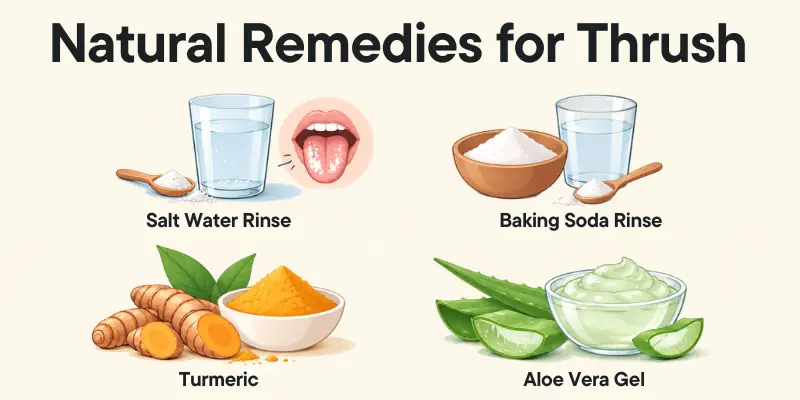
Here are some natural treatments for thrush that may help relieve symptoms and support recovery:
- Salt Water Rinse
- Baking Soda Rinse
- Probiotic Yogurt
- Coconut Oil
- Turmeric
- Aloe Vera Gel
- Garlic as Part of a Healthy Diet
- Stay Hydrated
- Maintain Good Oral Hygiene
- Diluted Apple Cider Vinegar Mouthwash (With Caution)
Let’s explore each remedy and learn how it may help soothe thrush symptoms naturally.
1. Salt Water Rinse
A salt water rinse is a simple and gentle way to support oral care when dealing with thrush symptoms. It may help soothe soreness, reduce discomfort, and keep the mouth cleaner by removing excess debris.
Many people use this traditional rinse as part of their natural remedies for an oral thrush routine. While it may provide temporary relief, it does not replace antifungal treatment when thrush is severe or persistent.
To make a saltwater rinse:
- Mix ½ teaspoon of salt into a cup of warm water.
- Swish the solution gently around your mouth for a few seconds.
- Spit it out and avoid swallowing the rinse.
- Repeat once or twice daily if it feels comfortable.
Tip: Avoid using too much salt because a strong solution may irritate sensitive mouth tissues.
2. Baking Soda Rinse
A baking soda rinse is another simple option that some people use to support mouth comfort during thrush. Baking soda may help balance the mouth’s environment and reduce irritation caused by excess yeast buildup.
This gentle rinse can be included as part of home remedies for oral thrush to help keep the mouth clean and soothe mild discomfort. However, it should be used carefully because it may not be suitable for everyone.
To make a baking soda rinse:
- Mix ½ teaspoon of baking soda into a cup of warm water.
- Stir well until the baking soda dissolves.
- Swish the mixture gently around your mouth.
- Spit it out and avoid swallowing it.
- Use it once or twice daily if it feels comfortable.
Tip: Stop using the rinse if it causes burning, dryness, or extra irritation.
3. Probiotic Yogurt
Probiotic yogurt may help support a healthy balance of bacteria in the mouth and body. The beneficial bacteria found in yogurt can support the natural microbial balance, which may help manage discomfort linked with thrush symptoms.
Choosing plain, unsweetened yogurt with live cultures is a better option because added sugar may encourage yeast growth. Including probiotic foods as part of a balanced diet may support overall oral and digestive health.
How to include probiotic yogurt:
- Choose plain yogurt that contains live active cultures.
- Eat a small serving as part of your daily diet.
- Avoid flavored yogurts that contain added sugars.
- Include other probiotic foods to support healthy bacteria levels.
Tip: Yogurt may help support balance, but it should not be considered a replacement for medical treatment if thrush symptoms continue.
4. Coconut Oil
Coconut oil is a popular natural ingredient that many people use for oral care. It contains compounds that may have antimicrobial properties and may help support a cleaner mouth environment when used as part of a good hygiene routine.
Some people use coconut oil as a gentle oil rinse to help reduce discomfort and maintain oral freshness. However, it should be used carefully and should not replace recommended thrush treatments when symptoms are ongoing.
How to use coconut oil:
- Take a small amount of coconut oil and gently swish it around your mouth.
- Continue for a few minutes without swallowing it.
- Spit it out and rinse your mouth with water.
- Use it occasionally as a supportive oral care method.
Tip: Avoid swallowing coconut oil after rinsing, and stop using it if it causes irritation or discomfort.
5. Turmeric
Turmeric is a natural spice known for its antioxidant and anti-inflammatory properties. Some people use turmeric as part of their wellness routine because it may help support the body’s natural response to irritation and discomfort.
Adding turmeric to meals may be a simple way to include it in your diet while supporting overall health. However, more research is needed to confirm its direct effects on thrush, so it should be considered a supportive option rather than a primary treatment.
How to include turmeric:
- Add a small amount of turmeric to cooked foods or drinks.
- Use it as part of a balanced diet.
- Avoid applying turmeric directly to irritated areas unless advised by a healthcare professional.
Tip: Choose dietary use over concentrated turmeric products if you are trying it for general health support.
6. Aloe Vera Gel
Aloe vera gel is commonly used for its soothing properties and may help calm mouth irritation caused by thrush symptoms. Its cooling effect may provide temporary comfort and support a more comfortable feeling in the affected area.
When using aloe vera for oral care, it is important to choose a product that is safe for use inside the mouth. Aloe vera may support symptom relief, but it does not remove the need for proper treatment if thrush does not improve.
How to use aloe vera gel:
- Choose a food-grade aloe vera gel made for oral use.
- Apply a small amount to the irritated area as directed on the product.
- Avoid using products that contain added chemicals or ingredients not meant for mouth use.
- Stop using it if you notice increased irritation.
Tip: Always check that aloe vera gel is labeled safe for oral use before applying it inside the mouth.
7. Garlic as Part of a Healthy Diet
Garlic is a natural ingredient that contains compounds with antimicrobial properties. Including garlic in your diet may support overall health and help maintain the body’s natural defenses, which can be beneficial when dealing with infections like thrush.
Some people use garlic as part of their natural thrush treatment routine, but applying raw garlic directly inside the mouth is not recommended because it may cause irritation. It is better to include garlic as a regular food ingredient.
How to include garlic:
- Add fresh garlic to cooked meals for flavor and nutrition.
- Use garlic as part of a balanced diet with other healthy foods.
- Avoid placing raw garlic directly on mouth sores or irritated areas.
- Choose moderate amounts to prevent stomach or mouth discomfort.
Tip: Garlic may support general health, but it should not replace medical treatment if thrush symptoms are severe or persistent.
8. Stay Hydrated
Staying hydrated is an important part of supporting oral health when dealing with thrush symptoms. Drinking enough water may help prevent dry mouth, keep oral tissues comfortable, and support the natural cleansing process of the mouth.
Proper hydration can also make it easier to manage discomfort caused by dryness or irritation. While drinking water does not directly treat thrush, it can support overall mouth comfort and healthy habits.
How to stay hydrated:
- Drink enough water throughout the day.
- Take small sips regularly instead of waiting until you feel thirsty.
- Limit sugary drinks that may encourage yeast growth.
- Choose plain water to keep your mouth refreshed.
Tip: Keeping your mouth moist can help improve comfort, especially if thrush causes dryness or irritation.
9. Maintain Good Oral Hygiene
Good oral hygiene plays an important role in managing thrush symptoms and supporting a healthier mouth environment. Keeping your mouth clean may help remove food particles, reduce irritation, and prevent conditions that allow yeast to grow.
Simple daily habits can support oral health and make it easier to recover from discomfort. These practices can also help lower the chance of thrush returning, especially when combined with other recommended care methods.
How to maintain good oral hygiene:
- Brush your teeth gently twice a day with a soft toothbrush.
- Clean your tongue carefully to remove buildup.
- Rinse your mouth after meals to keep it fresh.
- Replace your toothbrush after the infection improves.
- Clean dentures properly if you wear them.
Tip: Avoid harsh mouth products that may irritate sensitive tissues while you are experiencing thrush symptoms.
10. Diluted Apple Cider Vinegar Mouthwash (With Caution)
Apple cider vinegar is a popular natural ingredient that some people use as part of their oral care routine. Its acidic nature may help create an environment that is less favorable for yeast growth, but more research is needed to understand its effectiveness for thrush.
If you choose to try apple cider vinegar, it is important to dilute it properly because undiluted vinegar may irritate sensitive mouth tissues. It should be used carefully and stopped if it causes burning or discomfort.
How to use diluted apple cider vinegar mouthwash:
- Mix a small amount of apple cider vinegar with plenty of water.
- Swish the diluted solution gently around your mouth.
- Spit it out and avoid swallowing the mixture.
- Rinse your mouth with plain water afterward if needed.
Tip: Avoid using apple cider vinegar if it increases irritation, pain, or dryness in your mouth.
Foods That May Support Candida Balance
A balanced diet can support your overall health and help maintain a healthy internal environment. While foods cannot eliminate thrush, choosing nutrient-rich options may support your natural defenses and promote better oral health.

Including probiotic foods, vegetables, and low-sugar options in your diet may help support a healthy balance while managing thrush symptoms.
Here are some foods that may support a healthy Candida balance:
- Probiotic Foods
- Vegetables
- Protein-Rich Foods
- Low-Sugar Options
- Fermented Foods
Try to limit: Excess sugary foods and drinks
When to See a Doctor for Thrush
Thrush symptoms may improve with proper care, but some cases need medical attention. It is important to consult a healthcare professional if symptoms become severe, keep coming back, or do not improve over time.
Seek medical advice if you notice any of these warning signs:
- Persistent Symptoms: Symptoms do not improve with home care or continue for a long time.
- Recurring Thrush: Thrush keeps returning frequently despite proper care.
- Severe Pain: Pain, soreness, or irritation becomes intense and difficult to manage.
- Swallowing Problems: You have trouble swallowing food or liquids.
- Signs of Infection: You develop a fever or notice signs of a spreading infection.
- Higher-Risk Groups: Babies, older adults, or people with weakened immune systems are at higher risk of developing thrush symptoms.
Getting timely medical advice can help identify the cause of recurring thrush and ensure you receive the right treatment.
Conclusion
In this article, we covered natural remedies for thrush, supportive foods, prevention tips, and when to seek medical advice. These simple care methods may help soothe symptoms and support better oral health.
However, if thrush symptoms are severe, persistent, or keep returning, it is important to consult a healthcare professional for proper treatment.
For more helpful information, check the frequently asked questions below to learn more about thrush and its natural care options.
Frequently Asked Questions
Here are some common questions about natural remedies for thrush:
1. What are the best natural remedies for thrush?
Some common natural remedies for thrush that may help soothe symptoms include:
- Saltwater rinse to support oral comfort.
- Baking soda rinse to help maintain a cleaner mouth environment.
- Probiotic yogurt to support healthy bacteria balance.
- Coconut oil as a gentle oral care option.
- Good oral hygiene habits to support mouth health.
2. Can I treat oral thrush naturally at home?
You can try some home remedies for oral thrush to help relieve mild symptoms and improve comfort. Simple steps like rinsing your mouth, staying hydrated, and eating probiotic foods may support oral health. If symptoms do not improve, medical advice may be needed.
3. How can I get rid of thrush naturally?
To get rid of thrush naturally, focus on supportive care like good oral hygiene, a balanced diet, and gentle mouth rinses. These habits may help reduce irritation and support your body’s natural balance. However, thrush may require antifungal treatment in some cases.
4. Is yogurt good for thrush?
Plain yogurt with live cultures may be helpful as part of a natural thrush treatment approach. Probiotics in yogurt can support healthy bacteria levels in the mouth and body. Choose unsweetened yogurt because added sugar may not be helpful for yeast balance.
5. Can baking soda help with oral thrush?
A baking soda rinse is a popular home remedy for oral thrush that may help soothe mouth discomfort. It may also support a cleaner oral environment when used properly. Avoid overusing it because it can irritate some people.
6. How long does thrush take to go away naturally?
The time it takes for thrush to improve can vary depending on the cause and severity of symptoms. Mild cases may improve with proper care, while others may need medical treatment. If symptoms continue or worsen, consult a healthcare professional.
7. What foods should I eat for thrush recovery?
Certain foods may support your overall health and oral balance while managing thrush symptoms:
- Probiotic foods like plain yogurt and fermented foods.
- Vegetables that provide important nutrients.
- Protein-rich foods to support the body.
- Low-sugar options to avoid excess sugar intake.
- Healthy foods that support immune health.
8. What should I avoid when I have thrush?
Avoiding certain habits and products may help reduce irritation and support recovery:
- Excess sugary foods and drinks.
- Smoking, which can affect oral health.
- Alcohol-based mouthwashes that may irritate tissues.
- Harsh or irritating oral care products.
- Applying undiluted essential oils inside the mouth.
9. Can apple cider vinegar help treat thrush naturally?
Some people try diluted apple cider vinegar as a natural treatment for thrush, but evidence is limited. If used, it should always be diluted because it may irritate sensitive mouth tissues. Stop using it if it causes burning or discomfort.
10. When should I see a doctor for thrush?
You should seek medical advice if natural remedies for oral thrush do not improve your symptoms. Severe pain, trouble swallowing, recurring thrush, or signs of infection need professional attention. Early treatment can help prevent complications and provide proper relief.




- Be Respectful
- Stay Relevant
- Stay Positive
- True Feedback
- Encourage Discussion
- Avoid Spamming
- No Fake News
- Don't Copy-Paste
- No Personal Attacks
- Be Respectful
- Stay Relevant
- Stay Positive
- True Feedback
- Encourage Discussion
- Avoid Spamming
- No Fake News
- Don't Copy-Paste
- No Personal Attacks
