18 Best Healthy Habits for Men (Expert Daily Guide)
Published: 8 Jul 2026
Men often overlook their health until serious issues arise. But maintaining a strong, energetic body and a sharp mind is easier than many think. By adopting simple daily practices, men can prevent chronic diseases, boost energy, and live longer.
Healthy habits affect everything from heart health to hormone balance and mental well-being. Small, consistent changes lead to major long-term results. In this guide, we share expert-backed advice to help every man take control of his health and wellness.
18 Best Healthy Habits for Men
Here are the best healthy habits for men that can transform your life. Following these habits not only improves physical strength but also mental clarity. Simple steps, consistently followed, make wellness achievable.
List of all the best healthy habits for men to follow:
- Prioritize Testosterone Health
- Stay Physically Active
- Meet Your Protein Needs
- Maintain a Healthy Weight
- Know Your Body Type
- Limit Added Sugars and Refined Carbs
- Break Sedentary Habits
- Drink Plenty of Water
- Eat Fiber-Rich Foods
- Overcome Exercise Barriers
- Focus on Vitamins and Minerals
- Manage Stress Effectively
- Practice Kegel Exercises
- Choose Healthy Fats
- Schedule Annual Checkups
- Sleep 7–9 Hours Daily
- Limit Alcohol and Avoid Smoking
- Practice Mindful Eating
Let’s explore these habits in detail and understand how to incorporate them into daily life.
1. Prioritize Testosterone Health
Testosterone plays a vital role in muscle mass, energy, sex drive, and overall wellness. Men naturally experience declining testosterone levels after 30, but lifestyle habits can accelerate or slow this decline. Maintaining a healthy weight, staying active, and eating a balanced diet support optimal hormone levels.
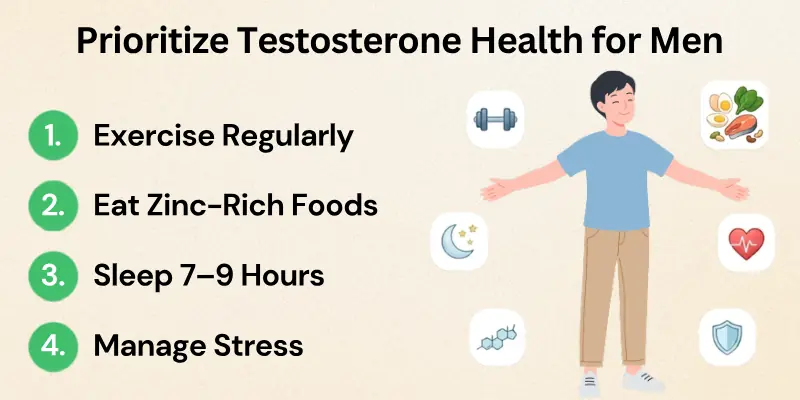
Avoid excessive alcohol and manage stress to protect testosterone production. Regular medical checkups can help detect deficiencies early.
Helpful points:
- Maintain a healthy waistline to support hormone balance
- Include zinc- and magnesium-rich foods
- Avoid chronic stress and poor sleep
- Consult your doctor for hormone testing if needed
2. Stay Physically Active
Exercise strengthens the heart, muscles, and bones. It also improves mental health and reduces risks of diabetes, stroke, and cancer. Aim for at least 150 minutes of moderate activity weekly.
Resistance training helps reduce visceral fat and boosts testosterone. Incorporating both aerobic and strength exercises is key.
Helpful points:
- Walk, jog, or cycle regularly
- Include resistance training 2–3 times a week
- Stretch daily to improve flexibility
- Take short movement breaks if sitting long hours
3. Meet Your Protein Needs
Protein is essential for muscle repair, tissue building, and hormone production. Men should consume 20–40 grams per meal, focusing on lean sources.
Adequate protein supports fitness and prevents muscle loss as you age. Balance intake with complex carbohydrates and healthy fats.
Helpful points:
- Eat chicken, fish, eggs, tofu, or legumes
- Include nuts and seeds for healthy fats
- Consider Greek yogurt or low-fat dairy
- Rotate protein sources to get a full range of amino acids
4. Maintain a Healthy Weight
Excess belly fat increases risks for diabetes, heart disease, and low testosterone. Focus on reducing visceral fat through diet and exercise.
A Mediterranean-style diet with plenty of fruits, vegetables, whole grains, and lean proteins is effective. Track your weight and waist circumference regularly.
Helpful points:
- Limit processed foods and sugary drinks
- Exercise consistently to burn visceral fat
- Track portion sizes and eat mindfully
- Use whole grains instead of refined carbs
5. Know Your Body Type
Understanding whether you’re an ectomorph, mesomorph, or endomorph helps tailor fitness goals. It clarifies what kind of workouts and diet adjustments are most effective.
Accept your natural body type, but challenge yourself to improve strength and fitness safely. Avoid comparing yourself to others.
Helpful points:
- Ectomorphs: Focus on strength training and protein
- Mesomorphs: Combine cardio and resistance exercises
- Endomorphs: Prioritize fat loss and consistent activity
- Track progress to adjust your routines
6. Limit Added Sugars and Refined Carbs
Excess sugar and refined carbs reduce testosterone and promote weight gain. They also increase the risk of diabetes, high blood pressure, and heart disease.
Read nutrition labels to spot hidden sugars in foods and beverages. Replace sugary snacks with fruits and nuts.
Helpful points:
- Avoid sodas, energy drinks, and candy
- Limit sugary cereals and baked goods
- Choose whole grains over white bread
- Use natural sweeteners like honey in moderation
7. Break Sedentary Habits
Prolonged sitting increases risk of obesity, diabetes, and heart disease. Men should move frequently during the day to support overall health.
Simple changes, like taking stairs or stretching, reduce risks and improve circulation. Make activity a habit both at work and home.
Helpful points:
- Take short movement breaks every hour
- Walk or stretch during phone calls
- Limit screen time in the evening
- Consider standing desks or walking meetings
8. Drink Plenty of Water
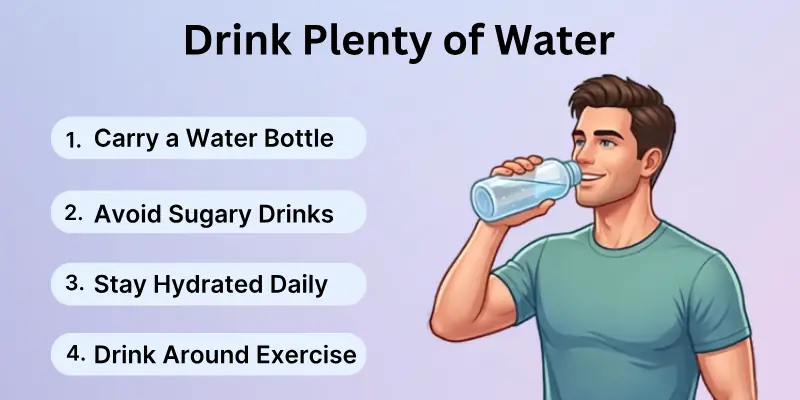
Water supports heart function, muscle activity, digestion, and temperature regulation. Men need approximately 13 cups daily, adjusting for activity and climate. Proper hydration prevents fatigue, supports mental clarity, and aids digestion.
Helpful points:
- Carry a water bottle during the day
- Drink before, during, and after exercise
- Limit sugary drinks and sodas
- Monitor urine color to gauge hydration
9. Eat Fiber-Rich Foods
Fiber improves digestion, reduces cholesterol, and stabilizes blood sugar. Most men consume far less than the recommended 25–38 grams per day.
Vegetables, fruits, legumes, nuts, and whole grains are excellent sources. Increasing fiber intake supports weight management and heart health.
Helpful points:
- Add a cup of non-starchy vegetables per meal
- Include fruits like berries and apples
- Eat legumes such as beans and lentils
- Drink water to help fiber work efficiently
10. Overcome Exercise Barriers
Common barriers include lack of time, motivation, and access to facilities. Planning workouts, preparing equipment, or exercising at home helps overcome these obstacles. Creative solutions like bodyweight exercises or short routines can be highly effective.
Helpful points:
- Keep workout clothes handy
- Use apps, playlists, or podcasts for motivation
- Try resistance bands or dumbbells at home
- Schedule exercise as part of daily routine
11. Focus on Vitamins and Minerals
Micronutrients like magnesium, zinc, and vitamin D support testosterone, immunity, and muscle health. A balanced diet ensures sufficient intake. Consider supplements only when dietary sources are insufficient.
Helpful points:
- Eat spinach, nuts, seeds, and beans
- Include lean meats and fish
- Expose yourself to sunlight for vitamin D
- Track nutrient intake if needed
12. Manage Stress Effectively
Stress increases cortisol, which reduces testosterone and increases fat. Managing stress improves mental and physical health. Mindfulness, meditation, hobbies, and exercise are effective strategies.
Helpful points:
- Meditate for 10–15 minutes daily
- Practice deep breathing exercises
- Engage in relaxing hobbies
- Take breaks from work and social media
13. Practice Kegel Exercises
Kegel exercises strengthen pelvic muscles, supporting urinary control and sexual health. They benefit men after surgery and improve bladder function. Practicing regularly yields noticeable improvements.
Helpful points:
- Contract pelvic muscles for 5–10 seconds
- Repeat 10–15 times per session, 2–3 times daily
- Combine with core exercises for better results
- Maintain consistency for optimal benefits
14. Choose Healthy Fats
Unsaturated fats support heart health and testosterone production. Include nuts, seeds, olive oil, and fatty fish. Avoid trans fats and excessive saturated fats from processed foods.
Helpful points:
- Use olive oil for cooking and dressings
- Eat avocados and nuts regularly
- Include salmon, tuna, and trout
- Avoid fried and processed snacks
15. Schedule Annual Checkups
Regular exams catch health issues early. Blood pressure, cholesterol, blood sugar, and prostate health screenings are essential. Consult your doctor to adjust screening based on age, family history, and risk factors.
Helpful points:
- Check vitals and lab tests annually
- Discuss lifestyle and diet with your doctor
- Schedule prostate cancer screening as advised
- Address mental health concerns proactively
16. Sleep 7–9 Hours Daily
Adequate sleep restores energy, supports hormone balance, and improves cognition. Poor sleep increases risks for obesity, heart disease, and diabetes. Maintain a consistent sleep schedule for optimal results.
Helpful points:
- Avoid screens 1 hour before bed
- Keep the bedroom dark and cool
- Follow a relaxing bedtime routine
- Aim for 7–9 hours per night
17. Limit Alcohol and Avoid Smoking
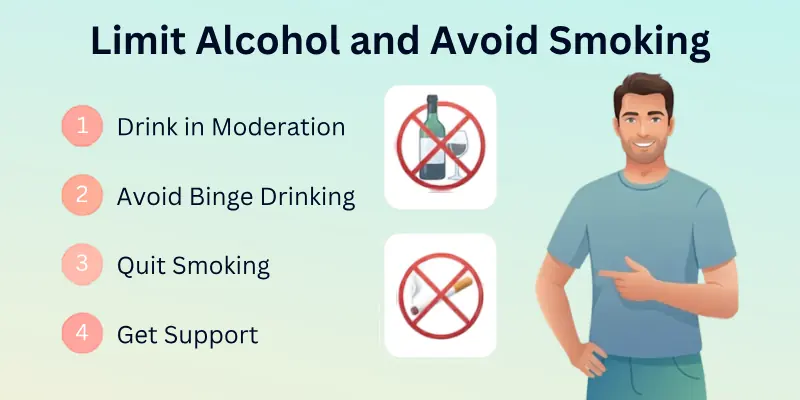
Alcohol and tobacco increase risks for heart disease, liver disease, cancer, and low testosterone. Limiting intake protects overall health and longevity.
Helpful points:
- Keep alcohol moderate (1–2 drinks/day max)
- Avoid binge drinking
- Quit smoking completely
- Seek support programs if needed
18. Practice Mindful Eating
Mindful eating helps control portions, reduces overeating, and improves digestion. Focus on nutrient-rich foods and eat slowly. This habit supports weight management and long-term health.
Helpful points:
- Chew slowly and savor meals
- Avoid distractions like TV while eating
- Listen to hunger and fullness cues
- Prioritize whole, unprocessed foods
How You Can Take Care of These Things in One Go
Combining multiple habits simplifies your health routine. Daily planning, consistent meals, regular workouts, and hydration can address many goals at once. A structured schedule reduces stress and improves adherence. Start small, track progress, and gradually add habits.
Quick Tips:
- Prepare healthy meals in advance
- Include exercise in your commute or breaks
- Drink water throughout the day
- Plan sleep and relaxation times
- Monitor progress weekly
Final Note
In this guide, we have covered the best healthy habits for men to boost energy, prevent disease, and improve longevity. These 18 tips are backed by experts and research, making them reliable for everyday life.
Start implementing a few at a time and gradually build a complete routine. Consistency is the key, small daily actions lead to lifelong wellness. Following these habits ensures men remain strong, active, and healthy for years to come.
FAQs
Here are some of the most commonly asked questions related to the best healthy habits for men:
Eating a balanced diet, exercising regularly, managing stress, and sleeping well are key. Staying hydrated and avoiding smoking or excess alcohol also supports overall wellness. These habits work together to improve physical and mental health.
Men should aim for at least 150 minutes of moderate activity per week. Include strength training 2–3 times weekly for optimal results. Even short daily walks or resistance exercises help maintain fitness.
A diet rich in protein, fiber, fruits, vegetables, and healthy fats supports hormones, heart health, and weight management. Avoiding added sugars, refined carbs, and processed foods prevents chronic disease.
Sleep restores energy, balances hormones, improves mental focus, and reduces risk of obesity and heart disease. Men should aim for 7–9 hours per night for optimal health.
Yes, stress increases cortisol, which lowers testosterone and promotes fat accumulation. Managing stress through meditation, hobbies, or exercise helps maintain hormone balance.
Supplements can help if diet is lacking essential nutrients like magnesium, zinc, or vitamin D. However, a balanced diet and healthy habits are more important than relying solely on supplements.
Annual checkups are recommended for monitoring vitals, blood work, and overall wellness. Screenings for prostate, heart, and other risks should follow your doctor’s advice. Regular exams catch problems early, making prevention easier.





- Be Respectful
- Stay Relevant
- Stay Positive
- True Feedback
- Encourage Discussion
- Avoid Spamming
- No Fake News
- Don't Copy-Paste
- No Personal Attacks
- Be Respectful
- Stay Relevant
- Stay Positive
- True Feedback
- Encourage Discussion
- Avoid Spamming
- No Fake News
- Don't Copy-Paste
- No Personal Attacks
