Methods of Stress Management: Easy Techniques for Daily Life
Published: 24 Mar 2026
Stress affects your body, your thoughts, and your actions. It can make you tired, confused, or worried. If you do not manage it on time, it becomes stronger and affects your daily life. The good news is that stress can be reduced when you follow the right steps.
This guide explains the best methods of stress management in the simplest way so anyone can understand and use them immediately.
Let us begin.
Methods of Stress Management
In this part, you will cover the main stress management methods. Here are the stress management methods that are fully researched and trusted by experts.
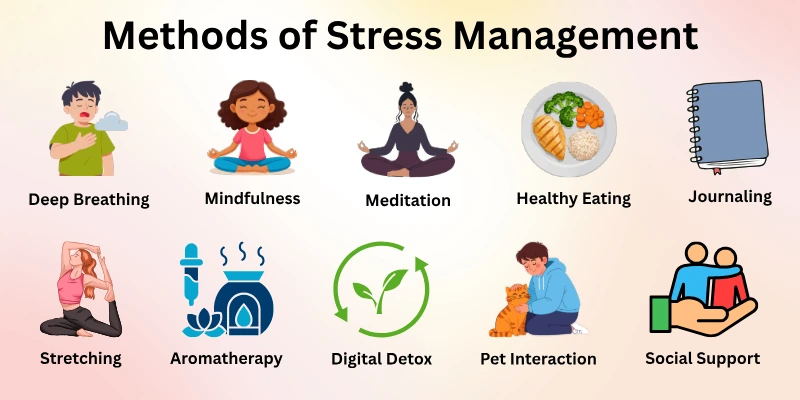
List of All Methods:
- Deep Breathing
- Progressive Muscle Relaxation
- Mindfulness
- Meditation
- Physical Activity
- Walking in Nature
- Sleep Routine Adjustment
- Healthy Eating
- Time Management
- Setting Boundaries
- Talking to Someone
- Journaling
- Stretching
- Guided Imagery
- Listening to Calm Music
- Warm Bath or Shower
- Positive Self Talk
- Reducing Caffeine
- Short Break Technique
- Hobbies and Creative Activities
- Gratitude Practice
- Social Support
- Organizing Your Space
- Limiting Screen Time
- Prayer or Spiritual Practices
- Laughter Therapy
- Aromatherapy
- Hydration Habits
- Digital Detox
- Breath Counting
- Grounding Technique
- Stress Busters Activity Box
- Pet Interaction
- Slow Eating Technique
- Body Scan Relaxation
Let us cover all the methods in detail.
1. Deep Breathing
Deep breathing means taking long, slow breaths that fill your lungs properly. It helps your body move from stress mode to calm mode. Your heart rate slows down, and your muscles relax naturally.
Your mind feels lighter because your brain receives more oxygen. This method works for almost everyone because it is simple and fast. You can use it anywhere to stop stress before it becomes heavy.
How it works:
- Sit or stand in a comfortable place.
- Breathe in through your nose slowly.
- Hold your breath for a few seconds.
- Release it gently through your mouth.
- Repeat several times until your body relaxes.
2. Progressive Muscle Relaxation
Progressive muscle relaxation means tightening and relaxing different muscle groups one by one. It helps your body release hidden tension that you may not notice. Your mind becomes calm when your muscles stop holding stress.
This method is useful during anxiety or when your body feels stiff. It also helps with better sleep and better focus. Many therapists suggest this for strong stress relief.
How it works:
- Sit or lie in a quiet place.
- Tighten one muscle group for a few seconds.
- Release the tension slowly.
- Move to another muscle group.
- Continue until your full body feels loose and calm.
3. Mindfulness
Mindfulness means paying attention to the present moment with full awareness. You notice your breathing, thoughts, and feelings without judging them. This stops your mind from running into future worries or past problems.
It gives your brain a break from nonstop thinking. You learn to stay steady during stress and respond calmly. Many people use this every day to build emotional strength.
How it works:
- Sit in a quiet place.
- Focus on your breath or surroundings.
- Notice thoughts, but let them pass.
- Bring your mind back when it wanders.
- Practice for a few minutes daily.
4. Meditation
Meditation means training your mind to stay focused and peaceful. It helps reduce stress, anxiety and negative thoughts.
Your mind becomes clearer and more organized. Your breathing slows down, and your body feels lighter. Meditation also improves patience and emotional control. Many people use it as a daily relaxing habit.
How it works:
- Sit in a comfortable position.
- Close your eyes gently.
- Focus on your breath or one word.
- Let distractions pass without reacting.
- Continue for a few minutes.
5. Physical Activity
Physical activity means moving your body to release energy and tension. Your brain produces chemicals that make you feel happy. Your muscles relax, and your stress level falls naturally. Even short movements give strong benefits.
This method also improves sleep and boosts confidence. It is one of the most effective stress busters.
How it works:
- Do light exercise or stretching.
- Try running, cycling or dancing.
- Use small home workouts.
- Move for at least a few minutes daily.
- Choose activities you enjoy.
6. Walking in Nature
Walking in nature helps your mind slow down and breathe better. Nature gives peace and comfort without any effort. Your thoughts become quiet, and your feelings become softer.
Fresh air supports relaxation and clears your mind. This method works for stress, sadness, and overthinking. It also improves mood very quickly.
How it works:
- Find a park or green space.
- Walk slowly and observe your surroundings.
- Pay attention to sounds and wind.
- Breathe naturally and deeply.
- Walk for 10 to 20 minutes.
7. Sleep Routine Adjustment
A regular sleep routine keeps your mind stable and healthy. Poor sleep increases stress and weakens your focus. Good sleep balances your emotions and thoughts.
Your body heals itself during rest. Adjusting your routine removes tiredness and heavy moods. It is one of the most important stress reduction methods.
How it works:
- Sleep and wake up at the same time daily.
- Avoid screens before bed.
- Keep your room dark and quiet.
- Use soft breathing before sleep.
- Limit caffeine in the evening.
8. Healthy Eating
Healthy eating supports your mind and body during stress. Some foods improve brain function and emotional stability.
Poor food choices increase anxiety and tiredness. Eating balanced meals gives energy and focus. Your mood improves when your body receives proper nutrients. This is a long-term method for managing stress.
How it works:
- Eat fresh fruits and vegetables.
- Add protein and whole grains.
- Drink enough water daily.
- Avoid heavy junk food.
- Do not skip meals.
9. Time Management
Time management helps you plan tasks without rushing. It reduces pressure and keeps your day organized. Your mind feels calmer when you know what to do next.
This method prevents overload and burnout. You also save time for rest and enjoyment. Good planning lowers stress from daily responsibilities.
How it works:
- Write a simple to-do list.
- Break big tasks into small steps.
- Set realistic goals.
- Avoid multitasking.
- Take small breaks between tasks.
10. Setting Boundaries
Setting boundaries means saying no when you feel overloaded. You protect your time, energy and peace. Boundaries stop people from using too much of your mental space.
You feel more in control of your life. This reduces stress and builds confidence. Healthy limits improve relationships.
How it works:
- Say no politely when needed.
- Set limits for work and personal time.
- Do not accept extra tasks when tired.
- Speak clearly about your needs.
- Protect your quiet time.
11. Talking to Someone
Talking to someone helps you release emotional weight. You feel less lonely when you share your worries. People can comfort you or offer solutions.
This builds emotional support and reduces pressure. Speaking your thoughts helps your mind relax. It also strengthens trust and connection.
How it works:
- Choose someone you trust.
- Explain how you feel calmly.
- Listen to their support.
- Accept comfort without guilt.
- Reach out when stress increases.
12. Journaling
Journaling means writing your thoughts on paper. It helps your mind unload stress that you hold inside.
You understand your emotions better when you write them. Journaling creates clarity and peace. It also helps you find solutions to your problems. Many people use it daily for better mental balance.
How it works:
- Write whatever you feel.
- Use simple and honest words.
- Note what stresses you.
- Note what helps you feel calm.
- Write for a few minutes daily.
13. Stretching
Stretching reduces tightness in your muscles. Stress often makes your body sore and stiff. Stretching opens your body and relaxes your breathing.
Your blood flow improves and your energy rises. It also helps your posture and prevents pain. This method is gentle and easy for all ages.
How it works:
- Stretch your arms and legs slowly.
- Hold each stretch for a few seconds.
- Do neck and shoulder stretches.
- Avoid pushing too hard.
- Use stretching during breaks.
14. Guided Imagery
Guided imagery means imagining a peaceful place in your mind. Your brain responds as if you are really there. This reduces stress and creates relaxation.
You feel calmer and lighter. It is very helpful during anxiety or fear. Many people use it before sleep or after a busy day.
How it works:
- Sit in a quiet place.
- Close your eyes gently.
- Picture a peaceful scene.
- Focus on the details.
- Stay in that image for a few minutes.
15. Listening to Calm Music
Calm music relaxes your mind and slows your heartbeat. It reduces stress energy in your body. Your mood improves, and your mind feels safe.
Music helps you focus better and breathe slowly. It is a simple stress buster that works quickly. Many people use it during work or rest.
How it works:
- Choose soft music.
- Sit in a quiet place.
- Listen with full attention.
- Take slow breaths.
- Play it whenever you feel tense.
16. Warm Bath or Shower
A warm bath relaxes your muscles and calms your thoughts. It reduces physical tension from stress. Your breathing becomes steady and slow.
Warm water helps your body release pressure. You feel refreshed and peaceful after a long day. It is a gentle way to stop mental overload.
How it works:
- Use warm water.
- Add calming scents if you like.
- Sit quietly and relax.
- Focus on the warmth.
- Stay until you feel calm.
17. Positive Self Talk
Positive self-talk means replacing negative thoughts with kind words. Stress grows when you speak harshly to yourself.
Gentle words give confidence and strength. Your mind becomes healthier with practice. This method improves emotional balance. It also builds a strong mindset.
How it works:
- Notice negative thoughts.
- Replace them with kind sentences.
- Speak to yourself softly.
- Repeat calming lines often.
- Practice daily.
18. Reducing Caffeine
Too much caffeine increases stress and anxiety. It speeds up your heart and makes your mind jumpy. Reducing it helps your body relax.
Your mood becomes more stable. You sleep better and think clearly. This method works well for daily stress control.
How it works:
- Drink less tea or coffee.
- Avoid energy drinks.
- Switch to herbal drinks.
- Reduce slowly each week.
- Drink more water instead.
19. Short Break Technique
Short breaks help your mind reset. Continuous work increases stress and decreases focus. A small pause gives your brain time to rest.
It also prevents burnout. You return with better clarity. This method fits every busy schedule.
How it works:
- Work for a set time.
- Take a short break.
- Stretch or breathe during the break.
- Return to work refreshed.
- Repeat throughout the day.
20. Hobbies and Creative Activities
Hobbies help your mind relax and express feelings. They reduce stress by shifting your focus to joy. Creative activities open new thoughts and ideas.
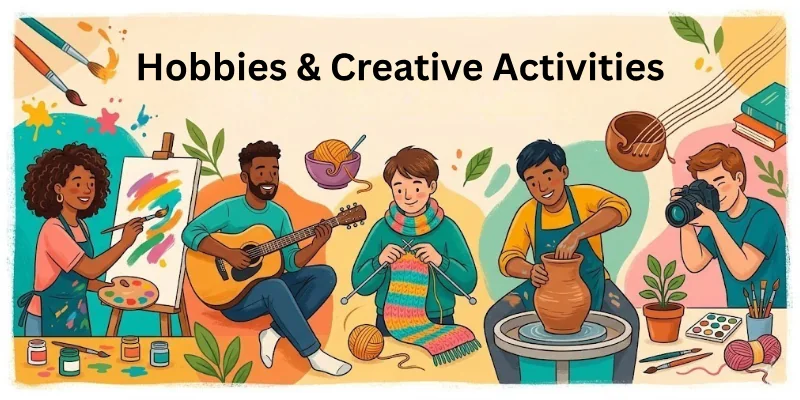
They build confidence and happiness. You feel lighter and more peaceful. Hobbies also give your brain healthy stimulation.
How it works:
- Choose activities you enjoy.
- Spend a few minutes daily.
- Keep tools or supplies ready.
- Explore different creative options.
- Use hobbies as a stress break.
21. Gratitude Practice
Gratitude practice means noticing good things in your life. It shifts your focus from stress to appreciation. Your mood becomes positive and soft.
This reduces stress and builds emotional strength. You see your day with more hope. Many people use gratitude in the morning or at night.
How it works:
- Write three good things.
- Think of things you value.
- Thank people mentally.
- Notice small joys.
- Practice daily.
22. Social Support
Social support means spending time with people who care about you. Kind connection lowers stress quickly. You feel safe when you share feelings.
Support gives strength during difficult times. It improves emotional health. Relationships act as natural stress busters.
How it works:
- Meet friends or family.
- Share your feelings openly.
- Listen to their support.
- Spend time in warm company.
- Build steady connections.
23. Organizing Your Space
A clean space helps your mind feel stable. Messy areas increase stress and confusion. Organizing removes mental pressure. You feel more in control. Your focus improves and your tasks become easier. This is a fast method to de-stress.
How it works:
- Clean small areas first.
- Remove things you do not need.
- Arrange items neatly.
- Keep surfaces clear.
- Do a quick tidy daily.
24. Limiting Screen Time
Too much screen time increases stress and distracts your mind. Your eyes become tired, and your brain becomes overloaded. Limiting screens helps you rest.
Your sleep improves, and your mood becomes stable. This method supports both physical and mental calmness.
How it works:
- Set a limit for daily use.
- Avoid screens before bed.
- Take screen breaks often.
- Reduce social media time.
- Use offline activities.
25. Prayer or Spiritual Practices
Prayer or spiritual practices bring comfort and peace. They give emotional support during stress. Many people feel grounded and safe through faith.
These practices reduce fear and worry. They help you slow down your thoughts. Spiritual habits bring inner strength.
How it works:
- Sit quietly for prayer.
- Focus on peaceful feelings.
- Repeat words that calm you.
- Practice daily or as needed.
- Use it during emotional stress.
26. Laughter Therapy
Laughter therapy uses humor to reduce stress. Your brain releases happy chemicals when you laugh. Your muscles relax and your mood lifts.
This removes tension from your mind. Laughter is a simple but powerful stress buster. It is helpful in both groups and alone.
How it works:
- Watch funny videos.
- Talk to cheerful people.
- Join laughter sessions.
- Smile more often.
- Allow yourself to enjoy humor.
27. Aromatherapy
Aromatherapy uses scents to relax your mind. Pleasant smells calm your senses. Your breathing becomes steady and slow. Stress reduces naturally. It helps with sleep and mood. Many people use it as a daily routine.
How it works:
- Use essential oils.
- Add scents to warm water.
- Use a diffuser.
- Breathe slowly near the scent.
- Pick calming fragrances.
28. Hydration Habits
Good hydration keeps your brain active and balanced. Dehydration increases stress and tiredness. Drinking enough water improves focus.
Your body functions smoothly when hydrated. This reduces irritation and pressure. Water is a simple stress buster.
How it works:
- Drink water throughout the day.
- Carry a water bottle.
- Add fruit slices for taste.
- Avoid long gaps without water.
- Increase water when stressed.
29. Digital Detox
A digital detox means staying away from phones or screens for some time. Your mind gets a chance to reset. You feel less pressure from online noise.
This improves your focus and mood. Digital rest gives your brain real peace. It is very helpful for stress.
How it works:
- Turn off notifications.
- Set phone free hours.
- Spend time outdoors.
- Use real-life activities.
- Avoid screens at night.
30. Breath Counting
Breath counting means focusing on your breath while counting slowly. It helps you stay calm and aware. Your mind stops running into stressful thoughts.
This method is simple and quiet. It also helps with anxiety and tension. People often use it during panic moments.
How it works:
- Sit quietly and breathe normally.
- Count each breath slowly.
- Focus on the counting.
- Return to counting if distracted.
- Continue for a few minutes.
31. Grounding Technique
Grounding helps bring your mind back to the present. Stress often pulls you into worries. Grounding gives stability and safety. It helps your brain feel steady.
This technique is useful during panic or emotional overload. It works quickly for many people.
How it works:
- Look at things around you.
- Notice colors and shapes.
- Touch something near you.
- Listen to sounds.
- Say things you observe.
32. Stress Busters Activity Box
A stress buster activity box is a small kit filled with things that calm you. It helps you relax anytime. You can choose items that comfort your mind.
It gives a quick break from stress. You feel safe because everything you need is in one place. This box becomes your calming tool.
How it works:
- Add soft items or scents.
- Place calming notes inside.
- Add small toys or tools.
- Keep it easy to reach.
- Use it during stress.
33. Pet Interaction
Pets give natural comfort and joy. Spending time with animals reduces stress quickly. You feel loved and supported. Pet interaction lowers loneliness and sadness. Your mind becomes lighter and happier. This is a gentle and effective stress buster.
How it works:
- Pet or cuddle your animal.
- Play with them.
- Talk to them softly.
- Take them for a walk.
- Spend daily time with them.
34. Slow Eating Technique
Slow eating helps calm your mind and body. Rushing food increases stress. Eating slowly improves digestion and awareness.
You enjoy your meal fully. Your brain feels relaxed during slow actions. This creates a peaceful routine.
How it works:
- Take small bites.
- Chew slowly and notice the taste.
- Put the spoon down between bites.
- Eat without screens.
- Focus on the experience.
35. Body Scan Relaxation
Body scan relaxation means checking each part of your body with attention. It helps you notice tension and release it. Your breathing becomes slow and calm. Your brain learns to relax deeply. This method is helpful during stress, anxiety, and sleeplessness. It brings peaceful body awareness.
How it works:
- Lie down comfortably.
- Start focusing on your toes.
- Move attention upward slowly.
- Notice tension and relax it.
- Continue until your whole body feels light.
How To Manage Stress In The Workplace
Workplace stress is very common. Heavy workload, deadlines, and team pressure can make your mind feel tired. You can manage it with simple steps. These actions help you stay calm at work.
Tips
- Take short breaks
- Keep a clean desk
- Use time management
- Talk politely when stressed
- Focus on one task at a time
How To Manage Stress As a Student
Students face stress because of exams, assignments, and expectations. Stress can block learning. You can control it with healthy habits. These habits support your mind and memory.
Tips
- Make a simple study plan
- Sleep on time
- Avoid study overload
- Study in small sessions
- Eat healthy snacks
How To Manage Stress At Home
Home stress comes from daily responsibilities. It can build quietly. Simple changes can reduce this pressure. These tips help you create a peaceful home.
Tips
- Keep your space clean
- Follow a routine
- Share tasks
- Rest when needed
- Stay organized
Common Signs of Stress
In this part, you will cover the signs that show your stress level is rising. These signs help you understand what your mind and body are trying to say.
Signs
- Headache or shoulder pain
- Trouble sleeping
- Fast heartbeat
- Quick anger
- Feeling tired all day
- Not able to focus
- Eating too much or too little
- Dry mouth or sweating
- Feeling nervous or shaky
If several signs stay for weeks, you need to use strong anxiety and stress management techniques.
When You Should Get Professional Help
In this part, you will cover when it is the right time to contact an expert.
Situations
- Stress stays for more than a month
- Anxiety blocks your daily routine
- You feel confused all the time
- You lose interest in everything
- You feel out of control
- You cannot sleep for many nights
A professional helps you find the right stress-busting plan for your lifestyle.
Parting Words
In this guide, we have covered the top 35 methods of stress management with clear explanations that help you understand what each method means and how it supports a calmer mind. You now know many ways to relax your body, balance your thoughts, and control your stress in daily life. Each method gives you a small tool that you can use anytime you feel tired or overwhelmed. You can try different methods and choose the ones that fit your lifestyle and comfort.
My personal recommendation is that you start with two or three easy methods and practice them daily. Give yourself patience and time, because stress reduces slowly when you follow gentle habits. You deserve peace and comfort in every part of your life.
Thank you for reading till the end. Take care of yourself, breathe softly, and smile a little. 🌸😊
FAQs: Managing Stress Techniques
Here are some of the most commonly asked questions related to the stress reduction method:
You can reduce stress by using breathing exercises, short breaks and light physical movement. These small habits calm your mind and relax your body. These are strong parts of the stress reduction method.
You can stop sudden stress by pausing for a moment and taking slow deep breaths. This gives your brain time to reset. These steps work well when you wonder how stop stress in any situation.
Stress busters include laughter, music, stretching and short walks. These activities break the pressure inside your mind. Many people use these when they want to know what are stress busters for quick relief.
You can manage both by using grounding, breathing and slow movement. These techniques help your thoughts and body feel safe. Many experts suggest practicing anxiety and stress management techniques every day.
You can take small breaks, organize tasks and talk to someone you trust. These steps reduce pressure and make your mind clear. They also work as things to help de stress during heavy days.
Calming habits train your mind to react with patience instead of fear. They build emotional balance and better focus. These habits support every modern stress reduction method.
You can follow a fixed sleep routine, limit screens and use light relaxation before bed. These steps prepare your body for rest. They also help avoid sudden stress that keeps your mind awake.


- Be Respectful
- Stay Relevant
- Stay Positive
- True Feedback
- Encourage Discussion
- Avoid Spamming
- No Fake News
- Don't Copy-Paste
- No Personal Attacks
- Be Respectful
- Stay Relevant
- Stay Positive
- True Feedback
- Encourage Discussion
- Avoid Spamming
- No Fake News
- Don't Copy-Paste
- No Personal Attacks
