Healthy Foods for Kidney Health: Best Diet for Strong Kidneys
Published: 25 Jul 2026
Your kidneys filter waste, balance fluids, and help keep your body healthy. When kidney function starts to decline, daily food choices become even more important. Kidney protection foods can support kidney function, reduce strain on the kidneys, and help you maintain better overall health. Choosing the right foods today can make a difference over time.
Many foods contain nutrients that help support healthy kidney function. At the same time, some foods can increase the workload on your kidneys, especially if you already have kidney problems. That is why a balanced kidney health diet plays an important role in protecting these vital organs.
In this guide, you will learn about the best foods for kidney health, including fruits, vegetables, proteins, and healthy drinks that support kidney function. You will also discover which foods to limit and simple dietary tips to help keep your kidneys healthy for years to come.
Best Healthy Foods for Kidney Health
The foods you eat every day can directly impact your kidney health. A kidney-friendly diet provides important nutrients while helping reduce the workload on your kidneys. Choosing the right foods may also help support kidney function and lower the risk of future kidney problems.
Let’s look at some of the foods good for kidney health and how they can benefit your kidneys.
Low-Potassium Fruits for Kidney Support
Many fruits contain important vitamins, minerals, and antioxidants that support overall health. For people who need to manage potassium intake, certain fruits can be a better choice while still providing valuable nutrients.
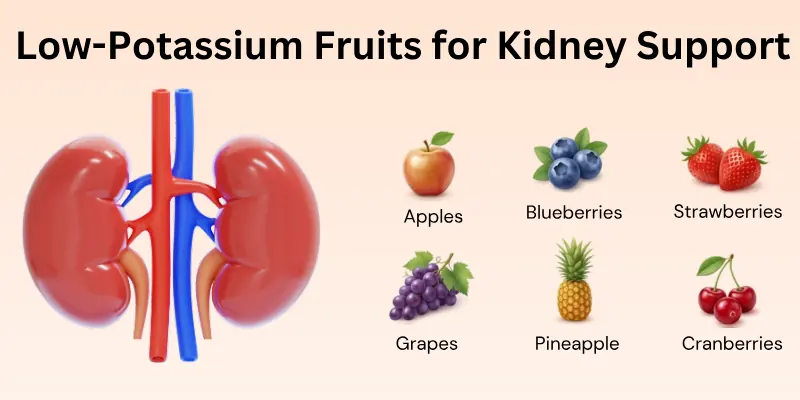
Here are some of the natural foods for kidney health that are naturally lower in potassium and can fit into a kidney-friendly diet:
- Apples
- Blueberries
- Strawberries
- Grapes
- Pineapple
- Cranberries
Let’s take a closer look at how each of these fruits can support kidney health.
Apples🍎
Apples are one of the best fruits for kidney health because they are naturally low in potassium and sodium. They also contain fiber, which may help support healthy digestion and overall wellness. Their antioxidant content can help protect cells from damage caused by oxidative stress.
Tip: Enjoy apples as a snack between meals or add sliced apples to oatmeal and salads for extra fiber.
Blueberries
Blueberries are rich in antioxidants that help protect the body’s cells. They are also lower in potassium than many other fruits, making them a popular choice in many kidney-friendly diets. Their natural sweetness makes them easy to include in everyday meals.
Tip: Add fresh or frozen blueberries to yogurt, oatmeal, or smoothies for a nutritious breakfast.
Strawberries🍓
Strawberries are packed with antioxidants, vitamin C, and fiber. They are lower in potassium than many other fruits, which makes them a good option for many kidney-friendly diets. Their antioxidants may also help protect cells from damage and support overall health.
Tip: Add fresh strawberries to yogurt, oatmeal, or fruit salads for a naturally sweet and refreshing snack.
Grapes🍇
Grapes provide antioxidants and hydration while remaining relatively low in potassium. They can be a healthy choice for people who want to enjoy a sweet fruit without adding too much potassium to their diet. Grapes also contain compounds that may support heart health, which is closely linked to kidney health.
Tip: Keep a bowl of chilled grapes in the refrigerator for a quick and healthy snack throughout the day.
Pineapple🍍
Pineapple is one of the best fruits for kidney health because it contains less potassium than many tropical fruits. It also provides vitamin C and antioxidants that support overall wellness. Its naturally sweet flavor makes it a tasty alternative to higher-potassium fruits.
Tip: Enjoy fresh pineapple as a snack or add it to smoothies and fruit bowls for extra flavor.
Cranberries🍒
Cranberries are well known for supporting urinary tract health. They contain antioxidants that help protect the body from oxidative stress and may help reduce the risk of certain urinary tract issues. This makes them a valuable addition to a kidney-friendly eating plan.
Tip: Choose fresh cranberries or unsweetened cranberry products to avoid added sugars.
Along with kidney-friendly fruits, certain vegetables can also help support kidney function and provide important nutrients for overall health.
Kidney-Friendly Vegetables
Vegetables provide vitamins, minerals, fiber, and antioxidants that support overall health. Many kidney-friendly vegetables are naturally low in potassium and can fit well into a balanced kidney-health diet. Adding a variety of vegetables to your meals can help you get important nutrients while supporting kidney function.
Here are some of the best vegetables for kidney health that can be included in a kidney-friendly diet:
- Cauliflower
- Cabbage
- Bell peppers
- Cucumber
- Garlic
- Onions
Let’s take a closer look at how these vegetables can support kidney health.
Cauliflower🥦
Cauliflower is a versatile vegetable that provides fiber, vitamin C, and antioxidants. It is lower in potassium than many other vegetables, making it a popular choice for people following a kidney-friendly diet. Its fiber content can also support healthy digestion.
Tip: Roast cauliflower with herbs and olive oil for a simple and flavorful side dish.
Cabbage🥬
Cabbage is rich in vitamins C and K while remaining relatively low in potassium. It also contains antioxidants that help protect cells from damage. This crunchy vegetable works well in many kidney-friendly meals.
Tip: Add shredded cabbage to salads, soups, or stir-fries for extra texture and nutrition.
Bell Peppers
Bell peppers provide vitamin C, antioxidants, and natural sweetness without adding large amounts of potassium. Their bright colors also contain plant compounds that support overall health. They can easily fit into a healthy kidney diet.
Tip: Slice bell peppers and enjoy them raw with a healthy dip or add them to salads and cooked dishes.
Cucumber🥒
Cucumbers have a high water content, which can help support hydration. They are low in calories and provide a refreshing addition to many meals. Their mild flavor makes them easy to include in a kidney-friendly eating plan.
Tip: Add cucumber slices to salads or infused water for a cool and refreshing option.
Garlic🧄
Garlic adds flavor to meals without the need for extra salt. It also contains compounds with anti-inflammatory properties that may support overall health. Using garlic can help reduce sodium intake while making food more enjoyable.
Tip: Use fresh garlic when cooking vegetables, soups, or lean proteins to add flavor naturally.
Onions🧅
Onions provide antioxidants and natural flavor while remaining low in potassium. They can help enhance the taste of meals without relying on high-sodium seasonings. This makes them a useful ingredient in many kidney-friendly recipes.
Tip: Sauté onions with vegetables or lean proteins to create a flavorful base for healthy meals.
After adding kidney-friendly fruits and vegetables to your meals, the next step is choosing protein sources that support kidney health.
High-Quality Protein Sources for Kidney Health
Protein helps build and repair tissues, supports muscle health, and plays an important role in many body functions. However, people who want to protect their kidneys should focus on high-quality protein sources that provide essential nutrients without adding unnecessary stress to kidney function.
Here are some of the best protein-rich Foods for healthy kidneys that can fit into a balanced diet:
- Egg whites
- Skinless chicken
- Salmon
- Tofu
- Lentils
Let’s explore how these protein sources can support kidney health.
Egg Whites🥚
Egg whites provide high-quality protein while remaining low in phosphorus compared to whole eggs. This makes them a popular choice for people who need to manage phosphorus intake. They also contain essential amino acids that help support muscle maintenance and overall health.
Tip: Add egg whites to omelets, scrambled dishes, or breakfast wraps for a protein-rich start to the day.
Skinless Chicken🍗
Skinless chicken offers lean protein with less saturated fat than many processed or fatty meats. It helps support muscle health while fitting well into a kidney-friendly diet when eaten in appropriate portions. Grilled, baked, or roasted chicken can be a healthy meal option.
Tip: Season chicken with herbs and spices instead of salt to add flavor without increasing sodium intake.
Salmon🐟
Salmon provides high-quality protein along with omega-3 fatty acids, which support heart health. Since heart and kidney health are closely connected, adding salmon to your diet may offer additional benefits. People with kidney disease should enjoy salmon in moderation and follow their healthcare provider’s advice.
Tip: Bake or grill salmon and serve it with kidney-friendly vegetables for a balanced meal.
Tofu
Tofu is a plant-based protein that can be a good alternative to some animal proteins. It provides essential nutrients while fitting into many healthy eating plans. Tofu also absorbs flavors well, making it easy to include in a variety of dishes.
Tip: Add tofu to stir-fries, soups, or salads for an easy protein boost.
Lentils
Lentils provide plant-based protein, fiber, and important nutrients. They can support overall health and help create satisfying meals. People with chronic kidney disease may need to monitor portion sizes because lentils contain potassium and phosphorus.
Tip: Use lentils in soups, stews, or grain bowls for a filling and nutritious meal.
In addition to fruits, vegetables, and protein foods, certain grains can also play a role in a healthy kidney-supportive diet.
Whole Grains That Support Kidney Function
Grains provide energy and can be an important part of a balanced diet for kidney health. However, some grains contain higher amounts of potassium and phosphorus than others. Choosing the right options and watching portion sizes can help support kidney function while meeting your daily nutrition needs.
Here are some grain-based foods that may fit into a kidney-friendly diet:
- White rice
- Oats
- Pasta and refined grains
Let’s look at how these foods can support kidney health.
White Rice🍚
White rice is often recommended for people with chronic kidney disease because it contains less phosphorus and potassium than brown rice. It is easy to digest and can serve as a simple base for many kidney-friendly meals. White rice also provides energy without adding large amounts of minerals that some kidney patients need to limit.
Tip: Pair white rice with lean protein and kidney-friendly vegetables for a balanced meal.
Oats🥣
Oats provide fiber and important nutrients that support overall health. They can help you feel full longer and make a nutritious breakfast option. Since oats contain moderate amounts of phosphorus and potassium, people with kidney disease may need to watch portion sizes.
Tip: Prepare oatmeal with fresh berries or sliced apples for a kidney-friendly breakfast.
Pasta and Refined Grains🍝
Pasta and other refined grain products can fit into a kidney-friendly eating plan when eaten in appropriate portions. They generally contain lower amounts of potassium and phosphorus than many whole-grain alternatives. The best choice depends on your kidney condition and dietary needs.
Tip: Choose simple pasta dishes with vegetables, garlic, and olive oil instead of high-sodium sauces.
Besides fruits, vegetables, proteins, and grains, healthy fats also play an important role in supporting overall kidney and heart health.
Healthy Fats for Kidney & Heart Support
Healthy fats provide energy and help your body absorb certain vitamins. They also support heart health, which is important because kidney and heart health are closely connected. Choosing healthier fat sources can help improve the quality of your diet while supporting overall wellness.
Here are some healthy fats that can fit into kidney-supportive foods:
- Olive oil
- Avocado
- Unsalted nuts
Let’s explore how these healthy fats can support kidney health.
Olive Oil
Olive oil contains healthy fats and antioxidants that support heart health. It can add flavor to meals without increasing sodium intake. Many people use olive oil as a healthier alternative to butter and other saturated fats.
Tip: Drizzle olive oil over salads or use it when roasting vegetables for extra flavor.
Avocado🥑
Avocados provide healthy fats, fiber, and several important nutrients. They can be a nutritious addition to many diets. However, avocados are relatively high in potassium, so people with kidney disease may need to enjoy them in moderation.
Tip: Spread a small amount of avocado on whole-grain toast or add a few slices to a salad.
Unsalted Nuts🥜
Unsalted nuts contain healthy fats, protein, and fiber. They can help satisfy hunger and make a convenient snack. Because nuts also contain potassium and phosphorus, portion control is important for people with chronic kidney disease.
Tip: Enjoy a small handful of unsalted nuts as a snack instead of processed chips or crackers.
Food is only part of a kidney-friendly lifestyle. The drinks you choose each day can also play a key role in supporting kidney function and staying properly hydrated.
Healthy Drinks for Kidney Support
What you drink is just as important as what you eat when it comes to kidney health. Staying properly hydrated helps your kidneys remove waste and maintain fluid balance in the body. Choosing kidney-friendly beverages can support kidney function while helping you avoid excess sugar, sodium, and other unwanted ingredients.

Here are some healthy drinks that can support kidney health and hydration:
- Herbal teas
- Lemon water
- Plain water
- Coconut water
Let’s take a closer look at how these drinks can fit into a kidney-friendly lifestyle.
Herbal Teas🍵
Certain herbal teas can be a soothing way to stay hydrated throughout the day. Many caffeine-free options provide flavor without added sugar or sodium. However, some herbal ingredients may not be suitable for people with kidney disease, so it is important to choose kidney-friendly varieties.
Tip: Check with your healthcare provider before regularly drinking herbal teas if you have chronic kidney disease.
Lemon Water🍋
Lemon water is a simple and refreshing drink that can help support hydration. Lemons contain citric acid, which may help reduce the risk of certain types of kidney stones. It also adds natural flavor to water without adding sugar.
Tip: Squeeze fresh lemon into a glass of water for a refreshing drink throughout the day.
Plain Water and Proper Hydration Balance💧
Plain water remains one of the best drinks for kidney health. It helps your kidneys remove waste products and supports many important body functions. Drinking enough water each day can help maintain proper hydration, but people with certain kidney conditions may need to follow fluid restrictions recommended by their doctor.
Tip: Keep a reusable water bottle nearby as a reminder to drink water regularly throughout the day.
Coconut Water🥥
Coconut water contains electrolytes and can help support hydration. However, it also contains potassium, which may be a concern for people with kidney disease. Those with normal potassium levels can enjoy coconut water in moderation as part of a balanced diet.
Tip: Read the nutrition label and keep portions moderate if you choose coconut water regularly.
Foods for Specific Kidney Conditions
Different stages of kidney disease need different eating habits. A diet that works in early stages may not suit advanced kidney disease. Understanding these differences can help you make safer food choices for long-term kidney health.
Let’s break it down based on common kidney conditions.
Foods for Early Kidney Disease (CKD Stage 1–2)
In early kidney disease, the focus stays on balanced nutrition and protecting kidney function through simple diet changes.
- Balanced diet: Supports body needs without overloading kidneys.
- Antioxidants: Help protect cells and support overall health.
- Low sodium: Helps maintain blood pressure and kidney function.
Foods for Advanced Kidney Disease (CKD Stage 3–5)
At advanced stages, kidneys need more support, and diet control becomes stricter.
- Potassium control: Helps prevent mineral buildup in the blood.
- Protein control: Reduces waste buildup in the body (doctor-guided).
- Kidney fruits: Apples and berries support lower kidney strain.
Foods for Kidney Stones Prevention
Certain foods and habits can help lower the risk of kidney stone formation.
- Citrus fruits: Help reduce the risk of stone formation.
- Hydration: Helps flush minerals out of the urinary system.
- Low oxalate: Reduces crystal buildup in the kidneys.
- Low salt: Helps lower calcium loss in urine.
Foods to Avoid for Better Kidney Health
Choosing kidney-friendly foods is important, but knowing which foods to limit is just as valuable. Some foods contain high amounts of sodium, potassium, or phosphorus that can place extra stress on the kidneys, especially for people with kidney disease.
Let’s explore the foods that may affect kidney function and why it is best to enjoy them in moderation or avoid them when needed.
- Processed Snacks: These often contain hidden salt that raises sodium intake quickly.
- Fast Food: Burgers, fries, and fried items usually have very high sodium levels.
- Pickles and Canned Foods: These are preserved with salt, which can overload kidney function.
- Bananas: Naturally high in potassium and may not suit low-potassium diets.
- Oranges: Fresh and healthy, but contain significant potassium levels.
- Potatoes: High in potassium unless properly leached or controlled.
- Tomatoes: Common in meals but contain concentrated potassium.
- Cola drinks: Contain added phosphates that can harm kidney balance.
- Processed Cheese: High in phosphorus and often also high in sodium.
- Excess Red Meat: Large amounts can increase the phosphorus load on the kidneys.
Conclusion
In this guide, we covered the best foods for kidney health, along with foods and drinks that can help or harm kidney function.
Staying consistent with a kidney-friendly diet matters more than short-term changes. Small daily choices can build better long-term kidney health and support overall well-being.
If you want to protect your kidneys, focus on simple habits that you can follow every day without stress. Over time, these habits can help you maintain stronger and healthier kidney function.
Frequently Asked Questions
Below are some common questions people ask about the best foods for kidney health.
What are the best foods for kidney health?
The best healthy foods for kidney health support normal kidney function and reduce stress on these organs. These foods are usually low in sodium and rich in nutrients.
- Apples
- Berries
- Cauliflower
- Cabbage
- Bell peppers
Fruits that are lower in potassium are usually better for kidney health. They provide vitamins and antioxidants without putting an extra load on the kidneys. Common options include apples, grapes, blueberries, strawberries, and pineapple. These fruits can be included in a balanced kidney health diet in normal portions.
A healthy kidney diet can support kidney function and help slow down damage. It reduces strain on the kidneys and helps the body manage waste better. Eating fresh foods, reducing salt, and avoiding processed items can make a positive difference. However, diet cannot fully reverse advanced kidney disease.
Some foods can increase pressure on the kidneys, especially in people with kidney disease. These foods are usually high in sodium, phosphorus, or unhealthy fats.
- Fast food
- Processed snacks
- Cola drinks
- Packaged salty foods
- Excess red meat
Yes, water is essential for kidney health. It helps the kidneys remove waste and maintain fluid balance in the body. Drinking enough water daily supports normal kidney function. However, people with kidney disease should follow their doctor’s advice on fluid intake.
Bananas are healthy fruits, but they contain high potassium. This can be a concern for people with kidney problems. People with normal kidney function can eat bananas in moderation. Those with kidney disease should check with a healthcare provider before including them regularly.
Vegetables that are low in potassium are usually better for kidney health. They help provide nutrients without increasing kidney stress.
- Cauliflower
- Cabbage
- Cucumber
- Bell peppers
- Onions
A kidney health diet can lower the risk of kidney problems and support long-term health. It helps control blood pressure and reduces strain on the kidneys. Eating fresh foods and avoiding processed items can make a big difference. However, other factors like genetics and health conditions also play a role.
Some drinks can support hydration and kidney function. Water is the best option for daily use. Other helpful drinks include lemon water and some herbal teas. Sugary drinks and sodas should be avoided as they may harm kidney health.
Yes, a kidney health diet can help lower the risk of kidney stones. It focuses on hydration and balanced food choices that reduce crystal buildup in the kidneys.
- Drink enough water daily.
- Eat citrus fruits like lemons.
- Reduce salt intake
- Limit high-oxalate foods






- Be Respectful
- Stay Relevant
- Stay Positive
- True Feedback
- Encourage Discussion
- Avoid Spamming
- No Fake News
- Don't Copy-Paste
- No Personal Attacks
- Be Respectful
- Stay Relevant
- Stay Positive
- True Feedback
- Encourage Discussion
- Avoid Spamming
- No Fake News
- Don't Copy-Paste
- No Personal Attacks
