How to Lower Blood Pressure With Exercise Without Medication
Published: 26 Jul 2026
High blood pressure is one of the most common health problems today, and many people don’t even realize they have it until it becomes serious. The good news is that you don’t always need medication to control it.
Regular physical activity can naturally support healthy blood pressure levels and improve heart function over time. Simple movements like walking, cycling, yoga, and breathing exercises can make a real difference if done consistently.
If you are looking for safe and effective ways to improve your heart health, this guide will show you exactly how to lower blood pressure with exercise naturally and which workouts actually work best in real life.
Now let’s look at the best exercises that help lower blood pressure naturally.
Best Exercises to Lower Blood Pressure
Exercise helps the heart pump blood more efficiently with less effort. This reduces pressure on the arteries and improves overall blood circulation. Over time, it supports healthier and more stable blood pressure levels.
Regular physical activity also helps relax blood vessels and lowers stress hormones in the body. This reduces strain on the heart and improves long-term heart health.
Here are some simple exercises to lower BP:
- Walking
- Brisk walking
- Cycling
- Swimming
- Yoga
- Deep breathing exercises (4-7-8 method)
- Light resistance training
- Aerobic dance (low-impact cardio)
- Tai Chi
- Stair climbing
1. Walking
Walking is one of the easiest ways to support healthy blood pressure. It keeps the body active without putting extra strain on the heart. Regular walking improves blood circulation and helps the heart work more efficiently.
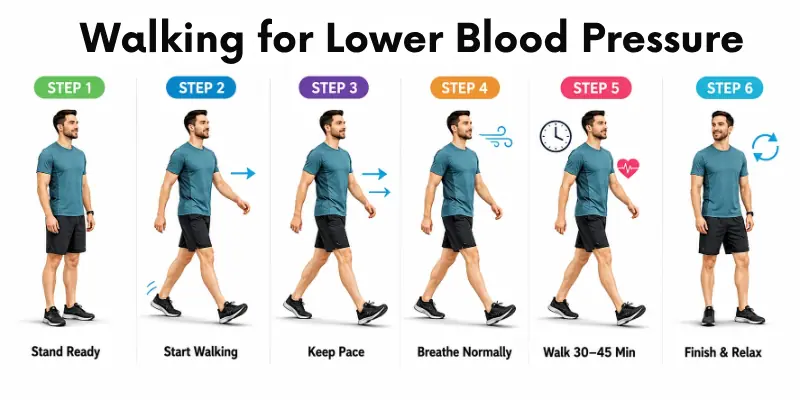
It also reduces stress, which is a major factor in high blood pressure. Even a simple daily walk can bring steady improvement over time.
How to do it:
- Walk for 30 to 45 minutes daily
- Keep a moderate and comfortable pace
- Breathe naturally and stay relaxed
- Prefer morning or evening walks
- Choose a flat and safe walking path
Tip: Start slow if you are new. Increase your walking time step by step instead of rushing into long walks.
2. Brisk Walking
Brisk walking is a slightly faster version of normal walking. It helps the heart pump blood more efficiently and improves overall circulation. This exercise healthily increases your heart rate without putting too much stress on the body.
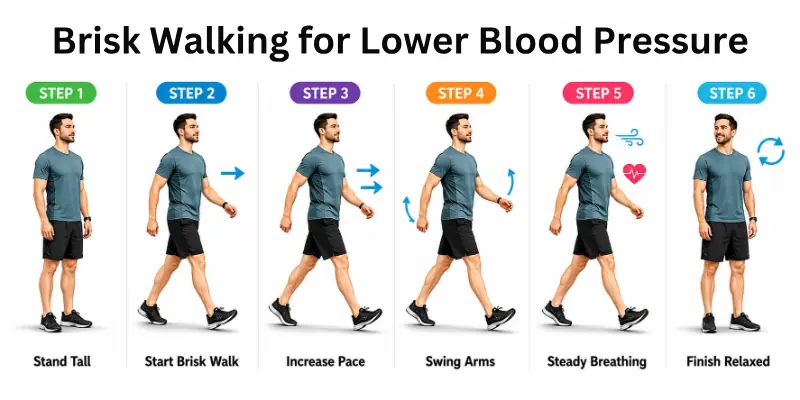
It is one of the most recommended exercises to support blood pressure control. With regular practice, it helps reduce stiffness in blood vessels and improves heart health.
How to do it:
- Walk at a faster pace than normal walking
- Aim for 30 minutes per session
- Keep your arms moving naturally
- Maintain steady breathing throughout
- Practice at least 5 days a week
Tip: Do not rush too fast at the start. Increase your speed gradually and always keep your body relaxed while walking.
3. Cycling
Cycling is a great exercise to support healthy blood pressure. It helps improve heart function and increases blood flow throughout the body.
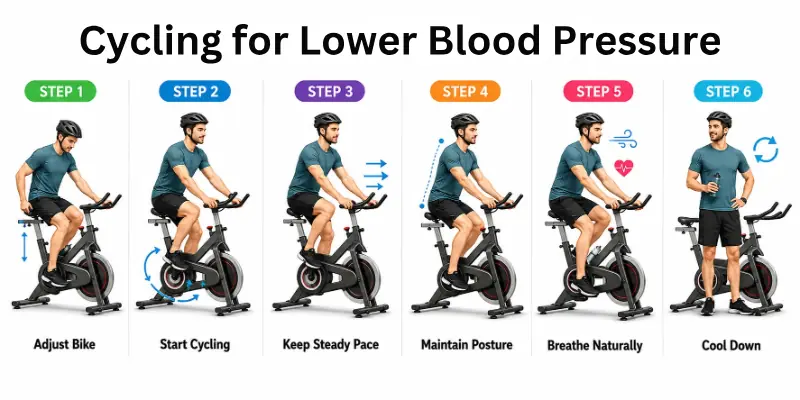
This low-impact cardio exercise does not put too much stress on the joints, so it is safe for most people. Regular cycling helps reduce stiffness in blood vessels and supports long-term heart health.
How to do it:
- Cycle for 20 to 40 minutes per session
- Maintain a steady and comfortable speed
- Keep your breathing normal and relaxed
- Use a flat road or a stationary bike
- Practice 4 to 5 times a week
Tip: Start with short sessions if you are new. Increase your duration slowly instead of pushing too hard at the beginning.
4. Swimming
Swimming is one of the best full-body exercises to help lower blood pressure. It works the entire body while keeping pressure off the joints.
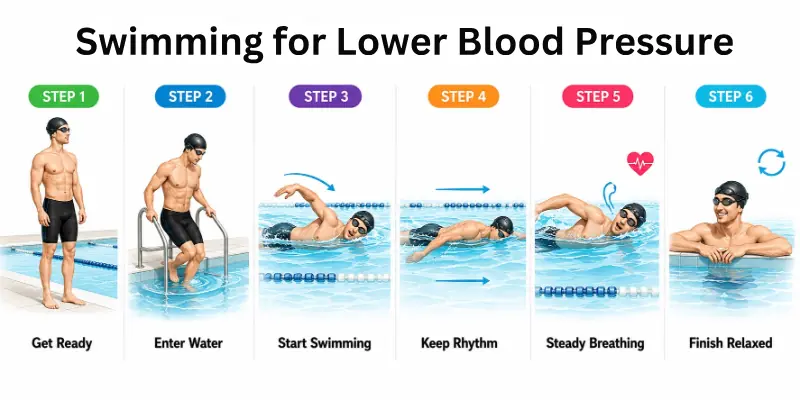
Water resistance helps the heart and lungs work more efficiently, which improves circulation. Regular swimming also reduces stress and supports better relaxation of blood vessels.
How to do it:
- Swim for 20 to 30 minutes per session
- Choose a comfortable swimming style like freestyle or backstroke
- Keep movements smooth and controlled
- Breathe slowly and evenly in the water
- Practice 2 to 4 times a week
Tip: Do not overexert yourself in the beginning. Focus on steady and relaxed swimming instead of speed.
5. Yoga
Yoga helps lower blood pressure by calming the mind and relaxing the body. It reduces stress hormones that often raise blood pressure.
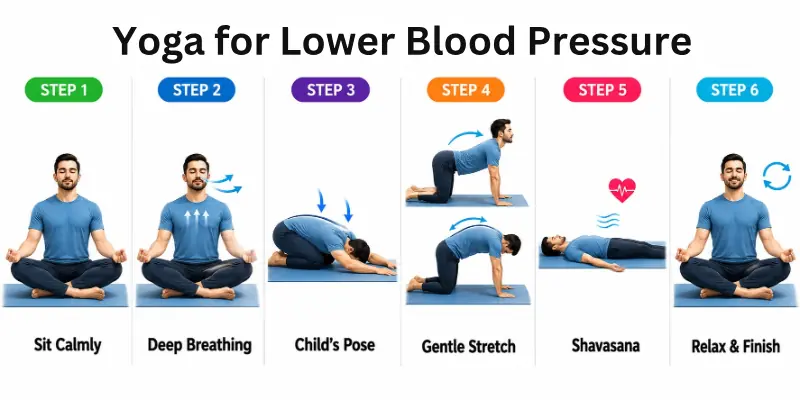
Gentle movements and stretching improve blood flow and support heart health. Regular yoga practice also helps the body stay relaxed for longer periods.
How to do it:
- Practice yoga for 20 to 30 minutes daily
- Focus on slow and controlled breathing
- Try beginner poses like Child’s Pose and Shavasana
- Keep your body relaxed during each pose
- Practice in a quiet and calm space
Tip: Do not rush into advanced poses. Start with simple stretches and focus on breathing control for better results.
6. Deep Breathing Exercises
Deep breathing exercises help lower blood pressure by reducing stress and calming the nervous system. They slow down the heart rate and improve oxygen flow in the body.
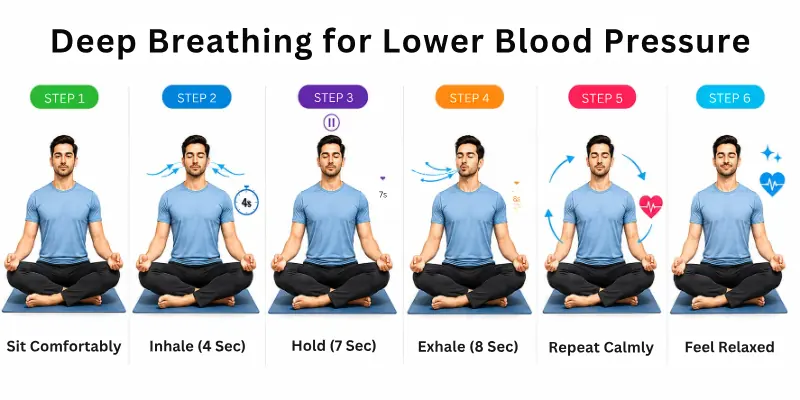
This makes the body feel relaxed and reduces sudden spikes in blood pressure. It is a simple but powerful technique you can use anytime.
How to do it:
- Practice the 4-7-8 breathing method
- Inhale slowly through the nose
- Hold your breath for a few seconds
- Exhale slowly through the mouth
- Repeat for 5 to 10 minutes daily
Tip: Use breathing exercises during stress or anxiety to quickly calm your body and mind.
7. Light Resistance Training
Light resistance training helps improve blood vessel health and supports better blood pressure control. It strengthens muscles, which helps the body use oxygen more efficiently.
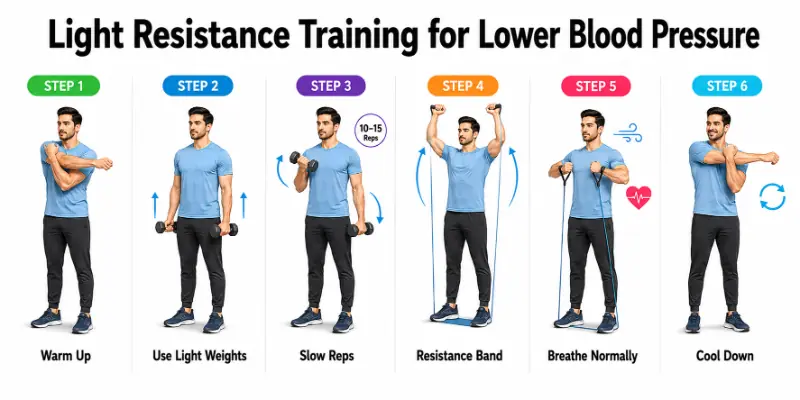
This type of exercise also improves metabolism and supports long-term heart health. When done correctly, it does not put extra stress on the heart.
How to do it:
- Use light weights or resistance bands
- Do 10 to 15 repetitions per set
- Keep movements slow and controlled
- Breathe normally and avoid holding your breath
- Train 2 to 3 times a week
Tip: Avoid heavy lifting or straining. Always focus on light effort with proper breathing to stay safe.
8. Tai Chi
Tai Chi is a slow and gentle exercise that helps lower blood pressure by reducing stress and improving relaxation. It combines soft movements with deep breathing, which supports better blood flow. This exercise is especially helpful for calming the nervous system and improving balance. Regular practice can help the body stay relaxed and stable.
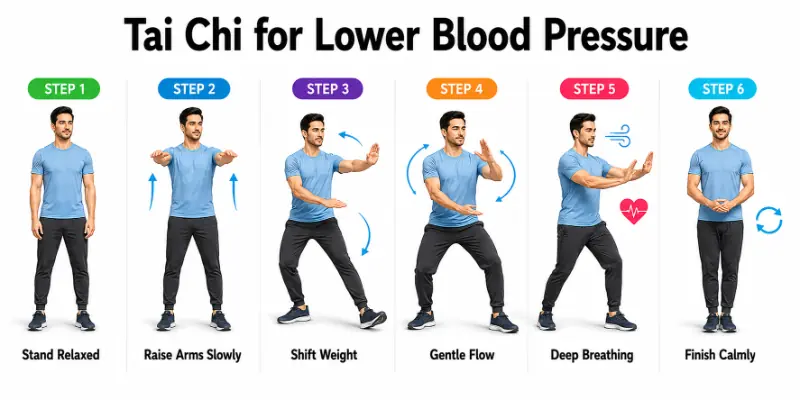
How to do it:
- Practice for 15 to 30 minutes daily
- Move slowly and smoothly between positions
- Focus on deep and steady breathing
- Keep your body relaxed throughout
- Practice in a quiet and open space
Tip: Start with basic movements and do not rush. Consistency is more important than speed or complexity.
9. Stair Climbing
Stair climbing is a simple way to stay active and support healthy blood pressure. It works the heart and leg muscles at the same time, making it an effective cardio exercise for BP control.
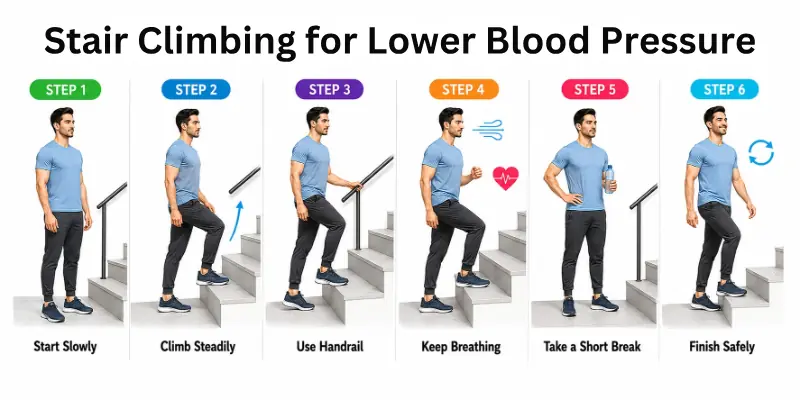
Regular stair climbing improves circulation and helps the heart use oxygen more efficiently. It also burns calories and supports overall cardiovascular health.
How to do it:
- Start with 5 to 10 minutes of stair climbing
- Climb at a comfortable and steady pace
- Hold the handrail if needed for balance
- Take short breaks if you feel tired
- Practice 3 to 5 times a week
Tip: Focus on steady movement rather than speed. Stop and rest if you feel dizzy or short of breath.
10. Aerobic Dance
Aerobic dance combines movement and rhythm to improve heart health and blood circulation. It raises the heart rate in a controlled way, which helps strengthen the cardiovascular system.
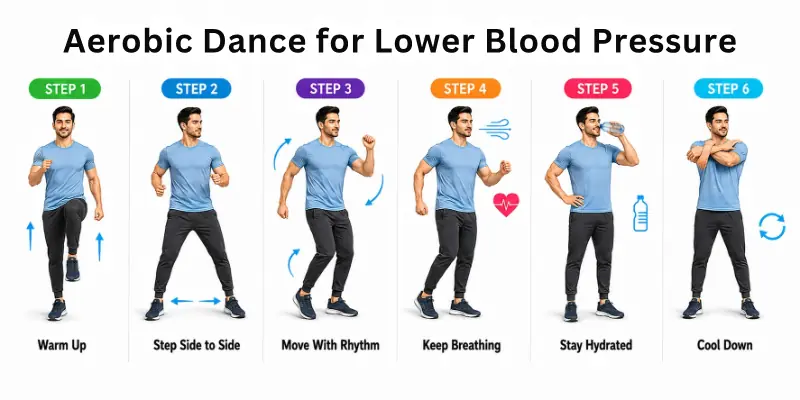
This exercise also reduces stress and supports healthy weight management. Many people find it easier to stay consistent because it feels enjoyable rather than routine.
How to do it:
- Choose a beginner-friendly aerobic dance routine
- Exercise for 20 to 30 minutes per session
- Keep your movements smooth and controlled
- Stay hydrated throughout the session
- Practice at least 3 times a week
Tip: Pick music or routines you enjoy. When exercise feels fun, it becomes easier to stick with it regularly.
Safety Tips Before Starting Exercise for BP
Exercise can help lower blood pressure, but safety should always come first. Taking the right precautions can help you stay safe and get the most benefit from your workouts. This is especially important if you have high BP or are starting a new exercise routine.
Follow these safety tips before starting an exercise routine to lower BP:
- Doctor Consultation: Talk to your doctor before exercising if you have uncontrolled high blood pressure or an existing heart condition.
- Start Slowly: Begin with low-intensity activities and increase your effort gradually.
- Warm-Up: Prepare your muscles and joints with a few minutes of gentle movement before exercising.
- Cool-Down: Allow your body to recover by reducing intensity gradually at the end of your workout.
- Hydration: Drink enough water to support healthy circulation and physical performance.
- Monitor BP: Keep track of your blood pressure to understand how your body responds to exercise.
- Weather Conditions: Avoid exercising outdoors during extreme heat or high humidity.
- Listen to Your Body: Pay attention to unusual symptoms and stop exercising if something does not feel right.
Common Mistakes People Make When Exercising for BP
Exercise can help lower blood pressure, but certain mistakes may reduce its benefits. Many people focus on exercising harder instead of exercising smarter. Avoiding common errors can help you get better results and stay safe while following an exercise routine for lowering BP.
Watch out for these common mistakes if you want to improve blood pressure control through exercise:
- Overtraining: Too much exercise without enough rest can put extra stress on the heart and body.
- No Warm-Up: Starting exercise suddenly can increase strain on muscles and blood vessels.
- Breath Holding: Holding your breath during strength training can cause a temporary rise in BP.
- Inconsistency: An irregular workout routine makes it harder to see lasting results.
- Ignoring Signs: Dizziness, chest discomfort, or shortness of breath should never be ignored.
- Fast Progression: Increasing workout intensity too quickly can put unnecessary stress on the body.
- Poor Hydration: Not drinking enough water can affect circulation and exercise performance.
- Exercise Imbalance: Focusing on only one type of exercise may limit overall benefits.
Disclaimer
This article is for informational purposes only and is not a substitute for professional medical advice, diagnosis, or treatment. Always consult your doctor before starting any new exercise program, especially if you have high blood pressure or any medical condition.
Conclusion
In this guide, we have covered how to lower blood pressure with exercise, including how physical activity affects blood pressure, the best exercises for BP control, important safety tips, and common exercise mistakes to avoid. We also discussed walking, cycling, swimming, yoga, breathing exercises, resistance training, and other activities that support heart health and healthy blood pressure levels.
The most important thing to remember is that consistency matters more than intensity. Regular movement, even in small amounts, can lead to lasting improvements over time. Focus on building a routine that fits your lifestyle and stick with it.
FAQs
Here are answers to some common questions about how to lower blood pressure with exercise.
Yes, regular exercise can help lower blood pressure naturally. It improves heart function and reduces stress on arteries. However, some people may still need medical treatment depending on their condition.
Several exercises can help lower blood pressure and support heart health. Here are some of the most effective options:
- Walking a simple and beginner-friendly way to improve circulation.
- Cycling helps strengthen the heart and improve blood flow.
- Swimming provides a full-body workout with low joint impact.
- Yoga reduces stress and supports blood pressure control.
- Breathing Exercises help calm the nervous system and promote relaxation.
Many people notice improvements within a few weeks of regular exercise. Results depend on your fitness level, lifestyle, and overall health. Consistency is the key to lasting benefits.
Walking can be enough to help reduce blood pressure when done regularly. It improves circulation and supports heart health. Many doctors recommend walking as a starting exercise for high blood pressure.
Yes, light resistance training can be safe for people with high blood pressure. It can improve muscle strength and support cardiovascular health. Use light weights and avoid holding your breath during exercises.
You can exercise at any time that fits your schedule. Morning workouts help some people stay consistent, while others prefer the evening. The best time is the one you can maintain regularly.
Breathing exercises can help reduce stress and promote relaxation. Lower stress levels can support healthy blood pressure. They work best when combined with other exercises and healthy habits.
Most adults should aim for regular physical activity to support healthy blood pressure. Here are the general recommendations:
- 150 Minutes Weekly: Aim for moderate aerobic exercise each week.
- 30 Minutes Daily: Exercise for about 30 minutes on most days.
- Strength Training: Include light resistance exercises 2 to 3 times weekly.
- Consistent Activity: Stay active regularly rather than exercising occasionally.
People with very high blood pressure should talk to a doctor before starting a new workout routine. Certain exercises may not be suitable until blood pressure is under control. Medical guidance can help you exercise safely.
Regular exercise can lower the risk of developing high blood pressure. It helps maintain a healthy weight and supports heart health. Active people often have better long-term cardiovascular health.



- Be Respectful
- Stay Relevant
- Stay Positive
- True Feedback
- Encourage Discussion
- Avoid Spamming
- No Fake News
- Don't Copy-Paste
- No Personal Attacks
- Be Respectful
- Stay Relevant
- Stay Positive
- True Feedback
- Encourage Discussion
- Avoid Spamming
- No Fake News
- Don't Copy-Paste
- No Personal Attacks
