Home Remedies for Dry Socket: Ways to Relieve Pain and Heal
Published: 14 Oct 2026
A dry socket can happen after a tooth extraction when the blood clot that protects the healing area is lost or does not form properly. This can expose the nerves and bone, leading to intense pain, bad breath, and discomfort while eating or drinking.
Many people look for home remedies for dry socket to reduce pain and support healing at home. Simple steps like gentle rinsing, using a cold compress, and eating soft foods may help ease symptoms. However, proper dental care is important because dry socket often needs treatment from a dentist.
In this guide, you will learn the safe ways to manage dry socket pain while supporting a smoother recovery.
Home Remedies for Dry Socket That May Help Relieve Pain
Dry socket can cause severe pain and discomfort after a tooth extraction. While home care cannot replace professional dental treatment, some simple remedies may help reduce pain, soothe irritation, and support the healing process.
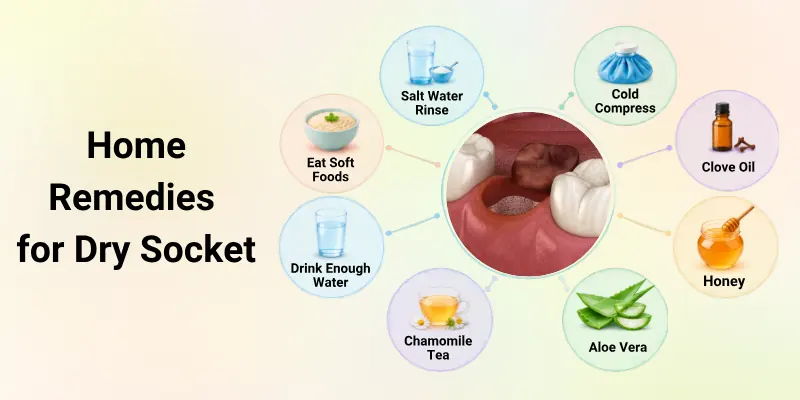
These remedies can help you stay more comfortable during recovery and protect the extraction area from further irritation. Use gentle methods and avoid disturbing the healing socket.
Here are some remedies for dry socket discomfort:
- Warm Salt Water Rinse
- Cold Compress
- Clove Oil
- Honey
- Aloe Vera
- Chamomile Tea Rinse
- Black Tea Bag Compress
- Turmeric Rinse
- Drink Enough Water
- Eat Soft Foods
- Keep Your Mouth Clean
- Use Pain Relief Medicine as Directed
Let’s explore how each remedy may help and how to use it safely for dry socket relief.
1. Warm Salt Water Rinse
A warm salt water rinse is a simple way to keep your mouth clean after a tooth extraction. It may help remove food particles and bacteria around the extraction area while reducing irritation. Gentle rinsing can support a cleaner environment for healing.
To use a saltwater rinse:
- Mix half a teaspoon of salt in a cup of warm water.
- Gently move the water around your mouth.
- Avoid forceful swishing because it can disturb the healing socket.
- Use the rinse as advised by your dentist.
Tip: Rinse gently and avoid strong swishing to protect the blood clot and support proper healing.
2. Cold Compress
A cold compress may help reduce swelling and ease discomfort after a tooth extraction. Applying cold therapy from outside the cheek can help numb the area and provide temporary relief from dry socket pain. It may also help calm inflammation around the extraction site and make recovery more comfortable.
To use a cold compress:
- Wrap ice cubes or a cold pack in a clean towel.
- Place it on the outside of your cheek near the extraction area.
- Apply it for about 15 to 20 minutes at a time.
- Take breaks between applications to avoid skin irritation.
Tip: Do not place ice directly on your skin because it may cause irritation or discomfort.
3. Clove Oil
Clove oil is a commonly used natural remedy that may help soothe tooth and mouth pain. It contains eugenol, a compound known for its calming properties. When used carefully, it may provide temporary relief from dry socket discomfort and help make the healing period more comfortable.
To use clove oil:
- Dilute clove oil with a carrier oil before applying it.
- Apply a small amount near the painful area using a clean cotton swab.
- Avoid placing concentrated clove oil directly into the extraction socket.
Tip: Stop using clove oil if you feel burning, irritation, or increased pain. Strong oils can irritate the sensitive tissues around the healing extraction area.
4. Honey
Honey may help soothe mouth irritation and provide temporary comfort around the affected area. It has natural properties that may help support a cleaner mouth environment, but it does not replace proper dental treatment for dry socket. Use it carefully to avoid disturbing the healing extraction site.
To use honey:
- Choose pure honey without added ingredients.
- Apply a small amount near the affected area if recommended.
- Avoid placing too much honey directly into the extraction socket.
- Rinse gently if any residue remains.
Tip: Do not rub or press honey into the socket because the healing area is sensitive.
5. Aloe Vera
Aloe vera may help soothe irritation and provide a calming effect on sensitive mouth tissues. Its natural compounds may support comfort during the healing process and help reduce dryness or discomfort around the extraction site. It may also help keep the surrounding tissues more comfortable while the mouth recovers.
To use aloe vera:
- Use an oral-safe aloe vera gel made for use inside the mouth.
- Apply a small amount near the affected area.
- Avoid putting large amounts of gel directly into the extraction socket.
Tip: Avoid aloe vera products containing added chemicals, fragrances, or other ingredients that may irritate sensitive tissues.
6. Chamomile Tea Rinse
Chamomile tea may help soothe irritated mouth tissues and provide a calming effect during dry socket recovery. It contains natural compounds that may help reduce discomfort and support a more comfortable healing process. A gentle rinse can also help freshen the mouth without disturbing the extraction area.
To use a chamomile tea rinse:
- Prepare a cup of chamomile tea and let it cool to a warm temperature.
- Gently rinse your mouth with the tea.
- Avoid forceful swishing around the extraction site.
Tip: Make sure the tea is not hot before rinsing to avoid irritating the healing area.
7. Black Tea Bag Compress
A black tea bag compress may help soothe dry socket discomfort and support the healing process. Black tea contains tannins that may help calm irritated tissues and provide temporary comfort around the extraction area. It can also help keep the affected area more comfortable during recovery when used gently.
To use a black tea bag compress:
- Soak a black tea bag in warm water and let it cool slightly.
- Place the tea bag near the extraction area for a short time.
- Remove it gently without pressing or disturbing the socket.
- Use a fresh tea bag each time to maintain cleanliness.
Tip: Avoid biting down hard on the tea bag because pressure may irritate the healing area.
8. Turmeric Rinse
A turmeric rinse may help soothe mouth irritation and support comfort during dry socket recovery. Turmeric contains curcumin, a natural compound with anti-inflammatory properties that may help calm irritated tissues. A gentle rinse may provide temporary relief while the extraction area continues to heal.
To use a turmeric rinse:
- Mix a small amount of turmeric powder with warm water.
- Gently rinse your mouth with the mixture.
- Avoid vigorous swishing around the extraction site.
- Spit out the rinse and avoid swallowing large amounts.
Tip: Use turmeric in moderation because too much may stain your teeth or irritate sensitive tissues.
9. Drink Enough Water
Staying hydrated can support the healing process after a tooth extraction. Drinking enough water helps prevent dry mouth, keeps oral tissues moist, and supports overall recovery. It may also help your body repair tissues and maintain better comfort while dealing with dry socket symptoms. You can learn more about the benefits of drinking water and why proper hydration is important for overall health.
To stay hydrated:
- Drink water regularly throughout the day.
- Take small sips instead of using a straw.
- Choose plain water and avoid very hot or sugary drinks.
Tip: Avoid using a straw because the suction can disturb the blood clot and delay healing.
10. Eat Soft Foods
Eating soft foods can help protect the extraction area and prevent irritation while your mouth heals. Hard, crunchy, or chewy foods may put pressure on the socket and increase discomfort. Choosing gentle foods can make eating easier and support a smoother recovery.
Soft foods also provide nutrients without requiring too much chewing, which can help avoid stress on the healing area.
Here are some soft foods you can choose:
- Yogurt
- Mashed potatoes
- Smoothies
- Bananas
- Applesauce
- Oatmeal
- Scrambled eggs
- Soft soups
To make eating more comfortable:
- Cut food into small pieces to make chewing easier.
- Chew on the opposite side of the extraction area.
- Avoid hard, spicy, or crunchy foods that may irritate the socket.
Tip: Choose foods that require less chewing to avoid putting pressure on the healing area.
11. Keep Your Mouth Clean
Keeping your mouth clean can help prevent bacteria buildup and support healing after a tooth extraction. Good oral care may reduce irritation around the extraction area and help maintain a healthier environment while recovering from dry socket symptoms. Gentle cleaning is important because the healing socket needs protection from disturbance.
To keep your mouth clean:
- Rinse your mouth gently as recommended by your dentist.
- Brush your teeth carefully and avoid the extraction area.
- Remove food particles around the mouth without touching the socket.
- Keep your toothbrush clean to maintain better oral hygiene.
Tip: Avoid touching or disturbing the extraction site while cleaning your mouth.
12. Use Pain Relief Medicine as Directed
Pain relief medicine may help manage the discomfort caused by dry socket and make daily activities easier during recovery. Over-the-counter pain relievers can reduce pain and inflammation when used correctly. Following the recommended dosage can help you get relief while avoiding unwanted side effects.
To use pain relief medicine safely:
- Take medicine according to the instructions on the label or your dentist’s advice.
- Avoid taking more than the recommended amount.
- Check with a healthcare professional if you have health conditions or take other medicines.
Tip: Do not place pain relief tablets directly on the extraction site because they may irritate the healing tissues.
Things to Avoid When You Have Dry Socket
Certain habits can disturb the healing process and increase pain after a tooth extraction. Avoiding these activities can help protect the blood clot, reduce irritation, and support faster recovery.
Here are some things you should avoid when you have dry socket:
- Smoking: Avoid smoking because it can delay healing and increase the risk of further irritation.
- Alcohol: Stay away from alcohol because it may irritate the healing tissues and affect recovery.
- Straws: Avoid using straws because suction can disturb the blood clot and worsen symptoms.
- Rinsing: Do not rinse your mouth forcefully because it can disturb the extraction area.
- Touching: Avoid touching the socket with your fingers or tongue to prevent irritation and infection.
- Hard Foods: Stay away from crunchy or hard foods that can put pressure on the healing area.
- Spitting: Avoid forceful spitting because it can create pressure and affect the blood clot.
Following these precautions can help protect the extraction site and support a smoother healing process.
When Should You See a Dentist?
Dry socket pain often improves with proper care, but some symptoms need professional attention. A dentist can check the extraction area, provide proper treatment, and help reduce discomfort if healing is not progressing normally.
Seek dental care if:
- Severe Pain: Your pain becomes intense or continues to get worse despite home care.
- Delayed Pain: Pain starts or increases a few days after the tooth extraction.
- Exposed Bone: You notice visible bone in the extraction area.
- Fever: You develop fever, increased swelling, or signs of infection.
- Bad Smell: A bad smell or unpleasant taste continues in your mouth.
- No Improvement: Home remedies do not reduce your symptoms or discomfort.
Getting timely dental care can help manage dry socket symptoms and support proper healing.
Conclusion
In this guide, I covered home remedies for dry socket, things to avoid, and when you should see a dentist. Dry socket can cause significant pain after a tooth extraction, but proper care can help manage discomfort and support healing.
Simple steps like keeping your mouth clean, eating soft foods, staying hydrated, and following your dentist’s advice can make recovery more comfortable. If your pain becomes severe or does not improve, seek professional dental care for proper treatment.
Frequently Asked Questions
Here are some frequently asked questions about home remedies for dry socket:
1. What is the fastest way to relieve dry socket pain?
You can also try these steps for temporary comfort:
- See a dentist for proper treatment.
- Use pain relief medicine as directed.
- Apply a cold compress to reduce discomfort.
- Keep your mouth clean with gentle care.
2. Can salt water heal dry socket?
Salt water rinses do not cure dry socket, but they may help keep the mouth clean and reduce irritation. Use gentle rinsing to avoid disturbing the healing area.
3. Is clove oil safe for dry socket?
Clove oil may help provide temporary pain relief because it contains eugenol, a soothing compound. Use it carefully and avoid applying concentrated oil directly into the socket.
4. Can dry socket heal on its own?
Dry socket may eventually heal on its own, but the pain can last longer without proper care. A dentist can provide treatment that helps reduce discomfort and support recovery.
5. How many days does dry socket pain last?
Dry socket pain usually improves within a few days after proper treatment. Without treatment, discomfort may continue for one to two weeks or longer depending on the severity. The healing time can vary based on your overall oral health and care routine.
6. Can I brush my teeth with dry socket?
Yes, you can brush your teeth with dry socket, but do it gently. Avoid brushing directly over the extraction area to prevent irritation. Keeping the rest of your mouth clean can help reduce bacteria buildup.
7. What foods should I avoid with dry socket?
Avoid these foods while your socket heals:
- Hard foods like nuts and chips.
- Crunchy foods that can irritate the socket.
- Spicy foods that may cause discomfort.
- Chewy foods that require more pressure.
- Very hot foods and drinks.
8. Does honey help dry socket?
Honey may help soothe irritation and provide comfort around the affected area. However, it should not replace dental treatment for dry socket. Use it carefully to avoid disturbing the extraction site.
9. How do I know if I have dry socket or normal pain?
Common signs include:
- Pain gets worse a few days after extraction.
- Pain spreads to the ear, temple, or jaw.
- Bad breath or unpleasant taste develops.
- You notice an empty-looking socket or exposed bone.
10. Should I go to a dentist for dry socket?
You should contact a dentist if your symptoms are severe or do not improve with home care. Seek dental help if you notice:
- Severe or worsening pain.
- Signs of infection like fever or swelling.
- Bad smell or taste that does not improve.
- Symptoms that do not improve with home care.





- Be Respectful
- Stay Relevant
- Stay Positive
- True Feedback
- Encourage Discussion
- Avoid Spamming
- No Fake News
- Don't Copy-Paste
- No Personal Attacks
- Be Respectful
- Stay Relevant
- Stay Positive
- True Feedback
- Encourage Discussion
- Avoid Spamming
- No Fake News
- Don't Copy-Paste
- No Personal Attacks
