Importance of Regular Health Checkups: Why Early Detection Matters
Published: 8 Apr 2026
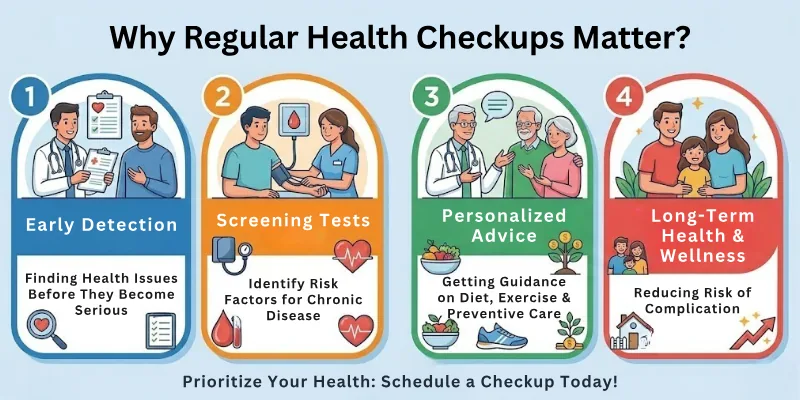
Regular health checkups are very important for everyone. They help identify health problems early, often before symptoms appear. Detecting diseases early makes treatment easier and more effective. Health checkups give a clear picture of your overall well-being.
They also help you take preventive measures for future health risks. Understanding the importance of regular health checkups can improve your life and prevent serious complications.
Why Regular Health Checkups Matter
Regular monitoring reduces the risk of severe complications. Health checkups also give peace of mind by letting you know your body is healthy.
Benefits of Regular Health Checkups
Health checkups offer many advantages that improve your life quality:
- Detect diseases early before they become severe.
- Prevent serious complications from chronic conditions.
- Receive personalized advice for diet, exercise, and lifestyle.
- Monitor key health indicators like blood pressure, sugar, and cholesterol.
- Improve mental health by reducing stress and worry.
Common Tests During Health Checkups
Health checkups include various tests that help detect hidden health issues. The tests vary depending on age, gender, and risk factors. These tests provide a clear understanding of your body’s condition.
They allow doctors to suggest preventive measures. Understanding common tests helps you prepare and take your health seriously.
Most Common Tests
Below are the main tests included in regular health checkups:
- Blood Pressure Measurement: Checks for hypertension.
- Blood Sugar Tests: Detects early diabetes.
- Cholesterol Tests: Evaluates heart disease risk.
- BMI and Weight Analysis: Monitors obesity and overall health trends.
- Urine and Kidney Function Tests: Detects kidney issues early.
- Vision and Hearing Checks: Ensures sensory health.
- Heart Health Tests (ECG, ECG Stress Test): Detects early heart conditions.
- Liver Function Tests: Monitors liver health.
Health Checkups for Adults
Adults are more prone to chronic diseases as they age. Regular checkups allow early detection of conditions like diabetes, hypertension, and heart disease. Doctors also give guidance on diet, exercise, and stress management.
Monitoring health trends over time helps prevent serious complications. Adults who stay proactive with checkups enjoy better long-term health.
Tips for Adults
Here are effective ways adults can benefit from regular checkups:
- Schedule an annual physical exam.
- Monitor blood sugar, cholesterol, and blood pressure regularly.
- Screen for age-appropriate cancers as recommended.
- Keep vaccination records updated.
- Track lifestyle habits such as diet, exercise, and sleep.
Health Checkups for Children
Children grow quickly, making regular checkups essential. Pediatric visits ensure proper growth and development.
Doctors track height, weight, and developmental milestones. Early detection of issues like anemia, vision problems, or malnutrition is possible. Regular checkups also support mental and emotional development. Healthy habits started early prevent future health problems.
Tips for Children
To keep children healthy, follow these tips:
- Schedule routine pediatric visits.
- Track growth charts and developmental milestones.
- Ensure vaccinations are up to date.
- Screen for vision and hearing problems.
- Encourage healthy eating and physical activity.
Health Checkups for Seniors
Seniors face a higher risk of chronic diseases. Regular checkups help manage conditions like diabetes, heart disease, arthritis, and osteoporosis.
Monitoring medications and lifestyle habits is important. Checkups improve independence and quality of life. They also assess cognitive health and mental well-being. Seniors benefit from early detection of age-related problems.
Tips for Seniors
Here are ways seniors can stay healthy with regular checkups:
- Schedule annual or bi-annual health exams.
- Monitor blood pressure, sugar, and cholesterol.
- Screen for heart disease, bone density, and kidney function.
- Maintain vaccination and flu shot schedules.
- Check mental health and cognitive functions regularly.
Lifestyle Benefits of Regular Health Checkups
Health checkups do more than detect disease they guide a healthy lifestyle. They help improve diet, exercise routines, and stress management. Knowing your health status encourages preventive measures.
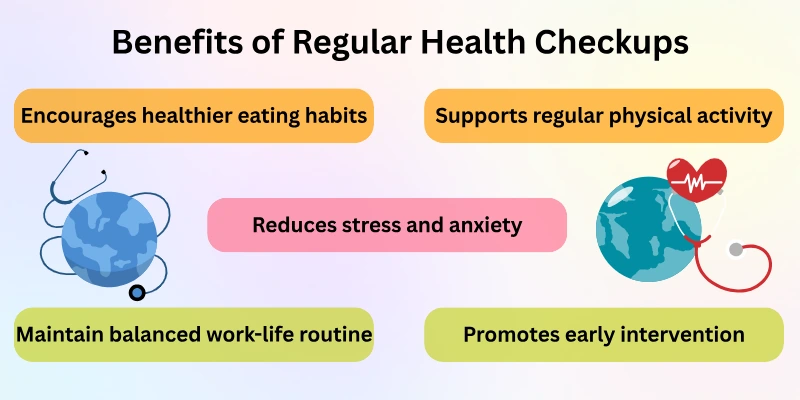
Early guidance from doctors helps avoid future complications. Regular monitoring improves overall quality of life and long-term well-being.
Key Lifestyle Benefits
- Encourages healthier eating habits.
- Supports regular physical activity.
- Reduces stress and anxiety about health.
- Helps maintain a balanced work-life routine.
- Promotes early intervention and preventive care.
How Often Should You Get a Health Checkup?
The frequency of checkups depends on age, lifestyle, and family history. Everyone benefits from regular monitoring. Following a doctor’s advice ensures timely detection of potential problems.
Recommended Frequency
- Adults: At least once a year.
- Seniors: Every 6–12 months depending on health.
- Children: As per pediatrician recommendations.
- People with chronic conditions: Follow doctor’s instructions.
- Adjust frequency based on previous test results.
Preparing for a Health Checkup
Preparation ensures health checkups are accurate and effective. Doctors can give better advice if you provide complete information. Being prepared helps avoid missing important details. It also saves time during the visit.
Preparation Tips
- List all medications and supplements you take.
- Note any new symptoms or changes in health.
- Fast if required for blood tests.
- Bring previous medical reports.
- Prepare questions for your doctor.
Just for You: Additional Benefits
Regular health checkups also support mental and emotional well-being. Knowing your health status reduces worry and stress. Early detection encourages preventive actions and lifestyle improvements. It helps maintain a proactive approach to overall health.
Extra Advantages
- Prevents unnecessary hospital visits with early detection.
- Improves confidence in managing health.
- Encourages preventive lifestyle habits.
- Detects silent conditions like hypertension or early diabetes.
- Reduces long-term healthcare costs.
Final Note
In this guide, we have covered the importance of regular health checkups for children, adults, and seniors.
My personal advice is to make checkups a routine habit, monitor your health, and adopt a healthy lifestyle. Early detection, preventive care, and informed choices help ensure long-term well-being. Stay proactive, take care of your body, and enjoy a healthier life!
FAQs: Regular Health Checkups
Here are some of the most commonly asked questions related to the benefits of regular health checkups:
They detect diseases early before symptoms appear. Early diagnosis allows easier and more effective treatment. Regular checkups also provide guidance on lifestyle and prevention.
Adults should have at least one checkup per year. Seniors or people with chronic conditions may need more frequent visits. Doctors recommend based on personal health risks.
Common tests include blood pressure, blood sugar, cholesterol, BMI, urine tests, and heart checkups. Vision and hearing tests are often included. Additional tests depend on age and risk factors.
Yes, to monitor growth, vaccinations, and developmental milestones. Early detection of vision, hearing, or nutrition problems is possible. Regular visits prevent future health issues.
Checkups help manage chronic conditions and monitor medications. They maintain physical and mental health. Early intervention prevents complications.
Yes, they detect issues like diabetes, heart disease, or cancer early. Preventive advice reduces risks and complications.
Bring a list of medications, past reports, and questions. Note any new symptoms. Follow fasting instructions for blood tests if needed.
Yes, doctors may screen for stress, anxiety, or depression. Early support improves overall quality of life.
Yes, preventive care like screenings, vaccinations, and lifestyle guidance is included. It helps avoid serious health problems.
Healthy habits reduce health risks but regular checkups are still essential. Prevention and monitoring work together for long-term health.






- Be Respectful
- Stay Relevant
- Stay Positive
- True Feedback
- Encourage Discussion
- Avoid Spamming
- No Fake News
- Don't Copy-Paste
- No Personal Attacks
- Be Respectful
- Stay Relevant
- Stay Positive
- True Feedback
- Encourage Discussion
- Avoid Spamming
- No Fake News
- Don't Copy-Paste
- No Personal Attacks
