Symptoms of Hormonal Imbalance: Know the Common Signs
Published: 15 May 2026
Hormones are chemical messengers that regulate nearly every bodily function, from metabolism to mood, energy, and reproductive health. When your hormones are out of balance, your body sends signals through various symptoms.
Recognizing these signs early can help you seek timely medical advice and manage your health effectively.
Here is a detailed guide on the common symptoms of hormonal imbalance.
Symptoms of Hormonal Imbalance
Here are the major signs of hormonal imbalance in your body:
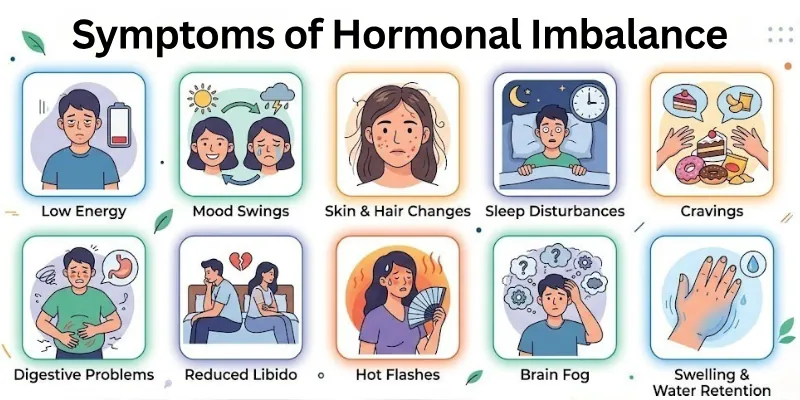
- Irregular Menstrual Cycles
- Unexplained Weight Changes
- Fatigue And Low Energy
- Mood Swings And Anxiety
- Skin And Hair Changes
- Sleep Disturbances
- Changes In Appetite And Cravings
- Digestive Problems
- Reduced Libido And Sexual Dysfunction
- Hot Flashes And Night Sweats
- Brain Fog And Poor Memory
- Swelling And Water Retention
Let us learn about each in detail.
1. Irregular Menstrual Cycles
Irregular or missed periods are often the first noticeable sign of hormonal imbalance in women. Changes in estrogen and progesterone can disrupt your cycle, causing periods to be heavier, lighter, shorter, or longer than usual. Polycystic Ovary Syndrome (PCOS) and thyroid problems are common causes. Tracking your menstrual pattern can help identify irregularities early.
Quick Signs:
- Missed or skipped periods
- Excessive bleeding or very light flow
- Unpredictable cycle length
2. Unexplained Weight Changes
Sudden weight gain or loss without any changes in diet or exercise can indicate hormonal disruption. Thyroid hormones, insulin, and cortisol play major roles in metabolism. Imbalances in these hormones can lead to fat storage, water retention, or unexpected weight loss. Monitoring weight trends alongside other symptoms can provide insights.
Quick Signs:
- Rapid weight gain around the abdomen
- Difficulty losing weight despite exercise
- Unexplained weight loss
3. Fatigue and Low Energy
Persistent tiredness is a common symptom of hormonal imbalance. Imbalances in thyroid, cortisol, or adrenal hormones can affect your energy levels, even if you sleep well. Feeling sluggish, sleepy, or mentally foggy can indicate that your body’s energy regulation is disrupted. Maintaining a healthy sleep routine and balanced diet can sometimes help.
Quick Signs:
- Feeling drained even after full rest
- Low motivation or lethargy
- Trouble concentrating
4. Mood Swings and Anxiety
Hormones significantly influence your mood and emotions. Imbalances in estrogen, progesterone, and cortisol can cause irritability, anxiety, or sudden mood changes. This is particularly noticeable in conditions like PMS, menopause, or thyroid disorders. Recognizing mood shifts alongside physical symptoms can guide proper treatment.
Quick Signs:
- Unexplained irritability or sadness
- Anxiety or nervousness without cause
- Emotional sensitivity
5. Skin and Hair Changes
Hormonal imbalance can affect your hair growth and skin health. Excess androgens or thyroid issues can cause acne, oily skin, hair thinning, or hair loss. Some women may notice unwanted facial or body hair. Maintaining hormonal balance is key to healthy hair and skin.
Quick Signs:
- Severe or persistent acne
- Hair thinning or sudden hair loss
- Excessive hair growth in unusual areas
6. Sleep Disturbances
Difficulty falling asleep, staying asleep, or waking up tired may result from hormonal imbalance. Imbalances in melatonin, cortisol, and progesterone affect sleep patterns. This leads to fatigue, irritability, and reduced immunity. Prioritizing a sleep-friendly environment can help, but persistent problems need medical attention.
Quick Signs:
- Trouble falling asleep or waking frequently
- Feeling unrested after sleep
- Insomnia during pregnancy or menopause
7. Changes in Appetite and Cravings
Hormones regulate hunger and satiety. Imbalances in leptin, ghrelin, insulin, or cortisol can cause extreme cravings or loss of appetite. This may lead to unhealthy eating patterns and weight changes. Recognizing cravings can help manage dietary habits effectively.
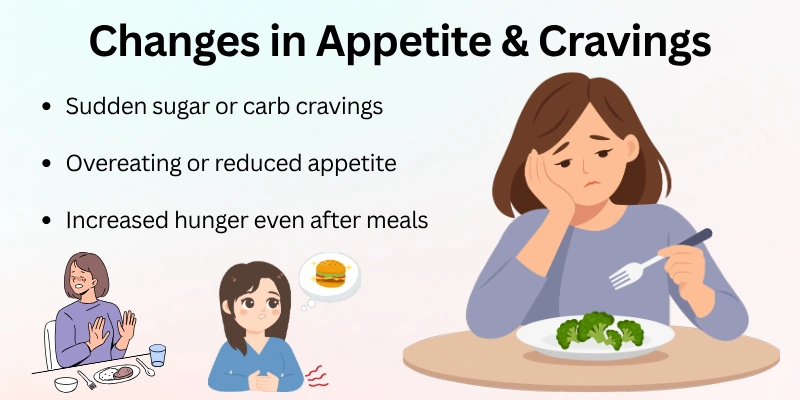
Quick Signs:
- Sudden sugar or carb cravings
- Overeating or reduced appetite
- Increased hunger even after meals
8. Digestive Problems
Hormonal imbalance can affect gut health and digestion. Thyroid hormones, estrogen, and progesterone influence metabolism and bowel movements. Imbalances may lead to bloating, constipation, diarrhea, or irritable bowel symptoms. Proper nutrition and hydration can support digestion, but persistent issues may require testing.
Quick Signs:
- Bloating and gas
- Irregular bowel movements
- Nausea or stomach discomfort
9. Reduced Libido and Sexual Dysfunction
Hormones like estrogen, progesterone, and testosterone regulate sexual desire. Low levels can lead to reduced libido, vaginal dryness, or erectile dysfunction in men. Hormonal imbalance can also affect mood, contributing further to sexual dissatisfaction. Addressing hormonal health can improve intimacy and overall quality of life.
Quick Signs:
- Reduced sexual interest
- Pain or discomfort during intercourse
- Difficulty achieving arousal
10. Hot Flashes and Night Sweats
Hot flashes and night sweats are classic signs of hormonal imbalance, particularly during menopause or perimenopause. They result from fluctuating estrogen levels affecting body temperature regulation. These symptoms can disrupt sleep and daily activities. Lifestyle adjustments and medical guidance can help reduce their frequency and severity.
Quick Signs:
- Sudden warmth or flushing
- Night sweats disturb sleep
- Irregular body temperature
11. Brain Fog and Poor Memory
Cognitive issues like forgetfulness or difficulty concentrating can indicate hormonal imbalance. Thyroid, estrogen, and cortisol imbalances are often involved. This affects mental clarity, focus, and daily performance. Recognizing these changes early can help with targeted lifestyle adjustments or medical interventions.
Quick Signs:
- Forgetting important tasks
- Difficulty concentrating
- Feeling mentally sluggish
12. Swelling and Water Retention
Hormonal imbalance can lead to fluid retention and swelling in different body parts. Imbalances in aldosterone, estrogen, and progesterone affect water and salt balance. Swelling is commonly seen in hands, feet, and ankles. Monitoring sudden or severe swelling is important for health.
Quick Signs:
- Puffy hands or feet
- Rapid weight fluctuation from fluid
- Swollen joints
Final Note
In this guide, we have covered the symptoms of hormonal imbalance in detail, helping you identify early signs and understand their impact on your health.
Personal advice: if you notice multiple symptoms persisting for weeks or months, it’s important to consult a healthcare professional for proper diagnosis and treatment. Maintaining a balanced diet, regular exercise, and stress management can support hormonal health. Stay attentive to your body, and seek help promptly if needed.
FAQs on Symptoms of Hormonal Imbalance
Here are some of the most commonly asked questions related to the signs of hormonal imbalance in the body:
Common signs include irregular periods, unexplained weight changes, fatigue, mood swings, and skin or hair changes. These symptoms can vary depending on age and gender.
Yes, imbalanced hormones like thyroid or cortisol can lead to unexplained weight gain, even with a healthy diet and exercise.
Hormonal shifts can cause mood swings, anxiety, irritability, or depression. This is often linked to imbalances in estrogen, progesterone, or cortisol levels.
Yes, hormones like melatonin, cortisol, and progesterone affect sleep. Imbalances can lead to insomnia or disrupted sleep patterns.
Yes, imbalances can cause acne, oily skin, hair thinning, or excessive hair growth, depending on the hormone affected.
Yes, changes in hormones like leptin, ghrelin, or insulin can increase cravings, alter appetite, or lead to digestive issues.
Yes, low estrogen, testosterone, or thyroid hormones can lower sexual desire or cause sexual dysfunction.
Yes, these are common during menopause or due to estrogen fluctuations in women. They indicate an underlying hormonal imbalance.
A healthcare professional can perform blood, saliva, or urine tests to check levels of key hormones such as thyroid, estrogen, progesterone, testosterone, and cortisol.
Yes, balanced nutrition, regular exercise, proper sleep, stress reduction, and avoiding processed foods can help regulate hormones naturally.




- Be Respectful
- Stay Relevant
- Stay Positive
- True Feedback
- Encourage Discussion
- Avoid Spamming
- No Fake News
- Don't Copy-Paste
- No Personal Attacks
- Be Respectful
- Stay Relevant
- Stay Positive
- True Feedback
- Encourage Discussion
- Avoid Spamming
- No Fake News
- Don't Copy-Paste
- No Personal Attacks
