How to Maintain Hormonal Balance Naturally: Diet, Lifestyle & Herbal Tips
Published: 10 Jul 2026
Hormones control your mood, energy, sleep, weight, skin, and overall health. When they go out of balance, your body shows signs like mood swings, irregular periods, acne, low energy, or sleep issues. The good news is you can support your hormones naturally with healthy habits, smart nutrition, and lifestyle changes.
Below is your complete step-by-step guide.
Natural Ways to Maintain Hormonal Balance
Here are the main natural ways to keep your hormones stable and functioning well:
- Eat a Balanced Diet
- Manage Stress
- Improve Sleep Quality
- Stay Physically Active
- Consume Healthy Fats
- Support Gut Health
- Reduce Sugar Intake
- Limit Caffeine and Alcohol
- Stay Hydrated
- Maintain a Healthy Weight
- Include Herbal Support
- Avoid Endocrine Disruptors
- Support Liver Health
- Track Your Symptoms
- Get Regular Checkups
Now let’s cover each one in detail.
1. Eat a Balanced Diet
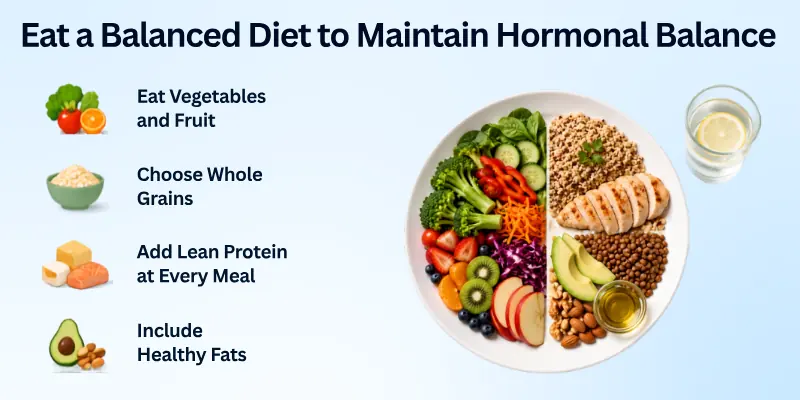
A balanced plate feeds your body the building blocks it needs to make hormones and to use them well.
Practical steps
- Fill half your plate with vegetables and fruit at each meal to supply vitamins and antioxidants.
- Choose whole grains like brown rice, oats, and whole wheat for steady energy and stable insulin.
- Add lean protein at every meal, such as eggs, chicken, fish, tofu, or lentils, to support hormone production.
- Include a portion of healthy fats like avocado, nuts, seeds, or olive oil to make steroid hormones.
- Eat iron-rich foods such as spinach, beans, dates, and red meat if you need more blood support.
- Snack on whole foods like fruit with yogurt or a handful of nuts instead of sugary snacks.
- Plan meals for two or three days to avoid last-minute processed food choices.
Personal tip: Start your day with oats, nuts, and fruit for a steady hormonal foundation.
2. Manage Stress
Stress raises cortisol and throws many other hormones out of balance. Reducing stress resets those signals.
Practical steps
- Practice 5 minutes of deep belly breathing twice a day to calm your nervous system.
- Try short guided meditation sessions or breathing apps that fit into breaks.
- Take two 10-minute outdoor walks per day to lower stress and clear your mind.
- Use gentle yoga or stretching in the morning or before bed to release tension.
- Set a small daily boundary like “no work after 8 pm” to protect your rest.
- Keep a short gratitude or journaling habit to shift focus away from worry.
- Talk with a friend when anxiety feels heavy instead of keeping it inside.
Personal tip: When you feel stressed, pause and take three deep breaths before responding to anything.
3. Improve Sleep Quality
Hormones repair and reset mostly during sleep. Better sleep equals better hormonal control.
Practical steps
- Aim for 7 to 9 hours of sleep per night and keep the timing consistent.
- Stop screens 30 to 60 minutes before bed and read or listen to calm music instead.
- Keep your bedroom cool, dark, and quiet to support deeper sleep cycles.
- Avoid heavy meals, alcohol, or caffeine within three hours of bedtime.
- Try a short relaxing routine like warm tea or gentle stretching before lights out.
- Use blackout curtains or a simple eye mask if light disturbs your sleep.
- Track sleep for one week to notice patterns and then adjust one habit at a time.
Personal tip: Go to bed and wake up within the same 30-minute window every day to train your body clock.
4. Stay Physically Active
Regular movement helps insulin, thyroid, and sex hormones stay balanced without stressing the body.
Practical steps
- Aim for 20 to 30 minutes of moderate activity most days, for example, brisk walking.
- Add two strength sessions per week to support muscle, metabolism, and hormone sensitivity.
- Include yoga or Pilates to combine movement with stress reduction and flexibility.
- Avoid suddenly switching to extreme workouts; increase intensity gradually to prevent hormonal disruption.
- Move during work breaks: stand, stretch, or walk for five minutes every hour.
- Track your activity to keep it consistent rather than erratic bursts of exercise.
Personal tip: If you feel low energy, choose a gentle 20-minute walk instead of a hard workout.
5. Consume Healthy Fats
Fat gives your body the raw materials to build many hormones, so choose good fats every day.
Practical steps
- Use olive oil for cooking or dressings for heart-healthy monounsaturated fat.
- Eat fatty fish like salmon or sardines twice weekly for omega-3 fatty acids.
- Add avocado or a handful of nuts as a snack to boost healthy fat intake.
- Sprinkle chia or flax seeds on yogurt or salads to increase omega-3 and fibre.
- Avoid trans fats and limit ultra-processed “low fat” products that remove essential nutrients.
- Balance fat portions with vegetables and protein for a stable meal.
Personal tip: Replace one margarine or processed snack with a small handful of nuts every day.
6. Support Gut Health
A healthy gut helps you absorb nutrients and regulates hormones like estrogen through detox pathways.
Practical steps
- Eat fermented foods such as plain yogurt, kefir, sauerkraut, or kimchi for probiotics.
- Include a variety of fibre sources: fruits, vegetables, beans, and whole grains to feed good bacteria.
- Avoid overuse of antibiotics unless your doctor prescribes them for an infection.
- Limit processed foods and excess sugar that feed harmful microbes.
- Stay hydrated and move daily to support regular digestion and bowel function.
- Consider a short course of a probiotic supplement after talking with your healthcare provider.
Personal tip: Start the day with a probiotic yogurt or kefir to support your gut and hormones.
7. Reduce Sugar Intake
High sugar spikes insulin and disrupts multiple hormones, including those that control ovulation and mood.
Practical steps
- Swap sugary drinks for water or herbal tea and avoid sodas.
- Choose whole fruit instead of fruit juices and processed sweets.
- Read labels and avoid foods with added sugar hidden under many names.
- Pair carbs with protein or healthy fat to lower the blood sugar spike.
- Gradually reduce sugar to avoid cravings and withdrawal; small changes stick longer.
- Replace dessert a few times a week with fruit or yogurt to retrain taste.
Personal tip: Try keeping one day a week as a “no added sugar” day to reset taste preferences.
8. Limit Caffeine and Alcohol
Caffeine and alcohol affect sleep, stress, and liver detox, all of which influence hormones.
Practical steps
- Reduce coffee to one cup a day or switch to half caf if sensitive.
- Avoid caffeine after midday to protect sleep quality and cortisol rhythm.
- Limit alcohol to occasional social use and rehydrate with water afterward.
- Choose herbal teas like chamomile or peppermint in the evening instead of caffeinated drinks.
- Notice how your cycle reacts when you reduce alcohol, and adjust intake accordingly.
- Replace evening wine with a relaxing nonalcoholic ritual like warm milk or tea.
Personal tip: If you rely on caffeine, replace your second cup with warm lemon water and note how you feel.
9. Stay Hydrated
Water supports circulation, digestion, and the liver detox pathways that clear hormones.
Practical steps
- Aim for about 6 to 8 glasses of water daily, more when active or in heat.
- Start the morning with a glass of water to kickstart hydration and digestion.
- Add water-rich foods like cucumber, watermelon, and oranges to increase fluid intake.
- Keep a refillable bottle with you to make sipping easier and habitual.
- Replace one sugary drink per day with water to cut calories and improve balance.
- Watch urine colour: pale yellow generally means good hydration.
Personal tip: Infuse water with lemon, mint, or cucumber if you struggle to drink plain water.
10. Maintain a Healthy Weight
Both too much and too little body fat affect hormone production and menstrual regularity.
Practical steps
- Aim for steady, small weight changes rather than quick, extreme diets that shock hormones.
- Combine moderate exercise with balanced meals for sustainable weight management.
- Focus on body composition: preserve muscle with resistance training while reducing excess fat.
- Avoid skipping meals; regular small meals help keep blood sugar and hormones stable.
- Work with a nutrition coach or doctor if you struggle to find a healthy range.
- Track progress with energy levels and how clothes fit, not only the scale.
Personal tip: Small consistent steps, like swapping one processed item per week, create lasting change.
11. Include Herbal Support
Some herbs support stress reduction, insulin balance, or reproductive health when used sensibly.
Practical steps
- Try ashwagandha for stress support and better sleep when used daily in small doses.
- Use maca root as an energy and balance aid, especially for menstrual symptoms.
- Consider spearmint tea if you have signs of higher androgens such as facial hair.
- Use fenugreek carefully for blood sugar support, particularly with meals.
- Always start herbs one at a time and monitor how your body responds.
- Talk to your healthcare provider before taking herbs if you take other medications.
Personal tip: Begin with a gentle herb like chamomile tea in the evening to test tolerance.
12. Avoid Endocrine Disruptors
Everyday chemicals can mimic hormones and confuse your system. Reducing exposure helps.
Practical steps
- Replace plastic food storage with glass or stainless steel, especially for hot food.
- Avoid microwaving food in plastic containers to reduce chemical leaching.
- Choose personal care products labeled free of parabens and phthalates.
- Use natural cleaning products or diluted vinegar instead of strong chemical cleaners.
- Store cosmetics and creams in cool places to reduce chemical breakdown.
- Wash new clothing to remove chemical residues before wearing.
Personal tip: Switch one product at a time, like a plastic water bottle, to make change easier.
13. Support Liver Health
Your liver clears excess hormones. Helping it work well supports overall balance.
Practical steps
- Eat cruciferous vegetables like broccoli and cabbage to support liver detox pathways.
- Add turmeric and lemon water to your diet to gently support liver function.
- Limit alcohol and fried or ultra-processed foods that burden the liver.
- Stay hydrated to help the liver flush toxins efficiently.
- Include beetroot and leafy greens occasionally to encourage liver health.
- Avoid excessive supplement doses unless a provider recommends them based on tests.
Personal tip: Begin the day with warm lemon water to give gentle support to your liver.
14. Track Your Symptoms
Logging sleep, mood, food, and cycle helps you find patterns and know what works.
Practical steps
- Use a simple app or a notebook to record your period dates and symptoms.
- Note changes in sleep, stress, diet, and exercise to find triggers.
- Track energy and mood through the month to see hormonal patterns.
- Share your log with your doctor if symptoms persist or worsen.
- Use tracking to identify which habits most help your balance and adjust them.
- Review your notes monthly and set one small change to test each cycle.
Personal tip: Keep a one-page weekly tracker you can fill in within one minute each night.
15. Get Regular Checkups
Sometimes tests and professional advice find hidden issues and speed up improvement.
Practical steps
- Ask your doctor to check thyroid function, vitamin D, iron, and sex hormones if symptoms persist.
- Bring a clear cycle log and symptom notes to help the clinician understand your pattern.
- Discuss medications you take that might affect hormones and explore alternatives if needed.
- Consider seeing an endocrinologist or gynecologist for complex or persistent problems.
- Follow your provider’s testing and treatment plan, and ask for clear next steps.
- Use checkups to reframe habits and to confirm natural approaches are safe for you.
Personal tip: Book an annual review and check one lab test a year to stay proactive.
Foods That Disrupt Hormones
Certain foods can interfere with hormone production and balance, leading to irregular cycles, mood swings, or insulin issues. Avoiding or reducing these can help your body maintain stable hormone levels naturally.
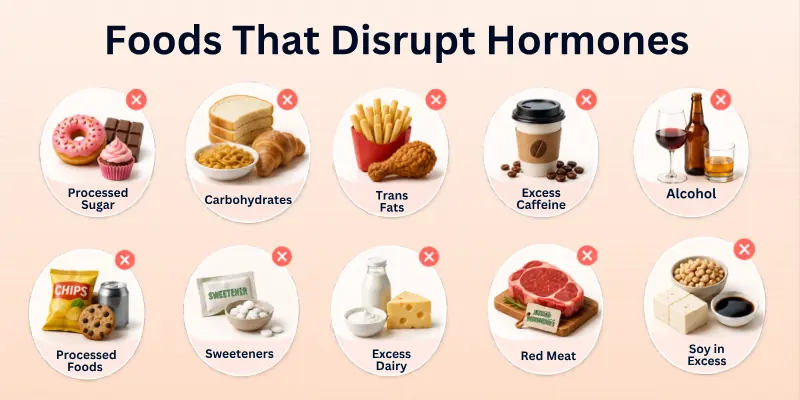
What to Avoid:
- Processed Sugar: Spikes insulin quickly, which can disturb reproductive and metabolic hormones.
- Refined Carbohydrates: White bread, pastries, and pasta cause blood sugar fluctuations affecting hormone stability.
- Trans Fats: Found in fried and packaged foods, they increase inflammation and disrupt estrogen and cortisol balance.
- Excess Caffeine: Can raise cortisol, reduce melatonin, and disturb sleep-dependent hormone regulation.
- Alcohol: Strains the liver, affecting hormone detoxification and estrogen metabolism.
- Highly Processed Foods: Often contain additives and preservatives that mimic hormones and affect the endocrine system.
- Artificial Sweeteners: May alter gut microbiome and insulin response, indirectly impacting hormones.
- Excess Dairy (if sensitive): Some people may experience estrogen spikes or inflammation from high dairy intake.
- Red Meat with Hormones: Conventionally farmed meat may contain added hormones, which can affect your own hormone levels.
- Soy in Excess: High amounts of processed soy can mimic estrogen and disrupt balance in sensitive individuals.
Tip: Focus on whole, natural foods and limit packaged and processed items. Small adjustments over time can significantly improve hormone regulation.
FAQs
Here are some of the most commonly asked questions related to how to maintain hormonal balance naturally:
Eat whole grains, vegetables, fruits, lean proteins, nuts, seeds, and healthy fats regularly. Avoid processed sugar, trans fats, and refined carbs. These foods help stabilize blood sugar and support hormone production naturally.
High stress raises cortisol, which can disrupt reproductive, thyroid, and metabolic hormones. Managing stress with meditation, deep breathing, or light exercise helps maintain hormonal balance.
Yes. Quality sleep supports repair and hormone regulation. Aim for 7–9 hours nightly in a dark, cool, quiet room to maintain stable hormone levels.
Moderate activities like walking, strength training, yoga, and light cardio support insulin balance and reproductive hormones. Avoid extreme workouts that may cause hormonal stress.
Healthy fats from nuts, seeds, avocado, olive oil, and fatty fish help your body produce hormones, support brain function, and reduce inflammation naturally.
Ashwagandha, maca root, fenugreek, and spearmint support stress reduction, reproductive health, and insulin balance. Use them in moderation after consulting a healthcare professional.
A healthy gut helps nutrient absorption and hormone processing. Eat probiotic foods, fiber-rich meals, and avoid excessive sugar to support balanced hormones.
Yes. Excess caffeine raises cortisol, and alcohol strains the liver, affecting estrogen and detoxification. Limit intake for better hormonal health.
Water helps digestion, nutrient transport, and toxin removal, all essential for hormone stability. Drink at least 6–8 glasses daily for optimal results.
See a doctor if symptoms persist, cycles are irregular, or you notice sudden changes. Regular checkups and lab tests can identify underlying issues for proper treatment.






- Be Respectful
- Stay Relevant
- Stay Positive
- True Feedback
- Encourage Discussion
- Avoid Spamming
- No Fake News
- Don't Copy-Paste
- No Personal Attacks
- Be Respectful
- Stay Relevant
- Stay Positive
- True Feedback
- Encourage Discussion
- Avoid Spamming
- No Fake News
- Don't Copy-Paste
- No Personal Attacks
