How to Prevent Seasonal Flu: Simple Ways to Stay Safe
Published: 14 May 2026
Seasonal flu affects millions of people every year, causing fever, cough, body aches, and fatigue. Preventing the flu is better than treating it, as it helps you avoid complications and keeps your immune system strong. In this guide, we will cover how to prevent seasonal flu through vaccinations, hygiene, lifestyle habits, and home remedies.
By following these steps, you can significantly reduce your chances of getting sick and protect your loved ones, too.
Top Ways to Prevent Seasonal Flu
Here are the ten best ways to get rid of seasonal flu:
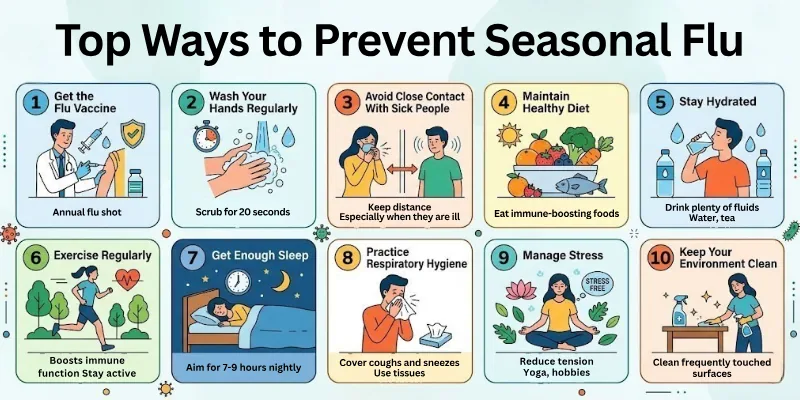
- Get the Flu Vaccine
- Wash Your Hands Regularly
- Avoid Close Contact With Sick People
- Maintain a Healthy Diet
- Stay Hydrated
- Exercise Regularly
- Get Enough Sleep
- Practice Respiratory Hygiene
- Manage Stress
- Keep Your Environment Clean
Let us cover all in detail.
1. Get the Flu Vaccine
Getting a yearly flu shot is the most effective way to prevent seasonal flu. The vaccine trains your immune system to recognize and fight the virus. It is particularly important for young children, elderly adults, pregnant women, and people with chronic health conditions. Even if you do get sick after vaccination, your symptoms are usually milder and recovery is faster.
Tips:
- Get vaccinated before flu season begins
- Choose the right type of vaccine for your age and health condition
- Encourage family members to get vaccinated
Quick Benefits:
- Strong protection against flu
- Reduces severity if infected
- Protects vulnerable people
2. Wash Your Hands Regularly
Flu viruses can easily spread through contaminated hands. Washing your hands frequently with soap and water helps remove germs before they enter your body. Using hand sanitizer is effective when soap and water aren’t available. Regular hand hygiene is one of the simplest ways to prevent illness.
Tips:
- Wash your hands for at least 20 seconds
- Clean your hands before eating or touching your face
- Use sanitizer after touching public surfaces
Quick Benefits:
- Reduces risk of flu infection
- Prevents transmission to others
- Simple daily habit
3. Avoid Close Contact With Sick People
Flu spreads through droplets released when someone coughs, sneezes, or talks. Avoiding close contact with sick individuals reduces your risk of infection. If a family member is sick, take extra precautions to limit exposure. Physical distancing and masks can further lower the risk.
Tips:
- Keep at least a 1-meter distance from sick people
- Avoid crowded places during the peak flu season
- Wear masks when needed
Quick Benefits:
- Lowers the risk of catching flu
- Protects immune system
- Reduces community spread
4. Maintain a Healthy Diet
Eating a nutrient-rich diet strengthens your immune system, helping prevent seasonal flu. Include fruits, vegetables, lean proteins, and whole grains to provide essential vitamins and minerals. Vitamins like C and D, along with zinc, play a crucial role in immune support. A healthy diet also helps your body recover faster if you do get sick.
Tips:
- Include citrus fruits, berries, and leafy greens daily
- Eat lean meats, eggs, and legumes
- Limit processed and sugary foods
Quick Benefits:
- Boosts immunity
- Reduces susceptibility to infection
- Supports overall health
5. Stay Hydrated
Water helps your body flush out toxins and keeps mucous membranes moist, which traps germs. Proper hydration supports overall health and keeps your throat and nasal passages healthy. Drinking enough fluids is a simple yet powerful way to reduce flu risk.
Tips:
- Drink at least 8–10 glasses of water daily
- Include herbal teas and soups
- Avoid sugary and caffeinated drinks in excess
Quick Benefits:
- Keeps respiratory tract healthy
- Supports immune function
- Reduces fatigue
6. Exercise Regularly
Moderate exercise boosts circulation and strengthens your immune system. Activities like walking, swimming, or yoga can help your body fight infections. Avoid overexertion, as it can temporarily weaken immunity. Exercising regularly keeps your body strong and resilient during flu season.

Tips:
- Aim for 30 minutes of moderate activity most days
- Choose low-impact exercises
- Listen to your body and rest if needed
Quick Benefits:
- Improves immunity
- Enhances cardiovascular health
- Supports overall wellness
7. Get Enough Sleep
Sleep is essential for immune health. Lack of sleep increases vulnerability to flu viruses and slows recovery. Aim for 7–9 hours of quality sleep every night. Good sleep habits help your body fight infections naturally.
Tips:
- Maintain a regular sleep schedule
- Avoid screens before bedtime
- Keep your bedroom dark and quiet
Quick Benefits:
- Strengthens immune system
- Reduces infection risk
- Improves overall health
8. Practice Respiratory Hygiene
Covering your mouth and nose when coughing or sneezing prevents the flu from spreading. Using tissues or your elbow is safer than using hands. Teaching children proper respiratory hygiene is equally important.
Tips:
- Always carry tissues
- Dispose of used tissues immediately
- Wash hands after sneezing or coughing
Quick Benefits:
- Prevents virus spread
- Protects those around you
- Reduces contamination
9. Manage Stress
High stress weakens your immune system, making you more prone to flu infections. Practicing stress management techniques supports overall health. Relaxation methods can also improve sleep and energy levels.
Tips:
- Try meditation, deep breathing, or yoga
- Take breaks during work
- Engage in hobbies and social activities
Quick Benefits:
- Enhances immunity
- Improves mental health
- Supports recovery
10. Keep Your Environment Clean
Flu viruses can survive on surfaces for hours. Regular cleaning and disinfecting reduce the risk of infection. Pay special attention to high-touch areas like doorknobs, phones, and countertops. A clean environment protects you and your family.
Tips:
- Wipe high-touch surfaces daily
- Use disinfectants recommended for viruses
- Keep home well-ventilated
Quick Benefits:
- Reduces flu virus presence
- Protects household members
- Promotes hygiene
Final Note
In this guide, we have covered how to prevent seasonal flu in detail. From getting vaccinated to practicing good hygiene, maintaining a healthy diet, exercising, and managing stress, these steps help protect you and your family during flu season. Additionally, staying hydrated, getting enough sleep, and keeping your environment clean are essential for flu prevention.
Personal Advice
Try to build a daily routine that includes hand washing, a balanced diet, moderate exercise, and proper rest. Using herbal teas or warm soups can provide extra immunity support. Avoid crowded places during peak flu season and consider wearing a mask if you feel unwell. Following these tips consistently can significantly lower your chances of catching the flu.
Now, check out the FAQs below for quick answers to common questions about how to prevent seasonal flu.
FAQs
Here are some of the most commonly asked questions related to the ways to get rid of seasonal flu:
Getting a yearly flu vaccine is the most effective method. It prepares your immune system to fight flu viruses. Even if you catch the flu, vaccination reduces severity and recovery time. Always get the vaccine before flu season starts.
Wash your hands frequently, especially before eating or touching your face. Use soap and water for at least 20 seconds. Hand sanitizer is helpful when washing is not possible. Regular hand hygiene greatly reduces flu risk.
Yes! Moderate exercise like walking, yoga, or swimming strengthens your immune system. Aim for at least 30 minutes most days. Avoid overexertion as it can weaken immunity temporarily. Exercise keeps your body resilient during flu season.
Absolutely. 7–9 hours of quality sleep strengthens the immune system. Poor sleep increases susceptibility to flu viruses. Maintain a regular sleep schedule and create a restful bedroom environment. Sleep helps your body fight infections naturally.
A balanced diet rich in fruits, vegetables, whole grains, and lean proteins supports immunity. Vitamins C, D, and zinc are crucial for fighting infections. Avoid processed foods and sugary drinks. A healthy diet helps your body prevent and recover from flu.
Yes, crowded places increase the risk of flu exposure. Maintain distance from sick people whenever possible. Wearing masks in crowded areas can further reduce risk. Limiting contact helps protect you and your family.
Water keeps your respiratory tract moist, trapping germs before they enter your body. Proper hydration also flushes out toxins and supports overall health. Aim for 8–10 glasses of water daily. Herbal teas and soups can also help.
High stress weakens immunity, making you more prone to flu. Managing stress with meditation, deep breathing, or hobbies supports immune health. Reducing stress also improves sleep quality. A calm mind helps your body fight infections effectively.
Clean and disinfect high-touch surfaces daily. Focus on doorknobs, phones, and countertops. Keep the home well-ventilated to reduce virus presence. A clean environment reduces flu spread significantly.
Some natural remedies, like herbal teas, vitamin-rich foods, and honey, can support immunity. These are not substitutes for vaccines but can complement prevention efforts. Consistent hygiene, diet, and exercise remain essential.




- Be Respectful
- Stay Relevant
- Stay Positive
- True Feedback
- Encourage Discussion
- Avoid Spamming
- No Fake News
- Don't Copy-Paste
- No Personal Attacks
- Be Respectful
- Stay Relevant
- Stay Positive
- True Feedback
- Encourage Discussion
- Avoid Spamming
- No Fake News
- Don't Copy-Paste
- No Personal Attacks
