What Are Complex Carbohydrates: Benefits, Types, Tips, and Myths
Published: 1 Jun 2026
Many people hear words like carbs or carbohydrates and feel confused. Some people say carbs give energy, while others say carbs are bad for health. This confusion makes many beginners unsure about what to eat every day.
In this guide, you will clearly learn What Are Complex Carbohydrates, why they are different from simple carbs, how they work in your body, and which foods are healthy choices. This simple guide will help you understand carbs in an easy and clear way.
Let’s dive in with me!
What are Complex Carbs?
Complex carbohydrates, also called complex carbs, are healthy carbs that are made of long chains of sugar molecules. These long chains take more time to break down inside the body. Because of this, complex carbs give slow and steady energy instead of a quick energy spike. They also help you feel full for a longer time and support better digestion.
Complex carbs are rich in fiber, vitamins, and minerals that support overall health. They help keep blood sugar levels more stable during the day. This is why nutrition experts often recommend complex carbs for a balanced and healthy diet.
Types of Complex Carbs
Guys, do you know there are two main types of complex carbs that your body uses every day? Both types are important for energy, digestion, and overall health.
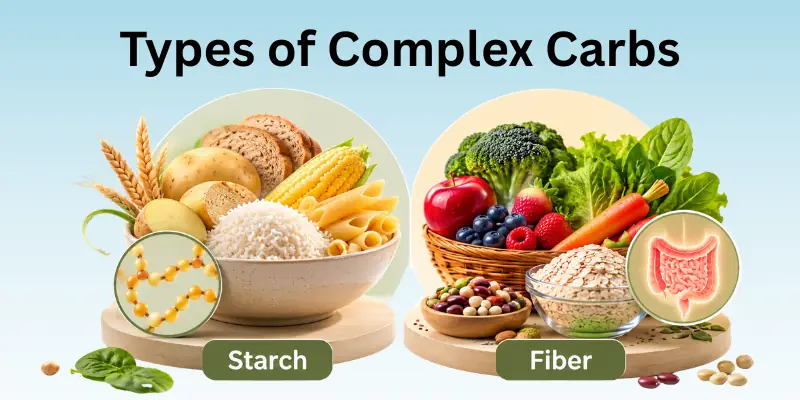
Let’s understand them in a very simple way.
Starch: Starch is a type of complex carb that gives your body energy. It breaks down slowly, which helps you stay active for a longer time.
Fiber: Fiber is a complex carb that helps your digestive system work properly. It keeps you full for longer and supports gut and heart health.
How Complex Carbs Work in the Body
Many people eat complex carbs every day, but they do not know how they actually work inside the body. These carbs follow a slow and healthy process that supports energy and digestion.
- The body breaks complex carbs into glucose slowly during digestion.
- This slow process gives steady energy instead of quick energy spikes.
- Blood sugar levels stay more balanced throughout the day.
- Fiber in complex carbs supports healthy digestion and gut health.
- The body feels full for a longer time, which helps control hunger.
Benefits of Complex Carbs
Complex carbs are an important part of a healthy diet. They support your body in many ways and help you stay active, full, and healthy throughout the day.
- Long-Lasting Energy: They release energy slowly, which helps you stay active for a longer time.
- Better Digestion: The fiber in complex carbs helps your digestive system work smoothly.
- Blood Sugar Control: They help keep blood sugar levels stable and avoid sudden spikes.
- Weight Management: They keep you full longer, which helps reduce overeating.
- Heart Health: Fiber-rich complex carbs support healthy cholesterol levels.
- Improved Gut Health: They feed good gut bacteria and support a healthy stomach.
Examples of Complex Carbohydrate Foods
Do you know which foods are rich in complex carbs? Eating these foods regularly can give you steady energy and support your overall health. Here are some easy examples:
- Whole Grains: Foods like brown rice, oats, and whole wheat bread are rich in complex carbs and fiber.
- Vegetables: Broccoli, carrots, spinach, and sweet potatoes provide healthy carbs and essential vitamins.
- Fruits with Fiber: Apples, berries, and pears contain natural sugars along with fiber for slow energy release.
- Legumes and Beans: Lentils, chickpeas, and black beans are packed with carbs, protein, and fiber.
- Nuts and Seeds: Almonds, walnuts, chia seeds, and flaxseeds provide carbs, healthy fats, and energy.
Complex Carbs vs Simple Carbs
Many people get confused between complex carbs and simple carbs. Understanding the difference can help you make healthier food choices every day.
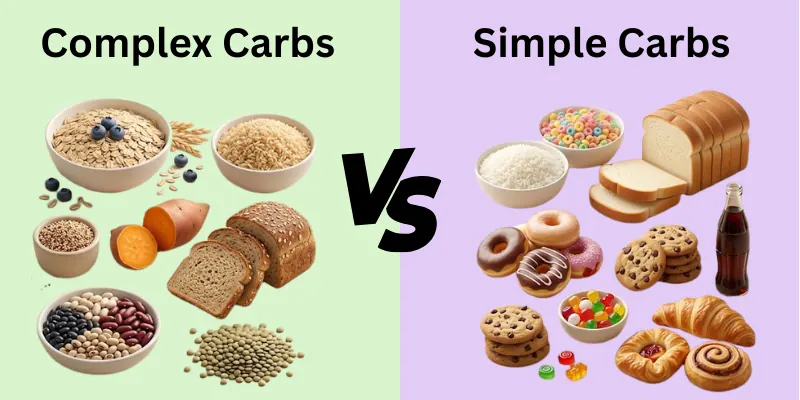
Here are some main differences between complex carbs vs simple carbs:
- Digestion Speed: Complex carbs take longer to digest, giving slow and steady energy. Simple carbs digest quickly, causing fast energy spikes and crashes.
- Energy Release: Complex carbs provide long-lasting energy, while simple carbs give short-term bursts of energy.
- Nutrient Content: Complex carbs are rich in fiber, vitamins, and minerals. Simple carbs often have little nutritional value and may be high in sugar.
- Effect on Blood Sugar: Complex carbs keep blood sugar stable. Simple carbs can cause rapid increases in blood sugar levels.
- Satiety: Complex carbs help you feel full longer. Simple carbs can leave you hungry soon after eating.
Are Complex Carbs Good for Weight Loss?
Yes, complex carbs can be very helpful for weight loss when eaten in the right amounts. Because they are rich in fiber, they keep you full for a longer time, which reduces unnecessary snacking and overeating.
They also provide steady energy, so your body can stay active and burn calories throughout the day. Choosing healthy complex carb foods like whole grains, vegetables, and legumes can support a balanced diet and help you reach your weight loss goals safely.
How Much Complex Carbs Should You Eat Daily?
Many people are unsure about how much complex carbs they should eat every day. The amount depends on your age, activity level, and health goals. Here is a simple guide to help you understand daily portions:
| Age / Group | Daily Complex Carb Intake | Examples of Serving Sizes |
| Children (4–8 yrs) | 3–5 servings | 1 slice whole wheat bread, ½ cup oats, ½ cup beans |
| Teens (9–18 yrs) | 5–7 servings | 1 cup brown rice, 1 medium potato, 1 cup vegetables |
| Adults (19–50 yrs) | 6–8 servings | 1 slice whole grain bread, 1 cup cooked pasta, 1 cup lentils |
| Active Adults | 7–9 servings | 1 cup quinoa, 1 medium sweet potato, 1 cup veggies |
| Older Adults (50+) | 5–6 servings | ½ cup oats, 1 slice whole wheat bread, ½ cup beans |
Note: One serving is roughly the size of a fist or half a cup for grains and legumes.
Best Time to Eat Complex Carbs
Eating complex carbs at the right time can help your body get steady energy and stay active throughout the day. Timing also affects digestion and overall health. Here are the best times to eat them:
- Morning: Eating complex carbs in the morning gives long-lasting energy for work, school, or daily activities.
- Before Workout: Consuming complex carbs 1–2 hours before exercise provides fuel for better performance.
- After Workout: They help restore energy and support muscle recovery when combined with protein.
- Evening: Light portions of complex carbs in the evening can keep you full overnight without causing weight gain.
Eating complex carbs at these times helps balance energy, blood sugar, and hunger levels.
Common Myths About Complex Carbs
There are many misunderstandings about complex carbs that confuse people about healthy eating. Let’s clear some of the most common myths:
- “Carbs Make You Fat:” Eating complex carbs in the right amounts does not make you fat. They provide energy and help control hunger.
- “All Carbs Are Bad:” Not all carbs are unhealthy. Complex carbs are important for energy, digestion, and overall health.
- “Low-Carb Diets Are Always Better:” Cutting all carbs is not necessary. A balanced diet with complex carbs supports long-term health.
- “You Should Only Eat Carbs in the Morning:” Complex carbs can be eaten at different times of the day for energy and fullness.
- “Fiber Isn’t Important:” Fiber from complex carbs is essential for digestion, heart health, and keeping you full.
Possible Side Effects of Too Many Complex Carbs
Even though complex carbs are healthy, eating too much can cause problems. Balance is the key to getting benefits without side effects. Here are some things to watch out for:
- Overeating Calories: Eating too many complex carbs can add extra calories and may lead to weight gain.
- Digestive Discomfort: Too much fiber at once can cause bloating, gas, or stomach upset.
- Blood Sugar Issues: Eating very large portions, even of complex carbs, can still affect blood sugar levels.
- Nutrient Imbalance: Relying only on complex carbs may reduce protein or healthy fat intake in your diet.
Including moderate portions of complex carbs along with protein and healthy fats is the best way to stay healthy.
Simple Tips to Add More Complex Carbs to Your Diet
Adding complex carbs to your meals is easier than you think. Small changes can make your diet healthier and more balanced. Here are some simple tips:
- Choose Whole Grains: Replace white rice, bread, and pasta with brown rice, whole wheat bread, or whole grain pasta.
- Add More Vegetables: Include vegetables like broccoli, carrots, spinach, and sweet potatoes in every meal.
- Include Legumes: Add beans, lentils, or chickpeas to salads, soups, or main dishes.
- Snack Smart: Eat nuts, seeds, or fruit instead of sugary snacks.
- Read Food Labels: Look for foods high in fiber and whole grains, and avoid refined carbs.
- Cook in Healthy Ways: Steam, boil, or bake complex carb foods instead of frying them.
Conclusion
In this guide, we have covered what are complex carbs, their types, benefits, how they work in the body, and the best foods to include in your diet. We also discussed the right amount to eat, the best time to consume them, and common myths about complex carbs.
Personal Advice: Try to include more whole grains, vegetables, fruits, and legumes in your daily meals. Eat them in balanced portions with protein and healthy fats for steady energy, better digestion, and overall health. Avoid overloading on carbs, even healthy ones, to prevent unwanted side effects.
Now, let’s see some FAQs to answer common questions about complex carbs.
FAQs: What are Complex Carbs
Here are some of the most commonly asked questions related to what are complex carbohydrates:
Complex carbs are long chains of sugar molecules that give slow and steady energy. They are found in foods like whole grains, vegetables, and legumes. Unlike simple carbs, they keep you full for a longer time.
Complex carbs digest slowly, giving long-lasting energy. Simple carbs digest quickly and cause energy spikes. Complex carbs also have fiber, vitamins, and minerals.
Yes, complex carbs can help with weight loss. They keep you full longer and reduce overeating. Choose whole grains, vegetables, and beans for the best results.
No, not all carbs are bad. Complex carbs are healthy and support energy, digestion, and heart health. Only refined or sugary carbs can cause health problems if eaten too much.
The daily amount depends on your age, activity, and health goals. Most adults need 6–8 servings a day. Include a mix of grains, vegetables, fruits, and legumes.
You can eat them at any meal for energy. Morning and pre-workout are great for long-lasting energy. Light portions in the evening can also keep you full overnight.
Yes, eating too much can cause bloating or weight gain. Too much fiber may upset your stomach. Balance complex carbs with protein and healthy fats for the best results.
Yes, complex carbs digest slowly and release energy gradually. This helps prevent sudden spikes in blood sugar. They are better for people trying to manage diabetes.
Some fruits with fiber, like apples, berries, and pears, are complex carbs. They release energy slowly and provide vitamins. Avoid fruit juices, as they act like simple carbs.
Yes, children need complex carbs for energy and growth. Include whole grains, vegetables, fruits, and beans in their meals. It helps them stay active and healthy.






- Be Respectful
- Stay Relevant
- Stay Positive
- True Feedback
- Encourage Discussion
- Avoid Spamming
- No Fake News
- Don't Copy-Paste
- No Personal Attacks
- Be Respectful
- Stay Relevant
- Stay Positive
- True Feedback
- Encourage Discussion
- Avoid Spamming
- No Fake News
- Don't Copy-Paste
- No Personal Attacks
