Best Foods For Healthy Eyesight: Protect Your Vision Now
Published: 20 Jun 2026
Your eyes are one of the most important organs in your body. They help you see the world clearly, maintain depth perception, and adapt to light changes. Good eyesight depends not only on genetics and habits but also on nutrition.
Certain vitamins, minerals, and antioxidants support eye health and reduce the risk of vision problems like cataracts, macular degeneration, and dry eyes.
But guys, many of us spend hours in front of screens or eat foods that do not support eye health. The good news is that including the right foods in your daily diet can make a huge difference.
In this guide, I will share the best foods for healthy eyesight that are easy, tasty, and nutrient-rich. So let us dig in!
Best Foods For Healthy Eyesight
Good vision depends on getting the right nutrients that support eye health and protect against age-related damage. Foods rich in vitamins A, C, E, omega-3 fatty acids, and antioxidants can help maintain healthy eyesight, reduce eye strain, and support long-term vision health.
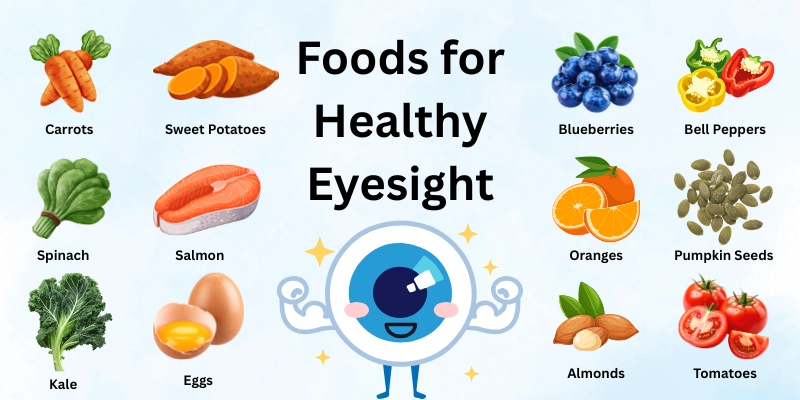
Including these nutrient-dense foods in your daily diet may help keep your eyes strong and healthy. Here is the list of the best foods for healthy eyesight:
- Carrots
- Spinach
- Kale
- Sweet Potatoes
- Salmon
- Eggs
- Blueberries
- Oranges
- Almonds
- Bell Peppers
- Pumpkin Seeds
- Tomatoes
Let us learn about their benefits and preparation ideas in great detail.
1. Carrots
Carrots are rich in beta-carotene, which the body converts into vitamin A. Vitamin A is essential for night vision and overall eye health. I always suggest including carrots regularly to support clear vision. They help reduce dryness and improve retinal function. Carrots are also easy to prepare and can be included in multiple dishes.
How To Prepare:
- Slice raw and eat as a snack.
- Add shredded carrots to salads.
- Roast with olive oil and herbs.
- Blend into smoothies.
- Include in soups and stews.
2. Spinach
Spinach is loaded with lutein and zeaxanthin, antioxidants that protect your eyes from harmful light and oxidative stress. I often recommend spinach for people who spend long hours in front of screens. It supports healthy retinal function and reduces the risk of age-related vision problems. Spinach is versatile and can be added to almost any meal.
How To Prepare:
- Steam lightly and serve as a side.
- Add to omelettes.
- Blend into green smoothies.
- Include in soups.
- Use in salads.
3. Kale
Kale is another leafy green rich in lutein, zeaxanthin, and vitamin C. These nutrients help maintain eye structure and prevent oxidative damage. I personally suggest adding kale to your weekly diet at least a few times. It supports long-term vision health. It is easy to cook or eat raw in salads.
How To Prepare:
- Massage raw kale with olive oil for salad.
- Steam and add a pinch of salt.
- Stir fry with garlic and spices.
- Blend into smoothies.
- Bake kale chips for a crunchy snack.
4. Sweet Potatoes
Sweet potatoes are a powerful source of beta-carotene. They help prevent night blindness and improve overall eye health. I suggest replacing refined carbs with sweet potatoes when possible. They provide fiber, vitamins, and energy. They are naturally sweet and delicious.
How To Prepare:
- Bake with a drizzle of olive oil.
- Mash and serve as a side dish.
- Roast cubes with herbs and spices.
- Include in soups and stews.
- Slice and grill for a quick snack.
5. Salmon
Salmon is rich in omega-3 fatty acids, which protect the retina and reduce the risk of dry eyes. I recommend including fatty fish like salmon twice a week. Omega-3s also support brain and heart health. Salmon is easy to cook and pairs well with vegetables.
How To Prepare:
- Season and bake for 15 minutes.
- Grill with lemon and herbs.
- Add to salads.
- Serve with quinoa or rice.
- Make salmon patties for quick meals.
6. Eggs
Eggs provide lutein, zeaxanthin, and vitamin A. They support retinal health and reduce the risk of cataracts. I personally recommend eggs for breakfast or lunch. They are affordable, versatile, and highly nutritious. Including eggs regularly can improve long-term eye health.
How To Prepare:
- Boil and serve with vegetables.
- Make a vegetable omelette.
- Scramble with spinach or kale.
- Add sliced eggs to salads.
- Prepare egg muffins for meal prep.
7. Blueberries
Blueberries are rich in antioxidants, especially vitamin C and anthocyanins. These compounds protect the eyes from oxidative stress. I often suggest adding blueberries to breakfast or snacks. They are low in sugar and easy to include. They support eye function and reduce inflammation.
How To Prepare:
- Add to oatmeal or yogurt.
- Blend into smoothies.
- Eat fresh as a snack.
- Mix with nuts for a quick trail mix.
- Use in breakfast bowls with seeds.
8. Oranges
Oranges and other citrus fruits provide vitamin C, which protects blood vessels in the eyes. I always recommend a serving of citrus daily. Vitamin C supports collagen in the eye and may reduce the risk of cataracts. Citrus fruits are easy to include and naturally refreshing.
How To Prepare:
- Eat fresh orange slices.
- Add to fruit salads.
- Blend into smoothies.
- Include as a topping for yogurt.
- Use morning water for a fresh start.
9. Almonds
Almonds are rich in vitamin E, which protects the eyes from oxidative damage. I suggest including a small handful daily. They are convenient, filling, and support overall eye and skin health. They also improve heart health.
How To Prepare:
- Eat raw as a snack.
- Add to oatmeal or yogurt.
- Blend into smoothies.
- Chop and mix into salads.
- Use in homemade energy bars.
10. Bell Peppers
Bell peppers are rich in vitamin C and carotenoids. They protect eyes from oxidative stress and support healthy retinal function. I often suggest adding colorful bell peppers to meals for visual appeal and nutrition. They are versatile and easy to cook.
How To Prepare:
- Slice raw for salads.
- Stir fry with olive oil and garlic.
- Roast and serve as a side dish.
- Add to omelettes or wraps.
- Blend into soups.
11. Pumpkin Seeds
Pumpkin seeds contain zinc, which is essential for retina health and night vision. I recommend a small handful daily. They are easy to include in meals or snacks. Zinc also supports immunity and metabolism.
How To Prepare:
- Eat raw as a snack.
- Sprinkle on salads or oatmeal.
- Add to smoothies.
- Mix into yogurt or breakfast bowls.
- Roast lightly with herbs for crunch.
12. Tomatoes
Tomatoes are rich in lycopene, an antioxidant that protects eyes from light-induced damage. I suggest including tomatoes in salads, sauces, or cooked dishes. They support retinal health and reduce inflammation. Tomatoes are versatile and easy to prepare.
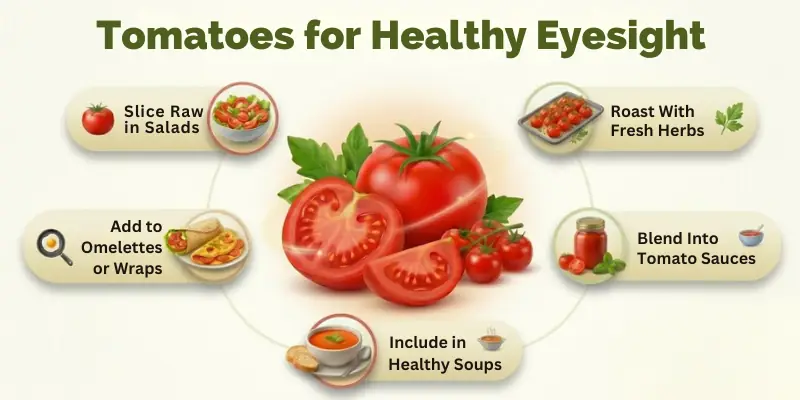
How To Prepare:
- Slice raw in salads.
- Roast with herbs as a side dish.
- Add to omelettes or wraps.
- Blend into sauces.
- Include in soups.
Tips For Supporting Healthy Eyesight
Eating the right foods is only part of eye care. Healthy lifestyle habits play a big role in maintaining vision and preventing eye strain. Regular check-ups, screen breaks, and proper lighting all help. I always recommend combining nutrition with lifestyle habits for the best results.
Helpful Tips:
- Take screen breaks every hour.
- Wear sunglasses to protect from UV rays.
- Drink plenty of water daily.
- Ensure proper lighting while reading or working.
- Schedule regular eye check-ups.
Final Note
In this guide, we have covered the best foods for healthy eyesight that support vision, retinal health, and long-term eye function. As a diet expert, I always remind readers that a balanced diet rich in antioxidants, vitamins, and minerals is key to preventing eye problems naturally. Combined with healthy habits, these foods can improve your vision and protect your eyes for years to come.
Stay connected and explore more guides on this site to enhance your health and wellness every day.
FAQs
Here are some of the most commonly asked questions related to the best foods for healthy eyesight:
Foods rich in vitamin A, C, E, zinc, and omega-3 fatty acids are best for eyesight. Carrots, leafy greens, salmon, and citrus fruits are excellent options. Regular consumption supports retinal health. Balanced meals provide long-term benefits.
Yes, carrots are rich in beta-carotene, which converts to vitamin A. Vitamin A supports night vision and retinal function. Regular intake helps prevent deficiencies. Pair with healthy fats for better absorption.
Yes, spinach and kale contain lutein and zeaxanthin. These antioxidants protect the eyes from oxidative stress. They also support retinal health and reduce the risk of macular degeneration. Include them regularly.
Yes, salmon provides omega-3 fatty acids, which support retina and tear production. It reduces the risk of dry eyes and age-related vision problems. Include fatty fish twice a week for optimal benefits.
Yes, berries contain antioxidants that protect the eyes from free radical damage. They also reduce inflammation and support retinal function. Regular intake contributes to long-term eye health.
Yes, eggs provide lutein, zeaxanthin, and vitamin A. These nutrients support retinal health and reduce the risk of cataracts. Eggs are versatile and easy to include in meals.
Yes, almonds and pumpkin seeds contain vitamin E and zinc. These nutrients protect the eyes from oxidative stress and support vision. Eat a small handful daily.
Vitamin C strengthens blood vessels in the eyes and reduces the risk of cataracts. Citrus fruits, bell peppers, and berries are rich sources. Regular intake supports overall eye health.
Yes, tomatoes contain lycopene, which protects the retina from light-induced damage. They also reduce oxidative stress. Include raw or cooked tomatoes in meals.
Absolutely. Eating the right foods is important, but habits like taking screen breaks, wearing sunglasses, and staying hydrated also protect vision. Combine nutrition with healthy habits for optimal eye health.





- Be Respectful
- Stay Relevant
- Stay Positive
- True Feedback
- Encourage Discussion
- Avoid Spamming
- No Fake News
- Don't Copy-Paste
- No Personal Attacks
- Be Respectful
- Stay Relevant
- Stay Positive
- True Feedback
- Encourage Discussion
- Avoid Spamming
- No Fake News
- Don't Copy-Paste
- No Personal Attacks
