How to Prevent Kidney Stones: Natural and Proven Ways
Published: 18 May 2026
Kidney stones are hard deposits of minerals and salts that form in your kidneys. They can cause severe pain, urinary issues, and discomfort. The good news is that kidney stones can often be prevented by following simple lifestyle changes, diet adjustments, and healthy daily habits.
In this guide, we will cover how to prevent kidney stones naturally, what foods and drinks help, and lifestyle strategies to reduce your risk. By the end, you will have practical steps to keep your kidneys healthy and stone-free.
Let’s dig in!
How to Prevent Kidney Stones
Preventing kidney stones requires proper hydration, balanced nutrition, and lifestyle habits that reduce the risk of mineral deposits in the kidneys. Many natural strategies can lower your risk significantly.
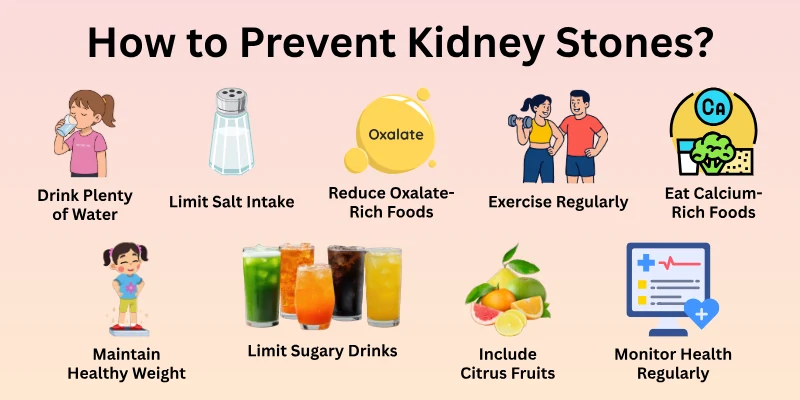
Here are the main ways to prevent kidney stones naturally:
- Drink Plenty of Water
- Limit Salt Intake
- Reduce Oxalate-Rich Foods
- Eat Calcium-Rich Foods
- Avoid Excess Animal Protein
- Limit Sugary Drinks
- Maintain a Healthy Weight
- Exercise Regularly
- Include Citrus Fruits
- Monitor Your Health Regularly
Let us cover all these in detail.
1. Drink Plenty of Water
Staying hydrated is the most effective way to prevent kidney stones. Water dilutes the minerals and salts in urine, reducing the risk of stone formation. Aim to drink at least 2–3 liters of water daily. Monitoring urine color, light yellow is ideal, can help ensure proper hydration.
Additional Tips:
- Carry a water bottle throughout the day
- Drink extra water during hot weather or exercise
- Include herbal teas and diluted fruit juices for hydration
2. Limit Salt Intake
High salt intake increases calcium levels in urine, which can lead to kidney stones. Reduce processed and packaged foods, fast foods, and salty snacks. Cooking with less salt and using herbs for flavor helps lower risk.
Additional Tips:
- Read nutrition labels to monitor sodium content
- Avoid adding extra salt to meals
- Use spices, garlic, lemon, or vinegar as alternatives
3. Reduce Oxalate-Rich Foods
Oxalates can bind with calcium and form kidney stones. Foods high in oxalates include spinach, rhubarb, beets, nuts, and chocolate. Reducing excessive consumption can help prevent stones. Pair oxalate-rich foods with calcium-rich foods to reduce stone formation.
Additional Tips:
- Cook spinach instead of eating raw to lower oxalate content
- Drink plenty of water when consuming oxalate-rich foods
- Track which foods trigger issues if prone to stones
4. Eat Calcium-Rich Foods
Calcium helps bind oxalates in the gut, preventing them from forming stones in the kidneys. Include dairy products, fortified plant milks, and leafy greens. Avoid taking high-dose calcium supplements without a doctor’s guidance.
Additional Tips:
- Pair calcium-rich foods with meals, not on an empty stomach
- Avoid excessive calcium supplements
- Focus on natural dietary sources for safety
5. Avoid Excess Animal Protein
High consumption of red meat, eggs, and fish increases uric acid, which can lead to kidney stones. Moderate your intake and balance with plant-based proteins like beans, lentils, and tofu. Eating too much protein also increases calcium excretion in urine.
Additional Tips:
- Limit animal protein to 1–2 servings per day
- Include fish, poultry, and plant proteins in rotation
- Avoid processed meats like bacon and sausages
6. Limit Sugary Drinks
Soda, sugary drinks, and juices that are sweetened all contribute to an increased risk of kidney stones. Sugar, and fructose in particular, has the potential to raise uric acid levels. To stay hydrated, you should drink water, herbal teas, or water that has been naturally infused with fruit.

Additional Tips:
- Avoid soft drinks, energy drinks, and sweetened iced teas
- Read beverage labels for hidden sugars
- Replace sugary drinks with fresh lemon water
7. Maintain a Healthy Weight
Obesity and overweight increase the risk of kidney stones. Losing excess weight through healthy eating and regular exercise can reduce stone formation. Focus on gradual, sustainable weight management rather than crash diets.
Additional Tips:
- Track your BMI and aim for a healthy range
- Include daily activity like walking or cycling
- Avoid extreme diets that affect kidney function
8. Exercise Regularly
As a result of regular exercise, kidney function is improved overall, and the formation of stones is reduced. Exercises that are moderate in intensity, such as walking, yoga, or swimming, are ideal. During your workouts, you should avoid becoming dehydrated, as this can increase the risk of developing stones.
Additional Tips:
- Exercise 20–30 minutes daily
- Combine cardio with stretching for better kidney health
- Drink water before, during, and after exercise
9. Include Citrus Fruits
Citrus fruits like oranges, lemons, and grapefruits increase citrate in urine, which prevents stone formation. Drinking fresh lemon water daily is an effective preventive measure. Citrate binds with calcium to reduce crystallization in kidneys.
Additional Tips:
- Drink 1–2 glasses of lemon water daily
- Include other citrus fruits in salads or snacks
- Avoid sugary citrus juices
10. Monitor Your Health Regularly
Urinary tests and checkups at regular intervals can assist in the early detection of kidney stones and other risk factors. It is possible to take preventative measures at the appropriate time by monitoring blood pressure, kidney function, and mineral levels.
Additional Tips:
- Schedule annual kidney health checkups
- Track any urinary symptoms like pain, frequency, or color changes
- Discuss family history of kidney stones with your doctor
When to See a Doctor for Kidney Stones
You should see a doctor immediately if you experience any of the following warning signs:
1. Severe Pain in the Back, Side, or Lower Abdomen
Kidney stones can cause sudden, intense pain that comes in waves. This pain is usually felt near the lower back, sides, or below the ribs and may radiate to the groin or genital area. Severe pain that doesn’t subside with rest or home remedies should be evaluated immediately.
2. Blood in Urine or Cloudy Urine
The presence of blood in urine (hematuria) or unusual cloudiness may indicate that a kidney stone is irritating the urinary tract. Even small amounts of blood should not be ignored, as they can signal a larger or obstructive stone.
3. Persistent Nausea, Vomiting, or Fever with Pain
Nausea and vomiting are common with kidney stones, but persistent vomiting or fever may indicate an infection. Infections combined with kidney stones can become life-threatening if not treated promptly.
4. Difficulty Urinating or Decreased Urine Output
A blockage caused by a stone can prevent normal urine flow. Difficulty urinating, pain while urinating, or a noticeable decrease in urine volume are warning signs that require medical attention.
5. Frequent Recurrence of Kidney Stones
If you develop kidney stones multiple times, it may indicate an underlying metabolic issue or a chronic condition. Regular medical evaluation can help identify the cause and prevent future stones.
Final Note
In this guide, we have covered how to prevent kidney stones in 10 effective ways. By focusing on hydration, balanced diet, exercise, and healthy habits, you can reduce the risk of kidney stones naturally. My personal advice is to start with water intake, limit salt and sugary drinks, and include citrus fruits daily. Consistency with these tips supports long-term kidney health and keeps stones away.
Take care of your kidneys, stay hydrated, and enjoy a stone-free life!
FAQs
Here are some of the most commonly asked questions related to how to prevent kidney stones:
The easiest way is to drink plenty of water daily. Staying hydrated dilutes minerals in urine and reduces stone formation. Adding citrus fruits like lemon to water can further help prevent stones.
Yes, eating a balanced diet helps prevent kidney stones. Reduce salt, sugary drinks, and excessive animal protein. Include calcium-rich foods and limit oxalate-rich foods like spinach and nuts.
Aim for 2–3 liters of water per day, depending on your activity level. Urine should be light yellow, which indicates proper hydration. Extra water is needed in hot weather or during exercise.
Yes, citrus fruits increase citrate levels in urine. Citrate prevents calcium from forming stones. Drinking lemon or orange juice daily can reduce the risk of kidney stones naturally.
Moderate exercise supports kidney function and overall health. Walking, yoga, and swimming improve circulation and prevent stone formation. Avoid dehydration during workouts.
Yes, high intake of red meat, eggs, and fish increases uric acid and calcium excretion. Moderate your consumption and include plant-based proteins like beans and lentils.
Yes, sugary drinks like sodas increase uric acid and stone formation risk. Replace them with water, herbal teas, or fresh lemon water. Limiting sugar helps maintain kidney health.
Common signs include severe back or side pain, blood in urine, nausea, vomiting, and frequent urination. Persistent symptoms should be evaluated by a doctor. Imaging tests like ultrasound or CT scan confirm stones.
Yes, dietary calcium binds to oxalates in the gut and reduces stone formation. Include dairy products, leafy greens, and fortified plant milk. Avoid excessive calcium supplements unless prescribed by a doctor.
See a doctor immediately if you have severe pain, blood in urine, persistent nausea, fever, or difficulty urinating. Frequent recurrence of stones also requires medical evaluation. Early treatment prevents complications and supports kidney health.




- Be Respectful
- Stay Relevant
- Stay Positive
- True Feedback
- Encourage Discussion
- Avoid Spamming
- No Fake News
- Don't Copy-Paste
- No Personal Attacks
- Be Respectful
- Stay Relevant
- Stay Positive
- True Feedback
- Encourage Discussion
- Avoid Spamming
- No Fake News
- Don't Copy-Paste
- No Personal Attacks
