How To Avoid Sugar Cravings & Stop Overeating
Published: 25 Jun 2026
Sugar cravings are one of the biggest challenges when trying to eat healthy. Many people crave sweets when they feel tired, stressed, bored, or emotionally low. Sugar gives a quick energy boost, but it also causes energy crashes that make you want even more sugar. Over time, frequent sugar cravings can lead to weight gain, low energy, and poor eating habits.
The good news is that sugar cravings can be controlled with the right strategies. If you want to reduce your sugar intake naturally, follow this complete step-by-step guide.
In this guide, we will cover ten of the best ways to avoid sugar cravings.
Ways To Avoid Sugar Cravings
Sugar cravings can make it difficult to maintain healthy eating habits and achieve your nutrition goals. Fortunately, a few simple lifestyle and dietary changes can help reduce cravings and make them easier to manage. By following these practical strategies consistently, you can improve your eating habits and make healthier food choices every day.
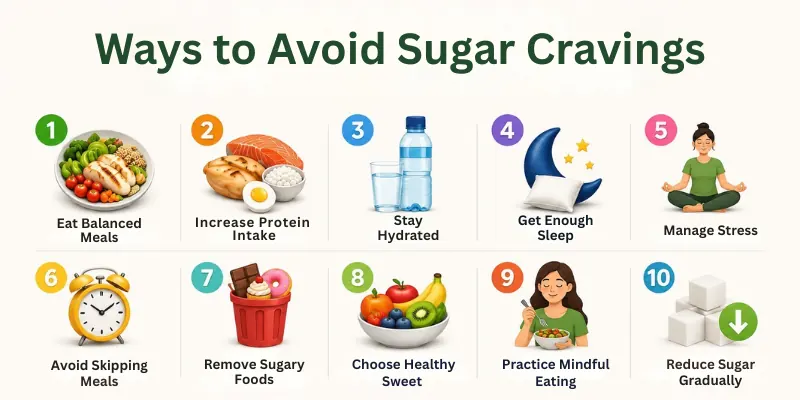
Here are the most effective strategies to reduce and control sugar cravings:
- Eat Balanced Meals
- Increase Protein Intake
- Stay Hydrated
- Get Enough Sleep
- Manage Stress Properly
- Avoid Skipping Meals
- Remove Sugary Foods From Your Home
- Choose Healthy Sweet Alternatives
- Practice Mindful Eating
- Reduce Sugar Gradually
Let us understand each method in detail.
1. Eat Balanced Meals
One major reason for sugar cravings is unstable blood sugar levels. When you eat meals high in refined carbs and low in protein or fiber, your blood sugar rises quickly and then crashes. This crash makes you crave sweets for quick energy. Eating balanced meals with protein, healthy fats, and fiber keeps your blood sugar stable. Stable blood sugar reduces sudden sugar cravings throughout the day. Consistency in balanced eating is key to long-term control.
How To Apply:
- Include protein in every meal (eggs, chicken, beans).
- Add fiber-rich foods like vegetables and whole grains.
- Include healthy fats like nuts or olive oil.
- Avoid refined carbs alone.
- Eat proper portion sizes.
Benefits:
- Stabilizes blood sugar levels.
- Reduces sudden sugar cravings.
- Improves energy levels.
2. Increase Protein Intake
Protein helps you feel full for longer periods. When you feel satisfied, you are less likely to crave sugary snacks. Protein also reduces hunger hormones and controls appetite naturally. Starting your day with a high-protein breakfast can significantly reduce cravings later. Regular protein intake throughout the day keeps cravings under control.
How To Apply:
- Eat eggs, yogurt, or protein-rich smoothies for breakfast.
- Include lean meat, beans, or lentils in lunch and dinner.
- Snack on nuts or roasted chickpeas.
- Aim for protein in every meal.
- Avoid sugary breakfasts like pastries.
Benefits:
- Keeps you full longer.
- Reduces appetite.
- Controls unnecessary snacking.
3. Stay Hydrated
Sometimes thirst is mistaken for sugar cravings. Mild dehydration can make you feel tired and low in energy, which may increase the desire for sweets. Drinking enough water helps reduce false hunger signals. Staying hydrated also improves digestion and overall metabolism. Often, drinking a glass of water can reduce a sudden craving.
How To Apply:
- Drink 8–10 glasses of water daily.
- Start your day with a glass of water.
- Carry a water bottle with you.
- Drink water before reaching for sweets.
- Add lemon or mint for flavor if needed.
Benefits:
- Reduces false hunger signals.
- Improves energy levels.
- Supports overall health.
4. Get Enough Sleep
Lack of sleep increases hunger hormones and reduces self-control. When you are tired, your body craves quick energy sources like sugar. Poor sleep also affects mood, which can trigger emotional eating. Getting 7–8 hours of quality sleep helps balance hunger hormones. Proper rest reduces the intensity of sugar cravings.
How To Apply:
- Maintain a fixed sleep schedule.
- Avoid screens before bedtime.
- Create a relaxing bedtime routine.
- Limit caffeine late in the day.
- Keep your room dark and quiet.
Benefits:
- Balances hunger hormones.
- Reduces late-night cravings.
- Improves mood and focus.
5. Manage Stress Properly
Stress increases cortisol, which can increase sugar cravings. Many people turn to sweets as comfort during stressful situations. Finding healthier stress management techniques reduces emotional sugar cravings. Exercise, breathing exercises, and relaxation activities help manage stress naturally. Lower stress levels lead to better eating decisions.
How To Apply:
- Practice deep breathing daily.
- Exercise 3–4 times per week.
- Try meditation or prayer.
- Take short breaks during work.
- Talk to someone when feeling overwhelmed.
Benefits:
- Reduces emotional cravings.
- Improves mental health.
- Supports healthier habits.
6. Avoid Skipping Meals
Skipping meals causes extreme hunger later, which increases the desire for sugary foods. When your body is very hungry, it looks for quick energy sources. Eating regular meals prevents drastic drops in blood sugar. Structured eating patterns reduce impulsive sweet cravings. Consistency is important for long-term success.
How To Apply:
- Eat every 3–4 hours.
- Plan healthy snacks between meals.
- Avoid long fasting periods if prone to cravings.
- Prepare meals in advance.
- Listen to your hunger cues.
Benefits:
- Prevents extreme hunger.
- Reduces sugar binges.
- Stabilizes energy levels.
7. Remove Sugary Foods From Your Home
If sugary snacks are easily available, it becomes harder to resist them. Your environment plays a big role in your eating habits. Keeping sweets out of sight reduces temptation. Stock your kitchen with healthier alternatives instead. Making the healthy option the easiest option improves long-term control.
How To Apply:
- Clean your pantry and remove high-sugar items.
- Avoid buying sweets during grocery shopping.
- Keep fruits visible on your counter.
- Buy single portions instead of large packs.
- Store occasional treats out of reach.
Benefits:
- Reduces impulsive sugar consumption.
- Encourages better choices.
- Supports consistent discipline.
8. Choose Healthy Sweet Alternatives
You do not have to completely eliminate sweetness from your diet. Natural alternatives can satisfy your sweet tooth with fewer negative effects. Fruits provide fiber and nutrients along with natural sugar. Dark chocolate in moderation can also be a better option. Smart swaps make the transition easier.
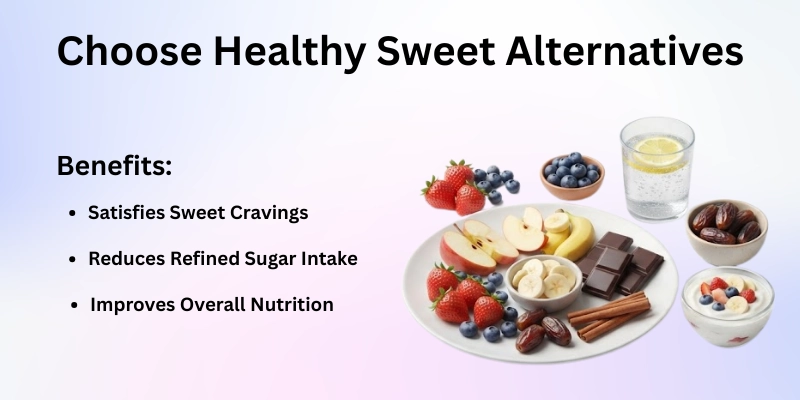
How To Apply:
- Eat fruit when craving sweets.
- Choose dark chocolate (70% or higher).
- Use cinnamon to enhance natural sweetness.
- Replace soda with sparkling water.
- Make homemade, healthier desserts.
Benefits:
- Satisfies sweet cravings.
- Reduces refined sugar intake.
- Improves overall nutrition.
9. Practice Mindful Eating
Mindless eating increases sugar consumption. When you eat while watching TV or scrolling through your phone, you may not notice how much sugar you consume. Mindful eating helps you become aware of taste, hunger, and fullness signals. Slowing down allows better control over portions. Awareness reduces automatic sugar cravings.
How To Apply:
- Eat without distractions.
- Chew slowly and enjoy flavors.
- Pause midway through your snack.
- Stop when satisfied, not stuffed.
- Reflect on how sweets make you feel afterward.
Benefits:
- Prevents overeating.
- Improves portion control.
- Builds healthier eating habits.
10. Reduce Sugar Gradually
Quitting sugar suddenly can feel difficult and lead to strong cravings. Gradually reducing sugar allows your taste buds to adjust. Over time, foods that once seemed normal may taste too sweet. Slow reduction makes the process sustainable and realistic. Consistency matters more than perfection.
How To Apply:
- Reduce sugar in tea or coffee step by step.
- Choose unsweetened products.
- Cut dessert portions in half.
- Replace sugary drinks with water.
- Track your daily sugar intake.
Benefits:
- Makes change easier.
- Reduces withdrawal-like cravings.
- Creates sustainable habits.
Final Note
In this guide, we have covered the different ways to avoid sugar cravings. Avoiding sugar cravings is not about strict dieting or completely removing sweets from your life. It is about balancing your meals, managing stress, improving sleep, and building consistent daily habits. Small changes done every day lead to long-term control.
Personal recommendation: Start with simple steps like drinking more water, eating balanced meals with protein and fiber, and improving your sleep schedule. Do not try to change everything at once. Focus on steady progress, and your body will slowly begin to crave healthier foods naturally.
FAQs
Here are some of the most frequently asked questions related to how to avoid sugar cravings:
Sugar cravings often happen because of unstable blood sugar levels. Stress, lack of sleep, and emotional triggers can also increase the desire for sweets. When your body is tired or stressed, it looks for quick energy. Improving daily habits can reduce these cravings over time.
Most people notice improvement within 2–3 weeks of consistent healthy habits. Eating balanced meals and avoiding long gaps between meals helps a lot. Staying consistent is important for lasting results. With patience, cravings become less intense.
Yes, sometimes dehydration feels like hunger or sugar cravings. Drinking a glass of water can help reduce this false signal. It is a simple and quick step to try before eating sweets. Staying hydrated daily also supports overall health.
Yes, stress increases a hormone called cortisol. High cortisol levels can make you crave sweet or high-calorie foods. Managing stress through exercise, relaxation, or hobbies can reduce these cravings. Lower stress often means fewer sugar urges.
Yes, eating sugar occasionally is completely fine. The key is moderation and balance. Avoiding sugar completely can sometimes lead to stronger cravings later. A healthy lifestyle allows small treats without guilt.




- Be Respectful
- Stay Relevant
- Stay Positive
- True Feedback
- Encourage Discussion
- Avoid Spamming
- No Fake News
- Don't Copy-Paste
- No Personal Attacks
- Be Respectful
- Stay Relevant
- Stay Positive
- True Feedback
- Encourage Discussion
- Avoid Spamming
- No Fake News
- Don't Copy-Paste
- No Personal Attacks
