How To Stop Emotional Eating: Tips For Healthy Habits
Published: 24 Jun 2026
Emotional eating happens when you eat to cope with feelings instead of physical hunger. Stress, boredom, loneliness, or sadness can trigger cravings, often for sugary, salty, or high-calorie comfort foods. Many people eat without realizing that it is their emotions driving the urge rather than actual hunger.
Over time, emotional eating can cause weight gain, guilt, and frustration. However, the good news is that we can change emotional eating habits through awareness, planning, and simple strategies.
Guys, if you want to stop emotional eating and regain control of your eating habits, this guide will share how to stop emotional eating with the best tips and practical ways. So without wasting time, let’s dig in!
How to Stop Emotional Eating: Best Ways
Emotional eating often happens in response to stress, boredom, sadness, or other emotions rather than true physical hunger. Learning to recognize these triggers and developing healthier coping strategies can help you build a more balanced relationship with food.
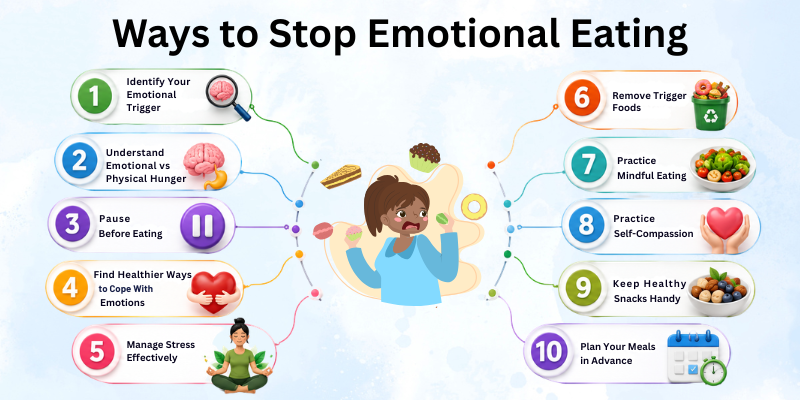
With consistent practice and mindful habits, you can reduce emotional eating and make choices that better support your health and well-being. Here is a list of the most effective strategies to stop emotional eating:
- Identify Your Emotional Triggers
- Understand Emotional vs Physical Hunger
- Pause Before Eating
- Find Healthier Ways To Cope With Emotions
- Manage Stress Effectively
- Remove Trigger Foods From Your Environment
- Practice Mindful Eating
- Practice Self-Compassion
- Keep Healthy Snacks Handy
- Plan Your Meals In Advance
Let us learn about their preparation and application in detail
1. Identify Your Emotional Triggers
Emotional eating often starts with feelings rather than hunger. You may crave snacks or sweets after stress, boredom, or loneliness. Recognizing your personal triggers is the first step in stopping emotional eating. Once you know what emotions trigger your cravings, you can prepare healthier ways to respond. Awareness reduces unconscious eating habits and gives you more control. Over time, noticing your triggers prevents repeated emotional eating.
How To Apply:
- Keep a daily food and mood journal.
- Write down how you feel before eating.
- Identify repeated emotional patterns.
- Note situations that trigger cravings.
- Pause and label your emotion before reaching for food.
Benefits:
- Builds self-awareness.
- Breaks automatic eating patterns.
- Improves emotional control.
2. Understand Emotional vs Physical Hunger
Physical hunger builds gradually and can be satisfied with a variety of foods. Emotional hunger comes suddenly and usually craves specific comfort foods like sweets, chips, or fried items. Emotional hunger feels urgent and may continue even after you are full. Understanding the difference prevents unnecessary eating. When you question your hunger, you gain control over your choices and reduce impulsive snacking.
How To Apply:
- Rate your hunger from 1 to 10 before eating.
- Ask yourself if a healthy meal would satisfy you.
- Wait 10 minutes before acting on sudden cravings.
- Drink water and reassess your hunger.
- Eat slowly and monitor fullness levels.
Benefits:
- Prevents overeating.
- Encourages mindful eating.
- Improves portion control.
3. Pause Before Eating
Emotional cravings often last only 10–20 minutes. Acting immediately reinforces the emotional eating cycle. Pausing creates space to think and make a better choice. Taking a short break can reduce the intensity of the craving. Over time, pausing becomes a habit that helps you respond thoughtfully rather than react impulsively.
How To Apply:
- Take 5–10 deep breaths before eating.
- Drink a glass of water.
- Step away from the kitchen or your desk.
- Distract yourself with a short walk or call a friend.
- Reassess if you are truly hungry.
Benefits:
- Reduces impulsive eating.
- Strengthens self-control.
- Breaks the craving cycle.
4. Find Healthier Ways To Cope With Emotions
Food should not be your only coping mechanism. Stress, sadness, or boredom can be addressed in healthier ways. Replacing eating with positive activities reduces emotional dependence on food. Simple habits like walking, journaling, or deep breathing help process emotions naturally. Developing multiple coping strategies prevents overeating and improves emotional health over time.
How To Apply:
- Take a 10–15 minute walk during cravings.
- Practice deep breathing or meditation.
- Call or talk to a supportive friend.
- Write your thoughts in a journal.
- Listen to calming music or practice a hobby.
Benefits:
- Reduces emotional dependency on food.
- Improves mental and emotional health.
- Strengthens coping skills.
5. Manage Stress Effectively
Stress increases cortisol levels, which trigger cravings for high-sugar and high-fat foods. Daily stress management reduces the likelihood of emotional eating. Small habits like proper sleep, regular exercise, and relaxation techniques can make a significant difference. Managing stress consistently helps you make healthier food choices naturally.
How To Apply:
- Sleep 7–8 hours every night.
- Exercise 3–4 times a week.
- Practice yoga or meditation daily.
- Reduce caffeine and stimulants that increase stress.
- Maintain a consistent daily routine.
Benefits:
- Lowers stress hormones.
- Reduces comfort eating.
- Improves emotional balance.
6. Remove Trigger Foods From Your Environment
Having junk food easily accessible increases emotional eating. When unhealthy snacks are out of sight, you are less likely to eat impulsively. Stocking your home with healthy foods encourages better choices. Your environment should make the healthy option the easiest option. Over time, this reduces automatic cravings.
How To Apply:
- Clean your pantry and remove trigger foods.
- Keep fruits, vegetables, nuts, and yogurt visible.
- Avoid shopping when emotional.
- Buy smaller portions if you keep treats at home.
- Store unhealthy foods out of reach.
Benefits:
- Reduces impulsive eating.
- Encourages discipline.
- Supports consistent habits.
7. Practice Mindful Eating
Mindful eating involves focusing on your food and listening to your body. Eating slowly allows you to notice fullness cues before overeating. Avoiding distractions like TV or phones helps prevent automatic emotional snacking. Mindful eating strengthens your connection with your body and reduces unnecessary cravings.
How To Apply:
- Eat without watching TV or using a phone.
- Chew food slowly and focus on flavors.
- Take smaller bites and pause between bites.
- Stop eating when you feel satisfied, not stuffed.
- Appreciate the textures and smells of your meals.
Benefits:
- Improves digestion.
- Prevents overeating.
- Strengthens awareness of hunger signals.
8. Practice Self-Compassion
Guilt and shame after emotional eating make the problem worse. Criticizing yourself increases stress and triggers more cravings. Being kind to yourself helps you move forward without emotional setbacks. Progress comes from consistent effort, not perfection. Self-compassion encourages long-term success and reduces emotional triggers for food.
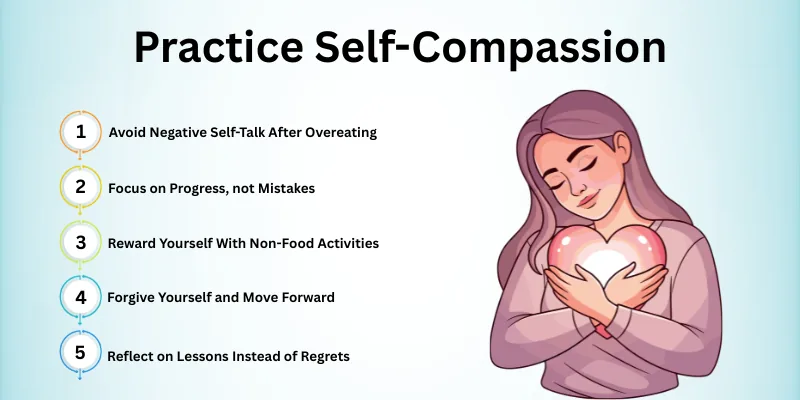
How To Apply:
- Avoid negative self-talk after overeating.
- Focus on progress, not mistakes.
- Reward yourself with non-food activities.
- Forgive yourself and move forward.
- Reflect on lessons instead of regrets.
Benefits:
- Breaks guilt and shame cycles.
- Builds confidence and self-control.
- Supports sustainable behavior change.
9. Keep Healthy Snacks Handy
Having nutritious snacks available prevents emotional eating. When cravings hit, you can choose a healthy alternative instead of junk food. Protein and fiber-rich snacks keep you satisfied longer and reduce urges. Planning your snacks makes healthy eating easy and convenient.
How To Apply:
- Keep fruits, nuts, yogurt, or roasted seeds ready.
- Portion snacks into small containers for convenience.
- Store healthy options at eye level.
- Prepare grab-and-go snack packs for busy days.
- Rotate options to keep variety.
Benefits:
- Reduces impulsive junk food consumption.
- Keeps you full between meals.
- Supports consistent healthy choices.
10. Plan Your Meals In Advance
Planning your meals prevents last-minute unhealthy choices. When you know what you will eat, you are less likely to reach for comfort food. Preparing ingredients or meals ahead saves time and stress. Meal planning ensures balanced nutrition throughout the day. Over time, consistent planning reduces emotional eating naturally.
How To Apply:
- Create a weekly meal plan every weekend.
- Prepare ingredients in advance.
- Cook larger portions and store leftovers properly.
- Pack meals if eating away from home.
- Keep simple, healthy recipes ready for busy days.
Benefits:
- Reduces impulsive decisions.
- Saves money and time.
- Improves nutrition quality.
Additional Strategies To Control Emotional Eating
Stopping emotional eating is easier when you focus on consistency and small daily habits. Avoid extreme restriction or dieting, as they often worsen cravings. Regular sleep, stress management, and healthy routine building are key. Surround yourself with supportive people and celebrate small wins along the way.
How To Apply:
- Maintain a daily schedule with balanced meals.
- Practice relaxation techniques regularly.
- Avoid skipping meals to prevent extreme hunger.
- Surround yourself with people who encourage healthy habits.
- Track progress and celebrate improvements.
Benefits:
- Reduces emotional and stress-related cravings.
- Builds sustainable habits.
- Improves overall well-being.
Final Note
In this guide, we have covered the best ways to stop emotional eating naturally. As an expert in nutrition and healthy habits, I believe that emotional eating is manageable when you build awareness, plan meals, manage stress, and practice mindful habits. Small daily changes create long-term results.
Stay connected and explore more guides on this site to learn about healthy eating, habit building, and lifestyle improvement.
FAQs
Here are some of the most commonly asked questions related to how to stop emotional eating:
Emotional eating happens when you eat to deal with feelings instead of real hunger. Stress, sadness, or boredom can trigger cravings for comfort foods. It is a way to cope with emotions temporarily.
Physical hunger comes on slowly and can be satisfied with many types of food. Emotional hunger feels sudden and urgent, often craving specific foods like sweets or snacks. Recognizing the difference helps you eat only when truly hungry.
Yes, stress increases a hormone called cortisol, which triggers cravings for sugary or fatty foods. This can make you eat even when you are not hungry. Managing stress can reduce these emotional eating episodes.
Mindful eating means paying close attention to your hunger and what you eat. It helps you notice true hunger and avoid eating just out of habit or emotion. Over time, it makes you more in control of your food choices.
Yes, keeping unhealthy snacks out of reach reduces temptation. It makes it easier to choose healthy foods instead. This simple step supports better eating habits.
Sleep affects hunger hormones that control appetite. Lack of sleep increases cravings and impulsive eating. Getting enough rest helps reduce emotional eating and supports overall health.
Yes, snacks high in protein and fiber help you feel full longer. They can prevent sudden urges for comfort foods. Examples include nuts, fruits, and yogurt.
With regular awareness and healthy habits, many people notice improvement within 2–4 weeks. Consistency is key to lasting changes. Small daily steps make a big difference over time.
No, occasional treats are fine and can be part of a balanced diet. The focus should be on moderation and planning. Being aware of your choices helps prevent overindulging.
Yes, regular physical activity improves mood and lowers stress levels. It also reduces the urge to eat when feeling emotional. Even light exercise like walking can make a difference.



- Be Respectful
- Stay Relevant
- Stay Positive
- True Feedback
- Encourage Discussion
- Avoid Spamming
- No Fake News
- Don't Copy-Paste
- No Personal Attacks
- Be Respectful
- Stay Relevant
- Stay Positive
- True Feedback
- Encourage Discussion
- Avoid Spamming
- No Fake News
- Don't Copy-Paste
- No Personal Attacks
