Best Morning Exercises to Stay Active: Daily Energy Boost
Published: 13 Mar 2026
In this guide, we will cover the best morning exercises to stay active in a clear and easy way. You will learn the right movements, the right timing, and the right benefits for each morning exercise.
This guide helps you start your day with more energy, better focus, and stronger stamina. You will also learn how long to do each exercise and the safest method to follow. By the end, you will know the best morning exercises to stay active and how to build them into a daily routine.
Let’s explore the best morning exercises to stay active and energized.
Best Morning Exercises to Stay Active
Here is the full list of the best morning exercises to stay active and boost your morning energy.
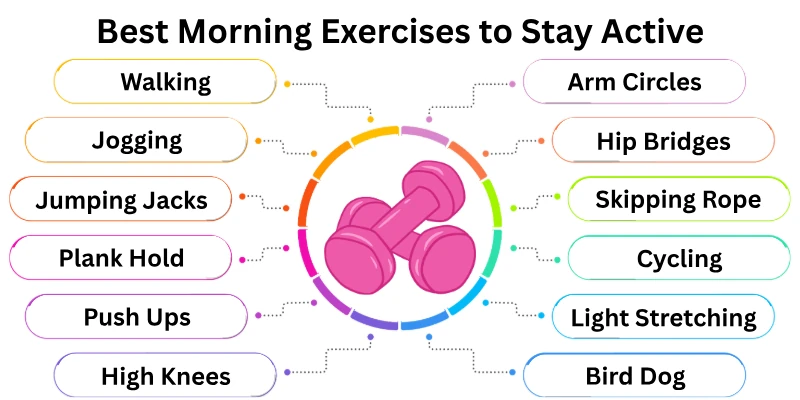
List of Top 20 Morning Exercises:
- Walking
- Jogging
- Jumping Jacks
- Surya Namaskar
- Light Stretching
- Plank Hold
- Squats
- Push Ups
- Lunges
- Mountain Climbers
- High Knees
- Arm Circles
- Yoga Breathing
- Pilates Leg Lifts
- Hip Bridges
- Skipping Rope
- Cycling
- Side Plank
- Bird Dog
- Marching in Place
Let us cover all of them in detail below.
1. Walking
Walking is a simple morning exercise that wakes up your body gently. It increases blood flow and warms up stiff muscles. It also helps clear your mind and reduce laziness. Many people choose walking because it feels natural and easy. It is a safe choice for beginners and older adults.
How to Do: Walk at a normal speed first, then slowly increase your pace.
How Long: 15 to 20 minutes.
Benefits
- Better heart health
- Improved energy
- Reduced stress
- Supports weight control
Other Details: Wear comfortable shoes and stay hydrated before and after your walk.
2. Jogging
Jogging helps activate your heart and lungs early in the morning. It gives you a fresh feeling and boosts stamina. It helps your body burn calories faster than walking. It also improves mood because it releases happy hormones. Jogging is suitable for both beginners and regular movers.
How to Do: Jog at a steady, comfortable pace without forcing speed.
How Long: 10 to 15 minutes.
Benefits
- Builds endurance
- Helps body tone
- Reduces morning tiredness
- Supports fat burning
Other Details: Always warm up for 2 minutes before jogging to avoid muscle strain.
3. Jumping Jacks
Jumping jacks quickly warm your entire body. They help increase heart rate within seconds. They are helpful for people who want a fast morning boost. It is a fun and energetic exercise that also improves coordination. Anyone can do it without equipment.
How to Do: Jump while spreading your arms and legs, then return to normal position.
How Many Times: 20 to 30 repetitions.
Benefits
- Full body warm-up
- Quick calorie burn
- Better blood circulation
- Improves flexibility
Other Details: If you have knee pain, do slower or half-jumps.
4. Surya Namaskar
Surya Namaskar is a gentle and powerful morning routine. It stretches your body, improves flexibility, and supports breathing. It calms your mind and reduces morning stress. It helps wake up every major muscle in your body. It is suitable for all fitness levels.
How to Do: Follow the 12-step flow slowly and smoothly.
How Many Times: 5 to 8 rounds.
Benefits
- Improves posture
- Reduces stiffness
- Strengthens muscles
- Helps with focus
Other Details: Practice on an empty stomach for best results.
5. Light Stretching
Stretching loosens tight muscles after sleep. It helps improve movement and reduces tension in the body. It prepares your joints for daily activity. It also improves blood flow to your muscles. Stretching is safe for everyone.
How to Do: Stretch arms, legs, back, and neck slowly.
How Long: 5 to 10 minutes.
Benefits
- Better flexibility
- Less stiffness
- Reduced injury risk
- Improved mobility
Other Details: Avoid bouncing movements to prevent injury.
6. Plank Hold
Planks strengthen your core and improve your posture. They also help reduce lower back pain. Planking builds stability in your body. It is a simple exercise but powerful for morning strength. Beginners can also do short-duration planks.
How to Do: Hold your body in a straight line on elbows and toes.
How Long: 20 to 40 seconds.
Benefits
- Stronger core
- Better balance
- Strong shoulders
- Improved endurance
Other Details: Do not drop your hips; keep your body straight.
7. Squats
Squats are great for leg and hip strength. They target large muscles and improve morning energy. Squats help you build lean muscle over time. They also improve body posture. Many people find squats useful for everyday strength.
How to Do: Stand straight, bend your knees, and sit back like a chair.
How Many Times: 12 to 15 repetitions.
Benefits
- Builds leg strength
- Boosts metabolism
- Improves balance
- Tones hips and thighs
Other Details: Keep your knees in line with your toes.
8. Push Ups
Push ups strengthen your chest, arms, and shoulders. They give your upper body a solid morning activation. Push ups also help build stamina. They are easy to do at home without equipment. Beginners can do knee push ups.
How to Do: Lower your body and push back up.
How Many Times: 8 to 12 repetitions.
Benefits
- Upper body strength
- Tones arms
- Improves muscle control
- Supports better posture
Other Details: Keep your back straight during the movement.
9. Lunges
Lunges activate your legs, hips, and glutes. They train your body for better balance. Lunges help tone your lower body nicely. They also improve coordination. Many people use lunges for daily strength building.
How to Do: Step forward and bend both knees to 90 degrees.
How Many Times: 10 reps per leg.
Benefits
- Stronger legs
- Better balance
- Toned hips
- Improved stability
Other Details: Keep your upper body straight while stepping forward.
10. Mountain Climbers
Mountain climbers are a fast and strong morning exercise. They wake up your core and upper body instantly. They burn calories quickly and improve stamina. This exercise also increases your heart rate in just a few seconds. It is great for people who want high energy in the morning.
How to Do: Start in plank and move each knee toward your chest one by one.
How Long: 20 to 30 seconds.
Benefits
- Strong core
- Fast calorie burn
- Better endurance
- Improved agility
Other Details: Keep your pace steady to avoid losing form.
11. High Knees
High knees are a fast and easy way to wake up your body. They raise your heart rate in seconds. This move warms up your legs and core. It is great when you want quick energy. Anyone can do it at home without equipment.
How to Do: Run in place while lifting your knees as high as you can.
How Long: 30–45 seconds.
Benefits
- Boosts heart rate
- Strengthens legs
- Improves coordination
- Burns calories quickly
Other Details: Swing your arms to increase power and balance.
12. Arm Circles
Arm circles warm your shoulders gently. They increase flexibility in your upper body. This move is perfect for starting your day slowly. It also improves blood flow. This exercise suits all age groups.
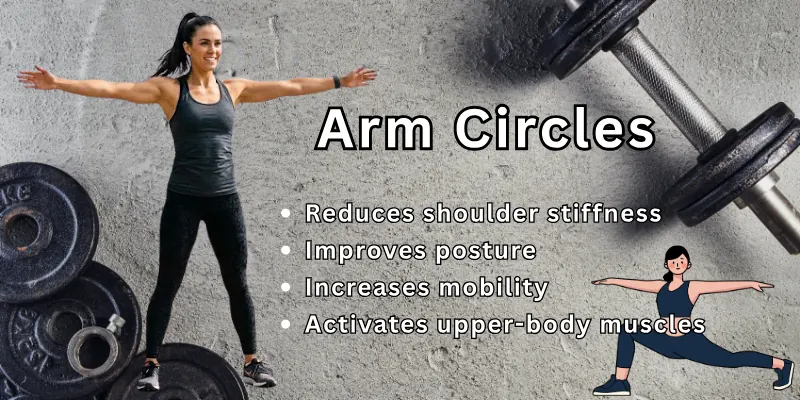
How to Do: Stretch your arms out and rotate them in forward and backward circles.
How Long: 20–30 seconds each direction.
Benefits
- Reduces shoulder stiffness
- Improves posture
- Increases mobility
- Activates upper-body muscles
Other Details: Keep arms straight to get the best results.
13. Yoga Breathing
Yoga breathing helps you feel calm and grounded. It increases oxygen flow to your body. It relaxes your mind early in the morning. You feel more focused and fresh. It is gentle and safe for everyone.
How to Do: Sit straight, breathe in deeply from your nose, and exhale slowly through your mouth.
How Long: 3–5 minutes.
Benefits
- Reduces stress
- Improves lung capacity
- Helps with focus
- Balances mood
Other Details: Try to breathe slowly and evenly for better results.
14. Pilates Leg Lifts
Pilates leg lifts strengthen your core and legs. They help improve stability. This exercise is great for controlled movement. It is calm but very effective. Many beginners enjoy this gentle training.
How to Do: Lie on your back, lift one leg up, lower it slowly, and repeat on the other side.
How Long: 10–12 reps each leg.
Benefits
- Stronger core
- Toned legs
- Better flexibility
- Improved control
Other Details: Keep your lower back pressed gently to the floor.
15. Hip Bridges
Hip bridges activate your glutes and lower back. They help improve posture. This move also strengthens your hips. It is perfect for people who sit for long hours. The movement is smooth and safe.
How to Do: Lie on your back, bend your knees, and lift your hips upward.
How Long: 10–15 reps.
Benefits
- Strengthens glutes
- Supports lower back
- Improves hip mobility
- Enhances core stability
Other Details: Pause for a second at the top for better effect.
16. Skipping Rope
Skipping rope is fun and fast-paced. It raises your heart rate quickly. It burns calories very efficiently. It also improves balance and rhythm. A great choice if you like active movements.
How to Do: Jump continuously while swinging the rope under your feet.
How Long: 1–2 minutes.
Benefits
- Strong heart
- Increased stamina
- Better coordination
- Full-body calorie burning
Other Details: Start slow if you are new to this exercise.
17. Cycling
Cycling is a smooth morning workout. It wakes up your muscles gently. It improves your stamina over time. It also lifts your mood. Many people love it as their morning routine.
How to Do: Ride at a comfortable speed and keep your posture relaxed.
How Long: 10–20 minutes.
Benefits
- Strong legs
- Improved heart health
- Burns calories
- Reduces stress
Other Details: You can use a stationary bike if you prefer staying indoors.
18. Side Plank
The side plank focuses on your core and obliques. It strengthens your side muscles. It also improves body stability. The move is slow but powerful. Great for building balance.
How to Do: Lie on one side, lift your body on your elbow, and hold your body straight.
How Long: 20–30 seconds each side.
Benefits
- Strong core
- Better balance
- Reduces side waist fat
- Supports spine alignment
Other Details: Avoid letting your hips drop.
19. Bird Dog
Bird dog is a simple but effective stability exercise. It activates your back, core, and glutes together. It supports better body control. It also helps reduce stiffness. Perfect morning move for beginners.
How to Do: Start on hands and knees, extend opposite arm and leg, then switch sides.
How Long: 8–12 reps each side.
Benefits
- Stronger back
- Improved balance
- Better core stability
- Helps posture
Other Details: Move slowly to maintain control.
20. Marching in Place
Marching in place is gentle and comfortable. It warms up your body without effort. It improves circulation early in the morning. It is beginner-friendly and easy for all ages. Great for light morning activation.
How to Do: Lift your knees one by one as if you are walking without moving forward.
How Long: 1–2 minutes.
Benefits:
- Boosts blood flow
- Improves rhythm
- Warms up legs and hips
- Low-impact cardio
Other Details: Swing your arms to increase intensity.
Which Exercise Is the King of All Exercises?
The title of “king of all exercises” is often given to the squat. Here’s why:
- Full-body activation: Squats engage your legs, glutes, core, and even your lower back.
- Strength and mobility: They build muscle strength while improving hip and ankle mobility.
- Functional movement: Squats mimic everyday movements like sitting and standing, making them highly practical.
- Metabolism booster: Because they involve large muscle groups, they burn a lot of calories.
Some fitness experts also consider push-ups or deadlifts contenders depending on goals, but overall, the squat is widely called the king because it’s versatile, effective, and foundational for strength training.
How to Build a Morning Exercise Routine
This section will guide you to make a routine that is easy and effective:
- Start with light warm-ups like walking or stretching
- Mix cardio and strength exercises for full-body benefits
- Limit total time to 20–30 minutes for beginners
- Gradually increase intensity over weeks
- Keep rest intervals short to stay energized
Tips to Stay Motivated for Morning Workouts
Even the best exercises don’t help if you skip them regularly. Staying motivated is key to morning activity. This section shares practical ways to keep yourself consistent.
It explains how to avoid common morning excuses and enjoy exercise. These tips support the best morning exercises to stay in the active routine you follow.
- Set a fixed wake-up time every day
- Prepare your workout clothes the night before
- Play energizing music to boost mood
- Track progress to stay motivated
- Pair workouts with a small reward or habit
Final Note
In this guide, we have covered the 20 best morning exercises to stay active to help you start your day with energy, improve strength, and boost overall health. As an expert, my personal recommendation is to choose 5–7 exercises that you enjoy most and do them consistently every morning.
Focus on proper form, start slow if you are a beginner, and gradually increase intensity. Pair these exercises with a healthy morning routine, good hydration, and balanced nutrition for the best results. Remember, consistency matters more than intensity in building a long-term active lifestyle.
Stay motivated, listen to your body, and make mornings your power time. Good luck and goodbye!
FAQs: Best Morning Exercises
Here are some of the most commonly asked questions related to the early morning workout:
The best morning exercises are those that wake up your body and get your blood flowing. Light cardio like walking, jogging, or jumping jacks works well. Stretching and yoga also help loosen stiff muscles. Combining a mix of cardio and strength exercises gives the most energy boost.
The 20 20 20 rule means spending 20 minutes on cardio, 20 minutes on strength, and 20 minutes on stretching or mobility. This routine balances your body’s energy and prevents stiffness. Many people use it to start their day fully active. It is flexible and can be adjusted to your fitness level.
The 5 5 5 30 routine focuses on 5 minutes warm-up, 5 minutes cardio, 5 minutes strength, all within a 30-minute session. It is great for beginners who want a structured short workout. This routine helps you stay consistent in the morning. It also improves overall fitness without being too tiring.
The 3 3 3 rule suggests doing 3 exercises for 3 sets each, 3 times per week. This helps beginners build a simple but effective routine. It improves strength, flexibility, and endurance gradually. Following this rule ensures you don’t overdo your workouts while still making progress.
The 70/30 rule means 70% effort in exercise and 30% focus on diet or recovery. It shows that workouts alone are not enough for results. Balanced nutrition and rest are essential to support morning exercise benefits. Following this rule helps you achieve fitness goals faster and safely.
The five exercises often recommended are squats, push-ups, lunges, planks, and burpees. These target all major muscle groups. Doing these regularly builds strength, endurance, and mobility. They are simple, require little or no equipment, and are perfect for a morning routine.
Staying consistent is about planning and motivation. Set a fixed wake-up time and prepare your clothes and water the night before. Mix fun exercises with your routine to avoid boredom. Tracking your progress and rewarding yourself helps maintain consistency.






- Be Respectful
- Stay Relevant
- Stay Positive
- True Feedback
- Encourage Discussion
- Avoid Spamming
- No Fake News
- Don't Copy-Paste
- No Personal Attacks
- Be Respectful
- Stay Relevant
- Stay Positive
- True Feedback
- Encourage Discussion
- Avoid Spamming
- No Fake News
- Don't Copy-Paste
- No Personal Attacks
