Best Exercises for Chest Muscles: Shape a Stronger Chest
Published: 13 Jul 2026
A strong chest can completely change the way your upper body looks and feels. It helps improve strength, supports better posture, and makes many daily movements easier. The problem is that many people waste time on chest workouts that do not give real results.
The good news is that you do not need complicated training to build muscle. The best exercises for chest muscles are often simple, effective, and easy to follow. With the right chest workout routine, you can improve muscle growth, increase strength, and train your chest more effectively.
In this guide, you will discover some of the best chest exercises for beginners and advanced fitness levels. You will also learn how to perform each exercise correctly and avoid common mistakes during your chest training workout.
Best Exercises for Chest Muscles
Choosing the right chest muscle exercises can help you build strength, improve muscle growth, and train your upper body more effectively. Some exercises focus on the upper chest, while others target the lower or middle chest muscles. Adding different chest strengthening exercises to your routine can help you get better overall results.
Below are some of the best chest workouts for beginners and advanced fitness levels.
- Barbell Bench Press
- Dumbbell Bench Press
- Incline Dumbbell Press
- Push-Ups
- Chest Dips
- Cable Chest Fly
- Pec Deck Machine
- Decline Bench Press
- Incline Push-Ups
- Dumbbell Pullover
Let’s cover the all exercises in detailed:
1. Barbell Bench Press
Barbell bench press is one of the best chest exercises for upper body strength and muscle size. This exercise mainly targets the middle chest and also works the shoulders and triceps.
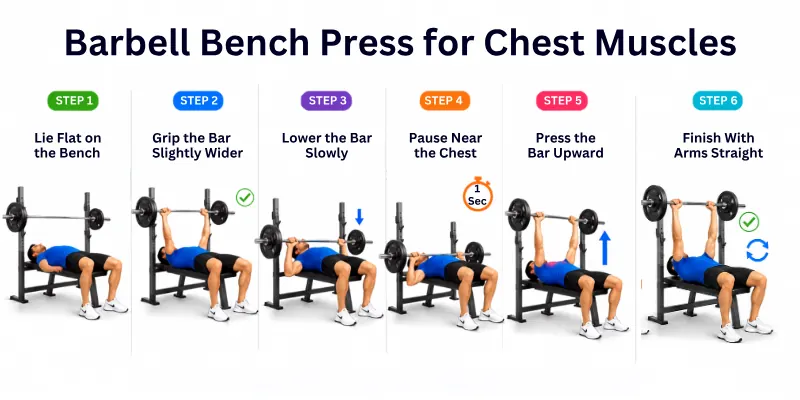
Many people include it in their chest workout routine because it helps improve strength and overall muscle growth. It is a great chest-strengthening exercise for both beginners and experienced lifters.
How to Do It:
- Lie flat on a bench with your feet firmly on the floor
- Hold the barbell with a grip slightly wider than shoulder-width
- Slowly lower the bar toward the middle of your chest
- Pause briefly once the bar is close to your chest
- Push the barbell upward until your arms are straight
- Repeat the movement with controlled form
Benefits:
- Helps build chest muscle strength
- Supports upper body muscle growth
- Improves pushing power and stability
- Trains multiple upper body muscles together
Tip: Keep your shoulders relaxed and avoid bouncing the bar off your chest. Controlled movements help improve chest activation and reduce injury risk.
2. Dumbbell Bench Press
The dumbbell bench press is a popular chest workout exercise that helps build strength and improve muscle definition. Unlike the barbell press, this movement gives each arm the freedom to move separately. This helps improve balance and allows a deeper stretch during the exercise.
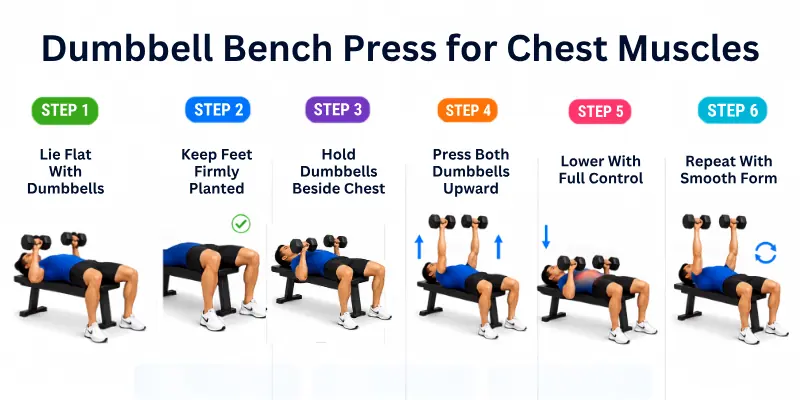
Many people add this movement to their chest training workout because it targets the chest muscles more evenly and supports steady muscle growth. 💪
How to Do It:
- Lie flat on a bench while holding a dumbbell in each hand
- Place your feet firmly on the floor for better stability
- Hold the dumbbells beside your chest with your palms facing forward
- Press the dumbbells upward until your arms are fully extended
- Slowly lower the weights back to the starting position
- Continue the movement with a smooth and controlled form
Benefits:
- Builds chest strength and muscle size
- Improves balance between both sides of the body
- Increases chest muscle activation
- Supports better upper body stability
Tip: Keep your wrists straight throughout the exercise. Avoid moving the dumbbells too quickly, especially while lowering the weight.
3. Incline Dumbbell Press
If you want to focus more on the upper part of your chest, the incline dumbbell press is a great exercise to add to your routine. The angled bench changes the direction of the movement and places more tension on the upper chest muscles.
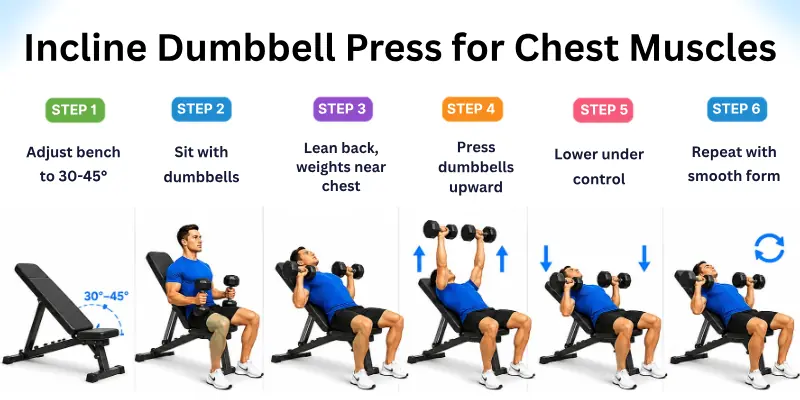
This movement also helps improve shoulder control and upper body stability. It works well for people who want a fuller and more balanced chest shape. 🔥
How to Do It:
- Adjust an incline bench to about 30 to 45 degrees
- Sit on the bench while holding a dumbbell in each hand
- Lean back and keep the dumbbells near your upper chest
- Press the weights upward until your arms are fully extended
- Slowly lower the dumbbells back to the starting position
- Continue the exercise with controlled movement
Benefits:
- Targets the upper chest more effectively
- Helps improve chest muscle shape and definition
- Supports better upper body strength
- Increases muscle control and stability
Tip: Keep your movements steady and avoid locking your elbows too hard at the top of the exercise.
4. Push-Ups
Push-ups are simple but highly effective bodyweight chest exercises that can help improve strength and endurance. This movement works the chest, shoulders, arms, and core at the same time.
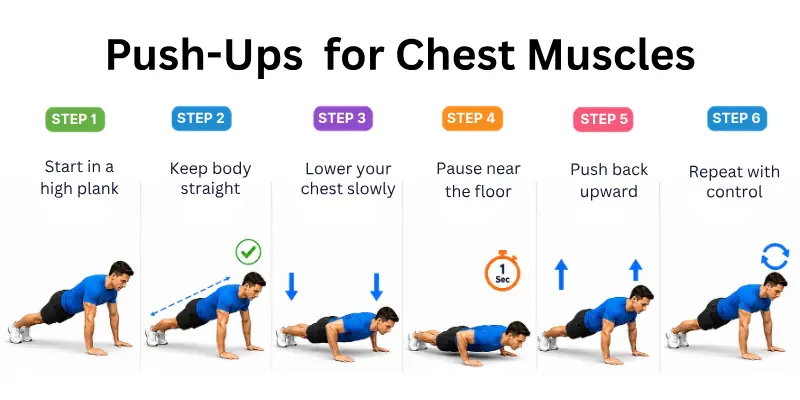
One of the best things about push-ups is that they are effective chest exercises without equipment and can be done almost anywhere. They are also a good option for a beginner who wants easy chest exercises at home. 🏋️
How to Do It:
- Start in a high plank position with your hands slightly wider than shoulder-width
- Keep your body straight from head to heels
- Slowly lower your chest toward the floor by bending your elbows
- Pause briefly once your chest is close to the ground
- Push your body back up until your arms are straight
- Repeat the movement with proper form
Benefits:
- Helps strengthen chest and arm muscles
- Improves upper body endurance
- Engages the core during the movement
- Does not require gym equipment
Tip: Avoid letting your hips drop during the exercise. Keep your body in a straight line to maintain proper form and reduce pressure on your lower back.
5. Chest Dips
Chest dips are a powerful movement that places strong tension on the lower chest muscles. This exercise also works the shoulders and triceps, which makes it useful for improving upper body strength.
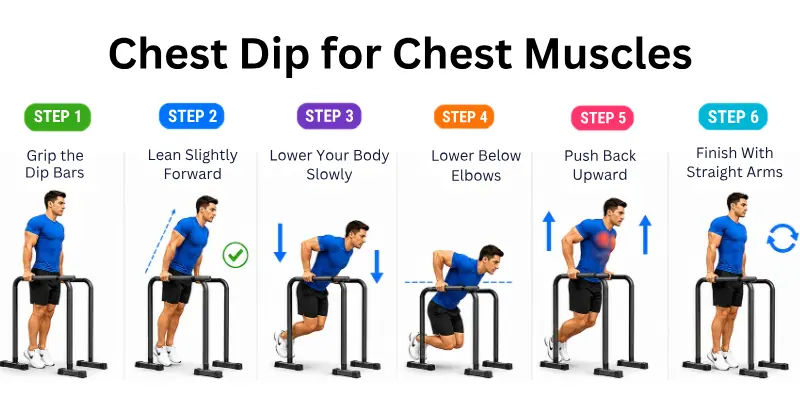
Leaning slightly forward during the movement helps activate the chest more effectively. People who want a deeper chest stretch and a stronger lower chest often add this exercise to their chest training workout.
How to Do It:
- Hold the parallel bars with your arms fully extended
- Lean your upper body slightly forward
- Slowly lower your body by bending your elbows
- Continue lowering until your shoulders are slightly below your elbows
- Push yourself back up until your arms are straight again
- Repeat the movement with control
Benefits:
- Targets the lower chest muscles
- Helps improve upper body strength
- Supports better muscle definition
- Increases shoulder and arm stability
Tip: Do not swing your body during the exercise. Controlled movement helps keep more focus on the chest muscles and improves form.
6. Cable Chest Fly
The cable chest fly creates constant tension on the chest muscles throughout the movement. Unlike pressing exercises, this movement focuses more on muscle contraction and control instead of heavy lifting.
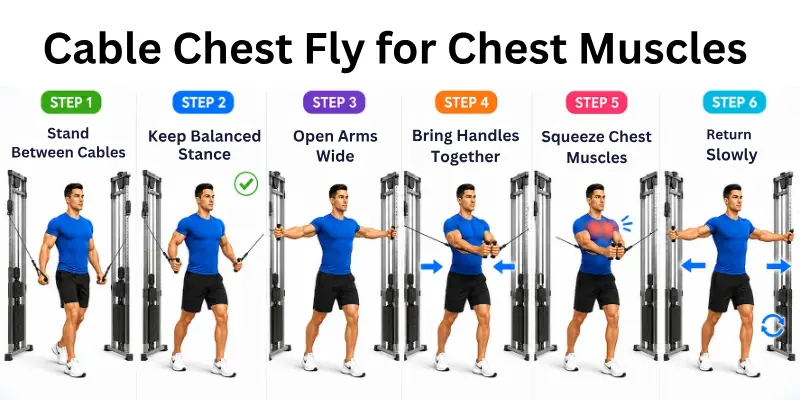
The cables allow a smooth range of motion, which helps improve chest muscle activation. This exercise works well for people who want better chest definition and a stronger muscle squeeze during workouts.
How to Do It:
- Stand between two cable machines and hold the handles
- Keep one foot slightly in front for better balance
- Start with your arms open and elbows slightly bent
- Bring the handles forward in a wide hugging motion
- Squeeze your chest muscles once your hands meet in front
- Slowly return to the starting position
Benefits:
- Improves chest muscle definition
- Keeps steady tension on the chest muscles
- Helps increase muscle control
- Supports better chest isolation during workouts
Tip: Do not bend your elbows too much during the movement. A slight bend helps protect the joints while keeping tension on the chest muscles.
7. Pec Deck Machine
The pec deck machine is a beginner-friendly chest exercise that helps improve muscle control and chest activation. The fixed movement path makes this exercise easier to perform with proper form.
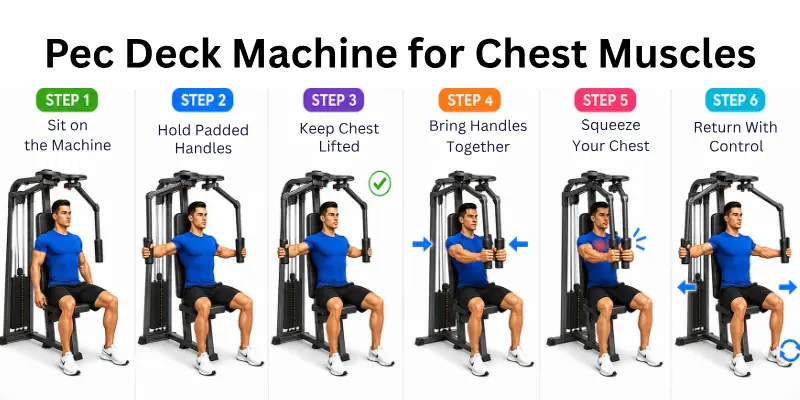
It mainly targets the chest muscles while reducing unnecessary pressure on other areas. This movement is often used to improve chest muscle definition and create a stronger muscle squeeze.
How to Do It:
- Sit on the pec deck machine with your back against the pad
- Place your arms on the padded handles at shoulder level
- Keep your feet flat on the floor for stability
- Push the handles inward until they come close together
- Squeeze your chest muscles for a moment
- Slowly return to the starting position
Benefits:
- Helps improve chest muscle isolation
- Improves control during movement
- Easy for beginners to perform correctly
- Reduces pressure on the shoulders during movement
Tip: Avoid using momentum to move the handles. Slow and steady movement helps keep tension on the chest muscles throughout the exercise.
8. Decline Bench Press
Decline bench press places more focus on the lower part of the chest muscles. The declined angle changes the direction of the press and helps create stronger lower chest activation.
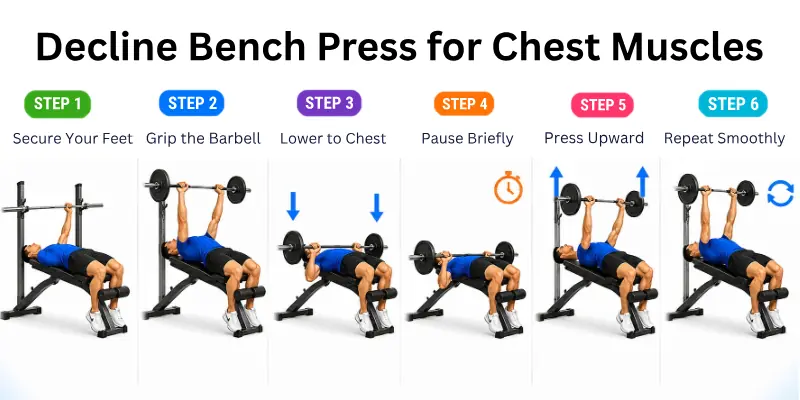
This movement also allows many people to lift heavier weights with better control. It is a useful addition to a chest workout routine for building a fuller and more balanced chest.
How to Do It:
- Lie on a decline bench and secure your feet properly
- Hold the barbell with a grip slightly wider than shoulder-width
- Slowly lower the bar toward the lower part of your chest
- Pause briefly near the chest without bouncing the bar
- Press the weight upward until your arms are straight
- Repeat the movement with controlled form
Benefits:
- Targets the lower chest muscles effectively
- Helps improve chest strength and size
- Supports better pressing power
- Adds variety to chest training workouts
Tip: Keep your wrists straight during the movement. Avoid lowering the bar too quickly to maintain better control and form.
9. Incline Push-Ups
Incline push-ups are a simple bodyweight chest exercise that works well for beginners. Raising the upper body reduces pressure on the arms and shoulders, which makes the movement easier than standard push-ups.
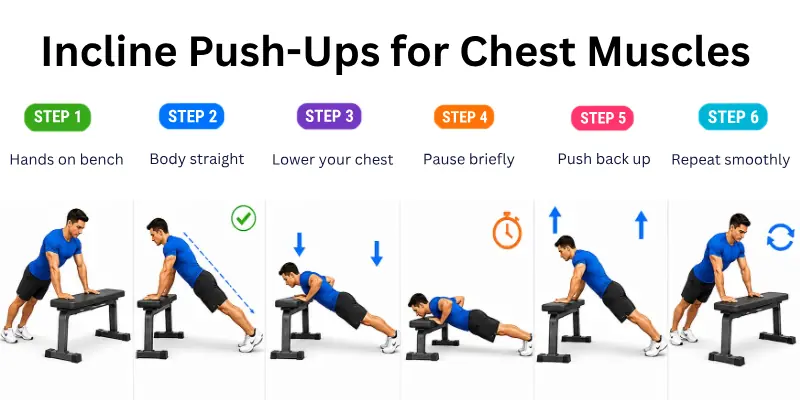
This exercise mainly targets the upper chest while also helping improve balance and control. It is a good option for people starting a home workout for chest muscles without equipment.
How to Do It:
- Place your hands on a stable bench, table, or elevated surface
- Extend your legs behind you and keep your body straight
- Lower your chest toward the surface by bending your elbows
- Pause briefly once your chest is close to the edge
- Push your body back to the starting position
- Repeat the movement with steady control
Benefits:
- Helps strengthen the upper chest muscles
- Easier for beginners compared to regular push-ups
- Improves upper body stability
- Can be done at home without gym equipment
Tip: Use a stable surface that does not move during the exercise. Keep your core tight to maintain proper body alignment.
10. Dumbbell Pullover
Dumbbell pullover is a classic movement that stretches the chest muscles while also engaging the shoulders and upper back. The long range of motion helps improve flexibility and muscle control during chest training workouts.
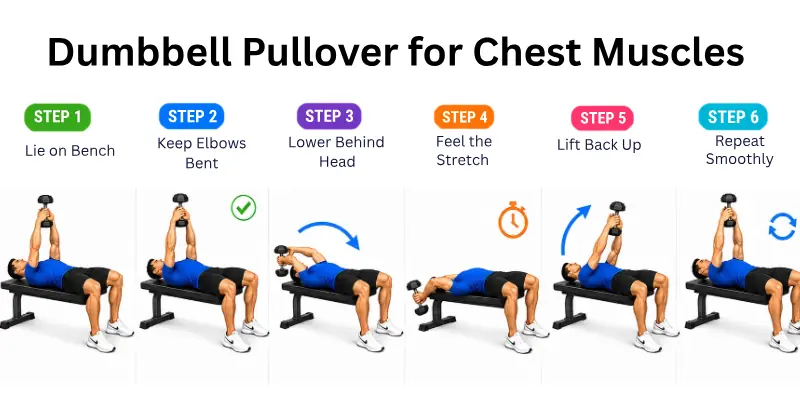
This exercise creates deep tension across the chest, which can support better muscle development over time. It also works well as a finishing movement at the end of a chest workout routine.
How to Do It:
- Lie flat on a bench while holding one dumbbell with both hands
- Extend the dumbbell above your chest with slightly bent elbows
- Slowly lower the weight backward over your head
- Stop once you feel a comfortable stretch in your chest
- Bring the dumbbell back above your chest with control
- Repeat the movement without rushing
Benefits:
- Helps stretch and strengthen the chest muscles
- Improves upper body flexibility
- Supports better muscle control during workouts
- Engages multiple upper body muscle groups
Tip: Do not lower the dumbbell too far behind your head. Move within a comfortable range to avoid extra pressure on the shoulders.
Common Chest Workout Mistakes
Many people do chest workout exercises but still do not get good results. The main reason is not the effort but the small mistakes that affect muscle growth and form.
Fixing these mistakes can improve your chest training workout and help you see better progress.
- Using Too Much Weight: Lifting heavy weights without control reduces chest activation and increases injury risk. Focus on proper form first, then increase weight slowly.
- Poor Exercise Form: Incorrect form shifts the load away from the chest muscles. This limits muscle growth and reduces workout effectiveness.
- Not Training Upper Chest: Many people ignore upper chest exercises. This creates an unbalanced chest shape.
- Skipping Warm-Up: Skipping warm-up can make muscles stiff and increase the chance of strain during training.
- Limited Range of Motion: Short movements reduce muscle activation. A full range of motion helps better chest development.
- Overtraining the Chest: Training the chest too often without rest slows recovery and stops muscle growth.
- Not Controlling the Movement: Fast and uncontrolled reps reduce tension on the chest muscles. Slow and steady movement works better.
- Holding Your Breath Incorrectly: Holding your breath during chest exercises can reduce your strength and control. Always breathe in during the lowering phase and breathe out while pushing the weight up.
Conclusion
In this article, we covered the best exercises for chest muscles in detail. We learned different exercises for the upper, middle, and lower chest, along with proper step-by-step form, benefits, and tips. We also discussed common mistakes that can stop your progress.
These exercises can help you build a stronger, more defined chest when done with consistency and correct technique. Recovery and good nutrition also play a key role in muscle growth and long-term progress.
Stay consistent and trust the process. Small improvements every week will lead to big changes in your chest strength and shape.
Let’s move on to some frequently asked questions about chest workouts.
FAQs
Here are some of the most common questions about the best exercises for chest muscles. These answers will help you understand how to train better, avoid mistakes, and get faster results.
The best exercises for chest muscles include barbell bench press, dumbbell press, push-ups, chest dips, and cable fly. These exercises target different parts of the chest for balanced development. Doing them with proper form helps build strength and muscle size.
Yes, push-ups can build chest muscles when done regularly with correct form. They also improve upper body strength and endurance. Over time, they help increase chest size and definition.
The barbell bench press is one of the best exercises for overall chest muscle growth. It allows you to lift heavier weight and build strength effectively. It also activates multiple upper body muscles at the same time.
Both are effective for chest training, but they work in different ways. Dumbbells improve balance and range of motion, while barbells help you lift heavier weights. Using both gives better overall results.
Yes, you can build chest muscles at home without equipment using bodyweight exercises. Push-ups and incline push-ups are very effective for this purpose. Consistency and proper form are very important.
For muscle growth, 3 to 4 sets of 8 to 12 reps are generally effective. This range helps build both strength and size. Always choose a weight or variation that challenges you.
You can build chest muscles fast by training consistently and using proper form. Progressive overload and a good diet with enough protein are also important. Rest and recovery play a key role in muscle growth.
Yes, push-ups are very good for chest muscles and overall upper body strength. They help improve muscle endurance and stability. They are also one of the best no-equipment exercises.
You should train your chest muscles about 2 to 3 times per week. This allows enough time for recovery and muscle growth. Overtraining can slow down your progress.
Beginners should not do chest workouts every day. Muscles need rest to recover and grow stronger. Training 2 to 3 times per week is more effective.




- Be Respectful
- Stay Relevant
- Stay Positive
- True Feedback
- Encourage Discussion
- Avoid Spamming
- No Fake News
- Don't Copy-Paste
- No Personal Attacks
- Be Respectful
- Stay Relevant
- Stay Positive
- True Feedback
- Encourage Discussion
- Avoid Spamming
- No Fake News
- Don't Copy-Paste
- No Personal Attacks
