Mental Health Tips for Students to Stay Positive and Productive
Published: 19 Jul 2026
Student life can feel stressful and overwhelming at times. Many students struggle with exam pressure, late-night study sessions, social anxiety, and the constant need to perform well. These challenges can affect focus, confidence, sleep, and overall happiness.
Good mental health is just as important as good grades. When students take care of their mental well-being, they often feel more motivated, calm, and productive in daily life.
In this article, you will learn practical and easy mental health tips for students that can help reduce stress, improve focus, and support a healthier and happier student life.
Best Mental Health Tips for Students
Student life comes with many challenges. Long study hours, exams, social pressure, and busy routines can affect mental health over time. Simple daily habits can help students feel calmer, more focused, and emotionally stronger.
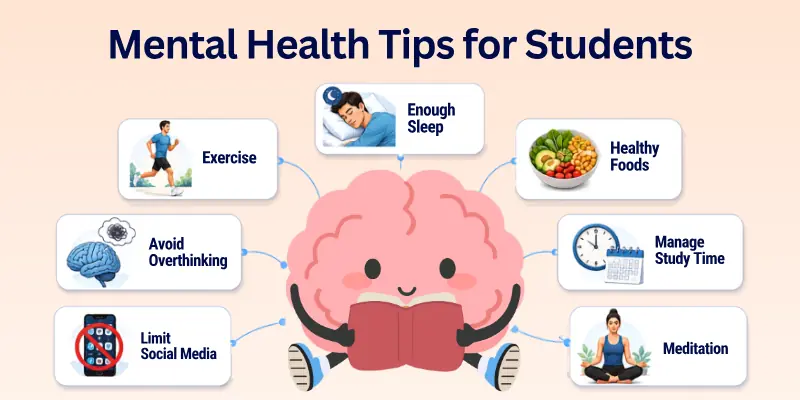
Here are some of the best mental health tips for students:
- Get Enough Sleep
- Exercise Regularly
- Eat Brain-Healthy Foods
- Avoid Overthinking
- Manage Study Time Properly
- Take Breaks During Study
- Limit Social Media Use
- Stay Connected with Friends and Family
- Practice Meditation and Mindfulness
- Spend Time Outdoors
- Avoid Academic Pressure
- Build Self-Confidence
- Ask for Help When Needed
- Follow a Healthy Routine
1. Get Enough Sleep
Many students sleep late because of studies, exams, or phone use. Poor sleep can increase stress, reduce focus, and affect daily mood. Good sleep helps students feel more active, calm, and mentally fresh throughout the day.
- Follow a consistent sleep schedule
- Avoid using phones before bedtime
- Keep your room quiet and comfortable
- Avoid drinking caffeine at night
- Try deep breathing or reading before sleep
Getting enough sleep can improve memory, concentration, and overall mental health.
2. Exercise Regularly
Regular exercise is one of the best student mental health tips because it helps reduce stress and improve mood. Physical activity keeps the mind fresh and helps students feel more active and confident. Even light exercise can support better mental wellness for students.
- Go for a daily walk
- Try yoga or stretching exercises
- Ride a bicycle
- Play outdoor sports with friends
- Follow a short home workout routine
Regular exercise can improve focus, reduce anxiety, and support healthy habits for students.
3. Eat Brain-Healthy Foods
Food can affect both physical and mental health. Students who eat healthy meals often feel more energetic, focused, and emotionally balanced. A balanced diet is an important part of stress management for students and overall mental wellness.
- Eat fresh fruits and vegetables
- Drink plenty of water
- Choose healthy snacks like nuts and yogurt
- Avoid too much junk food
- Reduce sugary drinks and excess caffeine
Healthy eating habits can improve concentration, support memory, and help students stay mentally healthy.
4. Avoid Overthinking
Many students overthink small problems like exams, grades, or daily mistakes. This builds stress and affects mental peace. Overthinking also reduces focus and makes study time harder.
- Practice deep breathing when you feel stressed
- Write your thoughts in a journal
- Focus on one task at a time
- Replace negative thoughts with positive thinking
- Take short breaks to relax your mind
These habits support better student mental health tips and improve emotional balance. They also help students build stronger stress management for students skills.
5. Manage Study Time Properly
Poor time management is a major reason students feel stressed. When work piles up, it affects both performance and mental health. Good planning creates calm and control in students’ daily lives.
- Make a daily study plan
- Break big tasks into small steps
- Use a simple schedule or timetable
- Avoid last-minute studying
- Set clear study goals for each session
Good planning reduces study stress, improves focus, and supports better mental wellness for students. It also helps students build healthy habits for long-term success.
6. Take Breaks During Study
Many students study for long hours without rest. This can reduce focus and increase stress. Short breaks help the brain relax and improve learning. This is an important part of student stress relief tips.
- Use the Pomodoro technique (study 25–30 minutes, then rest)
- Stand up and stretch your body
- Take a short walk around your room or outside
- Drink water and relax your eyes
- Avoid using social media during breaks
Regular breaks improve focus, reduce mental fatigue, and support better mental wellness for students.
7. Limit Social Media Use
Too much social media can increase stress and distraction. Many students compare themselves with others online, which affects confidence and mood. Reducing screen time is a key part of healthy habits for students.
- Set a daily screen time limit
- Avoid scrolling before studying or sleeping
- Turn off unnecessary notifications
- Use apps only at specific times
- Take a short digital detox every week
Limiting social media improves concentration, reduces anxiety, and supports better student mental health.
8. Stay Connected with Friends and Family
Students often feel stressed when they stay alone for too long. Talking to friends or family helps release pressure and improves mood. Strong relationships support better mental wellness for students.
- Talk to a close friend every day
- Spend time with family members
- Share your feelings instead of holding them inside
- Join group study or class activities
- Avoid isolating yourself for long hours
Good connections reduce stress, improve confidence, and support healthy student mental health tips.
9. Practice Meditation and Mindfulness
Many students feel anxious because their minds stay busy all the time. Meditation helps slow down thoughts and brings mental calm. It is a simple habit for better stress management for students.
- Sit quietly and focus on your breathing
- Practice 5–10 minutes of meditation daily
- Pay attention to the present moment
- Use simple guided meditation apps if needed
- Take slow, deep breaths during stress
These habits improve focus, reduce anxiety, and support strong mental wellness for students.
10. Spend Time Outdoors
Students spend most of their time indoors studying or using screens. This can increase stress and reduce energy. Fresh air and sunlight help the mind feel calm and active. This is a simple part of healthy habits for students.
- Take a short walk in the morning or evening
- Sit in natural sunlight for a few minutes
- Play outdoor games with friends
- Visit a park when you feel stressed
- Take study breaks outside your room
Spending time outdoors improves mood, reduces stress, and supports better student mental health.
11. Avoid Academic Pressure
Many students put too much pressure on themselves for good grades. This can lead to stress, anxiety, and burnout. A balanced mindset is important for long-term mental wellness for students.
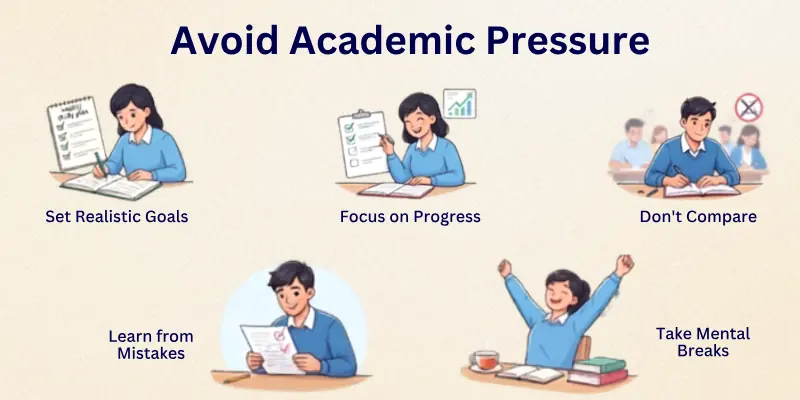
- Set realistic goals for study
- Focus on progress, not perfection
- Avoid comparing yourself with others
- Accept that mistakes are part of learning
- Take rest when your mind feels overloaded
Reducing pressure improves confidence, lowers stress, and supports better student stress relief tips.
12. Build Self-Confidence
Low confidence can increase stress in students. When students doubt themselves, they feel pressure and lose focus. Building confidence helps improve mental wellness for students and supports better performance.
- Focus on your small achievements
- Use positive words with yourself
- Prepare well before tests or presentations
- Stop comparing yourself with others
- Learn from mistakes instead of fearing them
Strong confidence reduces anxiety and supports better student mental health tips in daily life.
13. Ask for Help When Needed
Many students try to handle everything alone. This increases stress and makes problems harder. Asking for help is a healthy step toward better stress management for students.
- Talk to a trusted friend or family member
- Share your problems with a teacher or counselor
- Do not ignore constant stress or sadness
- Ask questions when you feel confused in your studies
- Accept support without hesitation
Getting help improves emotional balance and supports strong mental wellness for students.
14. Follow a Healthy Routine
A messy routine often increases stress in students. When there is no proper schedule, students feel rushed and lose focus. A simple routine helps create balance and improves mental wellness for students.
- Wake up and sleep at a fixed time
- Plan your study hours in advance
- Keep breaks between study sessions
- Eat meals at regular times
- Avoid last-minute work or rushing
A healthy routine reduces stress, improves focus, and supports better student mental health tips in daily life.
Now let’s look at some simple and practical tips that can help students stay calm and focused during exams.
Mental Health Tips for Students During Exams
Exams can create a lot of pressure for students. Many students feel stress, overthink, and lose focus during this time. Simple habits can help keep the mind calm and improve performance.
These exam stress management tips will help you stay balanced and confident during your exam days.
- Last-Minute Study: Avoid studying at the last moment. It increases stress and confusion. It also makes it harder to recall information during the exam.
- Sleep Routine: Sleep properly before exams. A fresh mind remembers better. Good sleep also improves focus and memory.
- Stay Calm: Keep your mind positive and avoid panic during preparation. Calm thinking helps you perform better under pressure.
- Healthy Diet: Eat simple and healthy food to stay active and focused. Good nutrition supports energy and concentration during study time.
- No Comparison: Avoid comparing yourself with others. Focus on your own progress. Comparison often increases stress and lowers confidence.
These simple habits support student stress relief tips and help improve focus, confidence, and mental balance during exams.
Conclusion
In this article, we explored simple and practical mental health tips for students, including sleep habits, healthy eating, exercise, stress management, time control, and exam-time strategies. Good mental health plays a key role in improving focus, reducing stress, and supporting overall mental wellness for students.
By following these small but effective habits daily, students can improve concentration, build confidence, and manage academic pressure more healthily. Over time, these practices support better performance and long-term emotional balance.
If stress becomes difficult to handle, students should not hesitate to seek support from friends, family, or teachers. Staying consistent with healthy habits and caring for your mind can make student life more balanced, productive, and less stressful.
FAQs
Here are some quick answers to common questions about mental health tips for students.
Here are the best tips students can follow:
- Sleep well every night to keep the mind fresh and improve focus
- Exercise regularly to reduce stress and improve mood
- Eat healthy food to support brain function and energy
- Practice relaxation, like deep breathing, to stay calm
Yes, sleep directly affects mental health in students. Good sleep improves mood, memory, and focus. Poor sleep increases stress and tiredness.
Yes, exercise is very helpful for mental health. It reduces stress and increases positive energy in the body. Even short daily activity can make a difference.
Here are natural ways to reduce stress:
- Maintain a daily routine to bring balance in life
- Take short breaks during study to relax the mind
- Do light exercise like walking to release tension
- Practice deep breathing to calm anxious thoughts
Students can balance both by managing time and avoiding pressure. A simple routine helps maintain control and reduces stress. Rest and study should stay balanced.
Here are simple ways to stay mentally healthy:
- Follow a study plan to avoid last-minute pressure
- Avoid last-minute study to reduce confusion and stress
- Sleep properly before exams to improve memory
- Stay calm and positive to improve performance
Daily habits like routine, sleep, and a healthy lifestyle improve mental wellness. Small changes every day bring long-term benefits. Consistency helps build strong mental health.
Social media can affect focus, mood, and confidence in students. Too much use increases stress and comparison. Balanced use helps maintain mental peace.
Here are common signs students should notice:
- Constant stress or sadness that affects daily life
- Loss of interest in studies and daily activities
- Sleep problems that disturb energy and focus
- Difficulty in concentration during study or exams
Students should seek help when stress becomes difficult to handle alone. Talking to someone trusted can make things easier. Support from others can improve mental health.






- Be Respectful
- Stay Relevant
- Stay Positive
- True Feedback
- Encourage Discussion
- Avoid Spamming
- No Fake News
- Don't Copy-Paste
- No Personal Attacks
- Be Respectful
- Stay Relevant
- Stay Positive
- True Feedback
- Encourage Discussion
- Avoid Spamming
- No Fake News
- Don't Copy-Paste
- No Personal Attacks
