Healthy Foods High in Fiber: Complete Food List & Benefits
Published: 18 Jul 2026
Fiber is a key part of a healthy diet, but many people do not get enough of it. It comes from plant foods and helps your body work in a better way. Your body does not fully digest fiber, but it plays an important role in digestion and overall health.
Eating enough fiber helps keep your bowel movements regular. It also supports gut health and helps you feel full for longer. This can make it easier to manage weight and avoid overeating. Fiber also helps control blood sugar levels and supports heart health.
In this guide, you will learn about healthy foods high in fiber. You will see the types of fiber, best fruits, vegetables, grains, legumes, nuts, and seeds that you can add to your daily meals.
Types of Fiber
Fiber comes from plant foods. It is not digested by the body, but it plays a big role in health. There are two main types of fiber. Both are important and work in different ways.
1. Soluble Fiber
Soluble fiber dissolves in water and forms a gel-like substance in the stomach. It helps slow down digestion and keeps blood sugar levels stable.
It also helps lower bad cholesterol and supports heart health. You can find soluble fiber in foods like oats, apples, pears, beans, and carrots.
2. Insoluble Fiber
Insoluble fiber does not dissolve in water. It adds bulk to your stool and helps food move through your digestive system.
It is useful for preventing constipation and keeping your bowel movements regular. You can find insoluble fiber in whole wheat, nuts, seeds, cauliflower, and green vegetables.
Best Healthy Foods High in Fiber
Fiber plays an important role in your daily diet. It helps your body digest food properly and keeps your stomach healthy. It also supports steady energy, better digestion, and long-lasting fullness after meals.
Many natural foods are rich in fiber. These include fruits, vegetables, whole grains, legumes, nuts, and seeds. Each group gives your body different nutrients along with fiber.
Let’s look at the best foods you can eat to increase your fiber intake naturally.
1. Fruits High in Fiber
Fruits are one of the easiest ways to add fiber to your daily diet. They are natural, simple to eat, and also provide vitamins and antioxidants along with fiber. Eating the right fruits can help improve digestion and keep you full for longer.
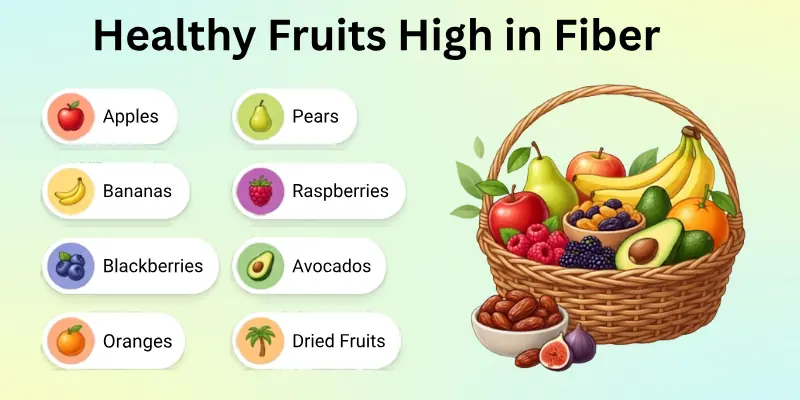
Here are some of the best fruits high in fiber:
- Apples
- Pears
- Bananas
- Raspberries
- Blackberries
- Avocados
- Oranges
- Dried Fruits (Dates, Figs, Prunes, Raisins)
Let’s look at each fruit in detail.
1. Apples
Apples contain a good amount of fiber, especially in the skin. It supports smooth digestion and helps the stomach work properly. Apples also help control hunger and keep you satisfied between meals.
Tip: Eat an apple with the skin to get more fiber.
2. Pears
Pears are rich in fiber and have a soft texture that is easy to digest. It supports regular bowel movements and keep the digestive system active. Pears also help reduce discomfort related to constipation.
Tip: Eat a ripe pear for better digestion.
3. Bananas
Bananas provide fiber along with natural energy. It also contains resistant starch that supports gut health. Bananas help maintain steady energy throughout the day.
Tip: A slightly green banana contains more resistant starch.
4. Raspberries
Raspberries are one of the highest fiber fruits. They also contain antioxidants that support overall health. Raspberries improve digestion and support a healthy gut environment.
Tip: Add raspberries to yogurt or smoothies.
5. Blackberries
Blackberries are rich in fiber and plant compounds. It supports digestion and help maintain gut balance. Blackberries also support overall daily nutrition.
Tip: Eat fresh blackberries for the best benefits.
6. Avocados
Avocado contains both fiber and healthy fats. It keeps you full for longer and supports digestive health. Avocado also supports heart health and stable energy levels.
Tip: Add avocado to toast, salads, or smoothies.
7. Oranges
Oranges provide fiber along with vitamin C. It supports digestion and help keep the body refreshed. Oranges are light, juicy, and easy to include in a daily diet.
Tip: Eat a whole orange instead of juice for full fiber benefits.
8. Dried Fruits (Dates, Figs, Prunes, Raisins)
Dried fruits are concentrated sources of fiber. They support bowel movements and help improve digestion. Dried fruits also provide quick natural energy.
Tip: Eat in small portions because they are high in natural sugar.
2. Vegetables High in Fiber
Vegetables are an important part of a high-fiber diet. They support digestion, improve gut health, and help the body stay active and balanced. Most vegetables are low in calories but rich in fiber and nutrients, which makes them great for daily meals.
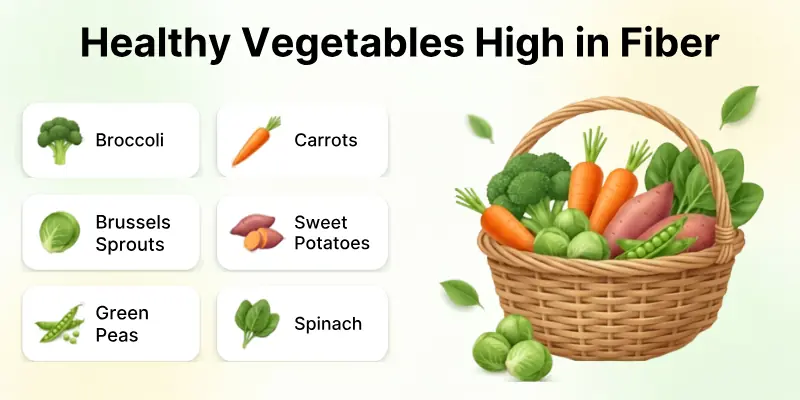
Here are some of the best vegetables high in fiber:
- Broccoli
- Carrots
- Brussels sprouts
- Sweet potatoes
- Green peas
- Spinach
Now let’s simply go through each vegetable.
1. Broccoli
Broccoli is rich in fiber and supports healthy digestion. It also helps the stomach function smoothly and keeps the gut active. Broccoli is also packed with nutrients that support overall health.
Tip: Steam broccoli instead of frying to keep nutrients safe.
2. Carrots
Carrots provide fiber along with important vitamins. They help support digestion and keep the stomach comfortable. Carrots are also a good snack option for daily use.
Tip: Eat raw carrots for more fiber benefits.
3. Brussels Sprouts
Brussels sprouts are high in fiber and support a healthy digestive system. They help the body process food more efficiently. They also support gut balance and overall wellness.
Tip: Roast Brussels sprouts with light seasoning for better taste.
4. Sweet Potatoes
Sweet potatoes contain fiber and complex carbohydrates. They help support digestion and provide long-lasting energy. They are also filling and help control hunger.
Tip: Bake sweet potatoes instead of deep frying.
5. Green Peas
Green peas are rich in fiber and plant protein. They support digestion and help keep you full for longer. They are also useful for balanced daily nutrition.
Tip: Add peas to rice, salads, or soups.
6. Spinach
Spinach is a low-calorie vegetable with fiber and many nutrients. It supports digestion and helps keep the stomach light. Spinach is easy to include in daily meals.
Tip: Add spinach to curries, soups, or smoothies.
3. Whole Grains High in Fiber
Whole grains are a strong source of dietary fiber. They support digestion, help maintain steady energy, and keep you full for longer. Unlike refined grains, whole grains keep their natural fiber and nutrients, which makes them a healthier choice for daily meals.
Here are some of the best whole grains high in fiber:
- Oats
- Brown rice
- Quinoa
- Barley
- Whole wheat bread
Now let’s look at each one in a simple way.
1. Oats
Oats are rich in soluble fiber that supports digestion and helps the body process food smoothly. They also keep you full for a longer time. Oats are also helpful for maintaining steady energy levels throughout the day.
Tip: Eat oats with milk or yogurt for a healthy breakfast.
2. Brown Rice
Brown rice contains more fiber than white rice because it keeps its outer layer. It supports digestion and helps the stomach work better. Brown rice also provides long-lasting energy.
Tip: Replace white rice with brown rice in daily meals.
3. Quinoa
Quinoa is a fiber-rich grain that also contains plant protein. It supports digestion and helps maintain balanced nutrition. Quinoa is also light and easy to digest.
Tip: Use quinoa in salads or as a rice substitute.
4. Barley
Barley is high in fiber and supports a healthy digestive system. It helps improve gut function and keeps digestion smooth. It also helps maintain fullness after meals.
Tip: Add barley to soups or stews.
5. Whole Wheat Bread
Whole wheat bread contains fiber because it is made from whole grains. It supports digestion and is a better option than refined white bread. It also helps reduce hunger between meals.
Tip: Choose 100% whole wheat bread instead of white bread.
4. Legumes and Beans High in Fiber
Legumes and beans are some of the best sources of fiber in a plant-based diet. They support digestion, improve gut health, and help keep you full for longer. They also provide plant protein, which makes them a strong and balanced food choice.
Here are some of the best legumes and beans high in fiber:
- Lentils
- Chickpeas
- Black beans
- Kidney beans
- Split peas
Now let’s simply understand each one.
1. Lentils
Lentils are rich in fiber and plant protein. They support smooth digestion and help the stomach process food better. Lentils also help keep you full and reduce unnecessary snacking.
Tip: Cook lentils as soup or add them to rice dishes.
2. Chickpeas
Chickpeas contain a good amount of fiber that supports gut health and digestion. They also help improve fullness after meals. Chickpeas are a filling and healthy food for daily use.
Tip: Use chickpeas in salads, curries, or hummus.
3. Black Beans
Black beans are high in fiber and support a healthy digestive system. They help the body maintain steady digestion and energy. They also support overall gut balance.
Tip: Add black beans to rice bowls or soups.
4. Kidney Beans
Kidney beans provide fiber and help support digestion and blood sugar balance. They are a strong and filling food choice. They also help reduce hunger between meals.
Tip: Cook kidney beans properly before eating for best digestion.
5. Split Peas
Split peas are rich in fiber and help support healthy bowel movement. They also improve digestive comfort and fullness. They are commonly used in soups and stews.
Tip: Use split peas in thick soups for a healthy meal.
5. Nuts and Seeds Rich in Fiber
Nuts and seeds are small but very powerful sources of fiber. They support digestion, help control hunger, and provide healthy fats along with important nutrients. Even a small handful can make a difference in your daily fiber intake.
Here are some of the best nuts and seeds rich in fiber:
- Chia seeds
- Flaxseeds
- Almonds
- Pistachios
- Sunflower seeds
Now let’s look at each one in a simple way.
1. Chia Seeds
Chia seeds are extremely high in fiber. They absorb water and form a gel-like texture that supports digestion and keeps you full for longer. They are also helpful for maintaining regular bowel movements.
Tip: Soak chia seeds in water or milk before eating.
2. Flaxseeds
Flaxseeds are rich in fiber and healthy fats. They support digestion and help improve gut health. They are also useful for keeping the digestive system active.
Tip: Grind flaxseeds before eating for better absorption.
3. Almonds
Almonds provide fiber along with healthy fats and protein. They help control hunger and support steady energy levels. They are also a good snack for daily use.
Tip: Eat a small handful as a healthy snack.
4. Pistachios
Pistachios contain fiber and support digestion. They help keep you full and reduce unnecessary cravings. They are also easy to include in the daily diet.
Tip: Eat unsalted pistachios for better health benefits.
5. Sunflower Seeds
Sunflower seeds are a good source of fiber and nutrients. They support digestion and help improve overall gut health. They also add healthy variety to your diet.
Tip: Sprinkle sunflower seeds on salads or yogurt.
Top High Fiber Foods List
Here is a quick list of high-fiber foods with their approximate fiber content per serving. This makes it easier to choose the right foods for your daily diet.
| Food | Serving Size | Fiber |
|---|---|---|
| Chia seeds | 1 tablespoon | 4g |
| Flaxseeds | 1 tablespoon | 3g |
| Lentils | 1 cup cooked | 15g |
| Chickpeas | 1 cup cooked | 12g |
| Black beans | 1 cup cooked | 15g |
| Split peas | 1 cup cooked | 16g |
| Oats | 1 cup cooked | 4g |
| Brown rice | 1 cup cooked | 3.5g |
| Apple (with skin) | 1 medium | 4g |
| Pear (with skin) | 1 medium | 5–6g |
| Raspberries | 1 cup | 8g |
| Avocado | 1 medium | 10g |
| Broccoli | 1 cup cooked | 5g |
| Sweet potato | 1 medium | 4g |
| Almonds | 28g (handful) | 3.5g |
Health Benefits of Eating High-Fiber Foods
High-fiber foods play an important role in overall health. They support different systems in your body and help you stay active, balanced, and healthy in daily life.
Here are some key benefits of fiber:
- Supports Digestive Health: Fiber helps your digestive system work smoothly. It adds bulk to stool and supports regular bowel movements, which helps reduce constipation and discomfort.
- Helps With Weight Loss: High-fiber foods take longer to digest. This helps control hunger and reduces overeating. It makes it easier to manage calorie intake naturally.
- Supports Heart Health: Fiber helps reduce bad cholesterol levels in the body. This supports better heart function and lowers the risk of heart-related problems over time.
- Controls Blood Sugar Levels: Fiber slows down the absorption of sugar in the bloodstream. This helps maintain stable blood sugar levels and reduces sudden spikes after meals.
- Keeps You Full Longer: Fiber-rich foods stay in your stomach for more time. This helps you feel full after eating and reduces frequent snacking between meals.
- Supports Healthy Gut Bacteria: Fiber acts as food for good bacteria in the gut. A healthy gut microbiome supports better digestion and overall body health.
Conclusion
In this article, we covered the best healthy foods high in fiber. We looked at fiber-rich fruits, vegetables, whole grains, legumes, nuts, and seeds. We also saw a quick fiber table, key health benefits, and simple ways to increase fiber in your daily diet.
Fiber is important for your overall health. It supports digestion, helps control weight, improves heart health, and keeps your blood sugar levels stable. A diet low in fiber can lead to digestive issues and low energy, so it is important to include enough fiber every day.
From my personal recommendation, try to add at least 2 to 3 fiber-rich foods to every meal. Small changes like eating fruits with the skin, choosing whole grains, and adding seeds to your diet can make a big difference over time.
FAQs
Here are some frequently asked questions about healthy foods high in fiber.
The best healthy foods high in fiber come from natural plant-based sources. These foods support digestion and improve overall health.
- Fruits like apples, pears, and raspberries
- Vegetables like broccoli, carrots, and spinach
- Whole grains like oats and brown rice
- Legumes like lentils and chickpeas
- Seeds like chia and flaxseeds
Fruits are one of the easiest ways to increase fiber intake naturally. They also provide vitamins and antioxidants.
- Apples
- Pears
- Bananas
- Raspberries
- Blackberries
- Oranges
Yes, vegetables are excellent sources of dietary fiber. They are low in calories but rich in nutrients. Broccoli, carrots, spinach, and sweet potatoes are great examples. These vegetables support digestion and help maintain a healthy gut.
Fiber-rich foods help improve bowel movement and reduce constipation naturally. They add bulk to stool and support digestion.
- Prunes
- Chia seeds
- Oats
- Lentils
- Apples with skin
Daily fiber needs depend on age and gender. On average, adults need a healthy amount to support digestion and overall wellness.
- Women: around 25 grams per day
- Men: around 30–38 grams per day
Yes, high-fiber foods can support weight loss naturally. They keep you full for longer and reduce overeating. Foods like beans, oats, fruits, and vegetables are especially helpful. This makes it easier to manage calorie intake.
High-fiber foods feed good bacteria in the gut and improve digestion. They help maintain a healthy gut microbiome.
- Whole grains like oats and barley
- Fruits like bananas and apples
- Legumes like beans and lentils
- Seeds like chia and flaxseeds
You can increase fiber intake with simple daily changes. Start by choosing whole and natural foods.
- Eat whole fruits instead of juice
- Add vegetables to every meal
- Choose whole grains over refined grains
- Include beans and legumes regularly
- Add seeds to yogurt or salads






- Be Respectful
- Stay Relevant
- Stay Positive
- True Feedback
- Encourage Discussion
- Avoid Spamming
- No Fake News
- Don't Copy-Paste
- No Personal Attacks
- Be Respectful
- Stay Relevant
- Stay Positive
- True Feedback
- Encourage Discussion
- Avoid Spamming
- No Fake News
- Don't Copy-Paste
- No Personal Attacks
