Common Cold vs. Flu: Know the Difference Fast
Published: 3 Apr 2026
Many people get confused when they feel sick and try to understand if it is a cold or the flu. Both illnesses affect the nose, throat, and breathing, but they work very differently inside the body. When people learn the difference, they can take the right steps for healing and prevent complications.
This guide explains the common cold vs. flu: what’s the difference? in simple and clear words for everyone. By the end of this guide, you will easily identify which one you have.
Let’s understand the difference between common cold vs. flu.
Difference between Common Cold & Flu
In this part, you will learn the major factors that separate both illnesses. These factors help you understand how each illness starts, how strong it feels, and how long it lasts. They also help you choose the right care at the right time.
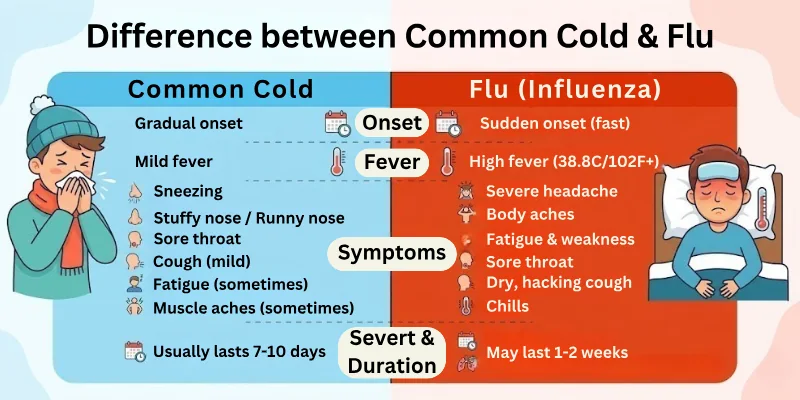
Factors:
- Onset Speed
- Severity of Symptoms
- Fever Level
- Body Aches
- Fatigue Level
- Breathing Issues
- Duration
- Complications
- Recovery Time
- Impact on Daily Activities
Let us learn about them in detail.
1. Onset Speed
This factor explains how fast the illness begins after the virus enters your body. Some illnesses appear slowly and gently, while others appear suddenly and strongly. Knowing the onset speed helps you judge your condition within the first few hours.
It also helps you understand how serious the illness might become. Many people do not notice this important sign, so this information is very helpful.
Cold
- Cold appears slowly over 1 to 2 days
- Early signs feel light and mild
- Symptoms build gradually
- No sudden sickness feeling
Flu
- Flu starts very suddenly within hours
- Symptoms hit the body strongly
- You may feel normal in the morning and sick at night
- Illness spreads fast inside the body
Difference
- Cold begins slowly
- Flu begins suddenly
2. Severity of Symptoms
Severity shows how strong or weak the symptoms feel inside your body. Some illnesses remain mild, while some become very intense. Understanding severity helps you decide when to rest and when to seek help.
It also helps you understand how deeply your body is affected. This factor is one of the most noticeable differences.
Cold
- Symptoms stay mild
- Only affects nose and throat
- You can continue daily activities
- Body discomfort stays low
Flu
- Symptoms become very strong
- Affects whole body
- You may need to stay in bed
- Pain and weakness increase fast
Difference
- Cold is mild
- Flu is strong
3. Fever Level
Fever is the body’s way of fighting infection. Different illnesses cause different levels of fever. Understanding this factor helps you identify your condition quickly.
Fever level also tells you how much rest and hydration your body needs. This helps you handle the illness correctly.
Cold
- Fever is rare
- If present, it stays low
- Mostly seen in children
- Adults often have no fever
Flu
- High fever is very common
- Temperature rises quickly
- Fever stays for many days
- It becomes the most noticeable sign
Difference
- Cold rarely has fever
- Flu has high fever
4. Body Aches
Body aches show how strongly the virus affects your muscles. Mild aches happen during normal sickness, while stronger aches appear during serious infections.
This factor is easy to notice and helps you tell the difference fast. It also reveals how deeply your body is reacting. Many people use this factor to judge the condition correctly.
Cold
- Aches stay very light
- Only slight discomfort
- You can move normally
- Pain disappears quickly
Flu
- Aches feel strong
- Legs, arms, and back hurt
- Movement becomes difficult
- Rest becomes necessary
Difference
- Cold causes mild body pain
- Flu causes strong body pain
5. Fatigue Level
Fatigue means how tired your body feels. Some illnesses cause mild tiredness, while some drain your energy completely.
Understanding this factor helps you plan your rest. It also helps you know how long your body will take to recover. Fatigue level is very important because it affects daily life.
Cold
- Tiredness stays light
- You can still work or study
- Energy returns fast
- Symptoms do not drain your strength completely
Flu
- Fatigue becomes very strong
- Weakness stays even after rest
- Energy drops suddenly
- Tiredness may stay for weeks
Difference
- Cold brings mild tiredness
- Flu brings severe tiredness
6. Breathing Issues
Breathing symptoms help you see how much your respiratory system is affected. Some illnesses affect only the nose, while others affect the chest too. Understanding this factor helps you notice early signs of seriousness.
It also helps you track how the infection moves inside your body. This factor is very helpful for proper care.
Cold
- Nose feels stuffy
- Breathing is blocked but not painful
- Chest remains clear
- Cough stays light
Flu
- Breathing becomes harder
- Chest feels tight
- Cough becomes deep and strong
- Chest discomfort increases
Difference
- Cold affects nose
- Flu affects nose and chest
7. Duration
Duration means how long the illness stays in your body. Some illnesses clear quickly, while others take more time.
This factor helps you plan rest and recovery. It also helps you understand when you are getting better. Duration is one of the easiest ways to compare both.
Cold
- Lasts 3 to 7 days
- Symptoms fade quickly
- You improve every day
- Rarely stays longer
Flu
- Lasts 1 to 2 weeks
- Recovery moves slowly
- Strong symptoms remain for days
- Body needs more time to heal
Difference
- Cold stays for a short time
- Flu stays longer
8. Complications
Complications show how risky the illness can become. Some conditions stay safe, while others can turn dangerous if not handled properly.
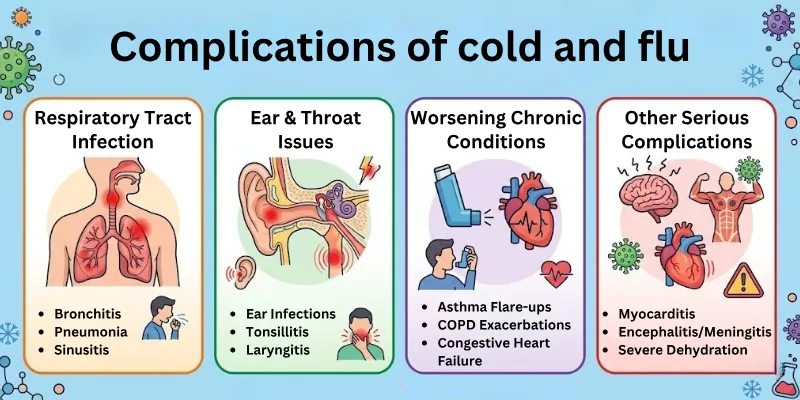
Understanding this factor helps you protect yourself. It also helps you know when to seek help. This factor is important for children and older people.
Cold
- Rare complications
- Sometimes causes sinus issues
- Children may get ear infections
- Usually harmless
Flu
- Can cause pneumonia
- Can worsen asthma
- Can lead to severe dehydration
- May require medical attention
Difference
- Cold is safe
- Flu can be dangerous
9. Recovery Time
Recovery time shows how long your body needs to feel normal again. Some illnesses allow quick recovery, while others need time and patience.
This factor is important for daily routine planning. It also shows how deeply your body was affected. Tracking recovery helps you understand your health better.
Cold
- Recovery is quick
- Energy comes back fast
- Symptoms disappear easily
- You return to life soon
Flu
- Recovery is slow
- Fatigue stays longer
- Body takes time to rebuild strength
- Full energy may take weeks
Difference
- Cold recovers fast
- Flu recovers slow
10. Impact on Daily Activities
This factor shows how the illness affects your everyday tasks. Some conditions allow you to continue working, while others stop your routine completely.
Understanding this helps you plan rest. It also helps you know how serious your condition is. This factor is easy to observe.
Cold
- You can work or go to school
- You feel only mild discomfort
- Basic tasks still possible
- Illness does not stop life
Flu
- You cannot work
- You feel too weak
- Routine becomes very hard
- Full rest becomes necessary
Difference
- Cold allows movement
- Flu stops movement
Common Cold vs Flu: Difference Table
Here is a direct difference between cold and flu:
| Factor | Common Cold | Flu |
| Onset | Slow | Sudden |
| Fever | Rare | High |
| Aches | Mild | Strong |
| Fatigue | Mild | Severe |
| Cough | Light | Strong |
| Duration | Short | Long |
| Complications | Rare | Possible |
| Recovery | Fast | Slow |
| Activities | Possible | Not possible |
Can You Have Cold and Flu at the Same Time?
In this part you will learn if both infections can happen together. This is rare but possible when immunity is weak. When both viruses enter the body at the same time, symptoms become stronger. It also increases the recovery time. People may need extra rest and care.
Key Points
- Both viruses can attack together
- Symptoms become mixed
- Body becomes weaker
Why Flu Is More Serious Than Cold
In this part you will learn why the flu brings stronger symptoms than the common cold. Flu attacks deeper and spreads faster inside the body. It causes more pain, more fever, and more tiredness. It also carries a higher risk of complications. This makes flu more serious.
Key Points
- Flu spreads faster
- Flu symptoms hit harder
- Flu needs more rest
Final Note
In this guide, we have covered the full difference between common cold vs. flu: What’s the Difference? and explained every factor clearly in simple English.
My personal advice is to listen to early symptoms and take rest before the condition becomes strong. Stay warm, drink water, and care for your health. Take care and feel better soon.
FAQs: Cold Versus Flu
Here are some of the most commonly asked questions related to the cold or flu confusion:
You can check the speed and strength of your symptoms to know the difference. A cold usually appears slowly with mild discomfort. The flu appears suddenly with strong fever and body pain.
The flu attacks your whole body and causes sudden weakness. It brings high fever, chills, and fatigue that last for days. A cold stays mild and mostly affects your nose and throat.
A cold cannot turn into the flu because both come from different viruses. However, you can catch the flu while you already have a cold. This makes your symptoms feel stronger.
Cold symptoms usually last three to ten days. Flu symptoms last longer and may continue for one to two weeks. Recovery takes more time because the flu drains your energy.
Yes, a fever is more common in the flu. Flu brings a high temperature that rises suddenly. A cold rarely causes fever and stays mild.
You should see a doctor when you face trouble breathing or strong chest pain. You should also get help if your fever does not go down. Quick care prevents complications like pneumonia.
Cold symptoms start slowly and build up over a day or two. Flu symptoms start suddenly and hit you all at once. The sudden onset is a major sign of the flu.
Yes, the flu can sometimes cause nausea, vomiting, or diarrhea. This is more common in children. A cold rarely affects the stomach.
Yes, body aches are much stronger in the flu. It affects your muscles and makes your body feel heavy and sore. A cold causes very mild body discomfort.
Yes, the flu drains your energy for many days. Fatigue can continue even after other symptoms fade. A cold does not cause long tiredness.






- Be Respectful
- Stay Relevant
- Stay Positive
- True Feedback
- Encourage Discussion
- Avoid Spamming
- No Fake News
- Don't Copy-Paste
- No Personal Attacks
- Be Respectful
- Stay Relevant
- Stay Positive
- True Feedback
- Encourage Discussion
- Avoid Spamming
- No Fake News
- Don't Copy-Paste
- No Personal Attacks
