How to Boost Red Blood Cells Naturally & Safely
Published: 17 May 2026
Red blood cells (RBCs) are vital for carrying oxygen from your lungs to all parts of your body. Low RBC count, also called anemia, can lead to fatigue, weakness, and poor concentration.
In this guide, we will cover how to boost red blood cells naturally through diet, lifestyle changes, supplements, and other safe methods. You will learn ways to increase RBC production, improve hemoglobin levels, and enhance overall energy naturally. By the end, you’ll have actionable strategies to maintain healthy red blood cells and better overall health.
Let’s get started!
How to Boost Red Blood Cells
Increasing red blood cells involves proper nutrition, lifestyle adjustments, and monitoring your health. Many natural methods can help your body produce RBCs efficiently.
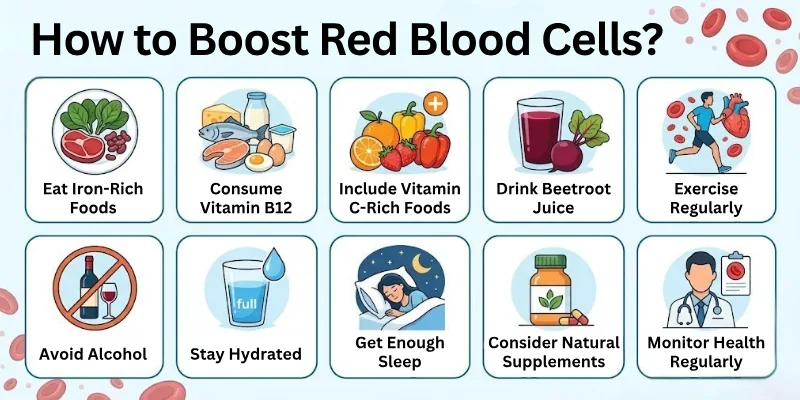
Here are the main ways to boost red blood cells naturally:
- Eat Iron-Rich Foods
- Consume Vitamin B12 and Folic Acid
- Include Vitamin C-Rich Foods
- Drink Beetroot Juice
- Exercise Regularly
- Avoid Alcohol and Smoking
- Stay Hydrated
- Get Enough Sleep
- Consider Natural Supplements
- Monitor Your Health Regularly
Let us cover all these in detail.
1. Eat Iron-Rich Foods
Iron is essential for producing hemoglobin, the protein in RBCs that carries oxygen. Foods rich in iron include red meat, liver, spinach, lentils, and beans. Including these foods regularly can help increase RBC count naturally. Iron absorption improves when combined with vitamin C-rich foods.
Additional Tips:
- Cook in cast-iron pans to increase iron content
- Avoid drinking tea or coffee with meals, as they reduce iron absorption
- Include both plant-based and animal-based iron sources
2. Consume Vitamin B12 and Folic Acid
Vitamin B12 and folic acid are crucial for RBC production. Deficiency in either can lead to anemia. Include foods like eggs, dairy, chicken, fish, and leafy green vegetables. Supplements may be necessary if dietary intake is insufficient.
Additional Tips:
- Consider fortified cereals for additional B12 and folic acid
- Consult a doctor before taking high-dose supplements
- Combine B12-rich foods with folic acid for best results
3. Include Vitamin C-Rich Foods
The proper absorption of iron by your body is facilitated by vitamin C. Oranges, strawberries, bell peppers, and guava are some of the foods that are excellent sources of this nutrient. To increase red blood cell production in a natural way, combine meals that are high in iron with foods that are high in vitamin C.
Additional Tips:
- Drink fresh fruit juices with meals
- Include a small salad with peppers, tomatoes, or citrus fruits
- Avoid cooking vitamin C-rich foods too long, as it reduces content
4. Drink Beetroot Juice
Beetroot is known to improve hemoglobin levels and support red blood cell production. Drinking fresh beetroot juice regularly increases oxygen-carrying capacity and stamina. It also supports overall blood health.
Additional Tips:
- Combine beetroot with carrot or apple juice for better taste
- Drink 1 cup daily for best results
- Ensure fresh, organic beetroot for maximum benefits
5. Exercise Regularly
Regular physical activity improves blood circulation and oxygen demand, which in turn stimulates the production of red blood cells (RBC). Aerobic exercises that are moderate in intensity, such as walking, jogging, or cycling, are ideal. Be careful not to overtrain, as this can temporarily lower red blood cell levels.
Additional Tips:
- Include 20–30 minutes of moderate exercise daily
- Try yoga or stretching exercises to enhance blood flow
- Avoid excessive fatigue that may worsen anemia symptoms
6. Avoid Alcohol and Smoking
Alcohol and smoking reduce RBC production and can damage haemoglobin. Limiting or avoiding these substances supports healthy blood cell production. Healthy lifestyle choices boost overall energy and immunity.
Additional Tips:
- Replace alcohol with herbal teas or water
- Seek support if quitting smoking is difficult
- Avoid secondhand smoke as it also affects RBC health
7. Stay Hydrated
Having adequate hydration helps maintain blood volume and improves the efficiency of red blood cells (RBCs). Water, herbal teas, and fresh juices should be consumed in large quantities. When blood is dehydrated, it can become more concentrated, which reduces the efficiency of oxygen transport.
Additional Tips:
- Carry a water bottle to maintain daily intake
- Drink fluids before, during, and after exercise
- Include soups and broths for hydration and nutrition
8. Get Enough Sleep
Adequate sleep is essential for overall health, including RBC production. Poor sleep can reduce oxygen efficiency and energy levels. Aim for 7–8 hours of sleep every night to support your body’s natural healing and blood production.

Additional Tips:
- Maintain a regular sleep schedule
- Avoid screens 1 hour before bedtime
- Ensure a dark, quiet, and cool environment for restful sleep
9. Consider Natural Supplements
Certain supplements help increase red blood cells naturally, including iron, vitamin B12, folic acid, and spirulina. Always consult a doctor before starting supplements. They are most effective when combined with a healthy diet and lifestyle.
Additional Tips:
- Follow recommended dosages carefully
- Track your hemoglobin and RBC count regularly
- Use natural supplements as preventive support, not as a substitute for diet
10. Monitor Your Health Regularly
Blood tests and checkups at regular intervals are helpful in monitoring red blood cell levels and hemoglobin. When deficiencies are identified at an early stage, timely action can be taken to prevent anemia. Monitoring allows for more effective adjustments to be made to lifestyle choices, diet, and supplements.
Additional Tips:
- Schedule blood tests every 3–6 months if prone to anemia
- Record your symptoms and progress in a health journal
- Discuss results with a doctor for personalized guidance
When to See a Doctor
Consult a physician if you experience any of the following symptoms:
Warning Signs:
- Severe fatigue or shortness of breath
- Dizziness, pale skin, or rapid heartbeat
- Persistent anemia despite diet and supplements
- Blood in stool, urine, or unusual bruising
- Any underlying medical conditions affecting blood health
Final Note
In this guide, we have covered how to boost red blood cells naturally in 10 effective ways. By focusing on nutrition, hydration, sleep, exercise, and healthy habits, you can improve RBC count and hemoglobin levels safely.
My personal advice is to start with diet and hydration, then gradually include supplements and lifestyle changes. With consistency, you can increase red blood cells naturally and feel more energetic.
Take care of your blood health, and stay strong and healthy!
FAQs: How to Boost Red Blood Cells RBC
Here are some of the most commonly asked questions related to the ways to increase the RBC in your body:
The easiest way is to eat iron-rich foods like spinach, beans, and red meat. Drinking beetroot juice and staying hydrated also helps. Combining iron-rich meals with vitamin C improves absorption. Consistent daily habits can naturally increase RBC count.
Yes, a balanced diet with iron, vitamin B12, folic acid, and vitamin C supports RBC production. Foods like eggs, leafy greens, and citrus fruits are helpful. Avoid processed foods and excessive caffeine, which may reduce iron absorption. Eating small, frequent meals is best.
Vitamin B12 is essential for the production of healthy RBCs. A deficiency can cause anemia and fatigue. Foods like eggs, dairy, and chicken provide B12. Supplements may be needed if dietary intake is insufficient.
Yes, beetroot contains nitrates that improve oxygen transport and hemoglobin levels. Drinking fresh beetroot juice daily supports red blood cell production. It also increases stamina and energy naturally. Combining beetroot with carrot or apple juice improves taste and nutrition.
Yes, regular moderate exercise stimulates RBC production. Activities like walking, cycling, or yoga improve blood circulation. Avoid overtraining, which can temporarily lower RBC count. Exercise combined with hydration supports overall blood health.
Yes, dehydration reduces blood volume and makes RBC function less efficient. Drinking enough water and herbal teas helps RBCs transport oxygen effectively. Proper hydration supports hemoglobin production naturally. Avoid excessive sugary or caffeinated drinks.
Yes, alcohol and smoking can reduce RBC production and damage hemoglobin. Limiting or avoiding these substances supports healthy blood cells. Healthy lifestyle choices improve energy, immunity, and overall blood health.
Yes, supplements like iron, vitamin B12, folic acid, and spirulina can support RBC production. Always consult a doctor before starting supplements. They work best alongside a nutrient-rich diet. Track your blood levels regularly for safety.
Adequate sleep helps your body regenerate and produce healthy RBCs. Aim for 7–8 hours of quality sleep every night. Poor or irregular sleep can reduce oxygen efficiency and energy levels. Regular sleep supports overall blood health.
See a doctor if you experience persistent fatigue, dizziness, pale skin, or shortness of breath. Blood tests can confirm low RBC count or anemia. Early detection allows timely treatment and prevents complications. Always consult a doctor before taking supplements or medications.




- Be Respectful
- Stay Relevant
- Stay Positive
- True Feedback
- Encourage Discussion
- Avoid Spamming
- No Fake News
- Don't Copy-Paste
- No Personal Attacks
- Be Respectful
- Stay Relevant
- Stay Positive
- True Feedback
- Encourage Discussion
- Avoid Spamming
- No Fake News
- Don't Copy-Paste
- No Personal Attacks
