Top Stress Relief Tips for Women for a Peaceful Mind
Published: 28 Apr 2026
Women often juggle multiple roles, from work responsibilities to family care, which can create ongoing stress. Chronic stress can affect both mental and physical health, leading to anxiety, fatigue, and other serious issues.
Learning to manage stress effectively is essential for overall well-being. Simple, consistent practices can help you feel calmer and more in control of your life. These stress relief tips for women are designed to be practical, realistic, and easy to incorporate into daily routines. Following them can help improve your mood, energy levels, and quality of life.
So, everyone, what are you waiting for? Let’s learn about each tip in detail.
Tips for Stress Relief for Women
Here are the best stress relief tips for women:
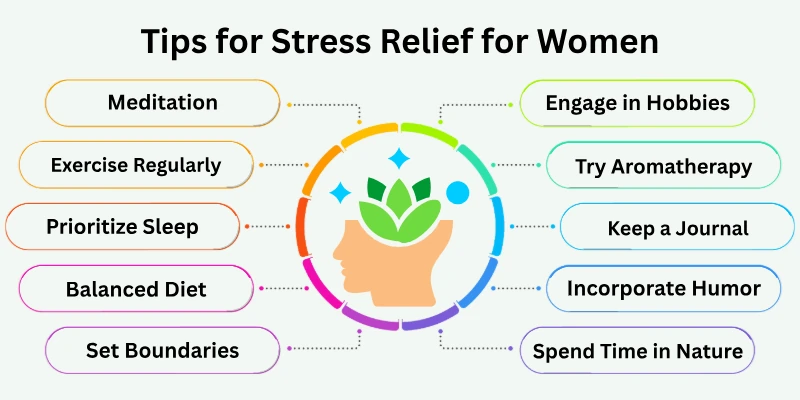
- Practice Mindful Meditation
- Exercise Regularly
- Prioritize Sleep
- Maintain a Balanced Diet
- Connect with Supportive People
- Practice Deep Breathing Exercises
- Set Boundaries and Learn to Say No
- Engage in Hobbies and Creative Activities
- Limit Exposure to Stress Triggers
- Practice Gratitude Daily
- Try Aromatherapy or Essential Oils
- Spend Time in Nature
- Listen to Music or Sounds That Calm You
- Keep a Journal
- Schedule “Me-Time” Daily
- Use Relaxation Techniques Like Progressive Muscle Relaxation
- Seek Professional Counseling if Needed
- Incorporate Humor and Laughter
Let us learn about them in detail.
1. Practice Mindful Meditation
Meditation reduces stress hormones and promotes mental clarity. Spending 10–15 minutes daily focusing on your breath can help you feel grounded. Mindfulness improves emotional resilience and reduces anxiety. Regular practice lowers blood pressure and supports better sleep. Meditation helps you respond calmly to challenges instead of reacting impulsively.
Tips to try:
- Use a guided meditation app
- Sit in a quiet space without distractions
- Focus on slow, deep breaths
2. Exercise Regularly
Physical activity releases endorphins, improving mood naturally. Exercise reduces anxiety, improves sleep, and boosts energy levels. Even a 20-minute walk can help you feel refreshed. Strength training and yoga support both physical and mental well-being. Consistent exercise also reduces the long-term effects of stress on the heart.
Tips to try:
- Walk, jog, or dance daily
- Try yoga or pilates for relaxation
- Include light strength training
3. Prioritize Sleep
Good sleep restores the body and mind. Lack of sleep increases irritability and stress. Maintain a regular sleep schedule and aim for 7–9 hours per night. Avoid screens and caffeine before bed. A calm bedtime routine improves sleep quality and relaxation.
Tips to try:
- Keep your bedroom dark and cool
- Use relaxing music or white noise
- Avoid heavy meals before bedtime
4. Maintain a Balanced Diet
Eating well stabilizes mood and energy. Include fruits, vegetables, whole grains, and lean proteins. Avoid excessive sugar, caffeine, and processed foods. Stay hydrated to support focus and calmness. Nutrition plays a critical role in reducing stress naturally.
Tips to try:
- Snack on nuts, seeds, or fruit
- Drink plenty of water throughout the day
- Plan balanced meals
5. Connect with Supportive People
Talking to friends or family reduces emotional burden. Sharing your feelings provides perspective and relief. Strong social connections boost resilience and reduce isolation. Make time for people who lift you up. Emotional support is essential for long-term stress management.
Tips to try:
- Schedule regular meet-ups or calls
- Join support groups
- Be honest about your feelings
6. Practice Deep Breathing Exercises
Deep breathing calms your nervous system. Techniques like diaphragmatic breathing lower heart rate and reduce tension. Practice 5–10 minutes daily or when stressed. Regular deep breathing helps you stay focused and calm. It’s simple, portable, and highly effective.
Tips to try:
- Inhale deeply through the nose
- Hold for a few seconds
- Exhale slowly through the mouth
7. Set Boundaries and Learn to Say No
Overcommitting increases stress and drains energy. Learn to politely decline tasks that aren’t essential. Prioritize yourself without feeling guilty. Setting boundaries protects mental health and prevents burnout. Clear communication helps others understand your limits.
Tips to try:
- Identify tasks that aren’t urgent
- Decline extra commitments politely
- Respect your personal time
8. Engage in Hobbies and Creative Activities
Hobbies reduce stress and provide emotional release. Activities like painting, gardening, or reading improve focus and mood. Even 20–30 minutes daily can help you feel fulfilled. Creative expression is linked to relaxation and happiness.
Tips to try:
- Schedule regular hobby time
- Explore new creative outlets
- Involve friends or family for fun
9. Limit Exposure to Stress Triggers
Identify situations or people that cause stress. Reduce exposure whenever possible. Avoid excessive negative news, toxic social media, or unhealthy relationships. A calm environment supports mental well-being. Regularly reassess your habits to minimize stress.
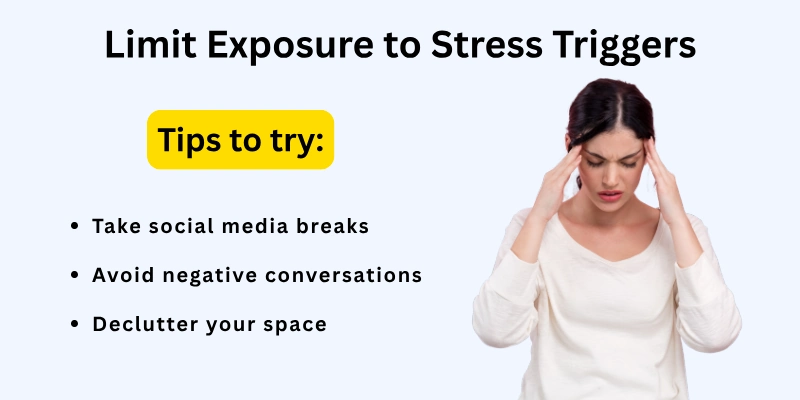
Tips to try:
- Take social media breaks
- Avoid negative conversations
- Declutter your space
10. Practice Gratitude Daily
Gratitude shifts focus to positive aspects of life. Keeping a journal helps you recognize what you’re thankful for. Write 3–5 things daily to create a positive mindset. Gratitude improves emotional resilience and happiness.
Tips to try:
- Note simple daily blessings
- Reflect on personal achievements
- Share gratitude with loved ones
11. Try Aromatherapy or Essential Oils
Certain scents help relax the mind and body. Lavender, chamomile, and sandalwood are known for stress relief. Aromatherapy can enhance meditation or sleep routines. Diffuse oils in your home or apply to pulse points. Scent can have an immediate calming effect.
Tips to try:
- Use a diffuser in your bedroom
- Add a few drops to a warm bath
- Inhale directly for a quick reset
12. Spend Time in Nature
Being outdoors reduces stress and improves mood. Natural surroundings help lower cortisol levels. Walking in parks, hiking, or gardening supports mental well-being. Sunlight boosts vitamin D and improves energy. Nature offers a peaceful escape from daily pressures.
Tips to try:
- Take short daily walks outside
- Plan weekend nature activities
- Practice mindful observation in nature
13. Listen to Music or Sounds That Calm You
Music can instantly affect mood. Calm or uplifting music reduces stress and enhances focus. Create playlists for relaxation or energy boosts. Listening daily can improve emotional balance. Pair music with deep breathing or meditation for the best results.
Tips to try:
- Play music during chores or work
- Explore nature sounds or white noise
- Sing or hum to engage yourself actively
14. Keep a Journal
Writing down thoughts releases mental tension. Journaling helps process emotions and track stress triggers. Reflecting on experiences improves self-awareness. Regular journaling reduces anxiety and provides perspective.
Tips to try:
- Write 5–10 minutes daily
- List stressors and solutions
- Include positive moments
15. Schedule “Me-Time” Daily
Taking time for yourself is essential. Even 15–20 minutes daily improves focus and mood. Use this time for hobbies, meditation, or relaxation. Regular self-care increases energy and resilience. Treating yourself with kindness helps long-term well-being.
Tips to try:
- Set alarms for personal breaks
- Enjoy a quiet cup of tea
- Read, stretch, or meditate
16. Use Relaxation Techniques Like Progressive Muscle Relaxation
Progressive muscle relaxation reduces tension in the body. Tense and release muscles from head to toe. Helps calm the nervous system and improve sleep. Practice before bedtime or during breaks. Regular use enhances physical and mental relaxation.
Tips to try:
- Start from the toes and move upward
- Inhale while tensing, exhale while releasing
- Practice 10–15 minutes daily
17. Seek Professional Counseling if Needed
Therapists provide tools to manage stress effectively. Professional help is essential if stress affects daily life. Counseling improves coping skills and reduces anxiety. Seeking help shows strength, not weakness.
Tips to try:
- Find a licensed therapist or counselor
- Join support groups
- Be open and honest during sessions
18. Incorporate Humor and Laughter
Laughter releases endorphins and reduces stress. Watching a comedy or sharing jokes can instantly lift one’s mood. Humor improves perspective and resilience. Daily laughter strengthens mental health.
Tips to try:
- Watch funny videos or shows
- Share jokes with friends or family
- Keep a humor journal
Final Note
In this guide, we have covered the best stress relief tips for women to help manage everyday challenges. These include meditation, exercise, sleep, nutrition, social support, hobbies, and professional help. Implementing these tips consistently can improve mood, energy, and overall health.
Remember to listen to your body and mind, prioritize self-care, and ask for help when needed. Taking even small steps daily can make a significant difference. You deserve peace, balance, and joy in your life.
FAQs
Here are some of the most commonly asked questions related to stress-relieving tips for women:
Indeed, meditation has the ability to reduce stress hormones and calm the mind. Practice on a daily basis helps improve focus as well as emotional control. Spending even ten minutes per day can improve one’s mood and clarity.
A minimum of thirty minutes of moderate exercise five days a week is beneficial. Endorphins are released when you walk, practice yoga, or dance. Intensity is less important than consistency in this context.
The mind and the body both benefit from sleep. A lack of sleep can make a person more irritable and stressful. Keeping a regular sleep schedule of seven to nine hours helps you cope better.
Nutritional food does, in fact, stabilize both energy and mood. Do not consume processed foods, sugar, or excessive amounts of caffeine. Drink plenty of water and consume plenty of fruits, vegetables, and lean proteins.
Talking to friends or family reduces emotional burden. Sharing your feelings gives perspective. Supportive relationships increase resilience and prevent isolation.
Muscles are relaxed and the heart rate is lowered when one breathes deeply. When you are feeling stressed, practice for five to ten minutes. It is not only effective but also easy to transport.
Absolutely, hobbies are a great way to relax and let out pent-up emotions. Focus and mood are both improved by engaging in creative activities. Even a brief session once a day is beneficial.
Seek help if stress affects daily life or sleep. Therapists provide tools and coping strategies. Professional help improves mental health and resilience.




- Be Respectful
- Stay Relevant
- Stay Positive
- True Feedback
- Encourage Discussion
- Avoid Spamming
- No Fake News
- Don't Copy-Paste
- No Personal Attacks
- Be Respectful
- Stay Relevant
- Stay Positive
- True Feedback
- Encourage Discussion
- Avoid Spamming
- No Fake News
- Don't Copy-Paste
- No Personal Attacks
