How to Reduce Fever Naturally: Simple Ways to Feel Better
Published: 10 May 2026
Fever is your body’s natural way of fighting infections and illnesses. While a mild fever is not usually dangerous, it can make you feel uncomfortable and weak. In this guide, we will cover how to reduce fever naturally using simple remedies, lifestyle habits, and home treatments.
You will learn easy and safe ways to lower your temperature, support your immune system, and feel better faster. By the end, you’ll have practical strategies to manage fever naturally without over-relying on medications.
Let’s dive in!
How to Reduce Fever Naturally
Reducing fever naturally involves supporting your body, staying hydrated, and using safe home remedies. There are many ways to help your body fight infection while easing fever symptoms. In this section, we will explain natural methods, foods, drinks, and lifestyle changes that can help reduce fever safely.
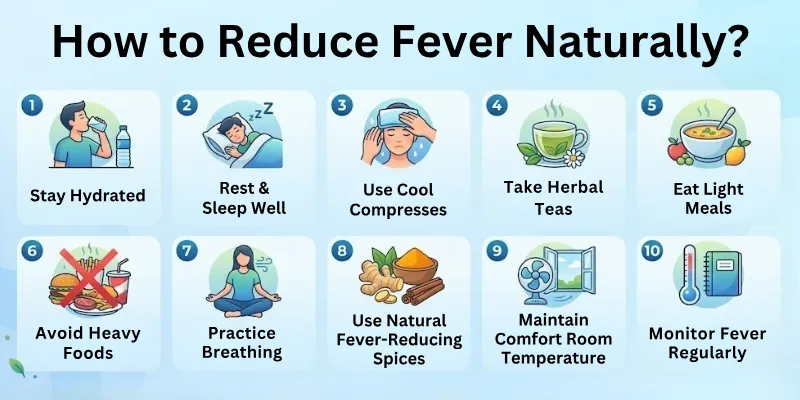
Here are the main ways to lower fever naturally:
- Stay Hydrated
- Rest and Sleep Well
- Use Cool Compresses
- Take Herbal Teas and Infusions
- Eat Light, Nutritious Meals
- Avoid Heavy or Sugary Foods
- Practice Breathing and Relaxation Techniques
- Use Natural Fever-Reducing Spices
- Maintain a Comfortable Room Temperature
- Monitor Your Fever Regularly
Let us cover all these in detail.
1. Stay Hydrated
Drinking enough water is essential when you have a fever. Fever increases fluid loss through sweating, which can lead to dehydration. Drinking water, coconut water, or clear soups keeps your body hydrated and helps regulate temperature. Proper hydration also supports your immune system and speeds up recovery.
Additional Tips:
- Drink small sips frequently rather than large amounts at once
- Include electrolyte drinks if the fever is high or persistent
- Avoid caffeinated or sugary beverages that may dehydrate you
2. Rest and Sleep Well
Your body needs rest to fight infections effectively. Sleep allows your immune system to repair and recover, which helps lower your fever naturally. Avoid strenuous activities and give your body time to heal. Napping during the day and maintaining a calm environment can improve recovery speed.
Additional Tips:
- Sleep in a quiet, dark room to maximize rest
- Use light blankets if you feel chills
- Avoid using electronic devices before sleep
3. Use Cool Compresses
Applying cool compresses to your forehead, neck, or wrists can help reduce fever. The gentle cooling effect lowers body temperature and provides relief from discomfort. Avoid very cold or ice-cold water, as it may cause shivering and increase body temperature.
Additional Tips:
- Reapply the compress every 15–20 minutes
- Combine with hydration for better results
- Focus on areas with major blood flow for faster cooling
4. Take Herbal Teas and Infusions
Certain herbal teas help reduce fever and support the immune system. Ginger tea, chamomile, and peppermint tea are known for their natural fever-reducing properties. Herbal infusions keep you hydrated and provide antioxidants to fight infection.
Additional Tips:
- Add a teaspoon of honey if desired, but avoid for children under 1 year
- Drink 2–3 cups daily for mild fever
- Combine with rest and hydration for faster relief
5. Eat Light, Nutritious Meals
When a fever is present, your body requires foods that are simple to digest and are rich in nutrients. Energy and support for immune function can be obtained from foods such as soups, broths, fruits, and vegetables. Eating foods that are heavy, oily, or processed can be difficult for digestion.
Additional Tips:
- Include vitamin C-rich fruits like oranges or kiwi
- Eat small, frequent meals rather than large portions
- Focus on foods with natural electrolytes like bananas and coconut water
6. Avoid Heavy or Sugary Foods
It is possible for your immune system to be hampered by sugary and processed foods, which can also make inflammation worse. Avoiding sweets, fried foods, and junk food is the best course of action when you have a fever. Eat foods that are light and healthy, as this will help your body recover more quickly.
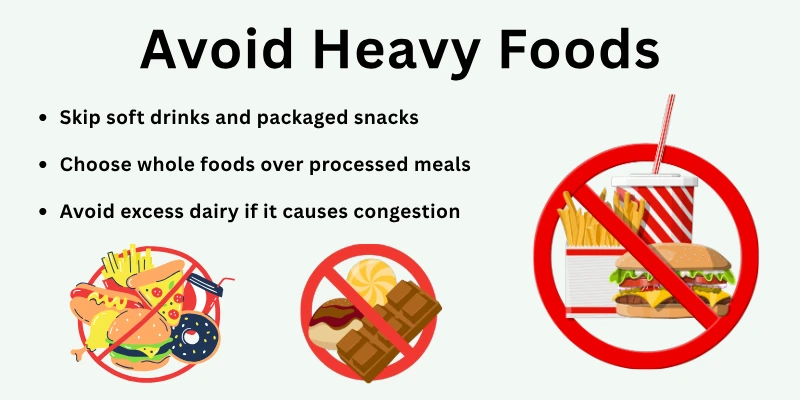
Additional Tips:
- Skip soft drinks and packaged snacks
- Choose whole foods over processed meals
- Avoid excess dairy if it causes congestion
7. Practice Breathing and Relaxation Techniques
Stress can affect your body’s ability to fight infection. Deep breathing, meditation, and gentle relaxation exercises help your body recover faster. These techniques also improve circulation and oxygen flow, which supports immune function.
Additional Tips:
- Try 5–10 minutes of slow, deep breathing several times a day
- Use calming music or guided meditation for better results
- Avoid overexertion during fever recovery
8. Use Natural Fever-Reducing Spices
There are certain spices that have properties that reduce fever and relieve inflammation. Cinnamon, ginger, and turmeric are all natural remedies that can assist your body in fighting off infections. It is possible to safely reduce fever by incorporating them into beverages or meals.
Additional Tips:
- Combine turmeric with warm milk or water for a soothing drink
- Use fresh ginger in tea or soups
- Avoid excess spice if it upsets your stomach
9. Maintain a Comfortable Room Temperature
For fever symptoms, a room that is cool and has adequate ventilation can be helpful. Avoid overheating or using heavy blankets, as both of these things can make the fever worse. Clothing and bedding should be adjusted to accommodate the wearer’s comfort level and temperature.
Additional Tips:
- Use a fan or open a window if the room feels stuffy
- Wear breathable, light clothing
- Keep a thermometer nearby to monitor temperature changes
10. Monitor Your Fever Regularly
Keeping track of your temperature is important for safety. If fever persists above 103°F (39.4°C) or lasts more than 3 days, seek medical advice. Monitoring allows you to adjust natural remedies and ensures early detection of complications.
Additional Tips:
- Take your temperature twice a day
- Note any additional symptoms like chills or body aches
- Consult a doctor if fever is accompanied by severe headache, vomiting, or rash
When to See a Doctor for Fever
Most mild fevers can be managed at home with natural remedies, rest, and hydration. However, sometimes a fever can indicate a more serious infection or underlying health issue. Knowing when to seek medical help is very important for your safety.
Paying attention to symptoms and fever patterns can prevent complications and ensure proper treatment.
Warning Signs to See a Doctor:
- Fever above 103°F (39.4°C) or persistent fever lasting more than 3 days
- Severe headache, confusion, or dizziness along with fever
- Difficulty breathing, chest pain, or persistent coughing
- Vomiting, dehydration, or inability to keep fluids down
- Rash, severe body pain, or swelling with fever
- Fever in infants under 3 months or in people with weakened immune systems
- Any sudden worsening of symptoms despite home remedies
Final Note
In this guide, we have covered how to reduce fever naturally in 10 effective ways. Following these tips can help lower fever safely, support your immune system, and speed up recovery. My personal advice is to start with hydration, rest, and light meals, and gradually include herbal teas and natural spices. Your body is working hard to heal; support it with care and patience.
Take these natural steps seriously, and your recovery will be faster and safer. Stay healthy and goodbye!
FAQs: Ways to Reduce Fever Naturally
Here are some of the most commonly asked questions related to how to reduce fever naturally:
The easiest way is to rest, drink plenty of water, and stay hydrated. You can also use cool compresses on your forehead. Herbal teas like ginger or chamomile help your body fight infection. Light meals and proper sleep support faster recovery.
Yes, water keeps your body hydrated and helps regulate temperature. Fever makes you lose fluids through sweating. Drinking water, coconut water, or clear soups prevents dehydration. Staying hydrated also supports your immune system.
Yes, herbal teas like ginger, peppermint, or chamomile can help reduce fever naturally. They provide antioxidants and help soothe your body. Drinking 2–3 cups a day can support recovery. Herbal teas also help keep you hydrated.
Eat light and nutritious foods like soups, fruits, and vegetables. Avoid fried or heavy meals that stress your digestion. Foods rich in vitamins and minerals support your immune system. Small, frequent meals are best during fever.
Yes, cool compresses on the forehead, neck, or wrists help lower body temperature. Use lukewarm or slightly cool water, not ice-cold. Reapply every 15–20 minutes for comfort. It also reduces headache and discomfort from fever.
Yes, sleep is very important for fever recovery. Your body heals and fights infection while you rest. Aim for 7–8 hours of sleep at night and naps during the day. Proper rest improves your immune response.
See a doctor if your fever is above 103°F (39.4°C) or lasts more than 3 days. Seek help if you have severe headache, vomiting, or difficulty breathing. Infants, elderly people, and those with weak immunity should consult a doctor sooner. Early medical attention can prevent complications.
Yes, spices like turmeric, ginger, and cinnamon have natural anti-inflammatory properties. They can help your body fight infection. Add them to teas or meals for mild fever relief. Avoid excessive amounts if your stomach is sensitive.
A comfortable room temperature helps regulate your body heat. Avoid overheating with heavy blankets. Keep the room ventilated and wear light, breathable clothing. This helps the fever reduce naturally and keeps you comfortable.
Yes, stress can slow your recovery. Relaxation, deep breathing, and meditation help your body heal faster. Reducing stress also supports your immune system. A calm mind makes natural fever remedies more effective.



- Be Respectful
- Stay Relevant
- Stay Positive
- True Feedback
- Encourage Discussion
- Avoid Spamming
- No Fake News
- Don't Copy-Paste
- No Personal Attacks
- Be Respectful
- Stay Relevant
- Stay Positive
- True Feedback
- Encourage Discussion
- Avoid Spamming
- No Fake News
- Don't Copy-Paste
- No Personal Attacks
