Natural Remedies for Stomach Pain: Simple Ways to Feel Better
Published: 10 Apr 2026
Stomach pain is a common problem that can occur due to indigestion, gas, infection, or stress. While medical attention is needed for severe cases, mild stomach discomfort can often be relieved naturally. Herbal remedies, home techniques, and lifestyle adjustments can soothe your stomach.
Natural remedies are safe, inexpensive, and effective for most people. Understanding natural remedies for stomach pain can help you manage discomfort quickly. Regular use of these remedies may prevent recurring stomach issues.
Let’s explore natural remedies for stomach pain and digestion.
Natural Remedies for Stomach Pain
Here are some of the most effective natural remedies for stomach discomfort. They are backed by traditional use and scientific research. Each remedy targets different causes of stomach pain, such as gas, bloating, or cramps.
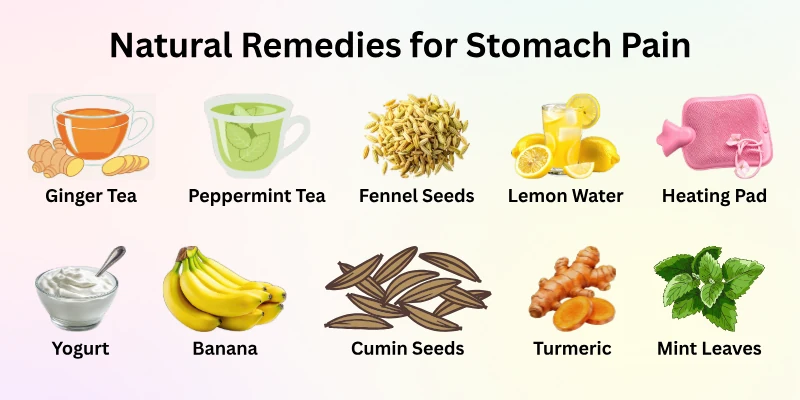
Using these remedies can improve digestion, reduce inflammation, and calm the stomach. They are easy to prepare at home and safe for regular use.
List of Remedies:
- Ginger Tea
- Peppermint Tea
- Chamomile Tea
- Fennel Seeds
- Warm Water
- Apple Cider Vinegar
- Lemon Water
- Heating Pad
- Yogurt
- Banana
- Cumin Seeds
- Turmeric
- Mint Leaves
- Hydration
- Avoiding Spicy or Fatty Foods
- Light Exercise or Walking
Let us cover all these remedies in detail.
1. Ginger Tea
Ginger is one of the most popular natural remedies for stomach pain. It contains compounds that reduce inflammation and soothe the digestive tract.
Ginger tea helps relieve nausea, bloating, and gas. Drinking ginger tea regularly may prevent stomach cramps and indigestion. It is easy to prepare and can be consumed multiple times a day.
Benefits of Ginger Tea:
- Reduces nausea and vomiting.
- Relieves gas and bloating.
- Improves digestion.
- Reduces inflammation naturally.
- Calms stomach cramps.
2. Peppermint Tea
Peppermint has cooling properties that relax the muscles of the gastrointestinal tract. Peppermint tea is effective for gas, bloating, and indigestion.
Its soothing effect helps reduce abdominal cramps and discomfort. Drinking peppermint tea after meals can prevent stomach pain. It is also helpful for stress-related stomach issues.
Benefits of Peppermint Tea:
- Relaxes stomach muscles to reduce cramps.
- Eases bloating and gas.
- Supports healthy digestion.
- Reduces stress-induced stomach pain.
- Refreshing and caffeine-free.
3. Chamomile Tea
Chamomile tea is known for its calming effect on the stomach. It reduces inflammation and helps with digestive discomfort.
Chamomile can relieve gas, bloating, and mild stomach cramps. Regular consumption supports healthy digestion and relaxation. It also improves sleep and reduces stress, which can trigger stomach pain.
Benefits of Chamomile Tea:
- Relieves bloating and stomach cramps.
- Reduces inflammation naturally.
- Supports digestion.
- Calms the body and mind.
- Prevents stress-related digestive issues.
4. Fennel Seeds
Fennel seeds have been used for centuries to soothe digestive problems. They help reduce gas, bloating, and indigestion.
Chewing fennel seeds or drinking fennel tea can relieve stomach pain. Fennel also stimulates digestion and improves appetite. It is gentle enough for children and adults alike.
Benefits of Fennel Seeds:
- Reduces bloating and gas.
- Improves digestion.
- Relieves mild stomach cramps.
- Supports appetite and nutrient absorption.
- Prevents stomach discomfort after meals.
5. Warm Water
Drinking warm water is a simple and effective way to ease stomach pain. It helps relax the muscles of the digestive tract.
Warm water improves blood flow and reduces cramps. It also aids digestion and prevents constipation. Sipping warm water throughout the day supports overall digestive health.
Benefits of Warm Water:
- Relaxes stomach muscles.
- Improves digestion.
- Reduces cramps and bloating.
- Prevents constipation.
- Supports natural detoxification.
6. Apple Cider Vinegar
Apple cider vinegar can balance stomach acid and improve digestion. Mixing a teaspoon of vinegar in warm water may relieve indigestion.
It helps break down food and reduces bloating. Apple cider vinegar also supports gut health. Regular use may prevent recurring stomach discomfort.
Benefits of Apple Cider Vinegar:
- Improves digestion.
- Reduces bloating and gas.
- Supports healthy gut bacteria.
- Relieves mild stomach cramps.
- Balances stomach acidity.
7. Lemon Water
Lemon water stimulates digestion and supports detoxification. Its mild acidity helps break down food in the stomach. Drinking lemon water in the morning can prevent bloating and constipation. It also boosts hydration and metabolism. Lemon water is easy to prepare and refreshing.
Benefits of Lemon Water:
- Improves digestion and metabolism.
- Reduces bloating.
- Supports detoxification.
- Hydrates the body naturally.
- Prevents mild stomach discomfort.
8. Heating Pad
A heating pad applied to the abdomen can relax stomach muscles. Heat increases blood flow, reducing pain and cramps.
It is especially useful for menstrual cramps and digestive discomfort. Heating pads are safe and can be used for 15–20 minutes at a time.
Benefits of Heating Pad:
- Relaxes stomach muscles.
- Reduces cramps and abdominal pain.
- Improves blood flow to the area.
- Provides quick relief.
- Safe and easy to use.
9. Yogurt
Yogurt contains probiotics that improve gut health. Eating yogurt can restore healthy bacteria and prevent bloating. Probiotics reduce inflammation and support digestion. Yogurt is mild and suitable for sensitive stomachs. Regular consumption can prevent recurring stomach pain.

Benefits of Yogurt:
- Supports healthy gut bacteria.
- Reduces bloating and gas.
- Improves digestion.
- Reduces inflammation.
- Prevents recurring stomach pain.
10. Banana
Bananas are a gentle fruit that is easy on the stomach. They are rich in fiber and potassium, which help regulate digestion. Eating a banana can soothe stomach irritation and prevent acid reflux. It helps restore electrolytes lost due to diarrhea or stomach upset. Bananas also support gut health and provide a mild energy boost.
Benefits of Banana:
- Soothes irritated stomach lining.
- Reduces acid reflux naturally.
- Improves digestion and bowel regularity.
- Restores electrolytes lost from stomach upset.
- Provides gentle energy for recovery.
11. Cumin Seeds
Cumin seeds are a traditional remedy for digestion and stomach pain. They contain compounds that relieve gas, bloating, and cramps.
Chewing cumin seeds or drinking cumin water improves digestive enzyme activity. Cumin also has mild anti-inflammatory properties. Regular use may prevent indigestion after heavy meals. Cumin is easy to include in daily diet.
Benefits of Cumin Seeds:
- Relieves gas and bloating.
- Reduces stomach cramps.
- Improves digestive enzyme activity.
- Prevents indigestion naturally.
- Supports overall gut health.
12. Turmeric
Turmeric contains curcumin, a natural anti-inflammatory compound. It helps reduce stomach inflammation and digestive discomfort.
Drinking turmeric tea or adding it to meals can soothe cramps and pain. Turmeric also supports liver health and detoxification. Its mild flavor blends well with warm beverages or food. Regular consumption promotes long-term gut health.
Benefits of Turmeric:
- Reduces stomach inflammation.
- Relieves mild stomach pain.
- Supports liver and digestive health.
- Prevents recurring digestive issues.
- Acts as a natural anti-inflammatory agent.
13. Mint Leaves
Mint leaves are cooling and soothing for the digestive system. Drinking mint tea or chewing fresh leaves helps reduce gas, bloating, and stomach cramps. Mint improves digestion and relieves nausea naturally.
It also calms the stomach lining and promotes relaxation. Mint can be combined with other teas like ginger or chamomile. Regular use prevents mild digestive discomfort.
Benefits of Mint Leaves:
- Soothes stomach muscles.
- Reduces gas and bloating.
- Relieves nausea naturally.
- Promotes calm digestion.
- Enhances relaxation.
14. Hydration
Staying hydrated is essential for proper digestion and gut health. Water helps move food through the digestive tract and prevents constipation. Adequate hydration reduces stomach cramps and bloating.
Herbal teas or warm water can complement regular water intake. Dehydration often worsens stomach pain and discomfort. Drinking enough water daily supports overall health.
Benefits of Hydration:
- Prevents constipation and bloating.
- Reduces stomach cramps.
- Supports smooth digestion.
- Helps flush out toxins.
- Maintains overall gut health.
15. Avoiding Spicy or Fatty Foods
Spicy and fatty foods can irritate the stomach lining and worsen pain. Avoiding them helps prevent acid reflux and indigestion.
Mild meals reduce bloating and cramps. Focus on easily digestible foods like rice, bananas, or yogurt. Avoiding triggering foods allows the stomach to heal. Regular dietary adjustments support long-term digestive health.
Benefits of Avoiding Spicy/Fatty Foods:
- Reduces stomach irritation.
- Prevents acid reflux and indigestion.
- Lowers bloating and cramps.
- Supports the healing of the stomach lining.
- Promotes long-term digestive comfort.
16. Light Exercise or Walking
Gentle exercise and walking help stimulate digestion and relieve stomach discomfort. Physical activity improves blood flow to the digestive organs. Walking after meals reduces bloating and gas naturally.
Exercise also helps relieve stress, which can trigger stomach pain. Light activities prevent constipation and improve overall gut motility. Regular exercise supports a healthy digestive system.
Benefits of Light Exercise/Walking:
- Reduces bloating and gas.
- Improves digestion and gut motility.
- Relieves stress-related stomach pain.
- Prevents constipation.
- Supports overall digestive health.
Personalized Guide for Stomach Pain Relief
Everyone’s stomach reacts differently, so remedies can be personalized. Ginger or peppermint for nausea. Chamomile for stress-induced pain. Fennel for bloating after meals. Warm water or heating pads for cramps. Adjust remedies based on severity and cause of pain.
Additional Tips for Stomach Health
- Avoid fried, spicy, and fatty foods.
- Eat smaller, frequent meals.
- Stay hydrated with water and herbal teas.
- Engage in light exercise like walking after meals.
- Manage stress with relaxation techniques.
Final Note
In this guide, we have covered the most effective 16 natural remedies for stomach pain.
My personal advice is to combine herbal teas, warm remedies, and lifestyle changes for quick relief. Listening to your body and using natural remedies regularly can prevent stomach discomfort. Stay mindful of your digestion and enjoy a pain-free life!
FAQs: Remedies for Stomach Pain
The following are some of the most frequently asked questions concerning the best ways to relieve stomach pain:
Ginger, peppermint, and chamomile teas are most effective. They soothe the stomach and reduce bloating. Drinking them after meals can prevent discomfort.
Yes, warm water relaxes the stomach muscles. It improves blood flow and aids digestion. Sipping warm water throughout the day helps prevent pain.
Yes, it balances stomach acid and improves digestion. Mix with warm water for relief. It can prevent bloating and discomfort.
Yogurt contains probiotics that restore healthy gut bacteria. It improves digestion and reduces inflammation. Regular intake prevents recurring stomach pain.
Yes, fennel seeds aid digestion and reduce gas. Chew seeds or drink fennel tea after meals. They provide natural, gentle relief.
It relaxes abdominal muscles and increases blood flow. Heating pads reduce cramps quickly. They are safe and easy to use.
Yes, bananas are gentle on the stomach. They soothe irritation and improve digestion. They are ideal for sensitive stomachs.
Yes, turmeric has anti-inflammatory properties. Drinking turmeric tea relieves mild stomach pain. It also supports overall gut health.
Use remedies as needed for mild discomfort. Regular use of herbal teas and warm remedies prevents recurring pain. Adjust according to severity.
Yes, avoiding spicy and fatty foods helps. Eating smaller meals, staying hydrated, and exercising improves digestion. Managing stress reduces stomach discomfort naturally.






- Be Respectful
- Stay Relevant
- Stay Positive
- True Feedback
- Encourage Discussion
- Avoid Spamming
- No Fake News
- Don't Copy-Paste
- No Personal Attacks
- Be Respectful
- Stay Relevant
- Stay Positive
- True Feedback
- Encourage Discussion
- Avoid Spamming
- No Fake News
- Don't Copy-Paste
- No Personal Attacks
