Symptoms of Poor Blood Circulation You Should Never Ignore
Published: 19 May 2026
Poor blood circulation can affect your whole body and daily life. Many people feel these signs but do not understand the real reason behind them.
In this guide, you will learn what poor blood circulation is, why it happens, and how it affects your body. We will clearly explain the symptoms of poor blood circulation in simple words. This guide will help you identify early warning signs and understand when you should take action.
Let’s dig in!
Symptoms of Poor Blood Circulation
Poor blood circulation means that blood is not flowing properly to all parts of your body. When blood flow slows down, oxygen and nutrients do not reach your organs well. This can cause many physical and visible problems.
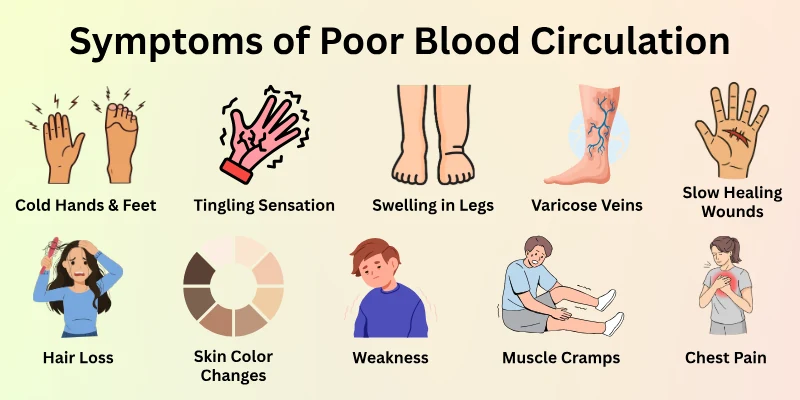
Some symptoms feel mild at first but can become serious over time. Here are the most common symptoms of poor blood circulation that you should never ignore.
- Cold Hands and Feet
- Numbness or Tingling Sensation
- Swelling in Legs, Feet, or Ankles
- Muscle Cramps or Pain
- Fatigue and Weakness
- Slow Healing Wounds
- Skin Color Changes
- Hair Loss on Legs
- Varicose Veins
- Chest Pain or Shortness of Breath
Let us cover all symptoms of poor blood circulation in detail below.
1. Cold Hands and Feet
Cold hands and feet are one of the earliest signs of poor blood circulation. When blood flow slows, less warm blood reaches your fingers and toes. This makes them feel cold even in normal weather. You may notice this more during rest or sleep. Over time, the cold feeling can last longer. This symptom often appears in people with circulation problems or low physical activity.
You may notice:
- Cold fingers even in warm rooms
- Cold toes at night
- Pale skin on hands or feet
2. Numbness or Tingling Sensation
Numbness or tingling feels like pins and needles in your hands or feet. This happens when nerves do not receive enough oxygen-rich blood. Poor circulation puts pressure on nerves and reduces sensation. You may feel this after sitting or standing too long. If ignored, this symptom can become frequent.
You may notice:
- Tingling in fingers
- Numb toes after walking
- Reduced feeling in hands
3. Swelling in Legs, Feet, or Ankles
Swelling happens when blood pools in the lower body. Poor blood circulation makes it hard for blood to return to the heart. This causes fluid buildup in legs and ankles. Swelling often worsens after long sitting or standing. Tight shoes or socks may feel uncomfortable.
You may notice:
- Puffy ankles
- Tight skin on legs
- Swelling that improves after rest
4. Muscle Cramps or Pain
Muscle pain and cramps occur when muscles lack oxygen. Poor blood flow means muscles do not get enough nutrients. Pain often appears during walking or physical activity. Rest may reduce pain but it returns again. This symptom is common in circulation disorders.
You may notice:
- Leg pain while walking
- Night cramps
- Muscle tightness
5. Fatigue and Weakness
Poor circulation reduces energy delivery to your body. This makes you feel tired even without hard work. Your muscles feel weak due to low oxygen supply. Daily tasks may feel exhausting. Fatigue often worsens during physical movement.
You may notice:
- Low energy levels
- Heavy legs
- Weak grip strength
6. Slow Healing Wounds
Cuts and wounds need good blood flow to heal. Poor circulation slows the healing process. Wounds stay open longer and risk infection. This is common in legs and feet. Ignoring this can lead to serious complications.
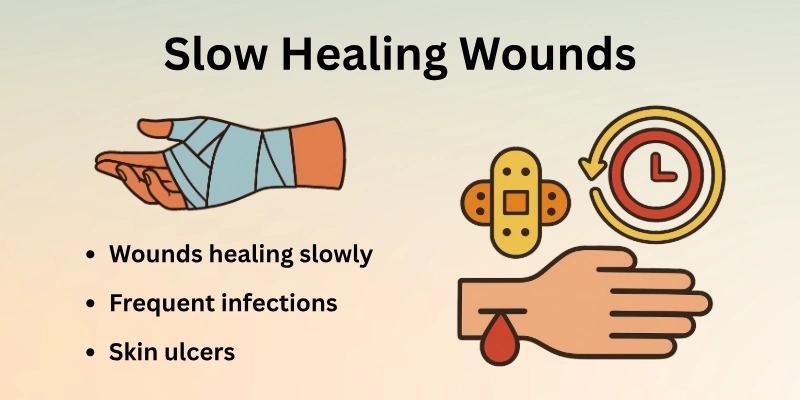
You may notice:
- Wounds healing slowly
- Frequent infections
- Skin ulcers
7. Skin Color Changes
Poor blood flow changes skin color. Skin may look pale, bluish, or purple. This happens because oxygen-rich blood does not reach the skin. Color changes appear more in hands and feet. Skin may also feel cool to touch.
You may notice:
- Pale skin
- Blue or purple tone
- Uneven skin color
8. Hair Loss on Legs
A healthy blood flow is necessary for the growth of hair. When circulation is poor, hair follicles become weaker. The legs will experience hair loss or thinning as a result of this. Perhaps the skin appears glossy and smooth. In many cases, this symptom is disregarded.
You may notice:
- Hair thinning on legs
- Smooth shiny skin
- Dry skin patches
9. Varicose Veins
Varicose veins are a condition that develops when blood pools in veins. Weak vein walls are a result of poor circulation. As a result, veins become twisted and swollen. It is possible to see them on the feet and legs. This issue is made worse by lengthy periods of standing.
You may notice:
- Bulging veins
- Leg heaviness
- Aching legs
10. Chest Pain or Shortness of Breath
Severe circulation problems affect the heart and lungs. Poor blood flow can cause chest pain. You may feel breathless during activity. This symptom needs urgent medical attention. Never ignore chest discomfort.
You may notice:
- Chest tightness
- Short breathing
- Fast heartbeat
Causes That Can Worsen Poor Blood Circulation
Poor blood circulation often becomes worse due to daily lifestyle habits. Many people unknowingly follow routines that slow down healthy blood flow. These causes slowly reduce oxygen and nutrient supply to different body parts.
Over time, they increase the risk of serious circulation problems. Understanding these causes helps you make better health choices early.
- Sitting for Long Hours: Sitting for many hours slows blood flow in the legs and causes blood to pool in the lower body.
- Lack of Physical Activity: Not moving enough weakens the heart and reduces the body’s ability to pump blood efficiently.
- Smoking Habits: Smoking damages blood vessels and reduces oxygen levels in the blood, which harms circulation.
- Poor Diet Choices: Eating unhealthy foods increases fat buildup in arteries and blocks smooth blood flow.
- Excess Body Weight: Extra body weight puts pressure on blood vessels and makes circulation harder.
- High Stress Levels: Constant stress tightens blood vessels and reduces proper blood flow throughout the body.
Final Note
In this guide, we have covered symptoms of poor blood circulation in complete detail. We explained how each symptom appears and why it happens. If you notice these signs early, you can protect your health. I personally suggest improving movement, eating healthy foods, and avoiding long sitting hours.
Thank you for reading this guide on symptoms of poor blood circulation, take care of your body, stay active, and goodbye.
FAQs: Symptoms of Poor Blood Circulation
Here are some of the most commonly asked questions related to the symptoms of poor blood circulation:
Early symptoms of poor blood circulation include cold hands and feet, numbness, and tingling. You may also feel mild swelling in your legs or feet. These signs often appear slowly and worsen with time. Early action can help prevent serious problems.
Yes, poor blood circulation can make you feel tired and weak. Your body does not get enough oxygen and nutrients. This lowers your energy level. You may feel exhausted even after rest.
Cold hands and feet are common symptoms of poor blood circulation. Blood does not flow properly to your fingers and toes. This reduces warmth in those areas. It often happens during rest or cold weather.
Yes, numbness is a common symptom of poor blood circulation. It happens when nerves do not get enough blood supply. You may feel pins and needles. This usually affects hands and feet.
Poor blood circulation can cause swelling in legs and ankles. Blood collects in the lower body due to weak flow. This leads to fluid buildup. Swelling often increases after long sitting or standing.
Yes, slow healing wounds are a symptom of poor blood circulation. Blood helps repair damaged skin. When blood flow is weak, healing becomes slow. This can increase the risk of infection.
Poor blood circulation can change skin color. Skin may look pale, blue, or purple. This happens due to low oxygen in the blood. These changes appear mostly in hands and feet.
Yes, muscle cramps can be symptoms of poor blood circulation. Muscles do not receive enough oxygen during movement. This causes pain and tightness. Cramps often happen in legs.
High stress can worsen symptoms of poor blood circulation. Stress tightens blood vessels. This reduces blood flow. Over time, symptoms become more noticeable.
You should worry if symptoms of poor blood circulation become frequent or painful. Chest pain or shortness of breath needs urgent care. Long-lasting numbness or swelling should not be ignored. Early medical advice can prevent complications.


- Be Respectful
- Stay Relevant
- Stay Positive
- True Feedback
- Encourage Discussion
- Avoid Spamming
- No Fake News
- Don't Copy-Paste
- No Personal Attacks
- Be Respectful
- Stay Relevant
- Stay Positive
- True Feedback
- Encourage Discussion
- Avoid Spamming
- No Fake News
- Don't Copy-Paste
- No Personal Attacks
