Tips to Improve Brain Function: Natural Ways to Boost Brain Health
Published: 22 May 2026
Your brain is the control center of your body, responsible for thinking, memory, focus, and decision-making. Many people experience forgetfulness, lack of focus, or mental fatigue, which can affect daily life. The good news is that you can improve brain function naturally with simple lifestyle changes, diet adjustments, and mental exercises.
In this guide, you will learn the best tips to improve brain function, including food choices, habits, exercises, and techniques to boost memory, focus, and overall brain health.
Let’s get started!
Tips to Improve Brain Function
Brain function depends on several factors, including blood flow, nutrients, mental activity, and sleep. Poor habits like irregular sleep, unhealthy diet, stress, and lack of exercise can slow brain performance.
On the other hand, consistent healthy routines, good nutrition, and mental stimulation can sharpen memory, improve focus, and enhance cognitive abilities.
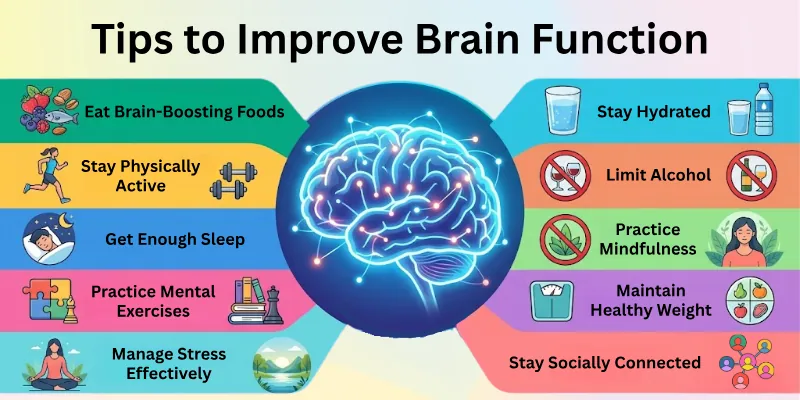
Here are some of the best tips to improve brain function naturally and effectively:
- Eat Brain-Boosting Foods
- Stay Physically Active
- Get Enough Sleep
- Practice Mental Exercises
- Manage Stress Effectively
- Stay Hydrated
- Limit Alcohol and Avoid Smoking
- Practice Mindfulness and Meditation
- Maintain a Healthy Weight
- Stay Socially Connected
Let us cover all in detail.
1. Eat Brain-Boosting Foods
Certain foods provide nutrients that support brain health. Foods rich in omega-3 fatty acids, antioxidants, and vitamins help improve memory and focus. Examples include fish, nuts, seeds, berries, and leafy green vegetables.
Tips for Best Results:
- Include salmon, sardines, and mackerel for omega-3.
- Eat blueberries, strawberries, and dark chocolate for antioxidants.
- Add spinach, kale, and broccoli for vitamins and minerals.
2. Stay Physically Active
Physical activity increases blood flow to the brain, delivering oxygen and nutrients. Regular exercise also promotes the growth of new brain cells and improves cognitive function. Even light exercises like walking or stretching have benefits.
Tips for Best Results:
- Walk 30 minutes daily.
- Include yoga or light stretching to reduce stress.
- Try aerobic exercises for better brain oxygenation.
3. Get Enough Sleep
Sleep is critical for memory, focus, and overall brain health. During sleep, the brain consolidates memories and removes toxins. Lack of sleep can lead to forgetfulness, poor concentration, and slower thinking.
Tips for Best Results:
- Aim for 7–8 hours of sleep daily.
- Maintain a consistent sleep schedule.
- Avoid screens at least 1 hour before bed.
4. Practice Mental Exercises
In order for your brain to remain sharp, it requires mental stimulation. Memory can be improved and neural connections strengthened through activities such as reading, solving puzzles, or learning a new skill. Learning throughout one’s life helps to maintain a healthy and active brain.
Tips for Best Results:
- Solve crosswords, Sudoku, or logic puzzles.
- Learn a new language or musical instrument.
- Read books or articles regularly to stimulate thinking.
5. Manage Stress Effectively
Stress raises cortisol levels, which over time can harm brain tissue. Decision-making, concentration, and memory are all impacted by ongoing stress. In order to preserve brain function naturally, stress management is crucial.
Tips for Best Results:
- Practice meditation or deep breathing daily.
- Take short breaks during work or study.
- Engage in hobbies like painting, gardening, or music.
6. Stay Hydrated
Focus, memory, and alertness are all cognitive abilities that are negatively impacted by dehydration. Consuming an adequate amount of water helps to maintain proper nerve function and keeps the brain sufficiently hydrated.

Tips for Best Results:
- Drink at least 6–8 glasses of water daily.
- Include herbal teas and natural fruit juices.
- Avoid excessive sugary drinks and caffeine.
7. Limit Alcohol and Avoid Smoking
Smoking and alcohol have a detrimental effect on brain function. They impair memory and learning, lower blood flow, and harm brain cells. Natural improvements in brain health can be achieved by reducing or avoiding these substances.
Tips for Best Results:
- Limit alcohol consumption or avoid it entirely.
- Quit smoking and exposure to second-hand smoke.
- Replace habits with brain-friendly activities like walking or reading.
8. Practice Mindfulness and Meditation
Mindfulness improves attention, focus, and memory. Meditation reduces stress and enhances brain plasticity, allowing better learning and memory retention. Regular mindfulness exercises also boost emotional intelligence.
Tips for Best Results:
- Meditate 10–20 minutes daily.
- Practice mindful breathing throughout the day.
- Use guided meditation apps if needed.
9. Maintain a Healthy Weight
The risk of cognitive decline is increased when there is an excess of body weight and obesity, both of which affect blood flow. The maintenance of a healthy weight is beneficial to brain function and helps to prevent memory problems.
Tips for Best Results:
- Eat balanced meals with proper nutrients.
- Combine diet with regular physical activity.
- Monitor weight and body composition regularly.
10. Stay Socially Connected
Participating in social activities helps to keep the brain active and minimizes the likelihood of mental decline. Brain activity is stimulated and cognitive performance is improved when people engage in activities such as talking, discussing ideas, and engaging with friends or family.
Tips for Best Results:
- Meet friends and family regularly.
- Join clubs or community activities.
- Engage in meaningful conversations daily.
Daily Habits That Boost Brain Function
Daily habits play a key role in keeping your brain sharp and active. Small, consistent actions every day can improve memory, focus, and overall cognitive performance.
Along with proper diet and exercise, these habits support long-term brain health naturally. Practicing them regularly strengthens your mind and keeps it energized throughout the day.
- Eat Small, Nutritious Meals Throughout the Day: Fuel your brain with steady energy and essential nutrients.
- Take Short Mental Breaks During Work or Study: Give your brain time to rest and improve focus.
- Avoid Multitasking to Improve Focus: Concentrate on one task at a time for better mental clarity.
- Practice Gratitude and Positive Thinking: Boost brain health by reducing stress and promoting emotional well-being.
- Keep Learning New Skills or Hobbies Regularly: Challenge your brain to build new neural connections and enhance cognitive function.
Final Note
In this guide, we have covered tips to improve brain function in detail. From eating brain-boosting foods and exercising to managing stress and staying socially active, these methods naturally enhance memory, focus, and mental performance. I personally recommend combining these tips consistently for long-term brain health.
Thank you for reading this guide on tips to improve brain function, take care of your mind, stay active, and goodbye.
FAQs: Tips to Improve Brain Function
Here are some of the most commonly asked questions related to how to improve brain functions:
Eating brain-boosting foods, staying physically active, getting enough sleep, and practicing mental exercises are easy ways. These habits improve memory, focus, and overall mental performance. Daily consistency is key.
Yes, exercise increases blood flow to the brain and delivers oxygen and nutrients. Regular physical activity also promotes new brain cell growth and better cognitive function. Even light exercise like walking helps.
Foods rich in omega-3, antioxidants, and vitamins help boost brain function. Examples include fish, nuts, seeds, berries, and leafy greens. These foods improve memory and focus naturally.
Sleep is critical for memory, focus, and learning. During sleep, the brain consolidates memories and removes toxins. Lack of sleep can lead to forgetfulness and slow thinking.
Yes, chronic stress raises cortisol levels, which can damage brain cells over time. Stress reduces focus, memory, and decision-making ability. Managing stress through meditation or relaxation helps protect the brain.
Yes, dehydration reduces focus, alertness, and memory. Drinking enough water keeps the brain hydrated and supports proper nerve function. Herbal teas and natural juices also help.
Yes, meditation and mindfulness improve focus, attention, and memory. They reduce stress and enhance brain plasticity for better learning and thinking. Daily practice is most effective.
Learning new skills challenges the brain and strengthens neural connections. It improves memory, creativity, and problem-solving abilities. Hobbies and new activities keep the brain active.
Yes, social activities stimulate brain regions linked to memory, reasoning, and emotional intelligence. Talking, sharing ideas, and engaging with friends or family improves cognitive health.
Yes, alcohol and smoking damage brain cells and reduce blood flow. Limiting or avoiding them supports better memory, focus, and overall brain health naturally.






- Be Respectful
- Stay Relevant
- Stay Positive
- True Feedback
- Encourage Discussion
- Avoid Spamming
- No Fake News
- Don't Copy-Paste
- No Personal Attacks
- Be Respectful
- Stay Relevant
- Stay Positive
- True Feedback
- Encourage Discussion
- Avoid Spamming
- No Fake News
- Don't Copy-Paste
- No Personal Attacks
