Best Foods for Rainy Season: Healthy Monsoon Diet Guide
Published: 10 Aug 2026
Rainy days often bring cravings for hot snacks, warm drinks, and comforting meals. While enjoying seasonal favorites can be tempting, the rainy season also increases the risk of digestive issues, infections, and seasonal illnesses. This makes it important to choose foods that not only satisfy your cravings but also support your overall health.
Adding the right foods for the rainy season to your daily diet can help strengthen immunity, improve digestion, and keep you energized throughout the monsoon months. From warming spices and nourishing soups to seasonal fruits and healthy grains, many foods provide valuable nutrients that help the body adapt to changing weather conditions.
In this guide, you’ll discover the best foods for rainy season, including immunity-boosting ingredients, healthy monsoon foods, comforting meals, and smart dietary choices. You’ll also learn which foods to avoid and how to build a balanced rainy season diet that supports your health and well-being.
Best Foods for Rainy Season
Choosing the right foods for rainy season can help support immunity, improve digestion, and keep you feeling energized during damp and humid weather. A balanced rainy season diet should include nourishing meals, seasonal produce, and warm beverages that promote overall well-being.
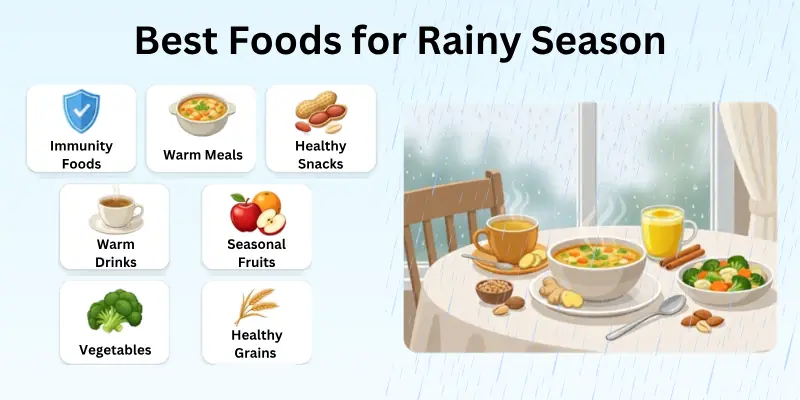
Explore these healthy foods for rainy season and discover what to eat in rainy season to stay healthy, comfortable, and prepared for seasonal changes.
- Immunity-Boosting Foods for Rainy Season
- Warm and Comforting Meals for Rainy Days
- Healthy Rainy Day Snacks
- Warm Drinks for Rainy Season
- Seasonal Fruits for Rainy Season
- Best Vegetables for Rainy Season
- Healthy Grains and Nutritious Foods
Let’s explore each category in detail.
1. Immunity-Boosting Foods
The rainy season can increase the risk of common infections and seasonal illnesses. Including immunity-supporting foods in your rainy season diet may help your body stay healthy and better adapt to changing weather conditions.
- Ginger
- Garlic
- Turmeric
- Honey
- Citrus Fruits
Let’s explore some of the best immunity-boosting foods for rainy season.
Ginger
Ginger is a popular rainy season food known for its warming properties and digestive benefits. It is often included among the best foods for rainy season because it may help support overall comfort during damp and chilly weather.
Tip: Enjoy ginger in tea, soups, or other warm homemade drinks.
Garlic
Garlic contains natural compounds that may help support the body’s immune system during seasonal changes. Its strong flavor and versatility make it one of the healthy foods for rainy season that can easily be added to everyday meals.
Tip: Add fresh garlic to soups, curries, and vegetable dishes.
Turmeric
Turmeric is widely valued for its antioxidant and anti-inflammatory properties. Adding turmeric to a balanced rainy season diet may help support overall health and wellness during the monsoon months.
Tip: Use turmeric in curries, soups, or warm milk.
Honey
Honey is a natural sweetener that is often enjoyed during rainy weather. It provides a soothing touch to warm beverages and can be a simple addition to healthy monsoon foods.
Tip: Stir honey into warm tea or herbal drinks.
Citrus Fruits
Citrus fruits such as oranges, lemons, and limes are rich in vitamin C and other beneficial nutrients. They are among the best foods to eat in rainy season for those looking to add more fresh and nutritious options to their diet.
Tip: Enjoy whole citrus fruits or add fresh lemon juice to meals and drinks.
2. Warm and Comforting Meals
Warm meals can feel especially satisfying on cool and rainy days. They are easy to enjoy, filling, and can be a great addition to a balanced rainy season diet.
Here are some comforting foods to eat during the rainy season.
- Chicken Soup
- Tomato Soup
- Dal Soup
- Khichdi
- Vegetable Rice Bowl
Chicken Soup
Chicken soup is a classic comfort food that many people enjoy during wet and chilly weather. It is warm, nourishing, and easy to prepare, making it a popular choice for rainy days.
Tip: Add vegetables and herbs for extra flavor and nutrition.
Tomato Soup
Tomato soup offers a rich flavor and a smooth texture that pairs well with rainy weather. It is light yet satisfying and can be enjoyed as a snack or a light meal.
Tip: Serve it warm with whole-grain toast or crackers.
Dal Soup
Dal soup is a simple and nutritious dish made from lentils. It provides plant-based protein and fits well into healthy monsoon foods that are both filling and comforting.
Tip: Add ginger, garlic, or turmeric for extra flavor.
Khichdi
Khichdi combines rice and lentils into a soft and comforting meal. Many people choose it during the rainy season because it is light, easy to eat, and satisfying.
Tip: Pair khichdi with yogurt or cooked vegetables.
Vegetable Rice Bowl
A vegetable rice bowl combines cooked vegetables with rice to create a balanced meal. It is an easy way to include a variety of foods for rainy season in one dish.
Tip: Use seasonal vegetables and limit heavy sauces for a healthier meal.
3. Healthy Rainy Day Snacks
Rainy weather often brings cravings for tasty snacks between meals. Choosing homemade and nutritious options can help you enjoy your favorite treats while maintaining a healthy rainy season diet.
Here are some healthy rainy day snacks to enjoy during the monsoon.
- Corn on the Cob
- Roasted Nuts & Dry Fruits
- Homemade Pakoras
- Homemade Samosas
Corn on the Cob
Corn on the cob is a seasonal favorite that many people enjoy during rainy weather. It offers a satisfying texture and natural sweetness, making it a simple snack for monsoon evenings.
Tip: Roast or boil corn and season it with lemon juice and spices.
Roasted Nuts & Dry Fruits
Roasted nuts and dry fruits make a convenient snack when you need something quick and filling. They add variety to monsoon foods and can be enjoyed at home or on the go.
Tip: Enjoy them in small portions as part of a balanced diet.
Homemade Pakoras
Pakoras are a popular rainy day treat that pairs well with a cup of hot tea. Preparing them at home allows you to control the ingredients and enjoy them fresh.
Tip: Use a variety of vegetables and avoid excessive oil.
Homemade Samosas
Homemade samosas can be a flavorful addition to rainy day gatherings and evening snacks. Making them at home gives you more control over the filling and cooking method.
Tip: Choose vegetable fillings and enjoy them in moderation.
4. Warm Drinks and Beverages
A warm drink can make rainy days feel more comforting and relaxing. These beverages pair well with monsoon foods and can be enjoyed throughout the day.
Here are some warm drinks for the rainy season that many people enjoy during wet and chilly weather.
- Masala Chai
- Ginger Lemon Tea
- Herbal Decoction
- Golden Milk
Masala Chai
Masala chai is a favorite rainy day beverage known for its rich aroma and comforting taste. The blend of tea and spices makes it a popular choice during cool and damp weather.
Tip: Enjoy it fresh and pair it with a light homemade snack.
Ginger Lemon Tea
Ginger lemon tea combines the warmth of ginger with the refreshing taste of lemon. It is a simple drink that fits well into a healthy rainy season diet.
Tip: Serve it warm and adjust the lemon to suit your taste.
Herbal Decoction
A herbal decoction is made by simmering ingredients such as tulsi, cloves, and cinnamon in water. Many households enjoy this traditional drink during the monsoon season.
Tip: Prepare it fresh and serve it warm for the best flavor.
Golden Milk
Golden milk is a warm beverage made with milk and turmeric. Its creamy texture and comforting taste make it a popular addition to monsoon evenings.
Tip: Drink it before bedtime as a soothing nighttime beverage.
5. Seasonal Fruits
Fresh fruits can be a healthy addition to your meals during the monsoon season. They provide important nutrients and add natural sweetness to a balanced rainy season diet.
Here are some seasonal fruits that fit well into healthy foods for rainy season.
- Pomegranate
- Apples
- Pears
Pomegranate
Pomegranate is known for its juicy seeds and refreshing taste. It makes a nutritious snack and is easy to include in meals, fruit bowls, and salads prepared at home.
Tip: Enjoy fresh pomegranate seeds as a snack or topping.
Apples
Apples are easy to store, carry, and enjoy as a quick snack. Their crisp texture and naturally sweet taste make them a simple addition to a balanced rainy season diet.
Tip: Wash apples thoroughly and enjoy them fresh with the skin on.
Pears
Pears have a soft, juicy texture that makes them a refreshing choice during humid weather. They can be enjoyed on their own or added to fruit bowls for extra variety.
Tip: Choose fresh pears and avoid pre-cut fruits from street vendors.
6. Vegetables for Rainy Season
Cooked vegetables can be a valuable part of a healthy rainy season diet. They add variety to meals and can be enjoyed in soups, curries, and other homemade dishes.
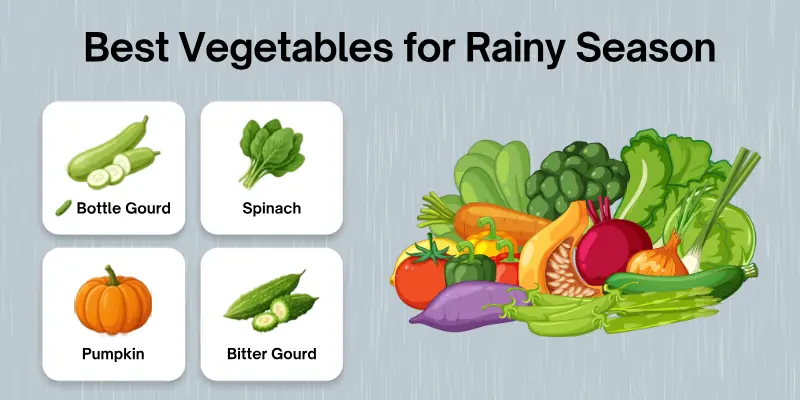
Here are some vegetables that are commonly included in foods for the rainy season.
- Bottle Gourd (Lauki)
- Bitter Gourd (Karela)
- Pumpkin
- Spinach
Bottle Gourd (Lauki)
Bottle gourd is a light vegetable that works well in a variety of home-cooked meals. Its mild flavor makes it easy to pair with spices, lentils, and other ingredients.
Tip: Use bottle gourd in curries, soups, or stews for a simple meal.
Bitter Gourd (Karela)
Bitter gourd has a distinct taste that makes it stand out from other vegetables. Many people include it in monsoon foods as part of their regular meal routine.
Tip: Cook it with onions and spices to balance its bitterness.
Pumpkin
Pumpkin adds natural sweetness and a soft texture to many dishes. It can be used in soups, curries, and side dishes, making it a versatile vegetable for the rainy season.
Tip: Roast or cook pumpkin with your favorite seasonings.
Spinach
Spinach is a leafy green that can add color and nutrients to everyday meals. During the rainy season, many people prefer to eat it cooked rather than raw.
Tip: Wash spinach thoroughly and cook it before serving.
7. Healthy Grains and Other Nutritious Foods
Adding wholesome ingredients to your meals can help create a balanced rainy season diet. These foods provide variety and can be used in many simple and satisfying recipes.
Here are some nutritious foods to include in your rainy season meals.
- Oats
- Quinoa
- Sweet Potatoes
- Mushrooms
Oats
Oats are a versatile whole grain that can be enjoyed for breakfast or as a light meal. Their mild flavor makes them easy to pair with fruits, nuts, and other healthy foods for the rainy season.
Tip: Prepare warm oatmeal and top it with fresh fruit or nuts.
Quinoa
Quinoa is a nutrient-rich grain that works well in salads, bowls, and side dishes. It is easy to combine with vegetables and other monsoon foods for a balanced meal.
Tip: Use cooked quinoa as a base for grain bowls and vegetable dishes.
Sweet Potatoes
Sweet potatoes have a naturally sweet taste and a soft texture when cooked. They make a filling addition to meals and snacks during the rainy season.
Tip: Roast or boil sweet potatoes for a simple and satisfying dish.
Mushrooms
Mushrooms add a rich, savory flavor to soups, stir-fries, and curries. Their versatility makes them a popular ingredient in many homemade rainy season recipes.
Tip: Cook mushrooms thoroughly before adding them to meals.
Foods to Avoid During the Rainy Season
Choosing the right foods is important during the monsoon, but knowing what to avoid matters just as much. Certain foods may spoil more quickly in humid conditions or increase the risk of digestive discomfort when not handled properly.
To maintain a healthy rainy season diet, it is best to limit or avoid the following foods.
- Raw Salads: Raw vegetables can carry dirt, bacteria, and other contaminants if they are not washed properly. During the rainy season, many people prefer cooked vegetables because heat helps reduce potential food safety risks.
- Street Food and Cut Fruits: Street food and pre-cut fruits may be exposed to dust, insects, and unhygienic handling. Choosing freshly prepared meals and whole fruits can be a safer option during wet weather.
- Seafood: Seafood may spoil faster if it is not stored and handled correctly. Since freshness can sometimes be difficult to judge, many people choose to be extra cautious when consuming seafood during the monsoon.
- Fried and Oily Foods: Deep-fried foods can feel heavy and may cause discomfort when eaten in large amounts. While occasional treats are fine, moderation is important for a balanced rainy season diet.
- Cold Drinks and Ice Cream: Cold beverages and frozen desserts are popular treats, but many people prefer warm foods and drinks during rainy weather. Warm options often feel more comforting on cool and damp days.
Conclusion
In this guide, we have explored some of the best foods for rainy season, including immunity-supporting ingredients, warm meals, healthy snacks, seasonal fruits, vegetables, and nutritious grains. These foods can help you build a balanced rainy season diet while enjoying a variety of seasonal flavors.
Choosing fresh, properly cooked foods and following good food hygiene practices can make a big difference during the monsoon. By including healthy foods for rainy season in your daily meals and limiting foods that may spoil quickly, you can enjoy the season while maintaining healthy eating habits.
FAQs: About Foods for Rainy Season
Below are some common questions about the best foods for rainy season and how to maintain a healthy monsoon diet.
Some of the best foods for rainy season include:
- Ginger
- Garlic
- Turmeric
- Soups
- Seasonal Fruits
- Cooked Vegetables
A balanced monsoon diet should include warm meals, nutritious grains, seasonal fruits, and freshly cooked vegetables. Many people also enjoy soups and herbal drinks during this time. Choosing fresh foods can help make meals more enjoyable during rainy weather.
Pomegranate, apples, pears, and citrus fruits are popular choices during the rainy season. These fruits provide important nutrients and natural sweetness. Always wash fruits properly before eating them.
Warm foods are often more comforting during cool and damp weather. Soups, khichdi, and other freshly cooked meals are common monsoon foods. Many people prefer them because they are satisfying and easy to enjoy.
Yes, soups are among the most popular foods to eat in the rainy season. Options such as chicken soup, tomato soup, and dal soup can be both filling and flavorful. They also pair well with other healthy rainy season foods.
Masala chai, ginger lemon tea, herbal decoctions, and golden milk are common rainy season beverages. These warm drinks are often enjoyed during wet and chilly weather. They can easily fit into a healthy monsoon diet.
Many people choose to limit the following foods during the monsoon:
- Street Food
- Pre-Cut Fruits
- Raw Salads
- Fried and Oily Foods
- Improperly Stored Seafood
Choosing fresh, properly cooked meals is often a better option during the rainy season.
Yes, roasted nuts and dry fruits can be healthy rainy day snacks when eaten in moderation. They are convenient, filling, and easy to carry. Many people include them in a balanced rainy season diet.
Yes, vegetables can be an important part of foods for monsoon season. Many people prefer cooked vegetables such as bottle gourd, pumpkin, and spinach during this time. Proper washing and cooking are important before eating them.
Focus on fresh foods, warm meals, seasonal produce, and good food hygiene practices. Try to include a variety of healthy foods for rainy season in your daily routine. Limiting heavily processed and improperly stored foods can also help.

Healthy Foods Rich in Calcium: Top 10 Natural Sources for Strong Bones & Better Health





- Be Respectful
- Stay Relevant
- Stay Positive
- True Feedback
- Encourage Discussion
- Avoid Spamming
- No Fake News
- Don't Copy-Paste
- No Personal Attacks
- Be Respectful
- Stay Relevant
- Stay Positive
- True Feedback
- Encourage Discussion
- Avoid Spamming
- No Fake News
- Don't Copy-Paste
- No Personal Attacks
