Causes of Salty Taste in the Mouth: Find Out Why It Occurs
Published: 8 Oct 2026
Have you noticed a salty taste in your mouth even though you have not eaten anything salty? It can feel confusing and even a little worrying, especially if the taste keeps coming back or does not go away. While it is often caused by something simple, such as dehydration or dry mouth, it can sometimes point to an underlying health problem.
A salty taste in the mouth can happen occasionally or last for several hours or even days. Common causes include dehydration, poor oral health, mouth or sinus infections, certain medications, and medical conditions that affect saliva or your sense of taste.
In this article, you will learn the common causes of salty taste in the mouth, the symptoms that may occur with it, available treatment options, and when you should see a doctor.
Common Causes of Salty Taste in Mouth
A salty taste in your mouth can happen for many different reasons. In some cases, the cause is simple and easy to fix, while in others it may be linked to an underlying health condition. Finding the cause is the first step toward choosing the right treatment.
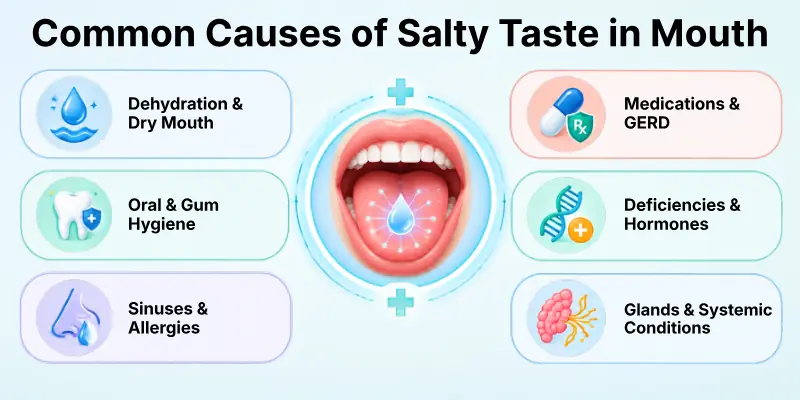
Here are the most common causes of a salty taste in the mouth and how each one can affect your sense of taste.
- Dehydration
- Dry Mouth (xerostomia)
- Poor Oral Hygiene
- Gum Disease
- Mouth Infections
- Sinus Infection or Postnasal Drip
- Allergies
- Certain Medications
- Acid Reflux (GERD)
- Nutritional Deficiencies
- Hormonal Changes
- Diabetes
- Sjögren’s Syndrome
- Neurological Conditions
- Salivary Gland Problems
Let’s look at each cause in more detail.
1. Dehydration
Dehydration happens when your body loses more fluids than it takes in. A lack of water can reduce saliva production and make the saliva more concentrated, which may create a salty taste in your mouth.
When your mouth does not have enough moisture, it can affect how you taste foods and drinks. This change in saliva can make a salty or unusual taste more noticeable.
Dehydration may happen due to:
- Not drinking enough water
- Excessive sweating
- Fever or illness
- Vomiting or diarrhea
- Intense physical activity
2. Dry Mouth (Xerostomia)
Dry mouth, also called xerostomia, is another common cause of a salty taste in the mouth. It happens when your mouth does not produce enough saliva. Since saliva helps maintain normal taste, a decrease in saliva can make flavors feel stronger or unusual.
When the mouth becomes dry, the small amount of saliva left can become more concentrated. This change may create a salty taste or a feeling that something tastes different in your mouth.
Dry mouth can happen due to:
- Dehydration
- Certain medications
- Mouth breathing
- Aging
- Stress or anxiety
- Medical conditions that affect saliva production
3. Poor Oral Hygiene
Poor oral hygiene can affect the balance of bacteria inside your mouth. When plaque, food particles, and bacteria build up on your teeth and tongue, they can change the way your saliva tastes and may create a salty or unpleasant flavor.
Without proper cleaning, these bacteria can affect your gums and overall mouth health. This may lead to taste changes that continue until the buildup and oral problems are addressed.
Poor oral hygiene may happen due to:
- Not brushing teeth regularly
- Skipping flossing
- Bacteria buildup on the tongue
- Plaque accumulation
- Missing regular dental visits
4. Gum Disease
Gum disease affects the tissues that support your teeth and can change the taste in your mouth. When bacteria build up around the gums, they can cause inflammation and release substances that may create a salty or unpleasant taste.
As gum problems progress, irritated gums may affect the quality of saliva and make taste changes more noticeable. Learning about common symptoms of gum disease can help you identify problems early.
Gum disease may develop due to:
- Plaque buildup around teeth
- Poor brushing and flossing habits
- Bacterial growth along the gumline
- Smoking or tobacco use
- Lack of regular dental checkups
5. Mouth Infections
Mouth infections can affect your saliva, taste buds, and overall oral health. When bacteria, viruses, or fungi grow inside the mouth, they may change the way you taste things and create a salty or unpleasant flavor.
These infections can cause irritation and inflammation in the mouth, which may affect saliva quality. The taste change usually continues until the infection improves.
Mouth infections may develop due to:
- Bacterial growth in the mouth
- Oral thrush (fungal infection)
- Poor oral hygiene
- Mouth injuries
- A weakened immune system
6. Sinus Infection or Postnasal Drip
Sinus infection or postnasal drip can be a cause of a salty taste in the mouth. When mucus from the nose or sinuses drains into the back of your throat, it can mix with saliva and create a salty or unpleasant taste.
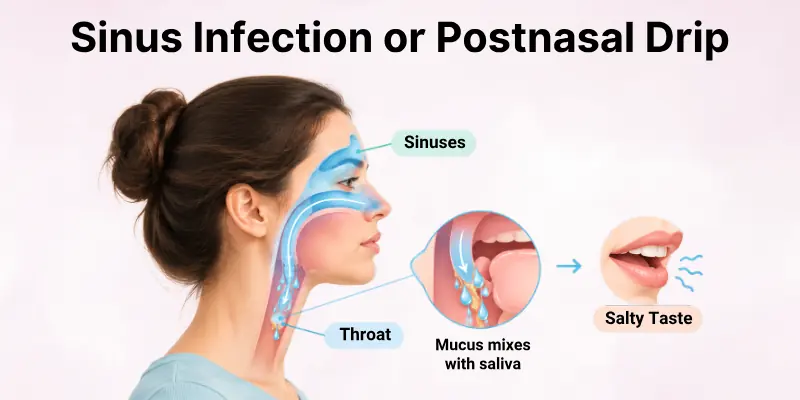
Sinus problems can also affect your sense of smell and taste, making normal flavors feel different. This change may continue until the infection or irritation in the sinuses improves.
Sinus infection or postnasal drip may happen due to:
- Cold or flu infections
- Allergies
- Sinus inflammation
- Excess mucus production
- Nasal congestion
7. Allergies
Allergies may change the way your mouth feels and how you taste things. During an allergic reaction, your body produces more mucus, which can drain into your throat and leave a salty taste in your mouth.
Nasal congestion caused by allergies can also make you breathe through your mouth. This can reduce moisture and affect saliva, leading to changes in taste.
Allergies may occur due to:
- Pollen exposure
- Dust and pet dander
- Seasonal changes
- Certain foods
- Environmental irritants
8. Certain Medications
Some medications can change the way your mouth tastes by affecting saliva production or how your taste buds work. These changes may cause a salty, bitter, or unusual taste even when you have not eaten anything salty.
Certain medicines can also lead to dry mouth, which may make taste changes more noticeable. The salty taste may continue while taking the medication or until your body adjusts.
Medications that may affect taste include:
- Antibiotics
- Blood pressure medicines
- Antidepressants
- Chemotherapy drugs
- Allergy medications
9. Acid Reflux (GERD)
Acid reflux, also known as GERD, happens when stomach acid moves back into the throat and mouth. This acid can mix with saliva and create a salty, sour, or unpleasant taste.
Understanding common acid reflux symptoms can help you recognize this condition earlier. These changes may cause a salty taste that becomes more noticeable after meals or when lying down.
Acid reflux may happen due to:
- Eating large meals
- Lying down soon after eating
- Spicy or fatty foods
- Excess body weight
- Weak lower esophageal sphincter
10. Nutritional Deficiencies
A lack of certain nutrients can affect your taste buds and change how your mouth senses flavors. Deficiencies in minerals and vitamins may interfere with saliva production or nerve function, which can sometimes lead to a salty or unusual taste.
When your body does not get enough essential nutrients, it can affect overall oral health and the way you experience taste. These changes may continue until the deficiency is corrected.
Nutritional deficiencies that may affect taste include:
- Zinc deficiency
- Vitamin B12 deficiency
- Iron deficiency
- Folate deficiency
- Poor overall nutrition
11. Hormonal Changes
Changes in hormone levels can affect saliva production and the way your taste buds respond. These changes may make certain flavors feel stronger or different, which can sometimes cause a salty taste in the mouth.
Hormonal shifts can happen during different stages of life and may also contribute to dry mouth. Reduced moisture in the mouth can make taste changes more noticeable.
Hormonal changes may occur due to:
- Pregnancy
- Menopause
- Menstrual cycle changes
- Hormone-related treatments
- Aging
12. Diabetes
Diabetes can affect your mouth health and change the way you experience taste. High blood sugar levels can reduce saliva production, which may lead to dry mouth and a salty or unusual taste.
Diabetes can also increase the risk of oral infections, which may further affect saliva and taste. Following healthy habits and learning ways to prevent diabetes can also help protect your overall health.
Diabetes-related factors that may affect taste include:
- High blood sugar levels
- Dry mouth
- Increased risk of mouth infections
- Changes in saliva production
- Poor oral health
13. Sjögren’s Syndrome
Sjögren’s syndrome is an autoimmune condition that affects the body’s moisture-producing glands, including the glands that make saliva. Reduced saliva production can cause dry mouth and may lead to a salty or unusual taste.
When the mouth does not produce enough saliva, it can affect taste, increase bacterial growth, and make oral discomfort more common. These changes may cause ongoing taste problems.
Sjögren’s syndrome may affect the mouth by:
- Reducing saliva production
- Causing persistent dry mouth
- Increasing the risk of tooth decay
- Affecting taste sensation
- Making swallowing more difficult
14. Neurological Conditions
Neurological conditions can affect the nerves responsible for taste and saliva production. When these nerves do not work properly, they may change the way your brain receives taste signals and cause a salty or unusual taste in your mouth.
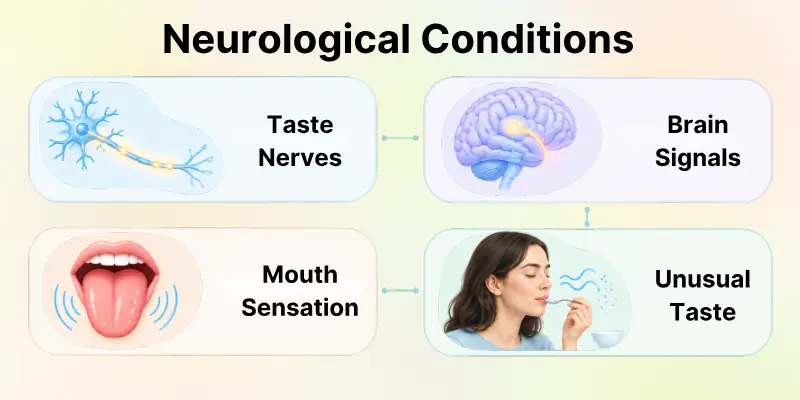
Some conditions that affect the nervous system can also interfere with normal mouth sensations. These taste changes may appear along with other symptoms depending on the condition.
Neurological conditions that may affect taste include:
- Nerve damage
- Bell’s palsy
- Stroke
- Multiple sclerosis
- Head injuries
15. Salivary Gland Problems
Salivary gland problems can affect the amount and quality of saliva your mouth produces. Since saliva helps control taste, changes in saliva flow may lead to a salty or unusual taste in the mouth.
Blocked or infected salivary glands can reduce normal saliva production and change the balance of substances in your mouth. This can make taste changes more noticeable.
Salivary gland problems may happen due to:
- Blocked salivary ducts
- Salivary gland infections
- Salivary stones
- Inflammation of salivary glands
- Reduced saliva production
Less Common Causes of Salty Taste in the Mouth
Some causes of a salty taste in the mouth are less common but may still affect your sense of taste. These conditions can change how your nerves, organs, or saliva production work, leading to unusual taste changes.
Less common causes may include:
- Head injury: Damage to the nerves involved in taste and smell can sometimes change how your brain detects flavors.
- Radiation therapy: Treatment involving the head or neck area can affect saliva glands and taste buds, causing taste changes.
- Chronic kidney disease: Changes in kidney function can lead to a buildup of waste products in the body, which may affect taste.
- Liver disease: Liver problems can sometimes change taste perception due to changes in the body’s chemical balance.
- Rare neurological disorders: Certain uncommon conditions affecting the nervous system may interfere with taste signals and cause unusual flavors.
Symptoms That May Occur Along With a Salty Taste
A salty taste in the mouth may appear with other symptoms depending on the underlying cause. Paying attention to these signs can help you understand what may be affecting your oral or overall health.
Common symptoms that may occur with a salty taste include:
- Dry mouth: A lack of saliva can make your mouth feel dry and change your sense of taste.
- Bad breath: Bacteria buildup, infections, or dry mouth can cause an unpleasant smell.
- Bleeding gums: Irritated or infected gums may bleed and affect taste.
- Tooth pain: Dental problems can cause discomfort along with taste changes.
- Sore throat: Throat irritation from infections or postnasal drip may occur.
- Nasal congestion: Blocked nasal passages can affect taste and smell.
- Thick mucus: Excess mucus draining into the throat may leave a salty taste.
- Metallic taste: Some conditions or medications can create a metallic flavor.
- Bitter taste: Acid reflux or infections may cause a bitter taste sensation.
- Difficulty swallowing: Throat irritation or reduced saliva can make swallowing harder.
- Burning mouth: Irritation in the mouth may cause a burning or tingling feeling.
- Fever: Infections causing taste changes may also lead to a fever.
Home Care Tips to Help Reduce a Salty Taste
Simple home care steps can help manage a salty taste in the mouth and support better oral health. These home remedies for salty taste in the mouth may help reduce discomfort and improve taste changes caused by common triggers.
- Drink enough water throughout the day
- Brush your teeth twice daily
- Clean your tongue regularly
- Floss to remove food particles and bacteria
- Rinse your mouth with water after meals
- Chew sugar-free gum to increase saliva flow
- Avoid smoking and tobacco products
- Maintain regular dental checkups
How Doctors Diagnose the Cause
Doctors use different methods to find the reason behind a salty taste in the mouth and identify the right treatment.
- Medical History: Doctors ask about symptoms, medications, and health conditions.
- Physical Examination: Doctors check the mouth, throat, and other areas for possible problems.
- Dental Examination: A dentist checks for cavities, gum disease, and oral infections.
- Blood Tests: Blood tests help identify medical conditions or nutrient deficiencies.
- Saliva Tests: Saliva tests check saliva production and quality.
- Imaging Tests: Imaging tests help detect problems with sinuses or salivary glands.
- Referral to a Specialist: Doctors may refer you to a specialist for further evaluation.
Conclusion
In this guide, we covered the common causes of salty taste in the mouth, including dehydration, dry mouth, oral health problems, infections, medications, and certain medical conditions. We also discussed the symptoms that may occur with a salty taste, how doctors diagnose the cause, and simple ways to manage it at home.
A salty taste in the mouth is often linked to a temporary issue, but a persistent taste change may need medical attention. Understanding the possible cause can help you take the right steps and know when to seek help from a healthcare professional.
Frequently Asked Questions
Here are some common questions about the causes of salty taste in the mouth and what this taste change may mean.
1. Why do I suddenly have a salty taste in my mouth?
A sudden salty taste can happen due to dehydration, dry mouth, infections, medications, or changes in saliva. It can also occur because of sinus problems, oral health issues, or temporary changes in your body.
2. Can dehydration cause a salty taste in the mouth?
Yes, dehydration can cause a salty taste because low fluid levels reduce saliva production and make saliva more concentrated. Drinking enough water can help restore normal saliva balance and reduce this taste change.
3. How can I get rid of a salty taste in my mouth?
Here are some helpful tips:
- Drink enough water throughout the day
- Brush your teeth and clean your tongue regularly
- Floss to remove bacteria and food particles
- Avoid smoking and tobacco products
- Manage acid reflux triggers
- Treat infections or other underlying causes
- Visit a dentist if oral health problems are causing the taste change
4. Is a salty taste in the mouth a sign of diabetes?
A salty taste can sometimes occur with diabetes due to dry mouth, changes in saliva, or a higher risk of oral infections. People with diabetes may also notice other mouth-related changes caused by high blood sugar levels.
5. Can sinus infections cause a salty taste?
Yes, sinus infections can cause a salty taste when mucus drains into the throat and mixes with saliva. This taste change may continue until the sinus infection or inflammation improves.
6. Why does my mouth taste salty after waking up?
A salty taste after waking up may happen because of dry mouth, mouth breathing, dehydration, or bacteria buildup overnight. Sleeping with an open mouth can reduce moisture and make taste changes more noticeable.
7. Can medications cause a salty taste in the mouth?
Yes, some medications can change taste by affecting saliva production or the way taste buds work. This side effect may improve after your body adjusts or after discussing medication changes with a doctor.
8. Does acid reflux cause a salty taste?
Yes, acid reflux can cause a salty, sour, or unpleasant taste when stomach acid reaches the throat or mouth. The taste may become more noticeable after meals or when lying down.
9. When should I worry about a salty taste in my mouth?
Here are some signs that may need medical advice:
- Salty taste lasting for several days or weeks
- Severe dry mouth
- Tooth pain or bleeding gums
- Fever or signs of infection
- Difficulty swallowing
- Taste changes after a head injury
10. Can poor oral hygiene cause a salty taste?
Yes, poor oral hygiene can allow bacteria and plaque to build up, which may affect saliva and create a salty or unpleasant taste. Regular brushing, flossing, and dental checkups can help maintain better oral health.



- Be Respectful
- Stay Relevant
- Stay Positive
- True Feedback
- Encourage Discussion
- Avoid Spamming
- No Fake News
- Don't Copy-Paste
- No Personal Attacks
- Be Respectful
- Stay Relevant
- Stay Positive
- True Feedback
- Encourage Discussion
- Avoid Spamming
- No Fake News
- Don't Copy-Paste
- No Personal Attacks
