Causes of Dry Mouth: Discover the Reasons Behind Oral Dryness
Published: 1 Oct 2026
Dry mouth is a common condition that occurs when the mouth does not produce enough saliva. Saliva helps keep the mouth moist, supports digestion, protects teeth, and prevents harmful bacteria from building up.
Many people experience dry mouth occasionally due to dehydration, stress, certain foods, or lifestyle habits. However, frequent or ongoing dryness may be linked to medications, health conditions, or changes in saliva production.
Understanding the reason behind dry mouth is important for managing the problem. In this article, we will explore the common causes of dry mouth, the factors that can make it worse, and when it may require medical attention.
Common Causes of Dry Mouth
Dry mouth can occur when the body produces less saliva than usual. Since saliva helps keep the mouth moist and healthy, reduced saliva flow can cause discomfort and affect oral health.
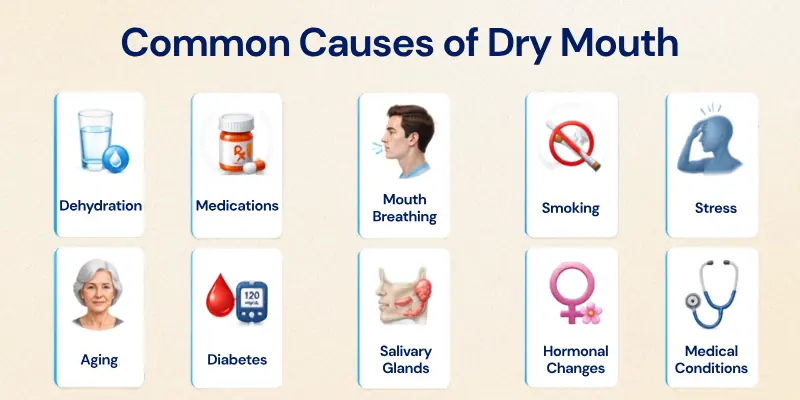
Several lifestyle factors, medications, and health conditions can interfere with saliva production. Identifying the underlying cause can help manage dryness more effectively.
Here are the most common causes of dry mouth:
- Dehydration
- Medication Side Effects
- Mouth Breathing
- Smoking and Tobacco Use
- Stress and Anxiety
- Aging
- Diabetes
- Salivary Gland Problems
- Hormonal Changes
- Certain Medical Conditions
Let’s take a closer look at each cause and understand how it can contribute to dry mouth.
1. Dehydration
Dehydration is one of the most common causes of dry mouth. When the body does not get enough fluids, it may produce less saliva, leading to a dry or sticky feeling in the mouth.
Fluid loss from sweating, illness, exercise, or not drinking enough water can reduce moisture levels in the mouth. This can make it harder for saliva to keep the mouth comfortable and healthy.
- Lack of fluids reduces saliva production
- Sweating or fluid loss can worsen mouth dryness
- Low water intake may cause a dry or sticky feeling
- Dehydration can make dry mouth symptoms more noticeable
2. Medication Side Effects
Certain medications can reduce saliva production and lead to dry mouth. Many commonly used medicines affect the salivary glands, causing less moisture in the mouth.
Dry mouth can occur while taking some medications regularly or as a side effect of certain treatments. The symptoms may continue as long as the medicine affects saliva flow.
- Some medicines can reduce saliva production.
- Certain medications, including allergy and blood pressure medicines, may cause dryness
- Reduced saliva flow can make the mouth feel uncomfortable
- Medication-related dryness may improve after adjusting treatment
3. Mouth Breathing
Mouth breathing can contribute to dry mouth by allowing moisture to escape more quickly. It often happens during sleep or when nasal passages are blocked due to congestion or allergies.
Breathing through the mouth for long periods can reduce moisture levels and make the mouth feel dry, especially after waking up.
- Breathing through the mouth increases moisture loss
- Nasal congestion can lead to mouth breathing
- Dry mouth is common after sleeping with the mouth open
- Long-term mouth breathing may affect oral comfort
4. Smoking and Tobacco Use
Smoking and tobacco use can affect saliva production and contribute to dry mouth. Tobacco products may irritate the tissues inside the mouth and reduce natural moisture levels.
Regular tobacco use can also increase the risk of other oral health problems. This makes it harder for the mouth to maintain a healthy balance.
- Tobacco can reduce saliva flow
- Smoking may irritate mouth tissues
- Dryness can become more noticeable with regular use
- Tobacco use can affect overall oral health
5. Stress and Anxiety
Stress and anxiety can influence how the body functions, including saliva production. During stressful situations, the mouth may produce less saliva, causing temporary dryness.
People with ongoing stress or anxiety may notice dry mouth more often. This can become more noticeable during nervous moments or periods of emotional pressure.
- Stress can reduce saliva production
- Anxiety may cause temporary mouth dryness
- Nervous situations can increase dry mouth symptoms
- Long-term stress may affect oral comfort
6. Aging
Aging can contribute to dry mouth as saliva production may naturally decrease over time. Older adults may also experience dryness due to certain medications or health changes.
Reduced saliva flow with age can affect mouth comfort and increase the risk of oral health problems. Maintaining proper hydration and oral care can help manage symptoms.
- Saliva production may decrease with age
- Certain medicines used by older adults can cause dryness
- Reduced moisture can affect mouth comfort
- Aging may increase the risk of dry mouth-related problems
7. Diabetes
Diabetes can be one of the causes of dry mouth because high blood sugar levels can affect fluid balance in the body. Increased urination caused by diabetes may also lead to dehydration and reduced saliva production.
People with uncontrolled diabetes may notice persistent mouth dryness along with other symptoms. Managing blood sugar levels can help reduce the risk of dry mouth.
- High blood sugar can reduce moisture levels
- Frequent urination may cause dehydration
- Diabetes can affect saliva production
- Dry mouth may occur with other diabetes symptoms
8. Salivary Gland Problems
Salivary gland problems can affect the amount of saliva produced in the mouth. When these glands do not work properly, reduced saliva flow can lead to ongoing dryness.
Infections, blockages, or damage to the salivary glands may interfere with normal saliva production. This can make it difficult for the mouth to stay moist.
- Salivary gland issues can reduce saliva flow
- Blockages may affect saliva production
- Infections can interfere with gland function
- Reduced saliva can cause persistent dryness
9. Hormonal Changes
Hormonal changes can influence saliva production and affect moisture levels in the mouth. Some people may notice dry mouth during periods of hormonal fluctuations.
Changes related to different life stages can alter how the body maintains moisture. This may lead to temporary or ongoing dryness for some individuals.
- Hormonal changes can affect saliva production
- Certain life stages may increase dryness
- Reduced moisture can affect mouth comfort
- Symptoms may vary depending on hormonal changes
10. Certain Medical Conditions
Some medical conditions can affect the body’s ability to produce enough saliva. Autoimmune disorders and other health problems may contribute to long-lasting dry mouth.
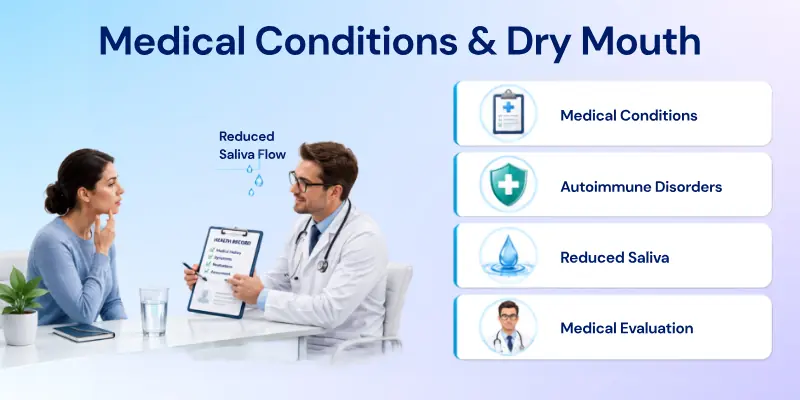
When dry mouth continues without an obvious reason, it may be linked to an underlying health condition. Identifying the cause can help with proper management.
- Certain illnesses can reduce saliva production.
- Autoimmune conditions may cause dry mouth
- Long-term dryness may need medical evaluation
- Underlying conditions can affect oral moisture levels
Factors That Can Make Dry Mouth Worse
Certain habits and daily choices can increase the feeling of dryness and make dry mouth symptoms more noticeable. These factors may affect hydration levels, saliva production, or moisture inside the mouth.
Here are some factors that may increase mouth dryness:
- Caffeine Intake: Can contribute to fluid loss and reduce moisture levels.
- Alcohol Consumption: May dry out mouth tissues and affect saliva flow.
- Poor Hydration Habits: Reduce the body’s ability to maintain proper moisture.
- Excessive Salt Intake: Can increase the feeling of dryness in the mouth.
- Sleeping With Mouth Open: Causes more moisture loss during sleep.
Common Myths About Dry Mouth
Many people have misunderstandings about dry mouth and its causes. Knowing the facts can help you understand this condition better and avoid common mistakes.
Here are some common myths about dry mouth:
- Only Dehydration: Many factors besides dehydration can reduce saliva production.
- Water Fixes It: Water can provide temporary relief but may not solve the underlying cause.
- Not Serious: Persistent dryness may be linked to oral health issues or other medical conditions.
When Dry Mouth May Be Linked to Other Health Conditions
Dry mouth is often caused by simple factors like dehydration or medications, but sometimes it may be connected to certain health conditions. These conditions can affect saliva production or the overall moisture balance in the mouth.
Here are some conditions that may be associated with dry mouth:
- Diabetes: High blood sugar levels can affect hydration and saliva production.
- Sjögren’s Syndrome: An autoimmune condition that can reduce saliva and tear production.
- Oral Infections: Infections in the mouth may affect moisture levels and comfort.
- Salivary Gland Disorders: Problems with salivary glands can reduce saliva flow.
- Autoimmune Conditions: Some immune-related disorders may interfere with normal saliva production.
When to See a Doctor for Dry Mouth
Dry mouth is usually a temporary issue, but persistent or severe symptoms may need medical attention. Seeking professional advice can help identify the underlying cause and prevent possible oral health problems.
Here are situations when medical advice may be needed:
- Persistent Dry Mouth: Dryness continues despite proper hydration and self-care
- Difficulty Eating or Swallowing: Lack of saliva affects chewing, swallowing, or daily activities
- Mouth Sores: Frequent sores, irritation, or discomfort develop inside the mouth
- Tooth Problems: Increased cavities or other oral health issues occur
- Sudden Dry Mouth: Symptoms appear suddenly without an obvious reason
A doctor can help determine the cause of ongoing dry mouth and suggest suitable treatment options.
Conclusion
In this guide, we covered the common causes of dry mouth, including dehydration, medication side effects, mouth breathing, lifestyle habits, and health conditions that can affect saliva production.
Understanding these factors can help explain why dry mouth occurs and why symptoms may vary from person to person. Dry mouth may improve by addressing the underlying cause and making suitable lifestyle changes.
If you want to explore ways to manage dryness naturally, you can also read our guide on home remedies for dry mouth. Taking proper care of your oral health can help maintain comfort and support a healthier mouth.
FAQs
Here are answers to some frequently asked questions about the common causes of dry mouth.
The main causes of dry mouth include:
- Dehydration: Reduces saliva production due to lack of fluids
- Medication Side Effects: Certain medicines can affect saliva flow
- Mouth Breathing: Causes moisture loss and increases dryness
- Stress and Anxiety: May reduce saliva production temporarily
- Lifestyle Habits: Smoking and other habits can contribute to dry mouth
- Health Conditions: Some medical conditions can affect saliva production
Understanding the cause can help manage symptoms and support better oral health.
Dry mouth can continue even after drinking water if the underlying cause is not dehydration. Medications, health conditions, or reduced saliva production may contribute to dryness. Proper evaluation can help find the reason.
Yes, dehydration is one of the most common causes of dry mouth. When the body lacks enough fluids, saliva production may decrease. This can create a dry or sticky feeling in the mouth.
Yes, some medications can reduce saliva production and cause dry mouth. Allergy, blood pressure, and other medicines may have this side effect. Symptoms may continue while taking certain medications.
Dry mouth at night can happen due to mouth breathing, sleeping with your mouth open, or low saliva production during sleep. Dehydration and certain medications may also contribute.
Yes, stress and anxiety can affect saliva production and cause temporary dry mouth. Many people notice dryness during stressful situations. Long-term stress may make symptoms more noticeable.
Dry mouth can sometimes be linked to diabetes. High blood sugar levels and frequent urination may lead to dehydration and reduced saliva production. However, dry mouth alone does not always mean you have diabetes.
You can help prevent dry mouth by:
- Staying Hydrated: Drinking enough water helps maintain saliva production
- Avoiding Tobacco: Reduces dryness and supports better oral health
- Limiting Drying Habits: Reducing caffeine and alcohol intake may help prevent dryness
- Maintaining Oral Care: Regular brushing and oral hygiene support mouth health
- Managing Health Conditions: Proper treatment can help reduce dry mouth symptoms
These habits can help maintain moisture levels and support a healthier mouth.
You should seek medical advice if dry mouth continues for a long time or affects eating, swallowing, or oral health. Persistent dryness may be linked to an underlying condition that needs attention.
Temporary dry mouth may improve when the cause is addressed, such as drinking enough fluids or changing certain habits. However, ongoing dryness may require medical evaluation. Identifying the cause can help with proper management.





- Be Respectful
- Stay Relevant
- Stay Positive
- True Feedback
- Encourage Discussion
- Avoid Spamming
- No Fake News
- Don't Copy-Paste
- No Personal Attacks
- Be Respectful
- Stay Relevant
- Stay Positive
- True Feedback
- Encourage Discussion
- Avoid Spamming
- No Fake News
- Don't Copy-Paste
- No Personal Attacks
