How to Reduce Water Retention & Beat Bloating Fast
Published: 4 Jul 2026
Water retention happens when your body holds excess fluids in tissues. This can cause bloating, puffiness, swelling in hands or feet, and temporary weight gain.
Many people confuse water weight with fat gain, which leads to frustration. The good news is that water retention is usually temporary and manageable.
Hormonal changes, high salt intake, low activity levels, dehydration, and stress can all contribute to fluid buildup. By adjusting your daily habits, you can naturally reduce excess water and feel lighter. Guys, if you often wake up feeling bloated or notice sudden weight fluctuations, this guide will help you.
In this guide, I will share practical and safe ways to reduce water retention effectively. So without wasting time, let’s dive in.
How To Reduce Water Retention
Water retention can cause temporary swelling and make you feel bloated or uncomfortable. It is often linked to factors such as excess sodium intake, hormonal changes, prolonged sitting, or dehydration.
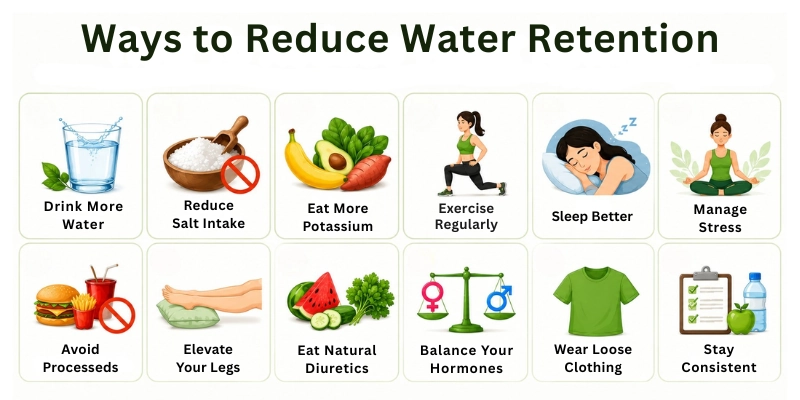
Making simple changes to your diet and daily routine can help your body maintain a healthy fluid balance and reduce water retention naturally. Here is the list of the most effective ways to reduce water retention naturally:
- Drink More Water
- Reduce Excess Salt Intake
- Increase Potassium-Rich Foods
- Exercise Regularly
- Improve Sleep Quality
- Manage Stress Levels
- Avoid Processed Foods
- Elevate Your Legs
- Try Natural Diuretic Foods
- Balance Your Hormones Naturally
- Wear Comfortable Clothing
- Maintain Consistent Healthy Habits
Let us understand each method in detail.
1. Drink More Water
It may sound surprising, but drinking more water actually helps reduce water retention. When you are dehydrated, your body holds onto fluids as a protective response. Proper hydration signals your body to release excess stored water. Drinking enough water also supports kidney function and digestion. Consistent hydration reduces bloating and puffiness over time.
How To Apply:
- Drink water throughout the day consistently.
- Start your morning with a glass of water.
- Carry a reusable bottle.
- Drink water before meals.
- Limit sugary beverages.
2. Reduce Excess Salt Intake
High sodium intake causes the body to hold water. Processed foods, packaged snacks, and restaurant meals often contain hidden salt. Reducing salt intake helps your body balance fluids properly. Small changes in seasoning habits can make a big difference.
How To Apply:
- Avoid heavily processed foods.
- Cook meals at home when possible.
- Use herbs and spices instead of excess salt.
- Check food labels for sodium content.
- Limit salty snacks.
3. Increase Potassium-Rich Foods
Potassium helps balance sodium levels in the body. When potassium intake increases, excess sodium and water are flushed out more efficiently. Potassium-rich foods support healthy fluid balance. Including these foods regularly can reduce bloating naturally.
How To Apply:
- Eat bananas, spinach, and sweet potatoes.
- Include avocados in meals.
- Add leafy greens to your daily diet.
- Consume yogurt and beans regularly.
- Maintain a balanced intake.
4. Exercise Regularly
Physical activity improves blood circulation, helps move excess fluids through sweat, and improves lymphatic flow. Exercise reduces swelling in the lower body. Even light walking can support fluid balance. Consistent movement prevents stagnation of fluids.
How To Apply:
- Walk daily for 30 minutes.
- Add light cardio sessions weekly.
- Perform stretching exercises.
- Avoid long sitting periods.
- Stay consistent with movement.
5. Improve Sleep Quality
Poor sleep disrupts hormone balance and may contribute to fluid retention. Proper sleep supports kidney function and hormonal regulation. When you rest well, your body regulates fluids more efficiently. Quality sleep reduces inflammation and puffiness.
How To Apply:
- Aim for 7 to 8 hours of sleep.
- Maintain a consistent bedtime routine.
- Avoid screens before sleep.
- Keep your room dark and comfortable.
- Reduce caffeine in the evening.
6. Manage Stress Levels
Stress increases cortisol levels, which can affect fluid balance. High stress may lead to bloating and hormonal shifts. Managing stress supports overall health and reduces temporary swelling. A calm mind promotes balanced bodily functions.
How To Apply:
- Practice deep breathing exercises.
- Spend time outdoors.
- Engage in relaxing hobbies.
- Exercise regularly.
- Avoid unnecessary stress triggers.
7. Avoid Processed Foods
Processed foods often contain high sodium and additives that contribute to water retention. These foods can also cause digestive bloating. Choosing whole foods improves nutrient balance and fluid regulation. Clean eating supports natural detox processes.
How To Apply:
- Choose fresh fruits and vegetables.
- Limit packaged snacks.
- Avoid fast food frequently.
- Prepare meals at home.
- Focus on natural ingredients.
8. Elevate Your Legs
Fluid often accumulates in the lower body due to gravity. Elevating your legs improves circulation and reduces swelling in your feet and ankles. This method is especially helpful if you stand or sit for long hours.
How To Apply:
- Elevate legs for 15 to 20 minutes daily.
- Use a pillow for support.
- Avoid standing for long periods.
- Take breaks during work hours.
- Combine with light stretching.
9. Try Natural Diuretic Foods
Some natural foods help your body release excess fluids. Foods like cucumber, watermelon, parsley, and lemon may support mild fluid reduction. These options are gentle and safe when consumed in moderation.
How To Apply:
- Add cucumber to salads.
- Drink lemon water.
- Include watermelon as a snack.
- Use parsley in meals.
- Stay consistent but moderate.
10. Balance Your Hormones Naturally
Hormonal changes, especially during menstrual cycles, can cause temporary water retention. Balanced nutrition, sleep, and stress management help regulate hormones. Stable hormone levels reduce fluid imbalance.
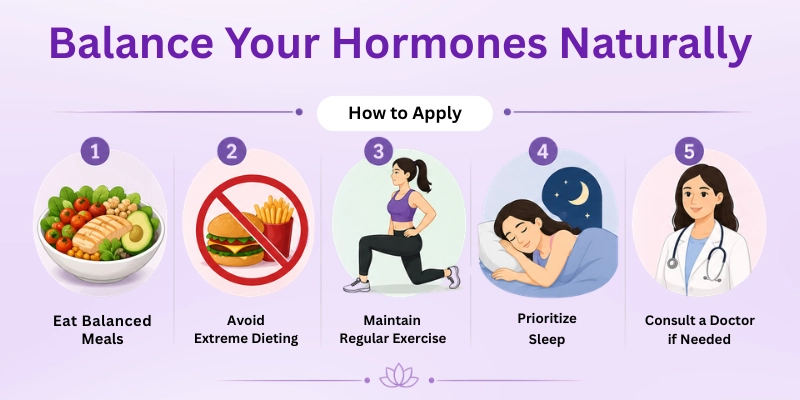
How To Apply:
- Eat balanced meals.
- Avoid extreme dieting.
- Maintain regular exercise.
- Prioritize sleep.
- Consult a healthcare professional if needed.
11. Wear Comfortable Clothing
Tight clothing can restrict circulation and worsen swelling. Comfortable clothing supports healthy blood flow. Small clothing adjustments may reduce discomfort related to fluid retention.
How To Apply:
- Avoid overly tight outfits.
- Choose breathable fabrics.
- Avoid restrictive waistbands.
- Wear supportive footwear.
- Allow proper circulation.
12. Maintain Consistent Healthy Habits
Water retention often results from inconsistent lifestyle habits. Sustainable daily routines help your body regulate fluids effectively. Small, consistent changes work better than extreme measures. Focus on long-term health rather than quick fixes.
How To Apply:
- Maintain balanced nutrition.
- Stay hydrated daily.
- Exercise regularly.
- Monitor salt intake.
- Track symptoms if necessary.
Tips For Managing Water Weight
Reducing water retention requires patience and consistency. Sudden weight fluctuations often reflect fluid shifts, not fat gain. By supporting your body with hydration, balanced nutrients, and movement, you allow it to regulate fluids naturally. Avoid drastic detox methods or extreme restrictions.
Key Actions:
- Drink enough water daily.
- Limit sodium intake.
- Increase potassium-rich foods.
- Stay physically active.
- Sleep consistently.
Final Note
In this guide, we have covered the best ways to reduce water retention naturally and safely. As someone who focuses on sustainable health habits, I strongly recommend improving hydration, reducing salt intake, staying active, and managing stress. Water retention is often temporary and manageable with simple lifestyle adjustments.
Stay connected and explore more health and wellness guides on this site to continue improving your well-being.
FAQs
Here are some of the most commonly asked questions related to how to reduce water retention:
Water retention can happen for many reasons. Common causes include too much salt, hormonal changes, dehydration, and inactivity. Stress can also affect your body’s fluid balance.
No, water retention is not the same as fat gain. It is a temporary buildup of fluid in the body. Fat gain happens when your body stores extra calories as fat.
Mild water retention can improve within a few days. Drinking enough water and reducing salt can help. Regular movement also speeds up recovery.
Yes, drinking enough water can reduce bloating. Proper hydration helps your body release extra stored fluids. It also supports healthy digestion.
Yes, exercise helps improve blood circulation. It allows your body to remove excess fluids naturally. Sweating during activity can also help reduce temporary bloating.
Yes, too much salt makes your body hold more water. Sodium affects how your body controls fluids. Reducing salt can help decrease swelling.
Natural foods like cucumber and watermelon are usually safe. They help the body release extra water gently. However, they should be eaten in moderation.
Yes, poor sleep can affect hormone balance. Hormones play a role in fluid regulation. Lack of rest may lead to temporary swelling.
No, your body needs a small amount of salt. Sodium supports nerve and muscle function. The key is moderation, not complete removal.
You should see a doctor if swelling is severe or painful. Seek medical help if it does not improve after a few days. Persistent swelling may need proper medical evaluation.






- Be Respectful
- Stay Relevant
- Stay Positive
- True Feedback
- Encourage Discussion
- Avoid Spamming
- No Fake News
- Don't Copy-Paste
- No Personal Attacks
- Be Respectful
- Stay Relevant
- Stay Positive
- True Feedback
- Encourage Discussion
- Avoid Spamming
- No Fake News
- Don't Copy-Paste
- No Personal Attacks
