What Is Clean Eating: Tips, Foods & Beginner’s Guide
Published: 26 May 2026
Many people feel confused when they hear the term clean eating. Some think it means eating only salads, while others believe it is a strict diet with many food rules. Do not worry.
In this guide, you will clearly understand what is clean eating, why people follow it, what foods it includes, and how beginners can start clean eating in a simple and safe way.
So, guys, what are you waiting for? Let us cover all in detail.
What is Clean Eating?
Clean eating simply means choosing foods that are fresh and natural, just the way they come from nature. Instead of eating too much packaged or fast food, clean eating encourages you to cook simple meals at home using real ingredients.
This way of eating helps your body get important vitamins, minerals, healthy fats, and protein, which can improve your energy, support your heart and brain, and keep you feeling healthier overall.
Even if clean eating feels a little hard at the start, it becomes easier with time and can be very helpful for your daily health.
Basic Rules of Clean Eating
Clean eating follows a few simple and easy rules that help you choose better food every day. You do not need strict plans or hard diets.
These basic rules focus on eating natural foods and avoiding unhealthy habits:
- Eat Fresh Foods: Choose fresh and natural foods whenever possible.
- Choose Whole Foods: Eat whole foods instead of processed or packaged items.
- Avoid Fast Food: Avoid fast food and ready-made meals regularly.
- Check Labels: Read food labels carefully before buying any product.
- Stay Hydrated: Drink enough water throughout the day.
- Cook at Home: Prepare meals at home using simple and clean ingredients.
- Limit Sugar & Salt: Reduce added sugar, salt, and artificial ingredients.
- Healthy Fats Only: Select healthy fats and avoid deep-fried foods.
Foods Allowed in Clean Eating
Clean eating focuses on foods that are fresh, natural, and full of nutrients. These foods give your body energy, vitamins, and minerals while keeping you healthy and strong.
Here are the main foods you can enjoy while eating clean:
- Fresh Fruits: Eat fruits like apples, berries, oranges, and bananas.
- Fresh Vegetables: Include vegetables like spinach, carrots, broccoli, and peppers.
- Whole Grains: Choose whole grains like oats, brown rice, quinoa, and whole wheat.
- Lean Proteins: Eat proteins like chicken, fish, eggs, and beans.
- Healthy Fats: Include healthy fats like olive oil, avocado, and nuts.
- Natural Dairy: Choose dairy like plain yogurt, milk, and cheese in moderation.
- Herbs & Spices: Use fresh herbs and natural spices to flavor your food.
- Natural Drinks: Drink water, herbal teas, and fresh fruit juices without added sugar.
Foods to Avoid in Clean Eating
Clean eating means focusing on natural and fresh foods while avoiding items that are heavily processed or unhealthy. Cutting out these foods helps your body stay strong and full of energy.
Here are the main foods to avoid:
- Processed Foods: Avoid packaged snacks, instant noodles, and ready-made meals.
- Sugary Drinks: Stay away from soda, energy drinks, and sweetened juices.
- Fast Food: Limit burgers, fries, fried chicken, and other fast-food items.
- Artificial Sweeteners: Avoid diet drinks or foods with chemical sweeteners.
- Excess Sugar: Reduce candies, chocolates, cakes, and pastries.
- High Salt Foods: Limit salty snacks like chips and salted nuts.
- Artificial Additives: Stay away from foods with food dyes, preservatives, or flavor enhancers.
- Refined Grains: Avoid white bread, white rice, and refined flour products.
Clean Eating for Beginners
Starting clean eating can feel confusing at first, but it becomes easier when you follow simple steps. You do not need to change everything at once; small changes can make a big difference.
Here are some tips to help beginners start clean eating:
- Start Slowly: Replace one processed meal a day with a fresh, homemade option.
- Plan Your Meals: Make a simple meal plan with fruits, vegetables, whole grains, and proteins.
- Swap Ingredients: Use healthier alternatives like brown rice instead of white rice.
- Cook at Home: Prepare your meals at home to control ingredients and avoid additives.
- Snack Wisely: Choose nuts, fruits, or yogurt instead of packaged snacks.
- Read Labels: Check for hidden sugar, salt, and artificial ingredients in foods.
- Stay Consistent: Follow clean eating habits regularly to make them a lifestyle.
- Be Patient: It takes time for your body to adjust, so start slowly and keep going.
Clean Eating Meal Examples
Eating clean does not have to be boring or difficult. You can enjoy simple, tasty meals that are fresh, natural, and full of nutrients.
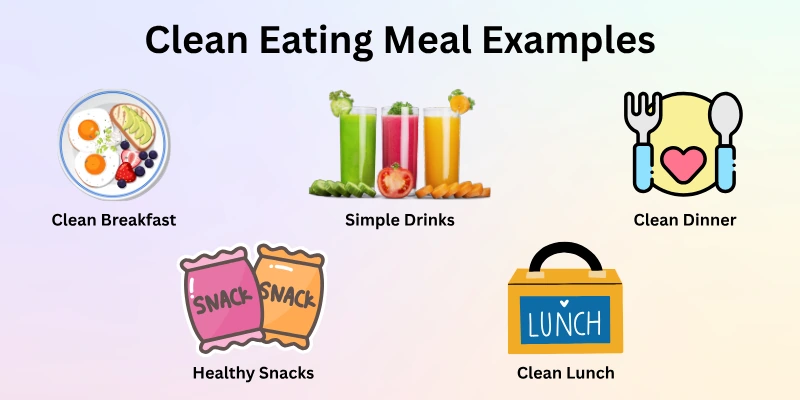
Here are some easy meal ideas for clean eating:
- Clean Breakfast: Oatmeal with fresh berries and a drizzle of honey.
- Clean Lunch: Grilled chicken salad with mixed vegetables and olive oil dressing.
- Clean Dinner: Baked fish with steamed broccoli and quinoa.
- Healthy Snacks: A handful of nuts, carrot sticks, or a fresh fruit.
- Simple Drinks: Water, herbal tea, or fresh fruit juice without sugar.
These meals are easy to prepare, fill your body with nutrients, and help you follow clean eating every day.
Clean Eating vs Healthy Eating
Clean eating and healthy eating are often used as similar terms, but they are slightly different.
Clean eating focuses on eating foods that are as close to their natural state as possible, avoiding processed foods, added sugars, and artificial ingredients. It emphasizes how food is prepared and encourages cooking meals at home using fresh ingredients. On the other hand, healthy eating focuses more on choosing nutritionally balanced foods for overall health, which can include some processed or packaged foods if they fit your nutritional needs.
In simple words, clean eating is about food quality and naturalness, while healthy eating is about balanced nutrition. Both approaches improve health, but clean eating is more about eating naturally and simply.
Common Myths About Clean Eating
Many people have wrong ideas about clean eating, which can make it seem confusing or hard to follow. These myths are not true and may stop you from trying this healthy lifestyle.
Here are some common myths about clean eating:
- Clean eating is expensive: You can eat clean on a budget by choosing seasonal fruits and vegetables.
- Clean eating means no taste: Meals can be flavorful using herbs, spices, and natural ingredients.
- Clean eating is very hard: Small changes and simple swaps make clean eating easy to follow.
- You can never eat out: You can make healthy choices at restaurants by picking fresh, simple meals.
- Clean eating is only for weight loss: It is for overall health, energy, and long-term wellbeing.
- You must give up all treats: Occasional treats in moderation can still fit into clean eating.
- It requires strict rules: Clean eating is flexible and focuses on better food choices, not strict restrictions.
- Only raw food counts: Cooked meals can also be clean if they use natural, fresh ingredients.
Is Clean Eating Safe for Everyone?
Clean eating is generally safe and healthy for most people, but it is important to follow it in a balanced way. Children, adults, and older people can all benefit from eating fresh, natural foods, but their nutritional needs may differ. For example, kids need enough calories and protein for growth, while older adults may need extra calcium and vitamins.
People with certain medical conditions should consult a doctor or nutritionist before making major changes to their diet. Overall, clean eating is safe for most people if it includes a variety of foods and meets daily nutritional needs.
Advantages and Disadvantages of Clean Eating
Clean eating has many benefits, but like any eating approach, it also has some drawbacks. Understanding both sides can help you follow it in a balanced and healthy way.
Advantages of Clean Eating
Clean eating helps your body get the nutrients it needs and supports long-term health. Here are the main benefits:
- Better Nutrition: Fresh and natural foods provide vitamins, minerals, and healthy fats.
- More Energy: Nutrient-rich foods help you feel active and energized throughout the day.
- Healthy Weight Management: Clean eating can help maintain a healthy weight naturally.
- Stronger Immunity: Nutrient-dense foods support a stronger immune system.
- Improved Digestion: Whole foods with fiber help your digestive system work well.
- Clearer Skin: Eating natural foods can improve skin health and reduce breakouts.
- Heart and Brain Health: Healthy fats, proteins, and antioxidants support heart and brain function.
Disadvantages of Clean Eating
While clean eating is healthy, it can have some challenges, especially when starting out. Here are the main disadvantages:
- Takes More Time: Cooking meals at home can be time-consuming.
- Limited Convenience: Packaged and fast foods are easy, but not allowed.
- Higher Cost Sometimes: Fresh and organic foods can be more expensive.
- Can Be Overwhelming: Beginners may feel confused about what foods are “clean.”
- Hard to Follow Outside Home: Eating clean while traveling or at restaurants can be tricky.
Conclusion
In this guide, we have covered what is clean eating in great detail, including its meaning, benefits, foods to eat, foods to avoid, and tips for beginners. Following clean eating can improve your energy, support a healthy weight, strengthen your immunity, and make your body feel better every day.
My personal advice is to start slowly, make simple changes, and enjoy the process instead of trying to be perfect from day one. Remember, clean eating is a lifestyle, not a strict diet.
Thank you for reading, and goodbye for now! Don’t forget to check the FAQs below to clear any remaining questions about clean eating.
FAQs
Here are some of the most commonly asked questions related to what is clean eating:
Clean eating means eating fresh, natural, and unprocessed foods. It focuses on meals made from real ingredients like fruits, vegetables, whole grains, and lean proteins. The goal is to avoid packaged foods, added sugar, and artificial ingredients. Clean eating helps your body get proper nutrients and feel healthy.
Yes, you can eat rice in clean eating, but it is better to choose whole grains like brown rice or quinoa. Avoid white rice or instant rice with added chemicals. Whole grains provide fiber, vitamins, and long-lasting energy. Eating rice in moderation fits well in a clean eating plan.
Yes, clean eating can help with weight management because it focuses on natural, low-calorie foods and avoids processed snacks. Eating more fruits, vegetables, lean proteins, and whole grains can reduce overeating. Clean eating improves metabolism and keeps you full for longer. However, portion control is still important.
Yes, eggs are allowed in clean eating because they are natural and high in protein. They can be boiled, poached, or cooked with minimal oil. Eggs provide essential nutrients like vitamins B12 and D, and healthy fats. Avoid fried eggs with lots of oil or processed egg products.
Start small by replacing one processed meal a day with a fresh homemade option. Plan your meals with fruits, vegetables, whole grains, and lean proteins. Read food labels to avoid added sugar, salt, and chemicals. Gradually, you can make clean eating a regular habit without feeling stressed.
Yes, you can eat out, but choose fresh and simple meals like salads, grilled chicken, or steamed vegetables. Avoid fried foods, creamy sauces, and packaged snacks at restaurants. Drinking water instead of sugary drinks also helps. With careful choices, eating out can fit into clean eating.
Clean eating can be affordable if you choose seasonal fruits and vegetables and cook at home. Buying in bulk and planning meals reduces cost. Organic options are healthier but not always necessary. Simple planning makes clean eating fit most budgets.
Yes, drinks like water, herbal tea, and fresh fruit juices without added sugar are allowed. Avoid soda, energy drinks, and packaged juices with chemicals. Staying hydrated is important for energy and digestion. Drinking clean beverages supports your overall healthy lifestyle.
Yes, you can enjoy snacks as long as they are natural and unprocessed. Examples include fresh fruit, nuts, yogurt, or carrot sticks. Avoid packaged chips, candies, and sugary bars. Healthy snacks keep your energy up and help control hunger between meals.
Clean eating is a lifestyle, not a temporary diet, so it can be followed long-term. You can start with small steps and gradually make it your daily habit. Consistency is key to getting health benefits like better energy, improved digestion, and a stronger immune system. Following clean eating regularly helps your body feel its best.



- Be Respectful
- Stay Relevant
- Stay Positive
- True Feedback
- Encourage Discussion
- Avoid Spamming
- No Fake News
- Don't Copy-Paste
- No Personal Attacks
- Be Respectful
- Stay Relevant
- Stay Positive
- True Feedback
- Encourage Discussion
- Avoid Spamming
- No Fake News
- Don't Copy-Paste
- No Personal Attacks
