Best Weight Loss Tips For Beginners: A Complete Step-by-Step Guide
Published: 23 Jun 2026
Starting your weight loss journey can feel overwhelming, especially with so many diets and advice online. But the truth is, losing weight doesn’t have to be complicated. With simple, practical strategies, beginners can build healthy habits that stick and see results steadily.
Guys, the key is not drastic changes; it’s small, consistent steps that improve your diet, activity level, and lifestyle. In this guide, I will share the best weight loss tips for beginners that are easy to follow and sustainable.
So without wasting time, let’s dig in!
Best Weight Loss Tips For Beginners
Here is a detailed list of practical tips to start your weight loss journey:
- Drink Plenty of Water
- Eat Protein-Rich Foods
- Control Portion Sizes
- Include More Vegetables and Fruits
- Avoid Sugary Drinks and Processed Foods
- Track Your Meals and Calories
- Move Your Body Regularly
- Prioritize Sleep
- Plan Your Meals
- Practice Mindful Eating
- Avoid Late-Night Snacking
- Set Realistic Goals
- Keep Healthy Snacks Handy
- Reduce Refined Carbs
- Stay Consistent and Patient
Let’s go through each tip in detail with practical advice.
1. Drink Plenty of Water
Keeping yourself hydrated, promoting digestion, and assisting in appetite control are all benefits of drinking water. It is possible for your body to confuse thirst with hunger at times.
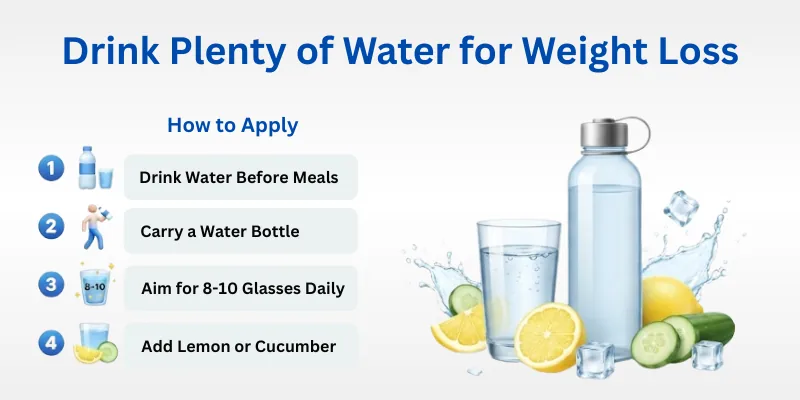
How To Apply:
- Drink 1–2 glasses of water before meals to reduce overeating.
- Carry a water bottle throughout the day.
- Aim for at least 8–10 glasses daily.
- Tip: Add lemon or cucumber slices for flavor.
Benefits:
- Reduces unnecessary calorie intake.
- Supports metabolism and digestion.
- Keeps you energized and full.
2. Eat Protein-Rich Foods
Protein not only helps you feel fuller for longer, but it also reduces your desire to eat and promotes muscle growth while you are losing fat.
How To Apply:
- Include eggs, lean meat, fish, beans, lentils, or tofu in meals.
- Add a protein source to every meal.
- Snack on nuts or Greek yogurt for extra protein.
Benefits:
- Increases satiety and reduces hunger.
- Supports lean muscle mass.
- Boosts metabolism slightly.
3. Control Portion Sizes
Even when eating healthy foods, excessive eating can prevent weight loss. Maintaining proper portion control is essential.
How To Apply:
- Use smaller plates and bowls to limit food intake.
- Fill half your plate with vegetables.
- Avoid going back for seconds automatically.
Benefits:
- Reduces calorie intake without feeling deprived.
- Helps you build long-term healthy eating habits.
4. Include More Vegetables and Fruits
Low in calories, high in fiber, and loaded with nutrients, vegetables and fruits are a great source of nutrition. Low in calories, high in fiber, and loaded with nutrients, vegetables and fruits are a great source of nutrition. Without adding any additional calories, they make you feel full. Without adding any additional calories, they make you feel full.
How To Apply:
- Add vegetables to every meal.
- Snack on fruits instead of sugary treats.
- Experiment with salads, smoothies, and stir-fries.
Benefits:
- Improves digestion and satiety.
- Provides essential vitamins and minerals.
- Helps prevent overeating.
5. Avoid Sugary Drinks and Processed Foods
Products that are processed and beverages that contain sugar are high in calories but low in nutrients. They are capable of undermining efforts to lose weight.
How To Apply:
- Replace sodas with water, green tea, or infused water.
- Choose whole foods over packaged snacks.
- Limit sugar in coffee, tea, and desserts.
Benefits:
- Reduces empty calories.
- Supports better energy levels.
- Prevents blood sugar spikes and cravings.
6. Track Your Meals and Calories
Food journaling is a useful tool for gaining insight into eating habits and calorie consumption. Change begins with awareness, which is the first step.
How To Apply:
- Use a notebook or app to log meals.
- Include portion sizes, snacks, and drinks.
- Review your log to identify areas for improvement.
Benefits:
- Helps you stay accountable.
- Reveals hidden calories and unhealthy habits.
- Guides adjustments to reach goals.
7. Move Your Body Regularly
As a result of exercise, calories are burned, muscles are strengthened, and the metabolism is boosted. If you want results, you don’t need to go to the gym.
How To Apply:
- Walk, jog, cycle, or do bodyweight exercises daily.
- Aim for at least 30 minutes of moderate activity most days.
- Include strength training 2–3 times per week.
Benefits:
- Burns calories and improves fitness.
- Builds lean muscle, which increases metabolism.
- Reduces stress and improves mood.
8. Prioritize Sleep
Sleep deprivation can cause an increase in hunger hormones, a decrease in willpower, and a slowdown in metabolism.
How To Apply:
- Aim for 7–8 hours of sleep every night.
- Maintain a consistent sleep schedule.
- Avoid late-night screen use to improve sleep quality.
Benefits:
- Supports appetite regulation.
- Improves energy and focus.
- Enhances weight loss efforts.
9. Plan Your Meals
This helps to prevent impulsive eating as well as the selection of unhealthy options, which can be avoided by planning meals in advance.
How To Apply:
- Prepare weekly meals in advance.
- Keep healthy snacks ready.
- Avoid skipping meals to prevent overeating later.
Benefits:
- Saves time and reduces stress.
- Helps stick to calorie goals.
- Encourages balanced nutrition.
10. Practice Mindful Eating
By practicing mindful eating, one is encouraged to pay attention to cues that indicate whether or not they are hungry or full. In this way, excessive eating is prevented.
How To Apply:
- Eat slowly and without distractions.
- Listen to your body’s signals before taking more food.
- Focus on taste, texture, and satisfaction.
Benefits:
- Reduces binge eating.
- Improves digestion.
- Builds a healthy relationship with food.
11. Avoid Late-Night Snacking
Having snacks late at night is a common practice that frequently leads to the accumulation of fat as well as an excessive amount of calories.
How To Apply:
- Finish dinner 2–3 hours before bed.
- Drink water or herbal tea if hungry.
- Keep unhealthy snacks out of reach.
Benefits:
- Reduces unnecessary calorie intake.
- Supports better sleep.
- Helps regulate metabolism.
12. Set Realistic Goals
By setting goals that are within your reach, you can prevent yourself from becoming frustrated and keep your motivation up with you.
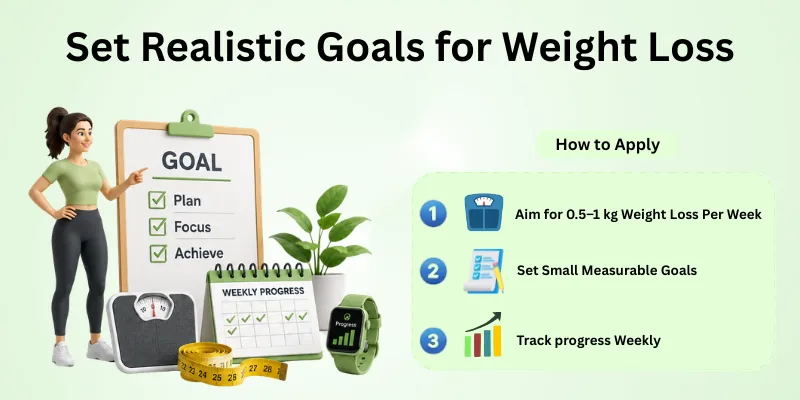
How To Apply:
- Aim for 0.5–1 kg weight loss per week.
- Set measurable goals like “walk 30 minutes daily” or “eat vegetables with every meal”.
- Track progress weekly.
Benefits:
- Encourages consistent efforts.
- Prevents disappointment from unrealistic expectations.
- Builds sustainable habits.
13. Keep Healthy Snacks Handy
Having nutritious snacks on hand will prevent you from reaching for unhealthy options in the event that you find yourself having a craving for food.
How To Apply:
- Stock fruits, nuts, yogurt, or veggie sticks.
- Portion snacks into small containers.
- Avoid keeping processed snacks at home.
Benefits:
- Reduces temptation.
- Supports balanced energy levels.
- Helps prevent overeating at meals.
14. Reduce Refined Carbs
The consumption of refined carbohydrates, such as white bread, pastries, and pasta, causes an increase in blood sugar levels and encourages the storage of fat.
How To Apply:
- Replace with whole grains like oats, brown rice, or quinoa.
- Limit sugary foods and drinks.
- Focus on fiber-rich foods for satiety.
Benefits:
- Controls blood sugar levels.
- Keeps you full longer.
- Reduces fat accumulation.
15. Stay Consistent and Patient
The process of losing weight is one that takes time, especially for those who are just starting out. The most important thing is to maintain consistency.
How To Apply:
- Follow your plan daily, even with small steps.
- Track progress, but focus on healthy habits over quick results.
- Adjust strategies gradually rather than making drastic changes.
Benefits:
- Promotes sustainable results.
- Builds healthy lifelong habits.
- Reduces frustration and stress.
Final Note
In this guide, we’ve covered the best weight loss tips for beginners, focusing on small, actionable habits. As a weight loss expert, I recommend combining these tips with a balanced diet, regular physical activity, and consistency. Even simple changes, when done daily, can lead to significant results over time.
Stay connected and explore more guides on this site to improve your health, fitness, and wellness journey.
FAQs
Here are some of the most commonly asked questions related to the best weight loss tips for beginners:
Start with small habits like drinking water before meals, reducing sugary drinks, and adding daily movement. Gradually improve diet and activity levels.
0.5–1 kilograms per week is a rate that is both safe and realistic. It is more important to maintain consistency and build habits than to lose weight quickly.
Yes, beginners can start with dietary changes, portion control, and movement. Exercise helps speed up results and maintain muscle.
It is essential to get enough sleep. Sleep deprivation causes an increase in hunger hormones, a decrease in willpower, and a slowdown in metabolism.
It is true that some nutritious snacks, such as fruits, nuts, or yogurt, can help prevent overeating during meals. Sugary and processed snacks should be avoided.
Build habits rather than focusing on immediate results, set goals that are attainable, keep track of your progress, and celebrate even the smallest of victories.
In comparison to diets that are overly restrictive, balanced and sustainable eating habits are more beneficial for beginners. Steer clear of extreme measures.
Just once a week is sufficient. It is possible that daily weighing could cause stress due to the normal fluctuations in weight.
It is true that drinking water speeds up the metabolism, decreases feelings of hunger, and helps prevent unneeded snacking.
Beginners may notice small changes in 2–4 weeks with consistent habits. Sustainable weight loss takes time, so patience is key.





- Be Respectful
- Stay Relevant
- Stay Positive
- True Feedback
- Encourage Discussion
- Avoid Spamming
- No Fake News
- Don't Copy-Paste
- No Personal Attacks
- Be Respectful
- Stay Relevant
- Stay Positive
- True Feedback
- Encourage Discussion
- Avoid Spamming
- No Fake News
- Don't Copy-Paste
- No Personal Attacks
