How to Prevent Injury During Exercise: Safe Tips & Tricks
Published: 7 Jul 2026
Exercise is essential for fitness, weight management, and overall health, but injuries can easily derail your progress if you’re not careful. Strains, sprains, joint pain, and muscle tears often happen when exercises are done incorrectly, without preparation, or with improper recovery. Preventing injuries is not only about safety; it also ensures consistent results and long-term fitness.
A safe workout routine protects your joints, muscles, and ligaments. It also improves performance and confidence in training. Guys, many people push themselves too hard or skip important steps like warm-ups, rest, and proper form.
In this guide, I will share practical ways to prevent injury during exercise so you can train safely and effectively. Let’s dive in.
How To Prevent Injury During Exercise
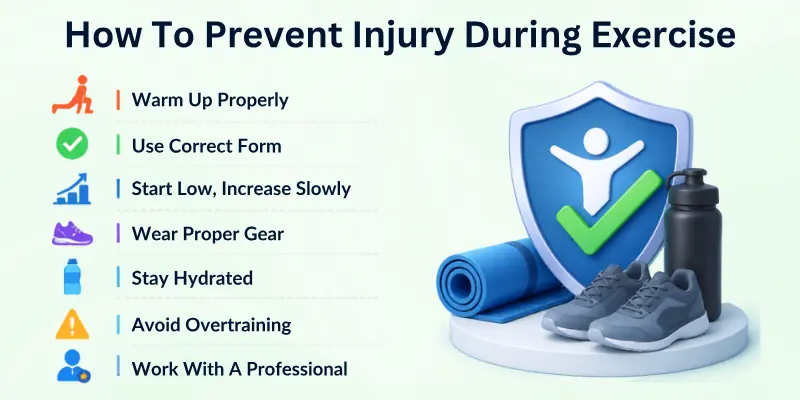
Here is a list of the most effective ways to prevent injuries while exercising:
- Warm Up Properly
- Use Correct Form And Technique
- Start With Low Weights Or Intensity
- Progress Gradually
- Wear Proper Footwear And Clothing
- Include Strength Training
- Stretch After Workouts
- Stay Hydrated
- Listen To Your Body
- Allow Adequate Rest And Recovery
- Avoid Overtraining
- Work With A Professional If Needed
Let us learn about each method in detail.
1. Warm Up Properly
A proper warm-up prepares your muscles, joints, and cardiovascular system for activity. It increases blood flow, raises body temperature, and reduces the risk of strains or tears. Skipping warm-ups can make muscles stiff and more prone to injury.
How To Apply:
- Perform 5–10 minutes of light cardio.
- Include dynamic stretches targeting muscles you’ll use.
- Do activation exercises for major muscle groups.
- Gradually increase intensity before heavy exercises.
- Avoid jumping directly into high-intensity movements.
2. Use Correct Form And Technique
Improper form is one of the most common causes of injury. Even small errors in posture or alignment can put excessive stress on muscles and joints. Learning and maintaining proper technique protects your body and improves performance.
How To Apply:
- Focus on proper alignment for every exercise.
- Keep your core engaged.
- Avoid locking joints unnecessarily.
- Start with lighter weights to master form.
- Consider guidance from a trainer.
3. Start With Low Weights Or Intensity
Jumping into heavy lifting or intense workouts too soon increases injury risk. Starting with manageable weights or intensity allows your muscles and joints to adapt. It also helps you build confidence and endurance safely.
How To Apply:
- Begin with lighter weights or lower intensity cardio.
- Focus on form rather than load.
- Increase intensity gradually.
- Track progress weekly.
- Avoid comparing yourself to others.
4. Progress Gradually
Sudden increases in exercise intensity, duration, or weight are common causes of overuse injuries. Gradual progression allows your body to adapt safely. Consistent, incremental increases reduce the chance of strains or stress injuries.
How To Apply:
- Increase weight or resistance in small steps.
- Add 5–10% to the intensity weekly.
- Avoid abrupt changes in routine.
- Monitor how your body responds.
- Prioritise consistency over rapid gains.
5. Wear Proper Footwear And Clothing
Wearing the right shoes and clothing protects your joints and supports natural movement. Improper footwear can lead to ankle sprains, knee pain, or foot injuries. Breathable and flexible clothing prevents discomfort and improves movement quality.
How To Apply:
- Choose shoes suitable for your activity.
- Replace worn-out shoes regularly.
- Wear moisture-wicking, flexible clothing.
- Ensure shoes provide proper arch support.
- Avoid restrictive clothing that limits movement.
6. Include Strength Training
Strengthening muscles, tendons, and ligaments improves joint stability and reduces injury risk. Balanced strength training supports weak areas that are prone to injury. It also enhances overall performance and movement efficiency.
How To Apply:
- Include full-body strength exercises 2–4 times per week.
- Focus on major muscle groups and stabilisers.
- Use proper weights and controlled movements.
- Include bodyweight exercises for beginners.
- Allow recovery between sessions.
7. Stretch After Workouts
Stretching post-workout improves flexibility and prevents muscles from tightening. It helps maintain the range of motion and reduces post-exercise stiffness. Proper stretching also aids in recovery and reduces soreness.
How To Apply:
- Perform static stretches after every workout.
- Hold each stretch for 20–30 seconds.
- Target muscles worked during your session.
- Avoid bouncing while stretching.
- Focus on deep, controlled breathing.
8. Stay Hydrated
Dehydration reduces muscle function, increases fatigue, and makes injury more likely. Staying hydrated supports performance, circulation, and recovery. Proper hydration is crucial before, during, and after workouts.
How To Apply:
- Drink water throughout the day.
- Take sips during workouts.
- Monitor urine colour to assess hydration.
- Avoid excessive caffeinated or sugary drinks.
- Replenish fluids after exercise.
9. Listen To Your Body
Ignoring pain or discomfort often leads to injuries. Differentiating between normal fatigue and warning signs prevents accidents. Paying attention to your body helps you adjust intensity and avoid overuse injuries.
How To Apply:
- Stop if you feel sharp or unusual pain.
- Modify exercises that cause discomfort.
- Track soreness and recovery.
- Avoid pushing through joint pain.
- Rest when your body signals fatigue.
10. Allow Adequate Rest And Recovery
Muscles need time to repair and grow stronger. Overworking without rest increases injury risk and reduces performance. Recovery supports energy, flexibility, and muscle resilience.
How To Apply:
- Schedule rest days in your routine.
- Rotate muscle groups for strength training.
- Sleep 7–8 hours per night.
- Use active recovery like light walking or stretching.
- Avoid consecutive high-intensity sessions.
11. Avoid Overtraining
Too much exercise without recovery weakens muscles, joints, and immune function. Overtraining increases the risk of stress fractures, strains, and fatigue. Balanced training ensures long-term progress and injury prevention.
How To Apply:
- Follow a structured training plan.
- Include rest days each week.
- Listen to warning signs like persistent soreness.
- Alternate intensity levels.
- Prioritise recovery and nutrition.
12. Work With A Professional If Needed
Professional guidance reduces mistakes and ensures proper technique. Trainers or physiotherapists can identify weak points and correct movement patterns. Personalised guidance reduces injury risk significantly.
How To Apply:
- Hire a certified trainer if unsure of the technique.
- Attend exercise workshops for proper form.
- Seek physiotherapy if recovering from an injury.
- Ask for personalised exercise modifications.
- Regularly reassess your program.
Tips for Safe Exercise
Preventing injuries requires a combination of preparation, technique, and awareness. Paying attention to warm-ups, form, and gradual progression creates a safe environment for your body. Combining strength, mobility, and flexibility training protects joints and muscles.
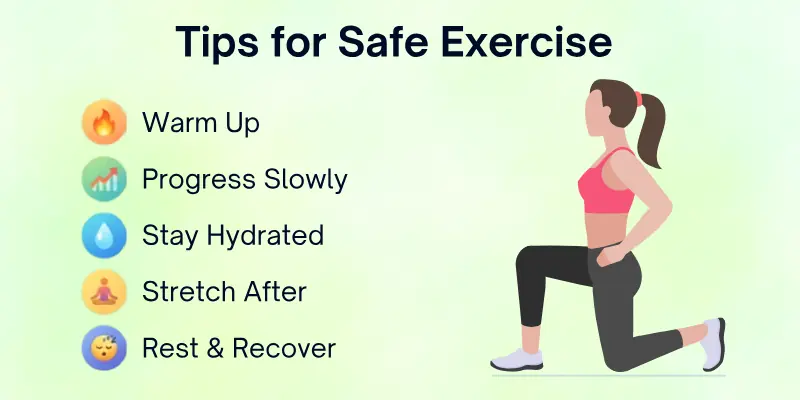
Key Actions:
- Warm up before every workout.
- Progress intensity gradually.
- Stay hydrated and fuel your body.
- Stretch after exercise.
- Prioritise rest and recovery.
Final Note
In this guide, we have covered the most effective ways to prevent injury during exercise. As a fitness professional, I always emphasise that prevention is better than cure. A safe exercise routine ensures consistent results, improved performance, and long-term health. Stay consistent, focus on proper technique, and explore more guides on this site to train smarter and safer.
FAQs
Here are some of the most commonly asked questions related to preventing injury during exercise:
Most injuries happen because of poor form or technique. Skipping warm-ups, overtraining, or sudden increases in intensity also cause problems. Paying attention to your body helps prevent injuries.
A warm-up usually takes 10–15 minutes. The time depends on your workout type and intensity. Warming up properly prepares your muscles and joints for exercise.
Dynamic stretching before workouts is best for injury prevention. Static stretching should be done after exercise to improve flexibility. This combination helps muscles work safely.
Yes, strength training makes muscles, ligaments, and joints stronger. This improves stability and reduces the chance of injuries. Strong muscles support your body during daily activities, too.
Safe exercises use proper form and manageable intensity. Listen to your body and stop if you feel pain. Starting slowly and progressing gradually helps prevent injuries.
Yes, overtraining increases the risk of strains, stress fractures, and fatigue. Rest days are important for recovery. Training too hard without breaks can set back progress.
Yes, a trainer teaches correct form and proper technique. Beginners learn exercises safely and avoid injuries. Trainers can also create a balanced workout plan.
Proper shoes support your joints and muscles. They help prevent slips and reduce strain on your body. Wearing the right shoes for your activity lowers injury risk.
Yes, dehydration reduces muscle function and increases fatigue. Tired muscles are more prone to injury. Drinking enough water keeps your body working safely.
Recovery depends on how severe the injury is. Rest, physiotherapy, and proper nutrition help speed up healing. Following your doctor’s or trainer’s advice ensures a safer recovery.






- Be Respectful
- Stay Relevant
- Stay Positive
- True Feedback
- Encourage Discussion
- Avoid Spamming
- No Fake News
- Don't Copy-Paste
- No Personal Attacks
- Be Respectful
- Stay Relevant
- Stay Positive
- True Feedback
- Encourage Discussion
- Avoid Spamming
- No Fake News
- Don't Copy-Paste
- No Personal Attacks
