Ball Exercises for Pregnancy: Support a Healthy Pregnancy
Published: 28 Oct 2026
Many pregnant women want to stay active but worry about choosing exercises that are safe for them and their baby. Some avoid exercise completely because they fear it could cause harm. Others are unsure which movements can ease common discomforts like back pain, pelvic pressure, and poor posture.
One simple and gentle option is ball exercises for pregnancy. These exercises use a birthing or stability ball to support your body while you move. They can help improve comfort, posture, balance, and flexibility. They may also prepare your body for labor by encouraging better pelvic mobility and relaxation.
In this guide, you’ll learn the ball exercises for pregnancy, important safety tips, common mistakes to avoid, and answers to frequently asked questions. You’ll also find practical guidance to help you exercise with confidence throughout your pregnancy.
How to Choose the Right Exercise Ball During Pregnancy
Choosing the right exercise ball is important for both safety and comfort. A ball that fits your height provides better support, improves balance, and helps you perform ball exercises for pregnancy with proper form. It also reduces the risk of strain and makes each movement feel more comfortable.
Exercise Ball Size Chart
Use the chart below to choose the right exercise ball based on your height.
| Your Height | Recommended Ball Size | Knee Position When Sitting |
|---|---|---|
| Under 5’4″ (163 cm) | 55 cm | Hips level with or slightly higher than knees |
| 5’4″ to 5’10” (163 to 178 cm) | 65 cm | Hips level with or slightly higher than knees |
| Over 5’10” (178 cm) | 75 cm | Hips level with or slightly higher than knees |
Features to Look For
The right exercise ball can make your workouts safer and more comfortable during pregnancy. Before buying one, make sure it has the following features.
Look for these important features:
- Anti-Burst Material: Reduces the risk of the ball bursting suddenly if it gets punctured.
- Non-Slip Surface: Provides a better grip and helps prevent slipping during exercise.
- Proper Inflation: The ball should feel firm while allowing a slight give when you sit on it.
- Weight Capacity: Check that the ball can safely support your weight during pregnancy.
Quick Tip: When you sit on the ball, your feet should rest flat on the floor. Your knees should form about a 90-degree angle and stay level with or slightly lower than your hips.
Ball Exercises for Pregnancy
Regular pregnancy exercises with a ball can help reduce back pain, improve posture, and keep your body moving safely during pregnancy. These gentle exercises are easy to perform and can support your hips, pelvis, and core while preparing your body for labor.
Here are some safe and effective ball exercises for pregnancy:
- Seated Pelvic Tilts
- Hip Circles
- Side-to-Side Sways
- Gentle Ball Bounces
- Figure Eight Pelvic Movements
- Seated Marches
- Wall Squats
- Wall Push-Ups
- Cat-Cow Stretch with the Ball
- Child’s Pose with the Ball
- Ball Supported Forward Lean
- Hip Openers
Let’s look at each exercise and how to do it safely.
1. Seated Pelvic Tilts
Seated pelvic tilts are one of the safest ball exercises for pregnancy. This gentle movement involves rocking your pelvis forward and backward while sitting on an exercise ball. It helps improve pelvic mobility, supports better posture, and may ease lower back discomfort as your pregnancy progresses.
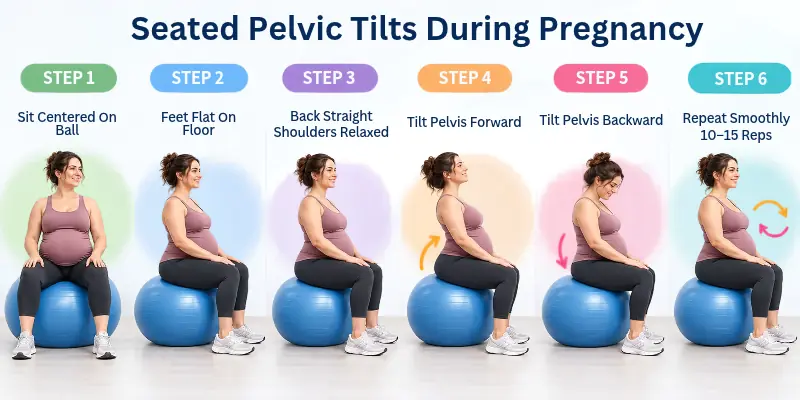
Regular practice can also reduce stiffness around the hips and lower back, making everyday movements more comfortable. It is a simple exercise that many women include in their prenatal routine to stay active and prepare their bodies for labor.
How to Do It:
- Sit in the center of the exercise ball with your feet flat on the floor.
- Keep your back straight, and your shoulders relaxed.
- Gently tilt your pelvis forward.
- Slowly tilt it backward.
- Keep the movement smooth and controlled.
- Repeat for 10 to 15 repetitions.
Tip: Breathe normally throughout the exercise and avoid forcing the movement. Stop if you feel pain, dizziness, or unusual discomfort.
2. Hip Circles
Hip circles are a gentle ball exercise for pregnancy that involves moving your hips in slow, circular motions while sitting on an exercise ball. This movement helps loosen the hip joints, improve pelvic flexibility, and reduce stiffness caused by pregnancy.
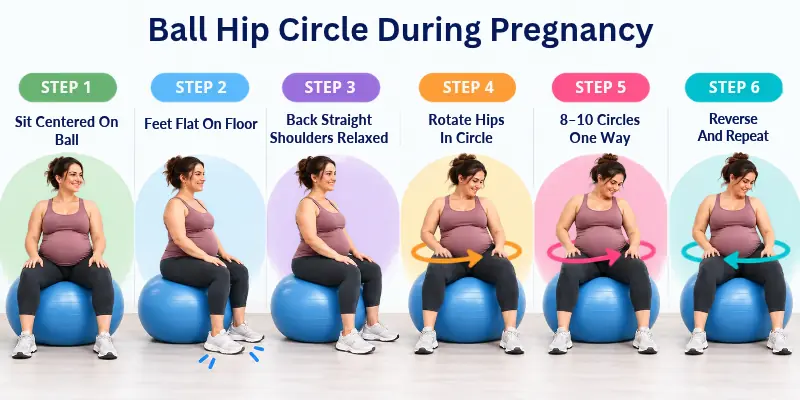
It can also ease pressure in the lower back and pelvis, making sitting, standing, and walking more comfortable. Many women find this exercise relaxing, especially during the later stages of pregnancy, as it encourages better pelvic mobility and helps prepare the body for labor.
How to Do It:
- Sit in the center of the exercise ball with your feet flat on the floor.
- Keep your back straight and your shoulders relaxed.
- Slowly rotate your hips in a large circle.
- Complete 8 to 10 circles in one direction.
- Reverse the direction and repeat.
- Keep your movements slow and controlled.
Tip: Move only as far as feels comfortable and keep both feet firmly on the floor for better balance.
3. Side-to-Side Sways
Side-to-side sways are simple ball exercises for pregnancy that involve gently shifting your weight from one side to the other while sitting on an exercise ball. This movement helps improve balance, increase hip mobility, and reduce tension in the lower back and pelvic area.
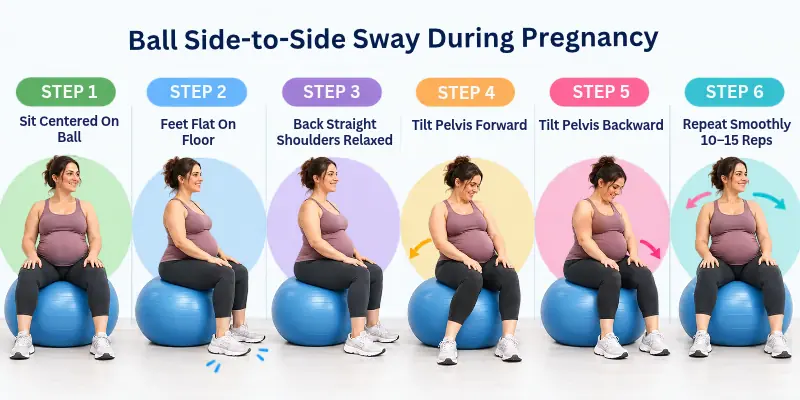
It also encourages better posture and can make sitting more comfortable as your pregnancy progresses. Many women use this exercise to stay relaxed and keep their hips flexible throughout pregnancy.
How to Do It:
- Sit in the center of the exercise ball with your feet flat on the floor.
- Keep your back straight and your shoulders relaxed.
- Slowly shift your hips to the left without lifting your feet.
- Move back to the center, then shift your hips to the right.
- Continue the movement from side to side in a slow, controlled manner.
- Repeat for 10 to 15 repetitions on each side.
Tip: Keep your upper body steady and avoid making quick or jerky movements.
4. Gentle Ball Bounces
Gentle ball bounces are easy ball exercises for pregnancy that involve making small, controlled bouncing movements while sitting on an exercise ball. This exercise helps reduce pressure on the hips and lower back, improves blood circulation, and encourages your pelvic muscles to relax.
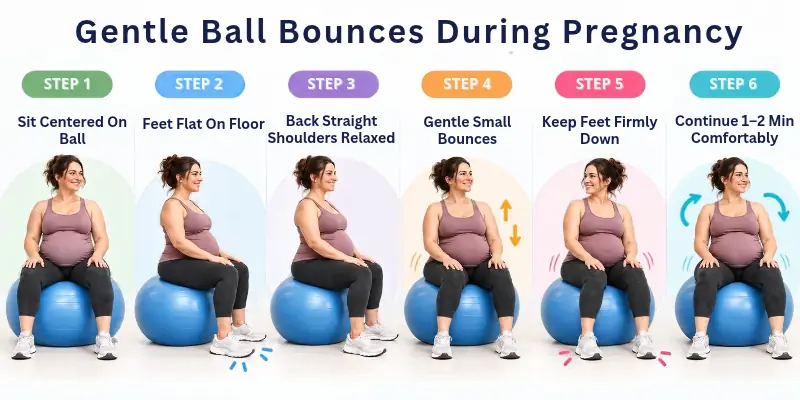
Many pregnant women find these gentle movements soothing, especially after sitting or standing for long periods. It may also help keep your body comfortable as you prepare for labor.
How to Do It:
- Sit in the center of the exercise ball with your feet flat on the floor.
- Keep your back straight and your shoulders relaxed.
- Gently bounce up and down using small, controlled movements.
- Keep both feet firmly on the floor throughout the exercise.
- Continue for 1 to 2 minutes or as long as you feel comfortable.
Tip: Make small, gentle bounces and avoid bouncing too high or too fast to maintain good balance.
5. Figure Eight Pelvic Movements
Figure eight pelvic movements are gentle ball exercises for pregnancy performed while sitting on an exercise ball. You move your hips in a slow figure-eight pattern. This exercise improves pelvic mobility and increases hip flexibility. It can also reduce stiffness in the lower back and pelvis. Regular practice helps your body move more comfortably as your pregnancy progresses.
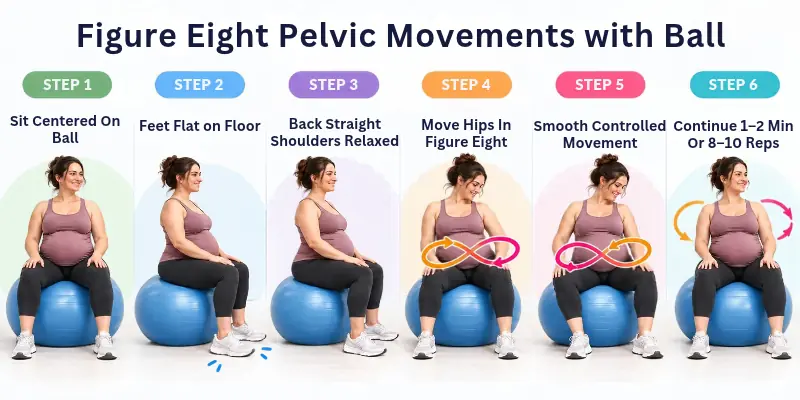
It may also support your body as you prepare for labor. This movement encourages your pelvis to move through a comfortable range of motion. Many women find it relaxing, especially during the second and third trimesters.
How to Do It:
- Sit in the center of the exercise ball with your feet flat on the floor.
- Keep your back straight and your shoulders relaxed.
- Slowly move your hips in a figure-eight pattern.
- Keep the movement smooth and controlled.
- Continue for 1 to 2 minutes or complete 8 to 10 figure-eight movements.
- Rest if needed before repeating.
Tip: Focus on slow, controlled movements. Keep both feet firmly on the floor to stay balanced.
6. Seated Marches
Seated marches are simple ball exercises for pregnancy that help improve balance and strengthen the muscles used for walking and daily activities. You perform this exercise by lifting one knee at a time while sitting on an exercise ball. It helps improve stability, supports better posture, and gently activates your core muscles.
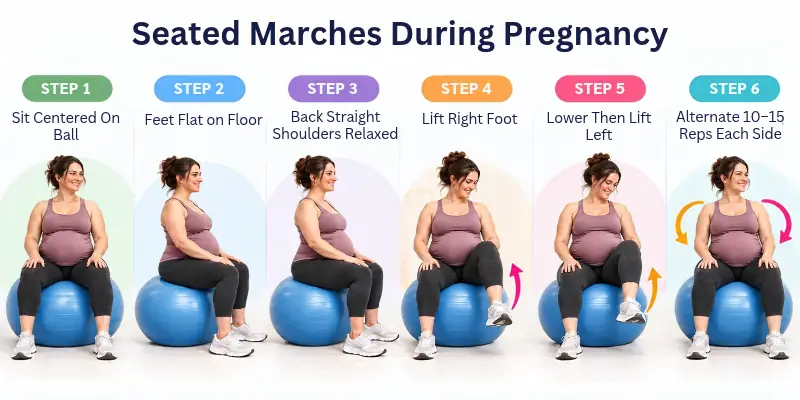
Regular practice can also improve coordination and make everyday movements feel easier. This low-impact exercise is suitable for most pregnant women when performed with proper control.
How to Do It:
- Sit in the center of the exercise ball with your feet flat on the floor.
- Keep your back straight, and your shoulders relaxed.
- Slowly lift your right foot a few inches off the floor.
- Lower it back down with control.
- Repeat with your left foot.
- Continue alternating legs for 10 to 15 repetitions on each side.
Tip: Lift your feet only as high as feels comfortable and avoid leaning your body from side to side.
7. Wall Squats
Wall squats are effective ball exercises for pregnancy that strengthen your legs, hips, and glutes while reducing pressure on your joints. This exercise uses an exercise ball placed between your back and a wall for extra support. It helps improve lower body strength and supports better posture as your pregnancy progresses.
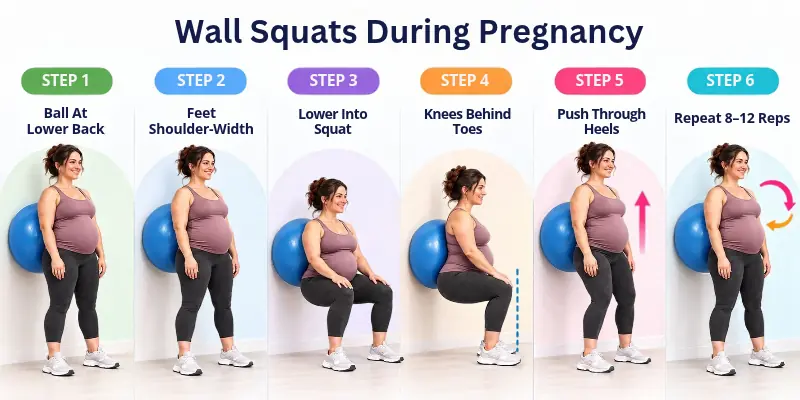
Strong leg muscles can make everyday activities like standing, walking, and sitting down easier. This exercise may also help prepare your body for labor by building strength and stability.
How to Do It:
- Place the exercise ball between your lower back and a wall.
- Stand with your feet shoulder-width apart and slightly in front of your body.
- Slowly bend your knees and lower into a comfortable squat.
- Keep your knees behind your toes.
- Push through your heels to return to the starting position.
- Repeat for 8 to 12 repetitions.
Tip: Only squat as low as feels comfortable. Stop immediately if you feel pain, dizziness, or lose your balance.
8. Wall Push-Ups
Wall push-ups are safe ball exercises for pregnancy that help strengthen your arms, shoulders, and chest without placing too much pressure on your body. The exercise ball provides extra support and helps you maintain proper alignment during the movement.
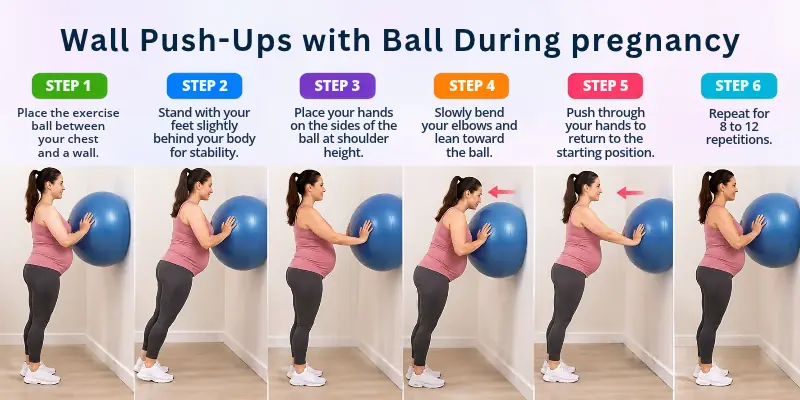
It can improve upper body strength, support better posture, and make everyday tasks easier as your pregnancy progresses. This low-impact exercise is suitable for most pregnant women when performed with good form.
How to Do It:
- Place the exercise ball between your chest and a wall.
- Stand with your feet slightly behind your body for stability.
- Place your hands on the sides of the ball at shoulder height.
- Slowly bend your elbows and lean toward the ball.
- Push through your hands to return to the starting position.
- Repeat for 8 to 12 repetitions.
Tip: Keep your body in a straight line throughout the exercise. Avoid locking your elbows or leaning too far forward.
9. Cat-Cow Stretch with the Ball
The cat-cow stretch with the ball is a gentle ball exercise for pregnancy that helps improve spinal mobility and reduce back tension. The exercise ball provides support, making the movement more comfortable during pregnancy. It can ease stiffness in the neck, shoulders, and lower back while encouraging better posture.
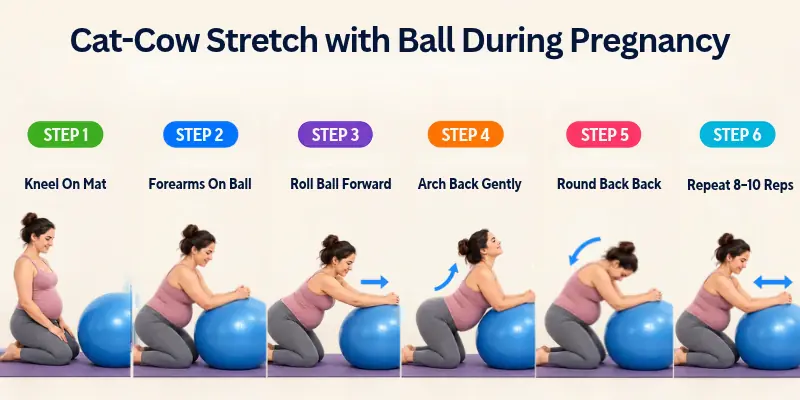
Regular practice also helps improve flexibility and promotes relaxation after a long day. Many women find this stretch especially helpful as their pregnancy progresses.
How to Do It:
- Kneel on a soft mat in front of the exercise ball.
- Place both hands and forearms on the ball.
- Slowly roll the ball forward while gently arching your back.
- Then round your back slightly as you roll the ball back toward you.
- Keep the movements slow and controlled.
- Repeat for 8 to 10 repetitions.
Tip: Move within a comfortable range and breathe slowly throughout the exercise. Stop if you feel pain or discomfort.
10. Child’s Pose with the Ball
Child’s pose with the ball is a relaxing ball exercise for pregnancy that gently stretches your back, hips, and shoulders. The exercise ball supports your upper body, making the stretch more comfortable than the traditional version. It can help reduce muscle tension, improve flexibility, and relieve pressure in the lower back.
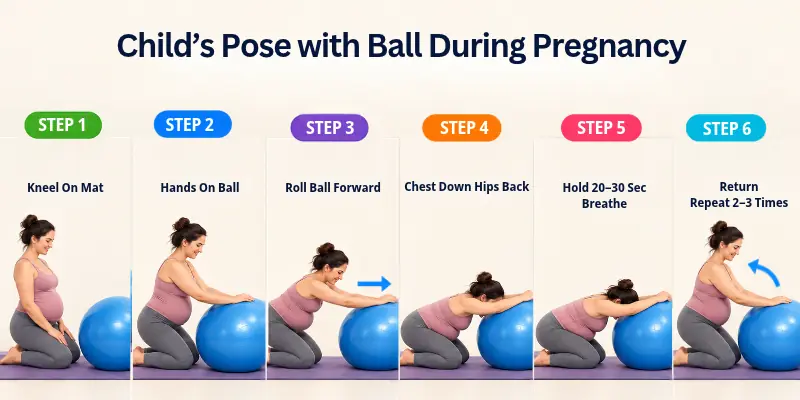
This calming stretch also encourages deep breathing and helps your body relax. Many women enjoy this exercise after other prenatal workouts or at the end of the day.
How to Do It:
- Kneel on a soft mat in front of the exercise ball.
- Place both hands on top of the ball.
- Slowly roll the ball forward as you lower your chest toward the floor.
- Keep your arms extended and your hips comfortably back.
- Hold the stretch for 20 to 30 seconds while breathing deeply.
- Slowly return to the starting position and repeat 2 to 3 times.
Tip: Stretch only as far as feels comfortable. Avoid forcing the movement or holding your breath.
11. Ball Supported Forward Lean
The ball-supportedforward lean is a gentle ball exercise for pregnancy that helps reduce pressure on your lower back and pelvis. You lean forward onto an exercise ball while supporting your upper body with your arms. This position encourages your back and hip muscles to relax and can improve overall comfort.
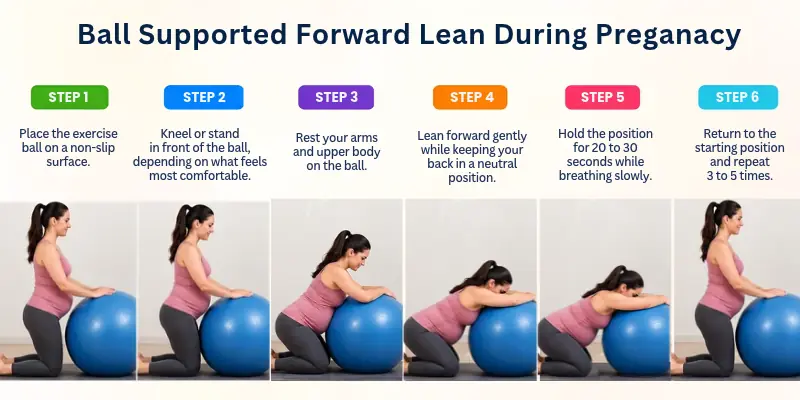
It also promotes better pelvic positioning and may help your body prepare for labor. Many women find this exercise soothing during the second and third trimesters.
How to Do It:
- Place the exercise ball on a non-slip surface.
- Kneel or stand in front of the ball, depending on what feels most comfortable.
- Rest your arms and upper body on the ball.
- Lean forward gently while keeping your back in a neutral position.
- Hold the position for 20 to 30 seconds while breathing slowly.
- Return to the starting position and repeat 3 to 5 times.
Tip: Keep your shoulders relaxed and avoid putting too much weight on the ball. Stop if you feel pain or dizziness.
12. Hip Openers
Hip openers are gentle ball exercises for pregnancy that help increase flexibility in your hips and pelvic area. These movements encourage your hips to relax and move more freely as your pregnancy progresses.
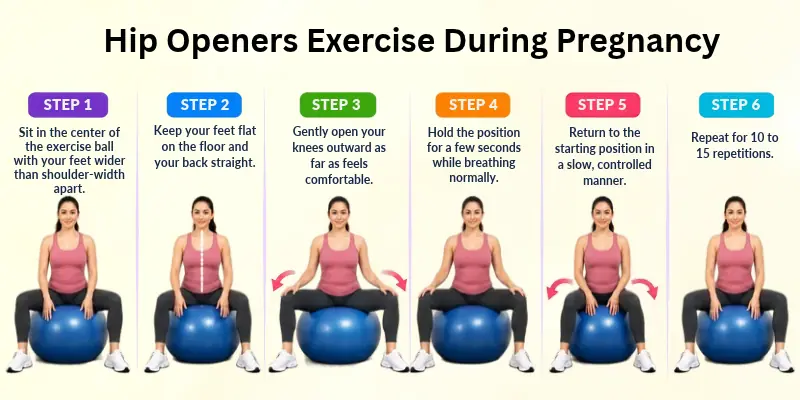
They can reduce tightness, improve comfort, and support better pelvic mobility. Regular practice may also help your body prepare for labor by keeping the pelvic muscles flexible. Many women find this exercise especially helpful during the third trimester.
How to Do It:
- Sit in the center of the exercise ball with your feet wider than shoulder-width apart.
- Keep your feet flat on the floor and your back straight.
- Gently open your knees outward as far as feels comfortable.
- Hold the position for a few seconds while breathing normally.
- Return to the starting position in a slow, controlled manner.
- Repeat for 10 to 15 repetitions.
Tip: Avoid pushing your knees too far apart. Move only within a comfortable range and keep your movements slow and steady.
Ball Exercises by Pregnancy Trimester
Your body changes throughout pregnancy, and your exercise routine should change with it. Choosing the right ball exercises for pregnancy during each trimester helps you stay active, reduce discomfort, and exercise more safely.
Here are the best ball exercises for each stage of pregnancy:
1. First Trimester
During the first trimester, focus on gentle exercises that keep your body moving without causing too much strain. Start slowly and exercise only if you feel comfortable.
- Seated Pelvic Tilts: Improve pelvic mobility and reduce stiffness.
- Hip Circles: Increase hip flexibility and ease lower back tension.
- Side-to-Side Sways: Improve balance and relax the pelvic muscles.
- Gentle Ball Bounces: Promote circulation and help your body relax.
2. Second Trimester
As your baby grows, your center of gravity changes. This is a good time to improve strength, balance, and posture while keeping your movements controlled.
- Seated Marches: Improve balance and strengthen your core and legs.
- Wall Squats: Build strength in your legs and hips.
- Figure Eight Pelvic Movements: Increase pelvic flexibility and improve coordination.
- Cat-Cow Stretch with the Ball: Improve spinal mobility and reduce back stiffness.
- Hip Openers: Keep your hips flexible and reduce tightness.
3. Third Trimester
During the final trimester, choose exercises that improve comfort and help prepare your body for labor. Focus on gentle movements that reduce pressure on your back and pelvis.
- Ball Supported Forward Lean: Relieve pressure on your lower back and pelvis.
- Child’s Pose with the Ball: Stretch your back and promote relaxation.
- Hip Openers: Improve pelvic mobility and flexibility.
- Figure Eight Pelvic Movements: Encourage smooth pelvic movement before labor.
- Gentle Ball Bounces: Help relax the pelvic muscles and improve comfort.
Safety Tips for Ball Exercises During Pregnancy
Safety should always come first when doing ball exercises for pregnancy. A few simple precautions can help you exercise safely and reduce the risk of injury. Pay attention to how your body feels and avoid pushing beyond your comfort level.
Follow these important safety tips:
- Medical Approval: Consult your healthcare provider before starting a new exercise routine.
- Correct Ball Size: Choose a ball that keeps your knees level with or slightly lower than your hips.
- Proper Footwear: Wear supportive shoes or exercise barefoot for better stability.
- Safe Surface: Use the ball on a flat, non-slip floor.
- Extra Support: Hold onto a wall or sturdy chair if you need better balance.
- Slow Movements: Perform every exercise with smooth, controlled motion.
- No Twisting: Avoid sudden or forceful twisting movements.
- Stay Hydrated: Drink enough water before, during, and after exercising.
- Listen to Your Body: Stop immediately if you feel dizzy, weak, or short of breath.
- Avoid Pain: Never continue an exercise that causes pain or discomfort.
Common Mistakes to Avoid
Even simple ball exercises for pregnancy can become less effective if you use the wrong technique. Avoiding common mistakes can help you stay comfortable, improve your results, and reduce the risk of injury.
Avoid these common mistakes during your workout:
- Wrong Ball Size: Choose a ball that fits your height and provides proper support.
- Poor Sitting Position: Avoid sitting too high or too low on the ball.
- Poor Posture: Keep your back straight, and your shoulders relaxed throughout each exercise.
- Overinflating: Do not overinflate the ball, as it can reduce stability.
- Fast Movements: Perform every exercise slowly and with control.
- Holding Your Breath: Breathe normally during each movement.
- Ignoring Pain: Stop immediately if you feel pain or unusual discomfort.
- No Support: Use a wall or sturdy chair if you need extra balance.
Conclusion
In this guide, you learned the benefits of ball exercises for pregnancy, how to choose the right exercise ball, safe exercises to try during each trimester, important safety tips, common mistakes to avoid, and how to exercise with proper form.
Adding these gentle exercises to your routine can help improve posture, reduce common pregnancy discomforts, increase flexibility, and prepare your body for labor. Choose the right ball, move at a comfortable pace, and always listen to your body. If you have a high-risk pregnancy or any medical concerns, talk to your healthcare provider before starting a new exercise routine.
With the right approach, ball exercises for pregnancy can help you stay active, feel more comfortable, and support a healthier pregnancy.
Frequently Asked Questions
Here are answers to some of the most common questions about ball exercises for pregnancy.
1. Are ball exercises safe during pregnancy?
Yes, ball exercises for pregnancy are generally safe for most women with a healthy pregnancy. They can improve posture, reduce back pain, and increase pelvic mobility. Always use the correct technique and get approval from your healthcare provider before starting a new exercise routine.
2. When can I start using an exercise ball during pregnancy?
You can usually start using an exercise ball during the first trimester if your healthcare provider says it is safe. Begin with gentle exercises and increase your activity gradually as your pregnancy progresses.
3. Which exercise ball is best for pregnancy?
Choose an exercise ball with these features:
- Anti-burst material
- Non-slip surface
- Correct size for your height
- Suitable weight capacity
These features improve safety and comfort during pregnancy.
4. Can bouncing on a pregnancy ball help induce labor?
Gentle bouncing on an exercise ball does not induce labor on its own. However, it may help relax your pelvic muscles, improve comfort, and encourage your baby to move into an ideal position before labor. Always follow your healthcare provider’s advice, especially near your due date.
5. How long should I sit on a pregnancy ball?
Most women can sit on a pregnancy ball for 15 to 30 minutes at a time if they feel comfortable. Take regular breaks and avoid sitting for too long if you feel tired or uncomfortable.
6. Can I do ball exercises every day during pregnancy?
Yes, many ball exercises for pregnancy are gentle enough to perform daily. Keep your sessions comfortable, stay hydrated, and stop if you feel pain, dizziness, or unusual discomfort.
7. Do pregnancy ball exercises help with back pain?
Yes, they may help relieve lower back pain by improving posture, increasing pelvic mobility, and reducing muscle stiffness. Gentle movements can also reduce pressure on the lower back as your pregnancy progresses.
8. Can ball exercises help prepare for labor?
Yes, regular ball exercises can improve pelvic flexibility, encourage better posture, and help your body relax. These benefits may support your body as you prepare for labor and delivery.
9. What size pregnancy ball should I use?
The right ball size depends on your height. Most women use a 55 cm, 65 cm, or 75 cm exercise ball. When sitting on the ball, your hips should be level with or slightly higher than your knees for the best support.
10. When should I stop doing pregnancy ball exercises?
Stop ball exercises for pregnancy immediately if you experience any of the following symptoms:
- Vaginal bleeding
- Leaking amniotic fluid
- Regular or painful contractions
- Severe dizziness or fainting
- Chest pain
- Difficulty breathing
- Severe abdominal or pelvic pain
- Decreased baby movements after your healthcare provider has advised monitoring.
Contact your healthcare provider right away if you notice any of these warning signs.






- Be Respectful
- Stay Relevant
- Stay Positive
- True Feedback
- Encourage Discussion
- Avoid Spamming
- No Fake News
- Don't Copy-Paste
- No Personal Attacks
- Be Respectful
- Stay Relevant
- Stay Positive
- True Feedback
- Encourage Discussion
- Avoid Spamming
- No Fake News
- Don't Copy-Paste
- No Personal Attacks
