Best Exercises for Kidney Health: Simple Ways to Support Healthy Kidneys
Published: 19 Oct 2026
Do you think only a healthy diet can keep your kidneys in good shape? Many people focus on what they eat but overlook the role of regular exercise. The truth is that staying active can also help support healthy kidneys and improve your overall health.
Exercise improves blood circulation, helps manage blood pressure, supports healthy blood sugar levels, and makes it easier to maintain a healthy weight. Regular physical activity may also lower the risk of health conditions that can affect kidney health over time.
In this article, you’ll discover the best exercises for kidney health that are simple, beginner-friendly, and easy to include in your daily routine. You’ll also learn helpful safety tips and mistakes to avoid while exercising for kidney health.
Best Exercises for Kidney Health
Regular physical activity plays an important role in supporting healthy kidneys. It helps improve circulation, manage blood pressure, and maintain a healthy weight, all of which benefit kidney function. The good news is that you do not need intense workouts. Simple and consistent movement can make a real difference.
Here are the kidney health exercises that can support your overall fitness:
- Walking
- Cycling
- Swimming
- Chair Exercises
- Strength Training
- Yoga
- Stretching Exercises
- Tai Chi
- Water Aerobics
- Dancing
Let’s take a closer look at each exercise and learn how it can help support kidney health.
1. Walking
Walking is one of the best exercise for kidney health because it is simple, low impact, and suitable for people of all fitness levels. You don’t need any equipment or training to start walking. It’s easy to fit into your daily routine, which makes it a great first step toward staying active.

These benefits reduce extra stress on the kidneys and support overall health. If you are looking for an easy exercise for kidney health, walking is a great place to begin. Pairing regular walking with a balanced diet can provide even more benefits, so be sure to include the foods for kidney health in your daily meals.
How to Do It:
- Wear comfortable walking shoes.
- Start with a slow pace for 5 minutes to warm up.
- Walk at a comfortable speed while keeping your back straight.
- Swing your arms naturally and breathe steadily.
- Slow down for a few minutes before you finish.
Duration: Walk for 30 minutes on most days of the week. If you are a beginner, start with 10 to 15 minutes and gradually increase your walking time.
Tip: Drink water before and after your walk. Staying hydrated helps your kidneys work better. See our guide on the benefits of drinking water.
2. Cycling
Cycling is a low-impact cardio exercise that helps strengthen your heart and improve blood circulation. Cycling is easier on your knees than walking or running, so you can work out longer without joint pain.

These benefits help reduce extra stress on the kidneys and support overall wellness. If you want to add variety to your kidney health exercises, cycling is a great choice.
How to Do It
- Choose a bicycle that fits your height and is comfortable to ride.
- Adjust the seat so your knees stay slightly bent while pedaling.
- Begin with a slow pace for a few minutes.
- Ride at a steady, comfortable speed.
- Finish with a slower pace to cool down.
Duration: Cycle for 20 to 30 minutes, 3 to 5 days a week. If you are new to cycling, start with 10 to 15 minutes and gradually increase your time.
Tip: Stay hydrated during your ride, especially in hot weather. If you feel very thirsty, dizzy, or notice dark urine, stop and rest. These can be signs of dehydration.
3. Swimming
Swimming is a gentle, low-impact exercise that works the entire body without putting too much pressure on your joints. The water holds up your body weight, so your joints don’t feel much pressure. This makes swimming a good choice if you have joint pain.

These benefits can help support kidney health and improve overall fitness. If you enjoy water-based exercises for kidney health, swimming is an excellent option.
How to Do It
- Start with a few minutes of gentle swimming to warm up.
- Choose a comfortable stroke, such as freestyle or breaststroke.
- Swim at a steady pace without overexerting yourself.
- Take short breaks if you feel tired.
- Finish with a few slow laps to cool down.
Duration: Swim for 20 to 30 minutes, 2 to 4 times a week. Beginners can start with 10 to 15 minutes and gradually increase the duration.
Tip: Drink water before and after swimming, even if you do not feel thirsty.
4. Chair Exercises
Chair exercises are simple movements performed while sitting or using a chair for support. They are ideal for older adults, beginners, or anyone with limited mobility.
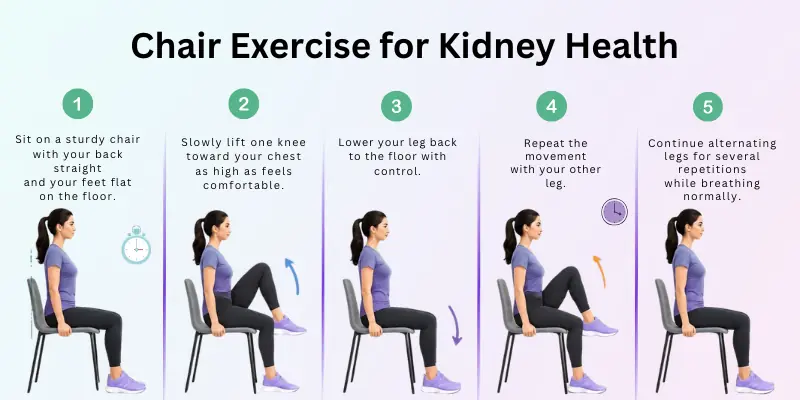
These exercises are safe for people who have trouble standing or moving around a lot. You can stay active while sitting down. They also help support healthy blood pressure and overall fitness.
How to Do It
- Sit on a sturdy chair with your back straight and your feet flat on the floor.
- Slowly lift one knee toward your chest as high as feels comfortable.
- Lower your leg back to the floor with control.
- Repeat the movement with your other leg.
- Continue alternating legs for several repetitions while breathing normally.
Duration: Perform chair exercises for 15 to 20 minutes, 3 to 5 days a week. If you are a beginner, start with 5 to 10 minutes and gradually increase your time.
Tip: Use a stable chair that does not slide or have wheels. If your legs or feet suddenly swell, don’t ignore it. This could be a sign of a kidney problem. Check the symptoms of kidney disease to learn more.
5. Strength Training
Strength training involves exercises that use resistance to build muscle strength and improve body stability. It can include bodyweight movements, resistance bands, or light weights. Building muscle also helps your body handle blood sugar better, which is why doctors often suggest strength training along with cardio.

Regular strength training also supports better blood sugar control and overall fitness, which can reduce factors that may put extra stress on the kidneys.
How to Do It
- Start with light weights, resistance bands, or bodyweight exercises.
- Warm up your muscles before beginning.
- Perform simple movements like squats, wall push-ups, or light arm curls.
- Keep your movements slow and controlled.
- Breathe normally during each exercise.
- Rest between exercises to avoid overexertion.
Duration: Perform strength training for 20 to 30 minutes, 2 to 3 days a week. Start with lighter resistance and gradually increase as your strength improves.
Tip: Focus on proper form instead of lifting heavy weights. If you have kidney problems or other health conditions, talk to your doctor before starting a new strength training routine.
6. Yoga
Yoga is a gentle exercise that combines stretching, controlled movements, and breathing techniques. It can help improve flexibility, reduce stress, and support better blood circulation. Slow breathing and calm movements help lower stress. Less stress can also mean better blood pressure.

Regular yoga practice can also improve body balance, muscle strength, and mobility. It is a low-impact activity that many beginners can include in their routine to stay active while supporting their overall health.
How to Do It
- Sit on a yoga mat or comfortable surface.
- Start with a gentle pose like Child’s Pose or Cat-Cow Stretch.
- Move slowly while focusing on your breathing.
- Hold each position for a few seconds.
- Repeat the movements without forcing your body.
Duration: Practice yoga for 15 to 30 minutes, 3 to 5 days a week. Beginners can start with shorter sessions and gradually increase the duration.
Tip: Choose gentle yoga poses and avoid difficult positions if you are new to yoga or have health concerns.
7. Stretching Exercises
Stretching exercises are gentle movements that help improve flexibility, reduce muscle stiffness, and support better mobility. Stretching works best before or after other workouts. It helps your body warm up or cool down properly. Better circulation and regular physical activity can support overall health factors that are important for maintaining healthy kidneys.
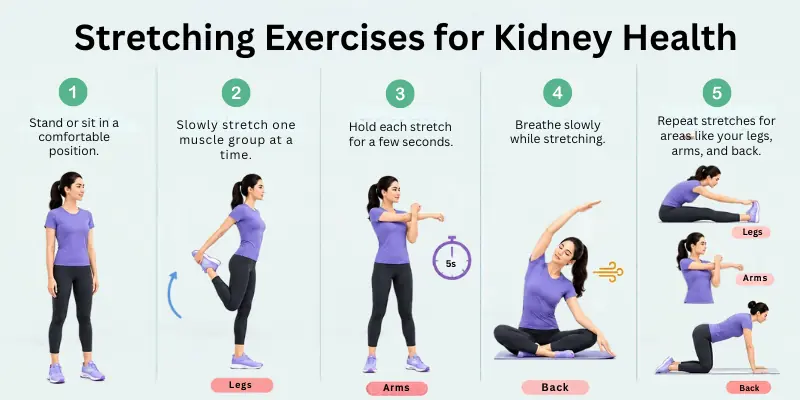
Stretching is a low-impact activity that suits beginners and older adults. It can also help the body relax, reduce tension, and prepare muscles for other exercises that support kidney health.
How to Do It
- Stand or sit in a comfortable position.
- Slowly stretch one muscle group at a time.
- Hold each stretch for a few seconds.
- Breathe slowly while stretching.
- Repeat stretches for areas like your legs, arms, and back.
Duration: Perform stretching exercises for 10 to 15 minutes, 3 to 5 days a week. You can also include gentle stretches before or after other workouts.
Tip: Never force a stretch or continue if you feel pain. Keep your movements slow and controlled.
8. Tai Chi
Tai Chi is a gentle exercise that combines slow movements, controlled breathing, and balance techniques. It helps improve coordination, flexibility, and body awareness. This makes it a useful option for beginners and older adults who want to stay active without putting too much pressure on their bodies.

Regular Tai Chi practice can help reduce stress, improve posture, and support better physical balance. These benefits can help you maintain an active lifestyle, which plays an important role in overall kidney health.
How to Do It
- Stand with your feet apart and relax your shoulders.
- Move your arms slowly with controlled movements.
- Shift your weight gently from one foot to the other.
- Focus on deep breathing during each movement.
- Repeat the sequence at a comfortable pace.
Duration: Practice Tai Chi for 15 to 30 minutes, 3 to 5 days a week.
Tip: Start with simple movements and focus on balance and control rather than speed.
9. Water Aerobics
Water aerobics is a low-impact exercise performed in a pool that combines simple movements with water resistance. The water supports your body and reduces pressure on your joints, making it a comfortable option for beginners, older adults, or people who find regular workouts difficult. Moving through water gives your muscles a workout without putting stress on your joints, unlike lifting weights on land.

Because it is gentle on the body, water aerobics can be a good choice for people looking for safe exercises for kidney health. Regular movement can support overall fitness and help you maintain a healthy, active routine.
How to Do It
- Stand in waist-deep water and maintain good balance.
- Start with simple movements like walking in water or leg lifts.
- Move your arms and legs against the water resistance.
- Keep your movements slow and controlled.
- Take breaks when needed and avoid overexertion.
Duration: Do water aerobics for 20 to 30 minutes, 2 to 3 times a week. Beginners can start with shorter sessions and gradually increase the duration.
Tip: Choose a pool depth where you feel comfortable and safe. Drink water before and after your workout to stay hydrated.
10. Dancing
Dancing is a fun aerobic activity that combines body movement, rhythm, and music. It helps improve stamina, coordination, and overall fitness while making exercise more enjoyable. As one of the exercises for kidney health, dancing can help you stay active, manage body weight, and support a healthy lifestyle.

Dancing is also a good option for people who do not enjoy traditional workouts. Regular movement through dancing can improve energy levels, balance, and muscle strength.
How to Do It
- Choose a dance style that matches your fitness level.
- Start with simple steps and gentle movements.
- Move your arms and legs with the rhythm.
- Keep your posture straight while dancing.
- Maintain a comfortable pace and breathe normally.
- Slow down gradually to cool down.
Duration: Dance for 20 to 30 minutes, 3 to 5 days a week. Beginners can start with shorter sessions and increase the time slowly.
Tip: Wear comfortable shoes and choose a safe space to avoid slips or injuries. Enjoy the movement and focus on staying consistent rather than dancing perfectly.
Exercise Tips for People with Kidney Disease
If you have kidney disease, you need to be more careful while exercising. The right approach can help you stay active while reducing the risk of unnecessary strain on your body. Always choose exercises according to your health condition and follow your healthcare provider’s advice.
Here are some important tips to follow:
- Start slowly: Begin with light exercises and increase intensity gradually as your body becomes stronger.
- Stay hydrated: Drink fluids according to your doctor’s advice, especially if you have fluid restrictions.
- Monitor blood pressure: Check your blood pressure regularly because high blood pressure can affect kidney health.
- Wear comfortable shoes: Use supportive footwear to improve comfort and reduce the risk of injury.
- Warm up: Spend a few minutes warming up your muscles before starting exercise.
- Cool down: Slow down your movements after exercise to help your body return to a relaxed state.
- Stop if you feel symptoms: Stop exercising if you experience dizziness, chest pain, severe tiredness, or unusual discomfort.
- Consult a healthcare provider: Talk to your doctor before starting a new exercise program, especially if you have kidney disease or other health conditions.
Mistakes to Avoid While Exercising for Kidney Health
Exercise can support kidney health, but doing it the wrong way may put extra stress on your body. Following safe practices helps you get the benefits of physical activity while reducing the risk of injury or discomfort. Avoid these common mistakes to make your kidney health exercises safer and more effective.
Here are some mistakes to avoid:
- Overtraining: Avoid pushing your body too hard, as excessive exercise can lead to fatigue and unnecessary strain.
- Skipping warm-up: Always warm up before exercising to prepare your muscles and reduce the risk of injury.
- Ignoring pain: Do not continue exercising through pain because it may be a sign that something is wrong.
- Exercising while dehydrated: Drink fluids according to your health needs and avoid workouts when your body lacks proper hydration.
- Lifting excessive weight: Use a suitable weight level and avoid heavy lifting that can put extra pressure on your body.
- Inconsistent workouts: Follow a regular exercise routine because consistency is important for long-term benefits.
- Exercising During Illness: Avoid workouts when you are unwell unless your healthcare provider approves it.
When to Talk to Your Doctor Before Exercising
Exercise is beneficial for many people, but some health conditions require extra care before starting a new routine. If you have certain kidney-related or other medical concerns, your doctor can help you choose safe exercises for kidney health and guide you on the right intensity level.
Talk to your healthcare provider before exercising if you have:
- Chronic kidney disease (CKD): Get medical advice to choose exercises that match your kidney condition and energy levels.
- Dialysis: Ask your doctor about safe activities, timing, and exercise intensity during dialysis treatment.
- Kidney transplant recovery: Follow your healthcare provider’s guidance before returning to regular workouts.
- Uncontrolled high blood pressure: Get your blood pressure managed before starting intense physical activity.
- Heart disease: Discuss safe exercise options to avoid putting extra stress on your heart.
- Diabetes complications: Seek advice if diabetes affects your nerves, blood vessels, or overall health.
- Severe swelling: Talk to your doctor if you have unusual swelling in your legs, feet, or other areas.
- Persistent fatigue: Get medical guidance if you often feel extremely tired or weak during daily activities.
Conclusion
In this guide, we covered the best exercises for kidney health. We also discussed important exercise tips for people with kidney disease and common mistakes to avoid.
Staying active with safe and suitable exercises can help support overall fitness, improve mobility, and maintain a healthy lifestyle. Choose exercises that match your fitness level, start slowly, and stay consistent to get long-term benefits.
Remember, every person’s health needs are different. If you have kidney disease or other health concerns, consult your healthcare provider before making changes to your exercise routine.
FAQs About Best Exercises for Kidney Health
After reading about best exercises for kidney health, you may still have some questions about safe exercises, routines, and how physical activity affects kidney health. Here are some common questions with simple answers.
1. What are the best exercises for kidney health?
The best exercises for kidney health include:
- Walking for easy daily movement
- Cycling for better fitness
- Swimming for gentle full-body activity
- Yoga for flexibility and relaxation
- Light strength training for muscle support
Choose exercises that match your fitness level and health condition.
2. Can exercise improve kidney function naturally?
Regular physical activity may help support kidney health by improving blood circulation, managing blood pressure, and maintaining a healthy weight. Exercises to improve kidney health should be safe, consistent, and suitable for your body. Always follow medical advice if you have kidney problems.
3. How much exercise is good for kidney health?
Most adults can benefit from around 150 minutes of moderate exercise each week, depending on their health condition. Start with shorter sessions and slowly increase your activity level. People with kidney disease should ask their doctor about the right amount of exercise.
4. Is walking good for kidney health?
Yes, walking is one of the easiest exercises for beginners to support kidney health. It supports heart health, improves movement, and helps maintain a healthy weight. A regular walking routine can be a simple way to stay active.
5. Are strength training exercises safe for kidney patients?
Light strength training can be safe for many kidney patients when done correctly. It helps improve muscle strength and supports daily activities. People with kidney disease should consult their healthcare provider before starting resistance exercises.
6. What are the best low-impact exercises for kidney health?
The best low-impact exercises for kidney health include:
- Swimming for gentle full-body movement
- Walking for simple daily activity
- Yoga for flexibility and relaxation
- Water aerobics for easy joint-friendly exercise
These exercises are suitable for beginners and older adults.
7. Can kidney patients do exercise during dialysis?
Some people on dialysis can perform certain exercises, but the type and timing depend on their condition. Light activities may help improve strength and energy levels. Always discuss your exercise plan with your healthcare provider before starting.
8. What exercises should people with kidney disease avoid?
People with kidney disease may need to avoid very intense workouts, heavy lifting, or exercises that cause extreme fatigue. The right limits depend on your kidney condition and overall health. Ask your doctor which activities are safe for you.
9. Can yoga help support kidney health?
Yoga can be a helpful exercise for kidney health because it improves flexibility, balance, and relaxation. Gentle yoga movements may also help reduce stress and support an active lifestyle. Choose simple poses if you are a beginner.
10. How can I start kidney health exercises at home?
You can start home exercises for kidney health with simple activities like walking indoors, stretching, chair exercises, or gentle yoga. Begin with short sessions and increase gradually as your body adapts. Consistency is more important than doing intense workouts.






- Be Respectful
- Stay Relevant
- Stay Positive
- True Feedback
- Encourage Discussion
- Avoid Spamming
- No Fake News
- Don't Copy-Paste
- No Personal Attacks
- Be Respectful
- Stay Relevant
- Stay Positive
- True Feedback
- Encourage Discussion
- Avoid Spamming
- No Fake News
- Don't Copy-Paste
- No Personal Attacks
